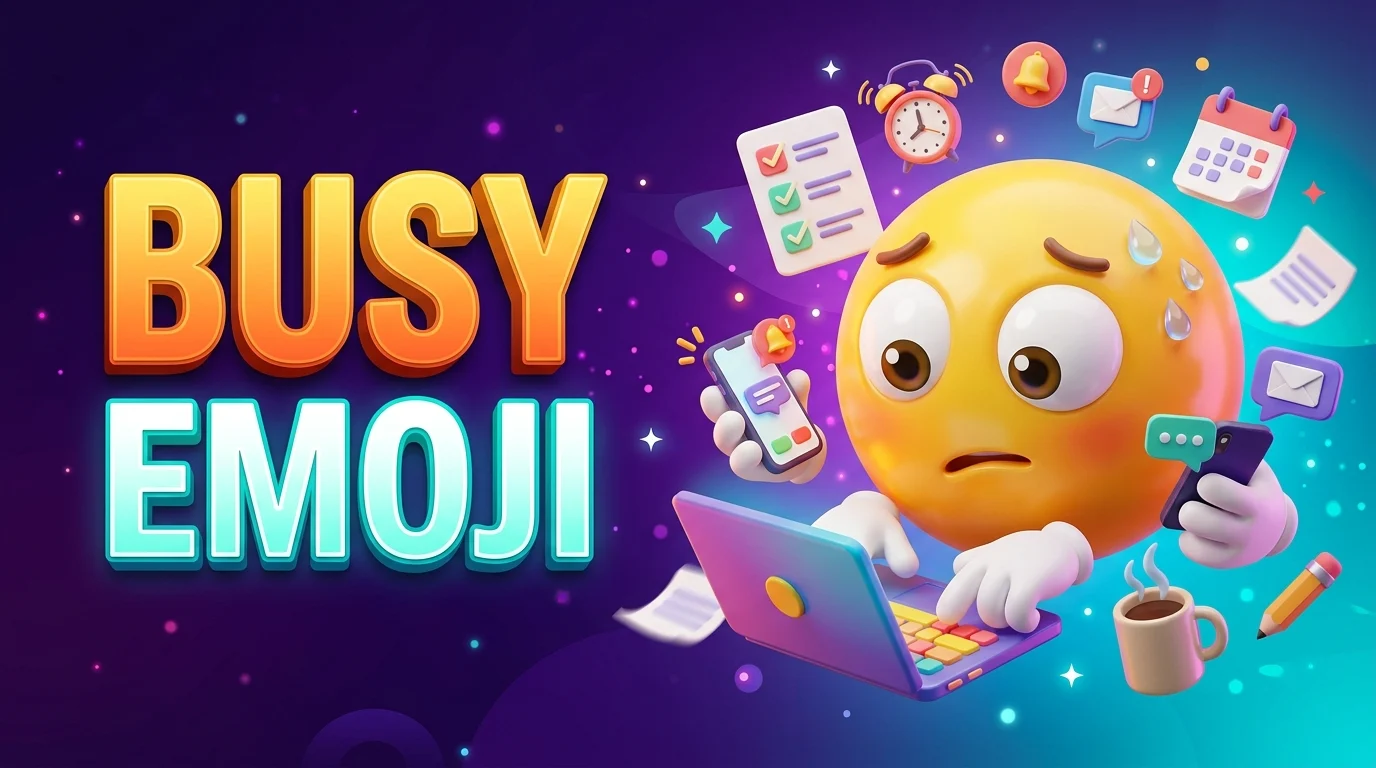
The busy emoji can help communicate that someone has a lot to do, cannot respond immediately, or needs time to focus. Depending on the symbol used, it may suggest a packed schedule, work pressure, mental exhaustion, or a simple lack of availability. People often use emojis to express these feelings quickly without writing a long explanation.
However, there is no single emoji officially known as the “busy emoji.” Several symbols can communicate that someone is occupied, including the person gesturing no, the person tipping hand, the person in a suit levitating, and faces showing exhaustion. The best choice depends on the situation and the message you want to send. Understanding the context helps you tell whether someone is genuinely busy, feeling overwhelmed, or simply asking for a little space.
Quick Answer
The busy emoji usually represents being occupied, unavailable, overwhelmed, or unable to respond right away.
Its exact meaning depends on which emoji someone uses and the context of the conversation.
What Does the Busy Emoji Mean?
The busy emoji is a general term for emojis people use to show that they have tasks to complete, limited time, or little availability for conversation. It can communicate anything from being occupied at work to feeling mentally exhausted after a long day.
Unlike a specific emoji name, “busy emoji” describes a purpose rather than one particular symbol. Someone might use a tired face to show that they are overwhelmed, a hand gesture to indicate that they cannot help right now, or a person in a business suit to suggest a formal or work-related situation.
For example, a person might send a busy-related emoji after receiving several messages while working. The symbol can politely explain why they are not responding immediately.
The meaning is not always negative. Being busy can simply mean having responsibilities, attending meetings, studying, running errands, or concentrating on an important task.
Busy Emoji Meaning in Text Messages
In text messages, a busy emoji often communicates that someone is occupied or cannot give their full attention at that moment.
Instead of typing a long explanation, a person can use an emoji to make a short response feel more expressive. The right symbol may help explain their mood or clarify why they need time before replying.
Common interpretations include:
- Working: The person has professional tasks or deadlines to handle.
- Studying: They need to focus on schoolwork, reading, or an assignment.
- Unavailable: They cannot talk or respond immediately.
- Overwhelmed: They have too many responsibilities to manage comfortably.
- Need for space: They want to concentrate without interruptions.
- Running errands: They are occupied with everyday responsibilities.
For example, someone might text, “I’m tied up with work today 😮💨.” The emoji adds a sense of tiredness or relief after dealing with a demanding schedule.
However, a busy-related emoji does not automatically mean that someone is ignoring you. Their actual availability and intention are best understood through the message and the surrounding conversation.
What Does the Busy Emoji Mean From Someone?
When someone sends you a busy-related emoji, they may be explaining their current situation or expressing how they feel about their responsibilities.
The intended meaning depends on the emoji and the message that accompanies it.
If they are working: They may be letting you know that they cannot talk much until they finish their tasks.
If they sound stressed: The emoji may suggest that they feel overwhelmed by deadlines or responsibilities.
If they reply briefly: They may be trying to acknowledge your message without starting a longer conversation.
If they ask for time: They may need a break or uninterrupted time to finish something.
If they use a playful tone: They could be joking about having a packed schedule or pretending to be extremely important.
It is important not to assume that someone is upset or uninterested simply because they use a busy emoji. A short message can reflect a genuinely hectic day rather than a change in how they feel about you.
Is the Busy Emoji Positive?
The busy emoji can be positive, neutral, or negative depending on the situation.
In a positive context, it may show that someone is working hard, staying productive, or managing several responsibilities. It can also be used humorously when a person wants to describe a full schedule without sounding too serious.
In a neutral context, the emoji simply communicates availability. Someone may be busy attending a meeting, completing an assignment, or taking care of routine tasks.
In a negative context, a busy-related emoji may express stress, frustration, or exhaustion. A tired face, for instance, can suggest that the person has reached the end of a demanding day.
The surrounding words are usually the clearest guide. “Busy day, but everything is going well” sounds different from “Too much to do today 😩.”
Therefore, the busy emoji should not be interpreted as automatically happy or upset. It usually reflects the sender’s circumstances or emotional tone.
Can the Busy Emoji Be Sarcastic?
Yes, a busy-related emoji can be used sarcastically or playfully.
Someone might describe themselves as “very busy” when they are doing something minor, such as choosing a movie or deciding what to eat. The exaggeration makes the message humorous.
For example:
- “Sorry, I’m extremely busy doing absolutely nothing 🙄.”
- “My schedule is packed today 😌.”
- “Too important to reply right now 😂.”
In these examples, the humor comes from the difference between the words and the situation. The person may not be seriously overwhelmed at all.
A sarcastic interpretation is more likely when the message includes exaggerated wording, playful punctuation, or other humorous emojis. Still, sarcasm depends on the sender’s communication style, so it is best not to assume that every joking message has a hidden meaning.
Does the Busy Emoji Mean Someone Is Ignoring You?
Not necessarily. A busy-related emoji generally communicates occupation, limited availability, or a demanding situation. It does not provide definite proof that someone is intentionally ignoring you.
People may use these symbols when they are working, studying, driving as a passenger in a busy environment, caring for family members, or handling personal responsibilities. They might also be tired and unable to hold a conversation.
Consider the difference between these messages:
- “I’m busy with work right now 😮💨.” This directly explains the person’s situation.
- “Can’t talk at the moment 🙅.” This communicates a boundary or lack of availability.
- “Busy, busy, busy 😂.” This may be a playful comment about a full schedule.
If someone repeatedly gives short replies, you still cannot determine their intentions from an emoji alone. Look at the wider conversation and communicate directly if you need clarification.
Which Emoji Is Best for Saying “I’m Busy”?
The best choice depends on what you want to communicate. Some emojis suggest that you cannot respond, while others focus on stress, exhaustion, or work.
Here are several useful options:
- 🙅 Person Gesturing No: Useful for indicating that something is not possible or that you cannot agree to a request.
- 💁 Person Tipping Hand: Can suggest explaining something, offering information, or responding with a confident attitude. Its meaning is not specifically “busy.”
- 😮💨 Face Exhaling: Often expresses relief, exhaustion, frustration, or the feeling of finishing something demanding.
- 😩 Weary Face: Suitable for showing that tasks or responsibilities feel overwhelming.
- 🧑💻 Technologist: Can represent working at a computer or handling digital tasks.
- 💼 Briefcase: Can suggest work, professional responsibilities, or business-related activity.
No single option communicates every aspect of being busy. A work-related symbol may be best for professional tasks, while an exhausted face may better express how someone feels about their workload.
Related Emojis and Their Meanings
Several emojis can help communicate being occupied, tired, unavailable, or focused on responsibilities.
| Emoji | Official Name | Common Meaning | Tone | Where or When It Is Used |
|---|---|---|---|---|
| 🙅 | Person Gesturing No | Refusal, disagreement, or indicating that something is not allowed | Firm, direct | Declining requests or setting boundaries |
| 💁 | Person Tipping Hand | Offering information, explaining, or showing confidence | Playful, confident | Casual responses and explanations |
| 😮💨 | Face Exhaling | Relief, exhaustion, frustration, or a sigh | Tired, relieved | After a long day or a demanding task |
| 😩 | Weary Face | Frustration, exhaustion, or feeling overwhelmed | Emotional, stressed | Complaining about a difficult workload |
| 🧑💻 | Technologist | Working with technology or at a computer | Neutral, professional | Remote work, coding, or digital tasks |
| 💼 | Briefcase | Work, business, or professional responsibilities | Formal, practical | Workplace conversations |
| ⏳ | Hourglass Not Done | Waiting, time passing, or something still in progress | Patient, anticipatory | Deadlines, delays, and ongoing tasks |
| 🚫 | Prohibited | Something is not permitted or should not happen | Strong, restrictive | Rules, warnings, or restrictions |
These emojis do not all mean “busy.” Instead, they express related ideas that may be useful when someone wants to explain their availability or current mood.
Busy Emoji vs. 😮💨: What’s the Difference?
The busy emoji is a broad description for symbols used to communicate that someone is occupied. The face exhaling emoji 😮💨 focuses more on the emotional feeling of sighing, exhaustion, or relief.
For example, “Busy with deadlines today 💼” emphasizes work responsibilities. In contrast, “Finally finished those deadlines 😮💨” emphasizes the feeling of relief or exhaustion afterward.
The distinction is between the situation and the reaction. One communicates what is happening, while the other often communicates how the person feels about it.
Busy Emoji vs. 😩: What’s the Difference?
The weary face 😩 is especially useful when someone wants to express frustration, tiredness, or feeling overwhelmed.
A person might use a work-related emoji to say they are occupied with a task. They might use 😩 to complain that the task is difficult or that they have too much to do.
For example:
- “In meetings all afternoon 💼” communicates a busy schedule.
- “Three more meetings to go 😩” communicates frustration or exhaustion about that schedule.
Both can relate to being busy, but they emphasize different aspects of the experience.
Is the Busy Emoji Flirty?
A busy-related emoji is not inherently flirty. Its usual purpose is to communicate availability, work, tiredness, or a need to focus.
However, it can appear in a playful or flirtatious conversation depending on the wording and the relationship between the people messaging.
For example, someone might say, “I’m busy, but I can make time for you 😉.” In this case, the wink and the sentence create the flirtatious tone. The busy reference itself is not what makes the message romantic.
Another person might write, “Too busy being cute today 😌.” That is a playful statement rather than a standard way of saying they have work to do.
If someone sends a busy-related emoji without any other context, it is safer to interpret it as a message about their availability rather than a sign of romantic interest.
Is the Busy Emoji Rude?
The busy emoji is not automatically rude. It can help someone communicate a boundary or explain that they cannot respond immediately.
However, some symbols may seem abrupt when used without words. A refusal gesture, for instance, may feel direct if someone was expecting a detailed answer. A prohibited symbol may also appear harsh when used to reject an invitation.
Compare these responses:
- “I can’t talk right now, but I’ll reply later.” This gives a clear and considerate explanation.
- “🙅” This may feel abrupt because it does not explain the reason.
- “I’m swamped today 😩. Can we talk later?” This communicates both the situation and the person’s feelings.
If you want to avoid misunderstandings, pair the emoji with a short explanation. A few words can make the difference between a clear boundary and a response that feels dismissive.
Busy Emoji on Social Media
On social media, busy-related emojis can appear in captions, comments, status updates, and personal messages. People use them to describe a demanding day, show that they are working, or joke about having too many responsibilities.
For example, someone might post a caption about meeting deadlines with a briefcase emoji. Another person may use a weary face to express frustration about exams or a long list of tasks.
Common uses include:
- Work updates: Communicating that the person is handling professional responsibilities.
- Study posts: Showing that schoolwork or exams are taking up time.
- Daily-life captions: Describing errands, appointments, or a packed schedule.
- Humorous posts: Exaggerating how busy someone feels.
- Personal boundaries: Explaining why the person may not respond immediately.
Social media meanings can vary by community and individual. A symbol that one person uses seriously may be used by another person as a joke.
Text Message Examples
Here are realistic examples of how busy-related emojis can appear in everyday conversations.
1. Explaining a Workload
- Person A: “Are you free to talk?”
- Person B: “I’m finishing a report right now 💼. Can we talk later?”
Meaning: The sender is occupied with work and is asking to continue the conversation at another time.
2. Showing Exhaustion
- Person A: “How was your day?”
- Person B: “Meetings all day, and I still have emails to answer 😩.”
Meaning: The sender feels overwhelmed by a demanding schedule.
3. Setting a Boundary
- Person A: “Can you help me with something right now?”
- Person B: “I can’t at the moment 🙅. I’m working on a deadline.”
Meaning: The sender is declining the request because they are occupied.
4. Expressing Relief
- Person A: “Did you finish your assignment?”
- Person B: “Finally! 😮💨 I can relax now.”
Meaning: The sender feels relieved after completing a task.
5. Making a Joke About Being Busy
- Person A: “What are you doing today?”
- Person B: “Very important business 😂. I’m deciding what to order for lunch.”
Meaning: The sender is exaggerating their importance for humor.
Common Misunderstandings About the Busy Emoji
1. Thinking There Is Only One Busy Emoji
There is no single symbol that covers every meaning of being busy. People use different emojis to communicate work, exhaustion, limited availability, or the need for space.
2. Assuming Someone Is Ignoring You
A busy-related emoji does not prove that the sender is deliberately avoiding you. They may genuinely be occupied or unable to respond.
3. Treating Every Busy Message as Negative
Being busy can be neutral or positive. It may mean someone is focused on a project, completing responsibilities, or managing a full day.
4. Assuming the Emoji Always Means Work
People can be busy with studying, family responsibilities, personal errands, appointments, or hobbies. The surrounding message helps clarify the situation.
5. Confusing Exhaustion With Unavailability
An exhausted face may communicate how someone feels rather than whether they can reply. Someone can be tired but still available to chat, or busy without feeling stressed.
6. Assuming an Emoji Has the Same Meaning for Everyone
People have different texting habits. An emoji that feels direct to one person may seem playful to another, so context matters.
How to Respond to the Busy Emoji
Your response should match the message and the relationship you have with the sender.
- If they are working: “No worries. Message me when you’re free.”
- If they seem exhausted: “Sounds like a long day. Hope you get some time to relax.”
- If they cannot help right now: “That’s okay. We can sort it out later.”
- If they are joking: “Very busy indeed 😂.”
- If you need a clear answer: “When would be a good time to talk?”
- If they need space: “Take your time. I’ll wait until you’re available.”
A considerate response acknowledges their situation without putting unnecessary pressure on them.
If the matter is urgent, explain why you need an answer and ask when they might be available. Otherwise, giving someone time to finish their responsibilities can prevent unnecessary misunderstandings.
Frequently Asked Questions
1. What is the busy emoji?
The busy emoji is a general term for emojis used to communicate being occupied, unavailable, overwhelmed, or focused on responsibilities. There is no single emoji officially named “Busy Emoji.”
2. Which emoji means “I’m busy”?
The best choice depends on the situation. A briefcase 💼 can suggest work, a technologist 🧑💻 can represent computer-based tasks, and a weary face 😩 can express feeling overwhelmed.
3. What does the busy emoji mean from a girl?
It generally communicates the same basic ideas as it does from anyone else: being occupied, tired, or unavailable. The specific meaning depends on the emoji and the conversation, not simply on the sender’s gender.
4. What does the busy emoji mean from a guy?
A busy-related emoji may indicate that he is working, studying, handling responsibilities, or unable to respond immediately. It does not automatically reveal his feelings or intentions.
5. Does the busy emoji mean someone is ignoring me?
No. It may simply indicate that the person cannot respond right away. You need more context to understand whether the person is busy or choosing not to continue the conversation.
6. Is the busy emoji rude?
Not necessarily. It can communicate a reasonable boundary or explain limited availability. However, a symbol sent without words may seem abrupt in some conversations.
7. Can the busy emoji be sarcastic?
Yes. People sometimes exaggerate how busy they are for humor. The wording, other emojis, and the conversation’s tone can help reveal whether the message is serious or playful.
8. What is the difference between a busy emoji and a tired emoji?
A busy-related emoji generally communicates occupation or limited availability, while a tired emoji focuses on exhaustion or low energy. The two can overlap when someone feels overwhelmed by responsibilities.
9. How should I reply when someone sends a busy emoji?
A simple, considerate reply works well. You could say, “No problem, talk when you’re free,” or ask when they might have time if you need to discuss something important.
Conclusion
The busy emoji is a useful way to communicate that someone is occupied, unavailable, or dealing with a demanding schedule. Because there is no single official busy emoji, people choose different symbols depending on whether they want to express work, exhaustion, frustration, or a need for space.
The most important factor is context. A busy-related emoji does not automatically mean someone is upset, ignoring you, or uninterested in talking. Reading the accompanying message and responding considerately can help you understand the intended meaning without making unnecessary assumptions.
Read More Related Articles:
- Sandwich Emoji Meaning | The Tasty Symbol for Food, Fun …
- Alarm Emoji Meaning | Wake-Up Alerts, Urgency & Hidden …
- Question Emoji Meaning | Decode Every ? Symbol and Its …