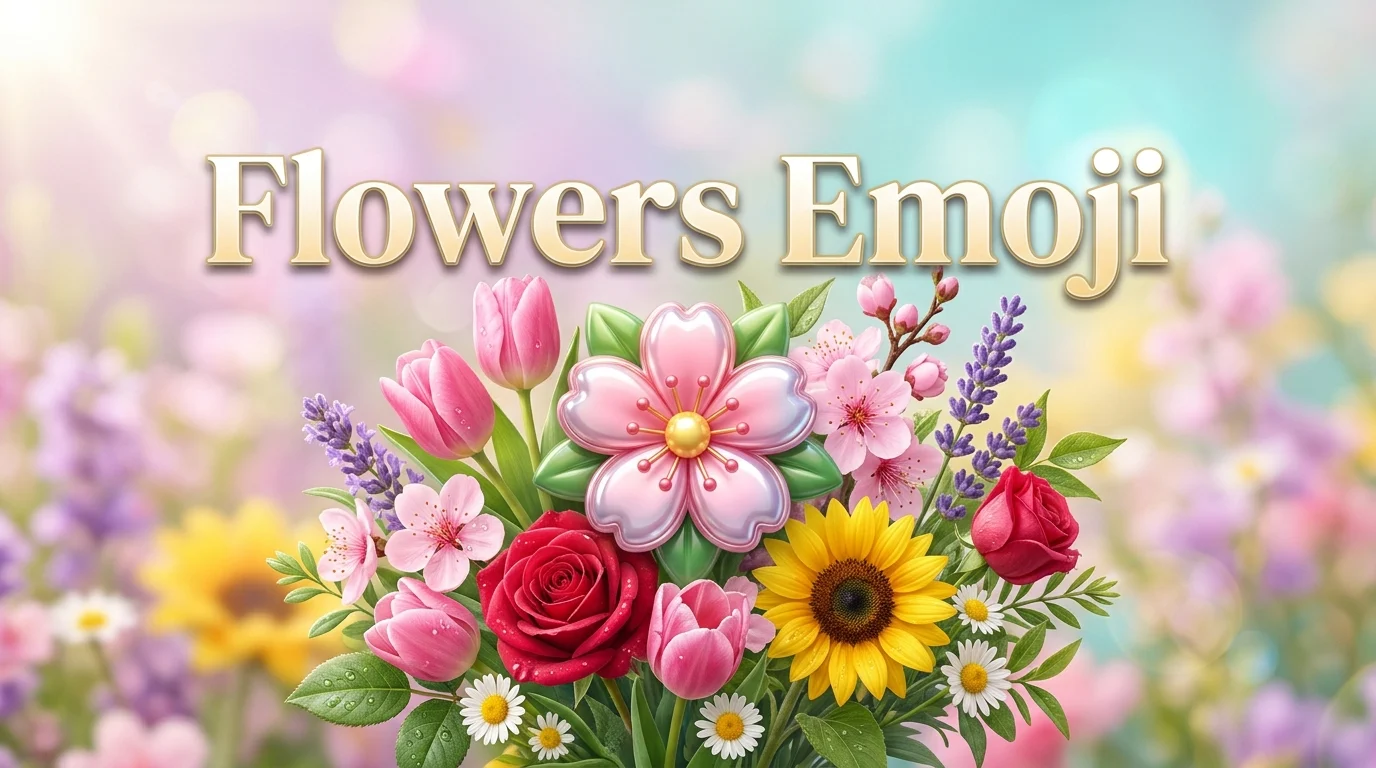
Flowers emojis bring beauty, warmth, and emotion to digital conversations. People use these floral symbols to express love, friendship, gratitude, happiness, and appreciation without needing a long message. From the romantic rose to the cheerful sunflower, each flower emoji can add a different feeling to a text, social media caption, or comment.
The meaning of a flowers emoji depends on the flower itself and the situation in which it appears. Some floral symbols are commonly associated with romance, while others suggest kindness, celebration, fresh beginnings, or peaceful feelings. A single flower can make a message feel thoughtful, but a group of flowers can create a brighter and more expressive tone. Understanding these differences helps you choose the right flower emoji for the message you want to send.
Quick Answer
The flowers emoji represents beauty, love, friendship, appreciation, happiness, and nature. Different flower emojis can suggest different feelings, depending on the flower and the conversation.
What Does the Flowers Emoji Mean?
The flowers emoji usually represents beauty, affection, kindness, and positive emotions. It can be used to make a message feel warmer, celebrate a special moment, or show appreciation for someone.
There is more than one flower emoji, and each has its own appearance and common associations. For example, a rose is often linked to romance, while a sunflower can suggest happiness and positivity. A bouquet of flowers may represent a gift, celebration, or thoughtful gesture.
Flowers also appear in conversations about gardening, spring, nature, weddings, birthdays, and other occasions. Their meaning is not always romantic. A person might send a flower emoji to a friend, family member, coworker, or someone they admire.
The surrounding message matters, too. A flower beside a compliment may express affection, while the same symbol in a gardening conversation may simply refer to a real plant.
Flowers Emoji Meaning in Text Messages
In text messages, flower emojis often add warmth and friendliness to ordinary words. They can soften a reply, make a compliment feel more personal, or help someone express an emotion that might otherwise be difficult to communicate.
Here are some common examples:
- Love and romance: A rose may accompany a romantic message or affectionate compliment.
- Friendship: A tulip or blossom can make a friendly greeting feel thoughtful.
- Gratitude: A flower may be used to thank someone for their help or kindness.
- Celebration: A bouquet can help mark a birthday, graduation, wedding, or achievement.
- Encouragement: A flower can represent hope, growth, or a fresh start.
- Everyday friendliness: A small floral symbol can make a greeting feel cheerful and welcoming.
For example, sending “Thank you for helping me 🌷” makes the message feel a little more personal. Adding a flower does not change the words themselves, but it can influence how the message feels.
What Does a Flowers Emoji Mean From Someone?
When someone sends you a flower emoji, the meaning depends on your relationship and the conversation.
If a close friend sends 🌸 after a compliment, it may simply be a sweet and friendly response. If a romantic partner sends 🌹 with an affectionate message, the rose may reinforce the romantic tone. A coworker sends 🌼 after you help with a task, it may be a polite way to show appreciation.
A flower emoji does not automatically mean that someone has romantic feelings. Some people use floral symbols frequently because they enjoy their appearance or prefer a gentle, positive texting style.
To understand the sender’s intention, consider the words that accompany the emoji, the occasion, and how that person usually communicates.
Are Flowers Emojis Positive?
Yes, flowers emojis are generally associated with positive feelings, although their meaning can vary.
Most floral symbols are used to express beauty, kindness, happiness, affection, or appreciation. They can make a greeting look cheerful or add a thoughtful touch to a message.
However, flowers can also appear in more serious conversations. Someone may use a flower when offering sympathy, remembering a loved one, or acknowledging a difficult experience. In those situations, the symbol can communicate care and remembrance rather than happiness.
The flower’s appearance and the context help determine the tone. A bright sunflower may feel energetic, while a wilted flower can suggest sadness, fading beauty, or disappointment.
Can Flowers Emojis Be Romantic?
Yes. Flowers emojis are often used in romantic messages, particularly the rose. They can communicate affection, admiration, or a thoughtful gesture without making a message feel overly formal.
For example:
- “You made my day 🌹” can sound affectionate.
- “Thinking about you 🌷” can feel gentle and caring.
- “You deserve something beautiful 🌸” can express admiration.
- “Sending you love 💐” can make affection feel more expressive.
Still, not every flower emoji is a romantic signal. A friend may send a blossom to brighten your day, and a family member may use flowers to celebrate a milestone. The message as a whole matters more than the symbol alone.
What Does Each Flower Emoji Mean?
Different flower emojis carry different common associations. Although these meanings are not fixed rules, understanding their typical use can help you select a symbol that fits your message.
Rose Emoji 🌹
The rose emoji is commonly associated with love, romance, admiration, and beauty. It is a popular choice for affectionate messages, romantic occasions, and compliments.
A rose can also express appreciation or respect, so it is not limited to romantic relationships. Its exact tone depends on the words and relationship involved.
Tulip Emoji 🌷
The tulip emoji often suggests spring, beauty, care, and fresh beginnings. Its simple, elegant appearance makes it suitable for friendly greetings, thoughtful messages, and seasonal posts.
It can also be used when discussing flowers, gardens, or springtime activities.
Sunflower Emoji 🌻
The sunflower emoji commonly represents happiness, positivity, warmth, and optimism. Its bright appearance makes it a natural choice for cheerful greetings and encouraging messages.
People may use it to celebrate good news, brighten someone’s day, or share a positive mood.
Cherry Blossom Emoji 🌸
The cherry blossom emoji is associated with spring, beauty, delicacy, and renewal. It can create a soft, peaceful tone in messages and social media captions.
It is also popular in conversations about flowers, seasonal scenery, and nature-inspired aesthetics.
Blossom Emoji 🌼
The blossom emoji represents a flower in a simple, cheerful style. It can suggest happiness, friendliness, natural beauty, and appreciation.
Its general appearance makes it useful when a person wants to add a floral touch without emphasizing a specific type of flower.
Bouquet Emoji 💐
The bouquet emoji often represents flowers given as a gift. It is commonly used for birthdays, weddings, anniversaries, congratulations, and other celebrations.
It can also express gratitude, admiration, or sympathy when the surrounding message makes that meaning clear.
Hibiscus Emoji 🌺
The hibiscus emoji is often associated with tropical beauty, summer, warmth, and colorful scenery. It can make a message feel bright, relaxed, and vacation-inspired.
It is a fitting choice for beach-related posts, garden photos, or conversations about tropical destinations.
Wilted Flower Emoji 🥀
The wilted flower emoji can suggest sadness, disappointment, fading beauty, emotional exhaustion, or something coming to an end.
Its tone is usually more somber than that of a fresh flower. However, it can also be used poetically or dramatically, so the exact meaning depends on context.
Related Flower Emojis and Their Meanings
| Emoji | Common Meaning | Tone | Where or When It Is Used |
|---|---|---|---|
| 🌹 | Love and admiration | Romantic, affectionate | Romantic messages and special occasions |
| 🌷 | Beauty and fresh beginnings | Gentle, thoughtful | Spring greetings and friendly texts |
| 🌻 | Happiness and positivity | Cheerful, warm | Encouragement and uplifting messages |
| 🌸 | Beauty and renewal | Soft, peaceful | Spring captions and aesthetic posts |
| 🌼 | Cheerfulness and kindness | Friendly, light | Casual greetings and positive messages |
| 💐 | Gifts and celebration | Appreciative, festive | Birthdays, weddings, and congratulations |
| 🌺 | Tropical beauty and summer | Bright, lively | Vacation posts and summer conversations |
| 🥀 | Sadness or fading beauty | Melancholy, dramatic | Emotional messages and reflective captions |
Why Do Different Flower Emojis Have Different Meanings?
Flower emojis are visually different, and people often connect those differences with familiar feelings or occasions. Roses are commonly linked to romance, sunflowers to cheerfulness, and bouquets to gifts or celebrations.
These associations are flexible rather than universal. Someone may use a rose to thank a friend or choose a sunflower simply because it matches a photo. The best interpretation comes from looking at the message and its context.
Rose vs. Tulip: What’s the Difference?
The rose emoji 🌹 is often used to communicate romantic love, admiration, or deep affection. It can make a message feel more intimate, especially when paired with loving words.
The tulip emoji 🌷 generally feels softer and more casual. It can suggest beauty, kindness, spring, or a fresh start without necessarily implying romance.
For example, “I love you 🌹” has a familiar romantic tone, while “Hope you have a lovely day 🌷” feels more like a gentle greeting. Both can express affection, but the rose more strongly suggests romance in many contexts.
Sunflower vs. Cherry Blossom: What’s the Difference?
The sunflower emoji 🌻 usually conveys warmth, happiness, and optimism. Its bright appearance makes it suitable for encouraging messages or cheerful updates.
The cherry blossom emoji 🌸 often feels delicate, calm, and graceful. It can represent spring, renewal, and natural beauty.
For example, “Keep smiling 🌻” feels energetic and encouraging, while “A peaceful morning 🌸” creates a softer mood. Neither meaning is fixed, but their visual styles often influence how people interpret them.
Is the Flowers Emoji Flirty?
A flowers emoji can be flirty, but it does not always carry that meaning.
A rose sent with a romantic compliment may suggest attraction. A flower sent after a friendly conversation may simply express warmth or appreciation.
For example, “You look amazing 🌹” may sound flirtatious depending on the relationship. By contrast, “Thanks for your help 🌼” is more likely to feel friendly or polite.
If you are trying to understand someone’s intention, pay attention to the entire message rather than treating the flower as proof of romantic interest.
Is the Flowers Emoji Rude?
Flowers emojis are generally not considered rude. They are more commonly associated with kindness, beauty, appreciation, and positive feelings.
However, any emoji can feel inappropriate if it does not fit the situation. Sending a cheerful flower in response to someone’s serious concern might seem dismissive if the message does not also acknowledge their feelings.
A wilted flower can also be interpreted as a dramatic or negative reaction in some conversations. The symbol itself is not inherently insulting, but timing and context affect how it comes across.
Flowers Emojis on Social Media
Flowers emojis are widely suited to social media captions and comments because they add color and emotion without requiring many words. They can complement photographs, seasonal updates, celebrations, and personal messages.
Common uses include:
- Instagram captions: Flowers can complement outfit photos, nature pictures, birthdays, and aesthetic posts.
- TikTok comments: A floral emoji can show appreciation for a creator’s look, mood, or content.
- Facebook posts: Flowers can add warmth to birthday wishes, congratulations, and family updates.
- Texting apps: Floral symbols can make greetings, thank-you messages, and affectionate replies feel more personal.
- Pinterest-style captions: Blossoms and tulips can support soft, natural, or spring-inspired themes.
The most suitable flower depends on the feeling you want to convey. A sunflower often suits a cheerful post, while a bouquet works well for celebrations and a rose fits many affectionate messages.
Text Message Examples
1. Showing appreciation
- Person A: “Thank you for always being there for me.”
- Person B: “Of course! You deserve the best 🌷”
Meaning: The tulip adds a thoughtful and caring tone.
2. Sending a romantic message
- Person A: “I had such a wonderful time with you.”
- Person B: “Me too 🌹”
Meaning: The rose reinforces affection and may suggest romance.
3. Encouraging a friend
- Person A: “I’m nervous about my interview tomorrow.”
- Person B: “You’ve got this! Stay positive 🌻”
Meaning: The sunflower adds an upbeat, encouraging feeling.
4. Celebrating good news
- Person A: “I finally graduated!”
- Person B: “Congratulations! You worked so hard 💐”
Meaning: The bouquet represents celebration and recognition.
5. Sharing a peaceful moment
- Person A: “The garden looks beautiful this morning.”
- Person B: “Spring is such a lovely time 🌸”
Meaning: The cherry blossom adds a gentle nature-inspired touch.
Common Misunderstandings About Flowers Emojis
1. Assuming Every Flower Means Love
A rose is commonly associated with romance, but other flowers often communicate friendship, happiness, beauty, or appreciation. Even a rose can be used in a non-romantic message.
2. Thinking a Flower Always Signals Flirting
A floral emoji alone is not enough to determine romantic interest. The sender may simply enjoy using flowers or want to make a message feel warmer.
3. Confusing the Bouquet With a Single Flower
The bouquet emoji 💐 often suggests a gift, celebration, or collection of flowers. A single flower may place more emphasis on beauty, affection, or a particular floral association.
4. Treating Flower Meanings as Universal Rules
People may interpret flowers differently depending on personal experience, culture, and context. Common associations can help, but they do not determine every message’s meaning.
5. Assuming a Wilted Flower Is Always Negative
The wilted flower 🥀 can suggest sadness or disappointment, but it may also be used for dramatic humor, poetic expression, or a particular visual style.
How to Respond to a Flowers Emoji
The best response depends on the sender’s message and your relationship.
- If a friend sends 🌷: “Thank you! That’s so sweet.”
- If someone sends 🌹 romantically: “That’s lovely of you ❤️”
- If someone sends 🌻 to encourage you: “Thanks, I really needed that.”
- If someone sends 💐 for an achievement: “Thank you for celebrating with me!”
- If the meaning is unclear: Respond to the words first, or ask what they meant if it matters.
You can also respond with a flower of your own. Matching the sender’s tone is often a natural way to keep the conversation warm without assigning extra meaning to the symbol.
Frequently Asked Questions
1. What does the flowers emoji mean?
The flowers emoji generally represents beauty, affection, kindness, happiness, appreciation, or nature. Its specific meaning depends on which flower appears and how it is used.
2. What does 🌹 mean from a girl or guy?
The rose emoji often suggests love, affection, or admiration. However, anyone can use it to express appreciation or friendliness, so it does not automatically mean romantic interest.
3. Which flower emoji means love?
The rose emoji 🌹 is one of the most common symbols of love and romance. Other flowers can express affection, but their meaning depends on the message and relationship.
4. What does 🌷 mean in texting?
The tulip emoji commonly represents beauty, spring, kindness, and fresh beginnings. It can make a greeting or friendly message feel gentle and thoughtful.
5. What does 🌻 mean in a text?
The sunflower emoji usually suggests happiness, warmth, positivity, and encouragement. People often use it to brighten a message or celebrate good news.
6. What does 🌸 mean?
The cherry blossom emoji often represents spring, beauty, delicacy, and renewal. It is also used in nature-related conversations and soft, aesthetic captions.
7. What does 💐 mean from someone?
The bouquet emoji often represents a gift, celebration, appreciation, or congratulations. It can also express sympathy or affection when the context supports that interpretation.
8. Is sending a flower emoji flirting?
Sometimes, but not always. A flower may be flirtatious when paired with romantic words, while the same symbol can be a friendly or thoughtful gesture in another conversation.
9. What does 🥀 mean?
The wilted flower emoji can suggest sadness, disappointment, fading beauty, or emotional exhaustion. It may also be used dramatically or humorously, depending on context.
Conclusion
Flowers emojis offer a simple way to add beauty, warmth, and emotion to digital conversations. Roses often suggest love, sunflowers bring a cheerful feeling, tulips can represent kindness or fresh beginnings, and bouquets are commonly associated with gifts and celebrations.
Although these floral symbols have familiar associations, their meanings are not fixed. A flower can express friendship, romance, gratitude, or support depending on the sender and situation. By considering the surrounding words and choosing a flower that fits your message, you can communicate your intended feeling more clearly.
Read More Related Articles:
- Moan Emoji Meaning | What It Really Means in Texts, Chats …
- Troll Emoji Meaning | Decode the Mischief, Sarcasm, and …
- Rocket Emoji Meaning and Symbolism for Messages, Goals …