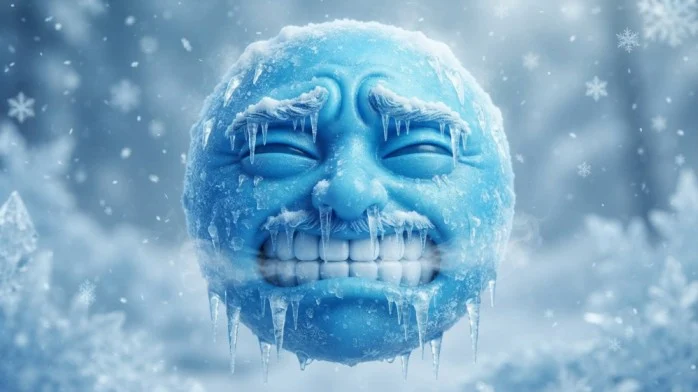
The cold emoji 🥶, officially called Cold Face, usually means that someone is extremely cold or feels like they are freezing. Its blue face, clenched teeth, and icicles make the literal meaning easy to understand. But in texts and social media, 🥶 can also express shock, discomfort, nervousness, awkwardness, or something being extremely “cold” or “cool.”
For example, someone might text “It’s 10 degrees outside 🥶” to say they are freezing. But “That comeback was brutal 🥶” uses the emoji figuratively to emphasize how cold or ruthless something felt.
So, the meaning of 🥶 depends heavily on the words around it and the situation.
🥶 Cold Emoji:
🥶 usually means “I’m freezing” or “It’s extremely cold.”
In casual texting, it can also suggest:
- Freezing: “This room is so cold 🥶”
- Shock: “You actually said that? 🥶”
- Awkwardness: “That silence was painful 🥶”
- Slang: “That was cold 🥶”
Its exact tone can range from literal and uncomfortable to humorous, dramatic, or impressed.
What Does the Cold Emoji 🥶 Mean?
The official Unicode name for 🥶 is Cold Face. It shows a blue or icy-looking face with tightly clenched teeth and ice or icicles around the face. Unicode lists keywords including cold, freezing, frostbite, icicles, subzero, and teeth.
Its most obvious use is to describe physical cold.
For example:
“I forgot my jacket today 🥶”
The sender is saying they are very cold.
Another example:
“Why is the AC set to 60? 🥶”
Here, 🥶 reinforces the feeling of being uncomfortably cold.
But the emoji has developed broader informal uses. Emojipedia notes that it can also represent being unfriendly or “cold” in slang, as well as something being “cool” or “chill” in certain contexts.
That figurative use is especially common in jokes, reactions, comments, and casual conversations.
What Does 🥶 Mean in Texting?
In texting, 🥶 often adds dramatic emphasis to a situation.
Someone might use it when they are:
- Actually freezing
- Nervous about something
- Surprised by what someone said
- Embarrassed by an awkward moment
- Reacting to a harsh comment
- Describing something as extremely intense
- Calling something “cold” in a figurative way
- Saying something is impressively “cool”
Consider these examples:
“I walked home without a coat 🥶”
Meaning: The person is physically cold.
“She really said that in front of everyone 🥶”
Meaning: The situation was shocking, harsh, or uncomfortable.
“That final shot was 🥶”
Meaning: The shot was impressive, dramatic, or “cold” in slang.
The emoji does not have to describe temperature. The message around it determines whether the meaning is literal or figurative.
Does 🥶 Always Mean That Someone Is Cold?
No.
The literal meaning is feeling extremely cold, but people can use the emoji metaphorically.
For example:
“He left me on read after that message 🥶”
The sender probably is not physically cold. The emoji may communicate an uncomfortable, awkward, or emotionally “cold” feeling.
Likewise:
“That comeback was cold 🥶”
Here, the emoji can emphasize that the comeback was ruthless or impressively sharp.
This is an important distinction when interpreting emoji meanings. The picture gives the basic idea, but everyday usage can expand beyond the literal image.
Can 🥶 Mean “Cold” in a Personality or Emotional Sense?
Yes.
The word cold can describe someone or something that feels emotionally distant, harsh, ruthless, or lacking warmth. 🥶 can sometimes reinforce that idea.
For example:
“He didn’t even apologize. That’s cold 🥶”
The emoji adds emphasis to the criticism.
Another example:
“She blocked him without saying anything 🥶”
Depending on the conversation, the emoji may communicate that the action feels harsh or emotionally cold.
This use is informal. It does not mean that 🥶 officially translates to “emotionless” or “mean.” Rather, the icy appearance makes it useful as a visual way to emphasize the slang meaning of cold.
Can 🥶 Mean “Cool”?
Sometimes, yes.
This can seem confusing because cold and cool can have very different meanings.
In slang, “cold” can describe something impressive, stylish, ruthless, or exceptionally good. Emojipedia also records this broader slang use for 🥶.
For example:
“That dunk was crazy 🥶”
The sender may be saying the dunk was impressive.
Or:
“That outfit is 🥶”
Here, the emoji may suggest that the outfit looks exceptionally good or “cold” in a slang sense.
Context is essential. If someone says “My hands are 🥶”, they almost certainly mean physically cold. If they say “That move was 🥶”, the meaning is more likely figurative.
Can 🥶 Mean Shock or Surprise?
Yes, especially in casual reactions.
The emoji can visually represent a person being frozen or stunned by what just happened.
For example:
“Wait, you actually told your boss that? 🥶”
The sender may be expressing surprise or disbelief.
Another example:
“He scored from midfield 🥶”
The emoji can add dramatic emphasis to an unexpected or impressive event.
It is not the same as an official “shocked” emoji, but the frozen expression can work as a dramatic reaction.
Can 🥶 Mean Awkwardness?
It can.
People sometimes use 🥶 after describing an uncomfortable or painfully awkward moment.
For example:
“Nobody answered after his joke 🥶”
The emoji makes the silence feel even more uncomfortable.
Or:
“I called her by the wrong name 🥶”
Here, 🥶 can mean something like “That was painfully awkward.”
The sender is using the idea of being frozen or uncomfortable rather than describing actual temperature.
Is 🥶 a Flirting Emoji?
Not inherently.
The Cold Face emoji is primarily associated with coldness, freezing, and related figurative reactions. It can appear in flirtatious conversations, but 🥶 by itself does not establish romantic interest.
For example:
“You look way too good in that photo 🥶”
In a romantic conversation, the emoji might add playful intensity to the compliment.
But:
“That picture is freezing me just looking at it 🥶”
could be completely playful and unrelated to flirting.
If you are trying to understand someone’s romantic intentions, consider the entire conversation rather than assigning a romantic meaning to one emoji.
What Does 🥶 Mean From Someone?
When someone sends 🥶 to you, first look at what they are responding to.
If they write:
“It’s freezing here 🥶”
They probably mean exactly what the emoji shows: they are cold.
If they write:
“You really said that to her? 🥶”
They may be expressing shock or discomfort.
If they write:
“That comeback was 🥶”
They may be calling the comeback ruthless, impressive, or “cold.”
If they send:
“You look amazing tonight 🥶”
the emoji could add playful intensity to the compliment.
The emoji itself does not provide enough information to determine the sender’s exact intention.
Positive, Negative, and Playful Uses of 🥶
The same emoji can have very different emotional tones.
Literal and Neutral
“It’s freezing outside today 🥶”
Meaning: The weather is very cold.
Uncomfortable
“The AC is blasting again 🥶”
Meaning: The sender is physically uncomfortable because of the cold.
Shocked
“You quit without telling anyone? 🥶”
Meaning: Surprise or disbelief.
Awkward
“Nobody laughed at the joke 🥶”
Meaning: The situation felt painfully awkward.
Impressed
“That was the best goal of the season 🥶”
Meaning: The sender thinks the performance was extremely impressive.
Ruthless
“He answered with one sentence and ended the argument 🥶”
Meaning: The response was harsh, decisive, or “cold.”
These examples show why a simple definition such as “🥶 means cold” does not cover every real-world use.
Related Emojis and How They Differ From 🥶
Several emojis can describe cold weather, physical discomfort, heat, sickness, shock, or intense reactions. The following are the closest useful comparisons.
| Emoji | Official Name | Common Meaning | Tone | Where or When It Is Used |
|---|---|---|---|---|
| 🥶 | Cold Face | Freezing, extreme cold, or figurative “cold” | Uncomfortable, dramatic, intense | Cold weather, awkward reactions, harsh comments, impressive moments |
| 🥵 | Hot Face | Extreme heat, overheating, or sometimes intense attraction | Overheated, dramatic, intense | Hot weather, physical heat, strong reactions |
| ❄️ | Snowflake | Snow, winter, ice, or cold weather | Neutral, seasonal | Weather updates, winter posts, snow-related messages |
| 🧊 | Ice | Ice, freezing temperatures, or something emotionally “cold” | Cool, detached, playful | Cold drinks, winter, slang reactions |
| 😬 | Grimacing Face | Awkwardness, nervousness, tension, or discomfort | Uncomfortable, nervous | Awkward texts, difficult situations, uneasy reactions |
| 😨 | Fearful Face | Fear, worry, or alarm | Anxious, serious | Scary situations, worrying news, nervous reactions |
| 😱 | Face Screaming in Fear | Extreme fear, shock, or dramatic surprise | Very dramatic | Frightening events, shocking news, exaggerated reactions |
| 😳 | Flushed Face | Embarrassment, surprise, or feeling exposed | Shy, embarrassed, surprised | Compliments, awkward moments, unexpected comments |
| 🤧 | Sneezing Face | Sneezing, allergies, or feeling sick | Unwell, casual | Illness, allergies, cold symptoms |
The most important comparison is between 🥶 and 🥵. They are visual opposites: 🥶 represents extreme cold, while 🥵 represents extreme heat. Both can also be used dramatically beyond temperature.
🥶 and 🧊 are also easy to confuse. 🥶 depicts a person’s reaction to extreme cold, while 🧊 represents an actual ice cube and can be used more broadly for ice, freezing, or a “cold” aesthetic.
🥶 and 😬 can overlap when a situation is uncomfortable. However, 😬 focuses more directly on a tense or awkward facial expression, while 🥶 adds the idea of freezing, shock, or intense cold.
🥶 vs. 🥵: What’s the Difference?
These two emojis are often treated as opposites.
🥶 Cold Face means:
“I’m freezing.”
🥵 Hot Face means:
“I’m extremely hot.”
But both can be used figuratively.
For example:
“That meeting was brutal 🥶”
can describe an emotionally cold or uncomfortable situation.
Meanwhile:
“That concert was intense 🥵”
can express overwhelming excitement, heat, or intensity.
The surrounding words determine whether the emoji is literal or figurative.
🥶 vs. 🧊: What’s the Difference?
The main difference is person versus object.
🥶 shows a face reacting to extreme cold.
🧊 shows an ice cube.
So:
“It’s freezing in here 🥶”
focuses on the person’s reaction.
But:
“I need more ice 🧊”
refers to ice itself.
The two can also appear together:
“This drink is so cold 🥶🧊”
Here, each emoji reinforces the cold theme in a different way.
🥶 vs. 😬: What’s the Difference?
These emojis can both appear in awkward situations.
😬 Grimacing Face usually focuses on tension, nervousness, embarrassment, or an uncomfortable reaction.
🥶 Cold Face can make the situation feel more dramatic, frozen, shocking, or emotionally cold.
Compare:
“I forgot her birthday 😬”
This sounds nervous or embarrassed.
“I forgot her birthday and she just stared at me 🥶”
This makes the moment sound intensely uncomfortable.
🥶 vs. 😳: What’s the Difference?
😳 is more closely connected to embarrassment, surprise, or feeling exposed.
🥶 is more connected to coldness, freezing, shock, or intense reactions.
For example:
“He complimented me in front of everyone 😳”
suggests embarrassment or surprise.
“He proposed in front of everyone 🥶”
could express shock or being overwhelmed by the situation.
Neither meaning is guaranteed, but the emotional focus is different.
Message Examples Using 🥶
“It is freezing outside 🥶”
Likely meaning: The sender is physically cold.
This is the most literal use of the emoji.
“Why is this office always so cold? 🥶”
Likely meaning: Physical discomfort caused by a low temperature.
The words clearly establish the meaning.
“You actually sent that message? 🥶”
Likely meaning: Shock, disbelief, or discomfort.
There is no need for the sender to be physically cold.
“That comeback was cold 🥶”
Likely meaning: The comeback was ruthless, harsh, or impressively sharp.
Here, “cold” is being used figuratively.
“That goal was 🥶”
Likely meaning: The goal was extremely impressive or stylish.
The emoji adds dramatic emphasis to the reaction.
“The silence after he said that was 🥶”
Likely meaning: The silence felt painfully awkward.
The emoji emphasizes the uncomfortable atmosphere.
How Should You Respond to 🥶?
Your response depends on what the sender means.
If they are literally cold
“Go grab a blanket 😂”
or:
“You definitely need a jacket.”
If they are reacting to something shocking
“I know! I couldn’t believe it either.”
If they are calling something impressive
“That was absolutely insane 🔥”
If they are describing an awkward moment
“That sounds painful 😭”
If the meaning is unclear
Respond to the words rather than the emoji. If the message is vague, a simple question such as “Wait, what happened?” can clarify the situation naturally.
Can You Copy and Paste the Cold Emoji?
Yes. Here it is:
🥶
You can copy and paste it into texts, captions, comments, and other messages.
The emoji may look slightly different on different devices because companies create their own emoji artwork. The basic concept remains the same: a face experiencing extreme cold.
Official Name and Unicode Details
The official Unicode name is Cold Face, and its code point is U+1F976. Unicode’s emoji charts list keywords such as cold, freezing, frostbite, icicles, subzero, and teeth, which reflect the emoji’s core concept.
The emoji was introduced with Unicode 11.0 and Emoji 11.0 in 2018. Unicode’s release chart originally associated the character with the name “Freezing Face,” while the current Unicode/CLDR name is “cold face.”
This technical information helps explain why you may see the emoji described with terms such as freezing face, cold face, or freezing emoji even though the character is the same.
Common Misunderstandings About 🥶
“🥶 only means cold weather.”
Not always. It can also express shock, discomfort, awkwardness, intensity, or figurative “coldness.”
“🥶 means someone is sick.”
Not by itself. A person may use it when they are physically cold, but it does not specifically mean illness. Emojis such as 🤧, 🤒, or 😷 are more directly associated with sickness.
“🥶 always means someone is scared.”
No. Fear can sometimes produce a figurative “frozen” reaction, but fear is not the emoji’s primary meaning.
“🥶 is always negative.”
No. It can be neutral when describing cold weather and even positive when used to say that something was impressive or “cold” in slang.
“🥶 means flirting.”
Not inherently. A flirtatious message can include 🥶, but the emoji alone does not prove romantic or sexual interest.
“🥶 has one secret meaning in texting.”
There is no universal secret interpretation. Informal meanings depend on the message, relationship, and situation.
Frequently Asked Questions
What does 🥶 mean in texting?
It usually means “I’m freezing” or “It’s extremely cold.” In casual texting, it can also express shock, awkwardness, discomfort, or something being figuratively “cold.”
What does the 🥶 emoji mean from someone?
It depends on the message. They could be describing cold weather, reacting to something shocking, or using “cold” as slang for something harsh or impressive.
Does 🥶 mean “cold” in slang?
It can. People may use it to emphasize that something was ruthless, harsh, detached, or impressively “cold.” This is an informal contextual use rather than the emoji’s only meaning.
Is 🥶 a flirty emoji?
Not specifically. It can appear in playful or flirtatious messages, but the surrounding conversation is needed to understand whether flirting is actually intended.
What is the difference between 🥶 and 🥵?
🥶 represents extreme cold, while 🥵 represents extreme heat. Both can also be used figuratively to express strong reactions.
What is the difference between 🥶 and 🧊?
🥶 shows a person experiencing extreme cold. 🧊 represents an ice cube. They can both be used for cold-related messages but emphasize different ideas.
Can 🥶 mean awkward?
Yes. In informal texting, 🥶 can describe a moment that feels painfully awkward, tense, or uncomfortable.
Can 🥶 mean “cool”?
Sometimes. In slang, “cold” can mean impressive or stylish, so 🥶 may be used to emphasize that reaction. The surrounding words make the intended meaning clearer.
Conclusion
The cold emoji 🥶 most directly means freezing or extreme cold, but its use in everyday messages can go beyond temperature. It may also express shock, discomfort, awkwardness, emotional coldness, or something that feels exceptionally impressive or “cold” in slang.
When you receive 🥶, check the words around it before deciding what the sender means. “It’s freezing 🥶” is literal, while “That comeback was cold 🥶” is clearly figurative. The same emoji can communicate very different ideas depending on context.
Read More Related Articles:
Heart Hands Emoji Meaning | What Does Mean in Texts?
Pleading Emoji Meaning | What Does It Mean? – emojisnest.com