Quick Answer:
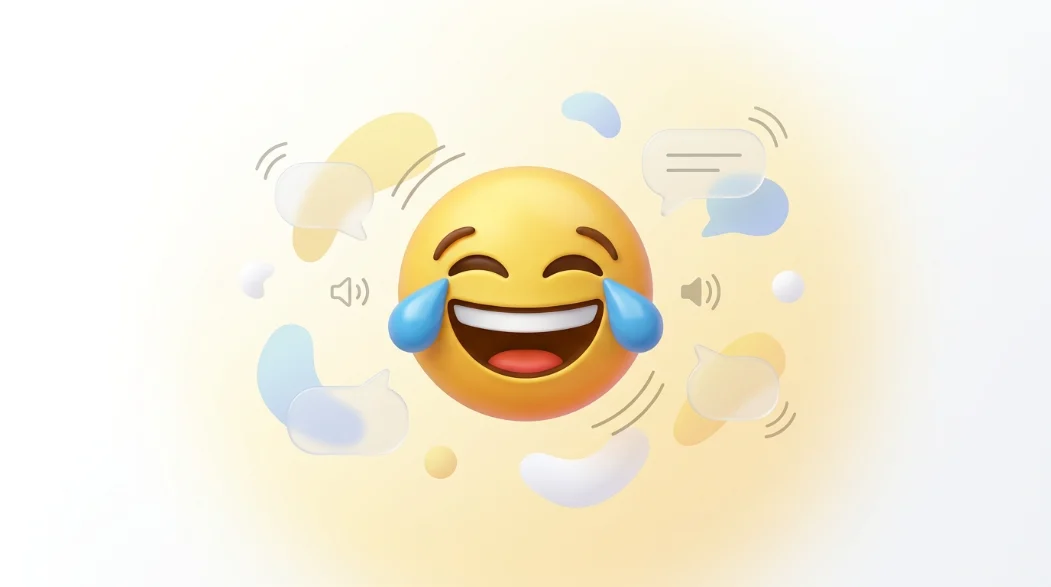
The crying laughing emoji 😂 usually means “that’s really funny” or “I’m laughing so hard I’m crying.”
It can also soften a joke, show amusement, or make a reaction feel more playful.
The crying laughing emoji 😂 is one of the clearest ways to show strong amusement, laughter, or joy in a text. Its official Unicode name is Face with Tears of Joy, and the image combines a wide laughing expression with tears coming from both eyes. It is commonly used when something feels extremely funny, ridiculous, or entertaining. Unicode lists laughter, joy, funny, and related terms among its keywords.
In everyday messages, 😂 can mean much more than simply “laughing.” It can react to a funny story, make a teasing comment feel lighter, or emphasize that a situation is ridiculous. The exact tone depends on the words around it and the relationship between the people chatting. It can be genuinely amused, playful, exaggerated, or occasionally sarcastic.
What Does the Crying Laughing Emoji 😂 Mean?
The crying laughing emoji 😂 usually means that something is very funny.
The official name is Face with Tears of Joy. The tears do not represent sadness. They represent laughing so hard that tears are associated with the emotion of joy. Unicode identifies 😂 as U+1F602, while Emojipedia describes it as a laughing emoji commonly known as the laughing crying emoji.
People commonly use 😂 to express:
- Strong laughter
- Amusement
- Joy
- A funny reaction
- A ridiculous situation
- Playful teasing
- An exaggerated laughing response
- “I can’t stop laughing”
For example:
“You actually did that 😂”
The emoji suggests that the sender finds the situation funny rather than responding with anger.
😂 Meaning in Text Messages
In texting, 😂 often works as a direct reaction to something humorous.
For example:
“I walked into the wrong classroom and sat down like I belonged there 😂”
Here, the emoji tells the reader that the story is being shared as something funny.
It can also appear at the end of a short response:
“No way 😂”
This could mean:
“That’s hilarious.”
Or:
“I can’t believe that happened.”
The exact meaning comes from the surrounding conversation.
Why Is It Called the Crying Laughing Emoji?
People often call 😂 the crying laughing emoji because the face is laughing while tears appear around the eyes.
Its official Unicode name is Face with Tears of Joy, which is more precise than the informal name. Unicode’s current emoji list identifies it as U+1F602.
So these names can refer to the same emoji:
- Crying laughing emoji
- Laughing crying emoji
- Laughing with tears emoji
- Face with tears of joy
- 😂 emoji
The official name is Face with Tears of Joy.
What Is the Emotional Tone of 😂?
😂 is generally strongly positive and playful.
However, the emotional tone can change depending on the message.
Genuine laughter
“That movie scene was so funny 😂”
The emoji clearly expresses amusement.
Playful teasing
“You really thought that was going to work 😂”
Here, 😂 makes the teasing feel lighter.
Ridiculous situation
“My alarm went off and I turned it off in my sleep 😂”
The sender is laughing at their own situation.
Exaggerated reaction
“You said WHAT 😂😂”
The repeated emoji adds extra emotional intensity.
Sarcastic laughter
“Yeah, because that worked so well last time 😂”
Here, the words create the sarcasm. 😂 simply reinforces the ironic tone.
Does 😂 Mean You Are Literally Crying?
Usually, no.
The tears in 😂 represent tears of joy, not sadness.
If someone sends:
“I’m crying 😂”
they may mean they are laughing extremely hard.
However, people sometimes combine emotional language with emojis in exaggerated ways. Context still matters.
If someone wants to express actual sadness or emotional crying, emojis such as 😭 or 😢 may be more appropriate depending on the situation.
What Does 😂 Mean From Someone?
If someone sends you 😂, they most likely found something funny, amusing, ridiculous, or entertaining.
For example:
You: “I forgot my own phone number for a second.”
Them: “😂”
That response probably means they found your comment funny.
If someone sends:
“You’re impossible 😂”
the emoji may soften the statement and make it sound playful rather than genuinely critical.
Still, 😂 does not automatically tell you exactly how the person feels about you. Their words and the larger conversation provide the better context.
Is 😂 Flirty?
Not by itself.
The crying laughing emoji is primarily an expression of laughter. It can appear in a flirty conversation, but using 😂 does not automatically indicate romantic interest.
For example:
“You’re actually pretty funny 😂”
could be friendly or mildly flirtatious depending on the conversation.
Compare:
“You always make me laugh 😂”
This can sound warm or affectionate, but the emoji itself is still primarily communicating laughter.
If you’re trying to understand whether someone is flirting, consider their complete message and communication pattern rather than treating one emoji as proof.
Can 😂 Be Sarcastic?
Yes.
The crying laughing emoji can accompany sarcasm, irony, or a deliberately exaggerated reaction.
For example:
“Great, another Monday 😂”
The sender may not literally find Monday funny. The emoji can make the complaint sound more playful.
Another example:
“Wow, what a surprise 😂”
Depending on the conversation, this may mean the opposite of the literal words.
The important point is that 😂 does not inherently mean sarcasm. The surrounding wording creates that interpretation.
Can 😂 Be Rude?
It can feel rude in certain situations, even though its basic meaning is laughter.
For example:
“You failed the test 😂”
If the person knows you are upset about the result, the emoji might make the message feel mocking.
But:
“I failed the test 😂”
sounds very different because the sender is laughing at their own situation.
This is why context matters. The same emoji can feel friendly in one conversation and insensitive in another.
Related Laughing Emojis and Their Meanings
| Emoji | Official Name | Common Meaning | Tone | Where or When It Is Used |
|---|---|---|---|---|
| 😂 | Face with Tears of Joy | Laughing very hard or finding something hilarious | Joyful, playful | Funny texts, jokes, reactions |
| 🤣 | Rolling on the Floor Laughing | Extremely strong laughter | Very playful, exaggerated | Something considered exceptionally funny |
| 😆 | Grinning Squinting Face | Big grin and strong amusement | Energetic, cheerful | Jokes, excitement, playful reactions |
| 😅 | Grinning Face with Sweat | Nervous laughter or relief mixed with amusement | Awkward, relieved | Embarrassing moments, close calls |
| 😭 | Loudly Crying Face | Intense crying or exaggerated emotional reaction | Dramatic, emotional | Sadness, overwhelm, or humorous exaggeration |
| 😹 | Cat with Tears of Joy | A cat-themed laughing reaction | Silly, playful | Funny or cute reactions |
| 🤭 | Face with Hand Over Mouth | Coy laughter, embarrassment, or “oops” | Playful, bashful | Awkward jokes, secrets, cheeky reactions |
| 💀 | Skull | “I’m dead” from laughter or shock in informal use | Dramatic, humorous | Extremely funny or absurd situations |
| 😄 | Grinning Face with Smiling Eyes | Happy smile and friendly amusement | Warm, positive | General happiness and light humor |
The most important distinction is between 😂 and 🤣. Both communicate laughter, but 🤣 is visually and semantically more exaggerated because it represents Rolling on the Floor Laughing. Unicode lists both separately.
😂 and 😭 can also confuse people. 😂 officially represents tears of joy, while 😭 is Loudly Crying Face. However, informal online communication sometimes uses 😭 to express extreme laughter or emotional overwhelm. Emojipedia specifically notes that 😭 is often used for laughing so hard that someone is brought to tears.
😂 vs. 🤣: What’s the Difference?
Both are laughing emojis, but their visual intensity is different.
😂 Face with Tears of Joy usually communicates strong laughter.
🤣 Rolling on the Floor Laughing is a more exaggerated reaction that suggests something is extremely funny.
Compare:
“That joke was funny 😂”
This sounds like a strong laugh.
“I cannot breathe 🤣”
This feels more exaggerated and intense.
Neither emoji guarantees a specific level of laughter. People choose them based on personal style and the situation.
😂 vs. 😭: What’s the Difference?
This comparison can be confusing because modern informal messaging sometimes uses 😭 for laughter.
Officially:
- 😂 Face with Tears of Joy = joy and laughter
- 😭 Loudly Crying Face = loud or intense crying
But informal usage can be more flexible. Emojipedia notes that 😭 can be used to express laughing so hard that the person is metaphorically crying.
So if the goal is to clearly communicate “that’s hilarious,” 😂 is the more direct choice.
😂 vs. 😅: What’s the Difference?
These two emojis both contain a smile and can appear after something funny, but their emotional signals differ.
😂 focuses on strong laughter.
😅 Grinning Face with Sweat can suggest nervousness, awkwardness, embarrassment, or relief alongside the smile.
Compare:
“That video was hilarious 😂”
Strong amusement.
“I almost sent that message to my boss 😅”
The sweat suggests relief or awkwardness.
Text Message Examples
1. Laughing at a joke
“That was actually hilarious 😂”
Likely meaning: The sender genuinely found the joke funny.
2. Laughing at yourself
“I just waved back at someone who wasn’t waving at me 😂”
Likely meaning: The sender is making fun of their own awkward moment.
3. Playful teasing
“You really believed that? 😂”
Likely meaning: Light teasing rather than serious criticism.
4. Reacting to something ridiculous
“Why would you even try that 😂”
Likely meaning: The situation seems funny or absurd.
5. Softening a statement
“You’re so dramatic 😂”
Likely meaning: The emoji can make the statement sound more playful and less harsh.
Common Misunderstandings About 😂
It does not always mean genuine laughter
Someone may use 😂 simply to make a message feel lighter or more playful.
It does not automatically mean sarcasm
Sarcasm depends on the words and context.
It does not mean sadness
The tears represent joy, which is why the official name is Face with Tears of Joy.
It does not prove someone is flirting
A person can use 😂 with friends, family, coworkers, partners, or anyone else.
Repeating it increases emphasis
Messages such as “😂😂😂” can communicate a stronger or more exaggerated reaction, but the exact intensity depends on the sender’s normal texting style.
How to Respond to 😂
There is no special response required. Match the tone of the conversation.
If they laughed at your joke
“I knew you’d laugh 😂”
If they are teasing you
“Okay, okay, don’t laugh at me 😂”
If they are sharing something funny
“That is actually hilarious.”
If the situation is awkward but funny
“Honestly, I would have done the same 😅”
If you’re not sure why they used it
“Wait, what’s so funny? 😂”
The best response usually follows the actual conversation rather than focusing on the emoji alone.
Copy and Paste the Crying Laughing Emoji
😂
You can copy and paste it into texts, captions, comments, posts, and messages.
Common combinations include:
- 😂😂😂 for stronger laughter
- 😂😭 for an exaggerated emotional reaction
- 😂💀 for extreme or absurd humor
- 😂🤦 for laughing at a mistake
- 😂❤️ for affectionate amusement
- 😂😅 for awkward or nervous humor
Official Name and Technical Details
The official Unicode name of 😂 is Face with Tears of Joy.
- Emoji: 😂
- Unicode code point: U+1F602
- Official Unicode name: Face with Tears of Joy
- Unicode version: 6.0
- Emoji version: 1.0
Unicode’s emoji charts identify U+1F602 as Face with Tears of Joy, with related keywords including crying, funny, happy, hilarious, joy, laugh, and tear.
The emoji was added to Unicode 6.0 and later included in Emoji 1.0. Its visual design can vary somewhat between platforms, but the underlying character remains the same.
Frequently Asked Questions
What does the crying laughing emoji 😂 mean?
😂 usually means “that’s really funny” or “I’m laughing so hard I’m crying.” Its official name is Face with Tears of Joy.
What is the official name of 😂?
The official Unicode name is Face with Tears of Joy.
Is 😂 a crying emoji or a laughing emoji?
It is primarily a laughing emoji. The tears represent joy rather than sadness.
What does 😂 mean from a girl or guy?
The emoji itself does not have a different meaning based on gender. It usually communicates laughter or amusement, regardless of who sends it.
Is 😂 flirting?
Not by itself. 😂 mainly communicates laughter. A romantic or flirty meaning depends on the surrounding conversation.
What does 😂 mean after a text?
It usually means the sender found the message funny, amusing, ridiculous, or worth laughing about.
Is 😂 sarcastic?
It can be used sarcastically, but the sarcasm comes from the context and wording rather than the emoji itself.
Is 😂 still used for laughing?
Yes. It remains an established laughing emoji, although people may choose different emojis depending on their personal style and the type of humor involved. Emojipedia also notes that 😂 has long been known colloquially as the laughing crying emoji.
What is the difference between 😂 and 🤣?
😂 means laughing with tears of joy, while 🤣 officially represents Rolling on the Floor Laughing and generally gives a more exaggerated impression of laughter.
Conclusion
The crying laughing emoji 😂, officially called Face with Tears of Joy, is mainly used to show strong amusement, laughter, or a funny reaction. It can also make teasing, awkward situations, and exaggerated comments feel more playful.
If you want to clearly show that something is funny, 😂 is a natural choice. For even more exaggerated laughter, 🤣 may fit better, while 😅 works well for awkward humor or relief. As always, the words around the emoji provide the best clue to its exact meaning.
Discover More Post:
- Music Emoji | Meaning, Uses, and Creative Ways to Express …
- Celebration Emoji | Meaning, Uses, Symbolism, and How to …
- Praying Hands Emoji Meaning, Symbolism, Uses & Emotional …