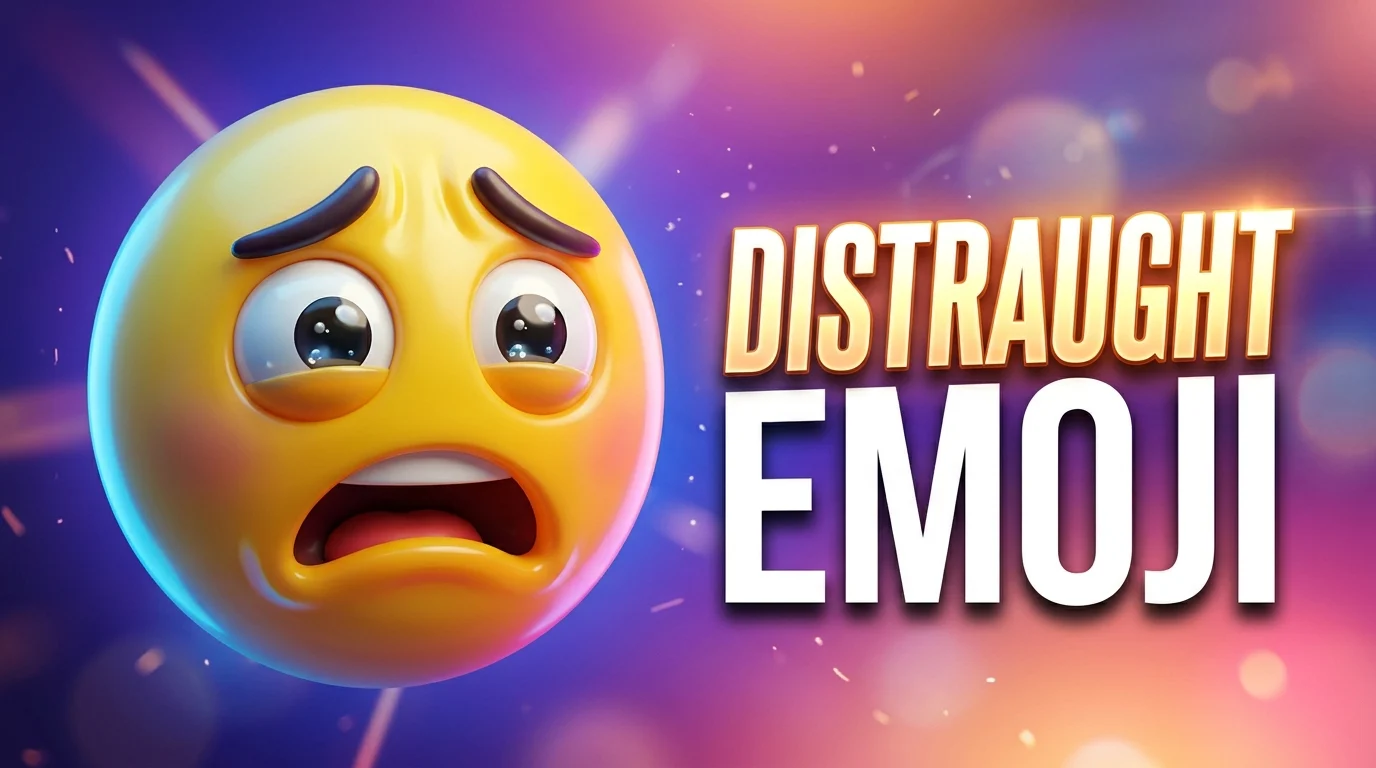
The distraught emoji expresses intense emotional discomfort, distress, worry, or feeling overwhelmed. People may use it when something upsetting happens, when they feel mentally exhausted, or when a situation becomes difficult to handle. Its exact meaning depends on the conversation and the emotion the sender wants to communicate.
Unlike a simple sad face, a distraught expression suggests a stronger reaction. It can convey shock, anxiety, frustration, or emotional exhaustion when words alone do not feel sufficient. People may also use it dramatically to react to embarrassing moments, stressful situations, or disappointing news. However, the phrase “distraught emoji” can refer to different distressed-looking faces, so the precise meaning depends on which emoji someone has in mind.
Quick Answer
- The distraught emoji generally represents intense distress, worry, sadness, or feeling emotionally overwhelmed.
- In texts and social media, it can express genuine upset or an exaggerated reaction to a stressful, shocking, or disappointing situation.
What Does the Distraught Emoji Mean?
The distraught emoji represents a state of emotional distress. It can communicate that someone feels upset, worried, shaken, or unable to deal easily with a situation.
The word distraught describes someone who is deeply troubled or emotionally disturbed. When people use a distressed-looking emoji to express this feeling, they may be showing that something has affected them more strongly than expected.
Depending on the context, the emoji may suggest:
- Emotional distress: Something has upset the person.
- Worry: They are concerned about what might happen.
- Overwhelm: They feel that a situation is becoming too much.
- Shock: They are struggling to process unexpected news.
- Frustration: Something has gone wrong, and they feel emotionally drained.
- Sadness: They feel hurt or disappointed by an event.
The emoji does not always indicate a serious emotional problem. Friends may also use it for everyday frustrations, such as missing a deadline, losing something important, or making an embarrassing mistake.
Because “distraught emoji” is a descriptive phrase rather than one universally fixed emoji name, the facial expression matters. A face showing worry may communicate anxiety, while one with tightly closed eyes and a tense mouth may suggest stronger distress or frustration.
Distraught Emoji Meaning in Text Messages
In text messages, a distraught-looking emoji can help communicate an emotional reaction that might otherwise be difficult to express.
Written messages do not always make tone clear. A short sentence such as “I can’t believe this happened” could express mild surprise or serious distress. Adding an expressive face can help show how strongly the sender feels.
For example, someone might use a distraught emoji after receiving disappointing news, dealing with an unexpected problem, or explaining that their day has gone badly.
Here are some common texting interpretations:
- “I am so stressed.” The emoji emphasizes emotional pressure.
- “This is upsetting.” It shows that something has caused distress.
- “I cannot handle this right now.” It communicates feeling overwhelmed.
- “I am shocked.” It highlights a strong reaction to unexpected information.
- “Everything is going wrong.” It expresses frustration or emotional exhaustion.
The emoji can also make a message feel more personal. Instead of simply stating that a situation is difficult, the sender shows an emotional response.
Still, it is important not to assume that every distraught-looking emoji indicates a serious problem. Some people use expressive faces playfully, so the surrounding message provides important clues.
What Does the Distraught Emoji Mean From Someone?
When someone sends you a distraught emoji, they may be expressing discomfort, worry, sadness, or frustration. The intended meaning depends on what happened before the message and how the person usually communicates.
If they share bad news, the emoji may show that they are genuinely upset.
If they are talking about work or school, it may communicate pressure, exhaustion, or concern about a difficult task.
If they send it after a surprising message, they might be shocked or unsure how to react.
If they use it during a casual conversation, the emoji may be a dramatic way of saying that something is frustrating or disappointing.
For example, if a friend says, “I studied all night and the exam covered completely different topics,” a distraught-looking face would reinforce their disappointment.
However, the emoji alone cannot tell you exactly what someone feels. If their message sounds serious or you are concerned about them, a kind question such as “Are you okay?” is more helpful than guessing.
Is the Distraught Emoji Positive or Negative?
The distraught emoji generally has a negative emotional tone because it represents distress, worry, sadness, or discomfort.
It is commonly associated with difficult moments rather than celebration or happiness. However, a negative-looking emoji can appear in a lighthearted conversation without indicating genuine suffering.
For example, someone might use a distraught face after discovering that their favorite restaurant is closed. Their reaction may be exaggerated for humor rather than a sign of deep emotional distress.
The tone can be understood in three broad ways:
- Serious: The person is genuinely upset or worried.
- Dramatic: The person is emphasizing how frustrating a situation feels.
- Playful: The emoji exaggerates a small inconvenience for comedic effect.
The words around the emoji help determine which interpretation fits. A message about a personal crisis deserves a different response from a joke about running out of snacks.
Can the Distraught Emoji Be Sarcastic?
Yes. A distraught-looking emoji can be used sarcastically when someone wants to exaggerate disappointment or frustration.
Sarcasm often relies on a difference between the apparent emotion and the actual seriousness of the situation. The emoji may look intensely upset even though the problem is relatively minor.
For example:
- “My favorite show ended on a cliffhanger. I will never recover.”
- “The store ran out of my favorite cookies. This is devastating.”
- “I have to wake up early on Saturday. What a tragedy.”
In these examples, the distressed expression may communicate mock sadness rather than genuine emotional pain.
However, sarcasm is not always obvious in text. Some people use the same expression when they are truly distressed. If the context is unclear, avoid assuming that the person is joking.
The Difference Between Feeling Distraught and Feeling Sad
Distraught and sad are related emotions, but they do not communicate exactly the same thing.
Sadness generally describes unhappiness, disappointment, or emotional pain. A sad-looking emoji may be enough when someone wants to express that they miss a person, feel disappointed, or have had a difficult day.
Distress often suggests a more intense or unsettled emotional state. It may combine sadness with worry, shock, fear, or frustration.
For example, someone who misses a friend might send a sad face. Someone who has received upsetting news and does not know what to do next might choose a more distressed-looking expression.
These distinctions are not strict rules for emoji use. People often use different facial expressions interchangeably, and the same emoji may communicate several emotions depending on context.
Does the Distraught Emoji Mean Anxiety?
It can. A distraught-looking face may communicate anxiety when someone feels worried, uncertain, or overwhelmed by what might happen.
For example, a student waiting for important results might use a distressed expression to show nervousness. Someone preparing for a difficult conversation may use it to communicate apprehension.
However, the emoji does not automatically mean that someone has an anxiety disorder or any particular mental health condition. It describes a possible emotional reaction, not a diagnosis.
The context helps distinguish worry from other meanings. A message about an upcoming interview may suggest nervousness, while a message about a disappointing event may point toward sadness or frustration.
Does the Distraught Emoji Mean Shock or Disbelief?
Sometimes. A person may use a distraught expression when they hear unexpected news or encounter a situation that is difficult to process.
The expression can combine surprise with worry or emotional discomfort. For example, someone might send it after learning that a planned trip has been canceled or that an important deadline has changed.
However, shock and distress are not identical. A surprised face usually emphasizes unexpected information, while a distraught-looking face suggests that the situation has caused emotional discomfort.
The sender may also use the emoji to exaggerate disbelief for humor. Reading the surrounding message is the best way to understand the intended reaction.
Related Emojis and Their Meanings
Several emojis can communicate emotions similar to distress, sadness, worry, or frustration. Their expressions differ, so the best choice depends on the feeling someone wants to convey.
| Emoji | Official Name | Common Meaning | Tone | Where or When It Is Used |
|---|---|---|---|---|
| 😟 | Worried Face | Concern, uneasiness, or worry | Anxious, concerned | When something troubling may happen |
| 😧 | Anguished Face | Distress, alarm, or emotional discomfort | Upset, shocked | When reacting to troubling or unexpected news |
| 😨 | Fearful Face | Fear, nervousness, or alarm | Scared, tense | When something feels frightening |
| 😰 | Anxious Face with Sweat | Nervousness, stress, or pressure | Worried, overwhelmed | Before a stressful event or after a close call |
| 😢 | Crying Face | Sadness, hurt, or disappointment | Sad, emotional | When expressing sorrow or disappointment |
| 😭 | Loudly Crying Face | Intense sadness or exaggerated emotion | Dramatic, emotional | For strong emotional reactions or internet humor |
| 😣 | Persevering Face | Struggle, frustration, or discomfort | Strained, frustrated | When dealing with something difficult |
| 😩 | Weary Face | Exhaustion, frustration, or feeling fed up | Tired, overwhelmed | When a situation feels draining |
Distraught Emoji vs. Worried Face: What’s the Difference?
A worried face generally communicates concern about a situation or something that might happen. It often suggests uncertainty or nervous anticipation.
A distraught-looking expression may communicate a stronger emotional reaction, especially when worry is mixed with sadness, shock, or frustration.
For example, someone waiting to hear whether they got a job might use a worried face. Someone who has received disappointing news about the job might choose an expression that better conveys distress.
The distinction depends on the particular emoji and the context. Neither expression has to represent an extreme emotion every time it is used.
Distraught Emoji vs. Crying Face: What’s the Difference?
A crying face emphasizes sadness or emotional pain. It can be used when someone feels hurt, disappointed, or moved by something.
A distraught-looking face may express distress without necessarily suggesting that the person is crying. It can communicate worry, shock, tension, or emotional overwhelm.
For example, someone who misses a loved one might use a crying face. Someone facing an unexpected problem that leaves them unsure what to do might use a distressed expression instead.
These meanings overlap, and people may choose either emoji depending on their personal texting style.
Is the Distraught Emoji Flirty?
The distraught emoji is not inherently flirty. Its main associations are distress, worry, sadness, and feeling overwhelmed.
However, the meaning can change in a playful or affectionate conversation. Someone might use a distressed-looking face when teasing a person, pretending to be upset because they are leaving, or joking about missing them.
For example, “You’re going already? I can’t believe it” followed by a distressed expression could be playful or affectionate.
That does not automatically make the message romantic. Friends may use the same style of humor, and some people regularly exaggerate their reactions in casual chats.
To understand whether the message is flirty, consider the words, the relationship, and the conversation as a whole. One emoji alone is not reliable evidence of romantic interest.
Is the Distraught Emoji Rude?
No, the distraught emoji is not generally considered rude by itself. It usually communicates an emotional reaction rather than an insult.
However, it may seem dismissive or sarcastic in certain conversations. For example, replying with an exaggerated distressed expression when someone shares a serious concern might make them feel that you are not taking their problem seriously.
It can also communicate frustration with another person’s actions, depending on the words that accompany it.
If you want to avoid misunderstandings, use the emoji thoughtfully. In a serious conversation, a clear and supportive message is often better than relying on a facial expression alone.
Distraught Emoji on Social Media
On social media, distressed-looking emojis can communicate strong reactions quickly. People use them in comments, captions, replies, and private messages to express emotions without writing long explanations.
Common uses include:
- Reacting to disappointing news: Showing that something has gone badly.
- Responding to stressful situations: Expressing nervousness about deadlines, exams, or important events.
- Commenting on dramatic moments: Reacting to an unexpected twist in a story or show.
- Sharing relatable frustration: Showing that an everyday problem feels overwhelming.
- Making jokes: Exaggerating distress over something minor.
The emoji’s meaning can also vary by online community. In one conversation, it may indicate genuine concern. In another, it may be a dramatic reaction used for humor.
When reading a social media comment, consider the topic, the accompanying words, and the tone of the discussion before deciding what the sender means.
Text Message Examples
Here are five realistic examples of how someone might use a distraught-looking emoji in everyday conversations.
1. Stress About an Exam
- Person A: “I just realized the exam is tomorrow, not next week.”
- Person B: “I haven’t even finished studying. I’m so stressed.”
Meaning: The distressed expression communicates worry and feeling overwhelmed by the unexpected deadline.
2. Disappointing News
- Person A: “The concert tickets sold out before I could buy them.”
- Person B: “No way. I was really looking forward to it.”
Meaning: The emoji can emphasize disappointment over something the person wanted.
3. An Unexpected Problem
- Person A: “My laptop stopped working right before the presentation.”
- Person B: “That’s the worst possible timing.”
Meaning: The expression shows frustration and distress caused by an inconvenient situation.
4. Playful Exaggeration
- Person A: “I ate the last slice of cake.”
- Person B: “You didn’t save me any?”
Meaning: A distressed-looking emoji can exaggerate disappointment for a playful reaction.
5. Emotional Support
- Person A: “Today has been really difficult, and I feel overwhelmed.”
- Person B: “I’m sorry you’re dealing with all that. Do you want to talk?”
Meaning: The emoji may help express emotional distress, while a supportive reply shows concern.
Common Misunderstandings About the Distraught Emoji
1. Thinking It Always Means Severe Distress
A distressed expression can communicate strong emotions, but people also use it casually or dramatically. The emoji alone does not tell you how serious the situation is.
2. Confusing Distress With Sadness
Sadness is one possible meaning, but distress can also include worry, frustration, shock, or feeling overwhelmed.
3. Assuming It Always Means Anxiety
A worried-looking expression may communicate nervousness, but it can also represent disappointment or another difficult emotion. It does not establish a mental health condition.
4. Treating Every Use as Sarcasm
Some people use distressed expressions for jokes, while others use them to express genuine feelings. The surrounding conversation helps clarify the intended tone.
5. Assuming Everyone Uses the Same Emoji
People choose emojis differently based on personal habits, age, community, and context. A symbol that feels dramatic to one person may seem ordinary to another.
How to Respond to the Distraught Emoji
Your response should depend on the situation and your relationship with the sender.
- If they seem genuinely upset: “I’m sorry. What happened?”
- If they are worried: “I hope everything works out. Is there anything I can do?”
- If they are frustrated: “That sounds really annoying.”
- If they are joking: “Oh no, how will you ever recover?”
- If you are unsure what they mean: “Are you okay, or are you joking?”
A supportive response is usually the safest choice when the situation seems serious. If the conversation is clearly playful, a lighthearted reply may fit better.
Avoid assuming that the sender is being dramatic or sarcastic simply because they use an expressive emoji. Their words and circumstances matter more than the symbol alone.
Popular Emoji Combinations
A distraught-looking expression can appear alongside other emojis to add emotional detail to a message.
| Combination | Common Meaning |
|---|---|
| 😟💔 | Worry combined with heartbreak or disappointment |
| 😰📚 | Stress about studying, schoolwork, or an exam |
| 😩💻 | Frustration with a computer or difficult task |
| 😭💔 | Intense sadness or emotional hurt |
| 😨😰 | Fear and anxiety about a situation |
| 😣😩 | Struggling with something exhausting or frustrating |
| 😟❤️ | Concern mixed with care or affection |
| 😭😂 | A dramatic or mixed reaction that may express laughter through tears |
These combinations are informal. Their meanings can change depending on the message, and they should not be treated as fixed definitions.
Frequently Asked Questions
1. What does the distraught emoji mean?
It generally expresses distress, worry, sadness, shock, or feeling overwhelmed. The exact meaning depends on the facial expression and the context in which it is used.
2. Which emoji represents being distraught?
There is no single emoji that represents every meaning of distraught. Depending on the emotion, people may use 😧, 😟, 😰, 😢, or 😩.
3. Does the distraught emoji mean sadness?
It can. However, it may also communicate anxiety, frustration, shock, or emotional discomfort rather than sadness alone.
4. What does the distraught emoji mean from a girl or a guy?
The basic interpretation is the same regardless of who sends it. It may express worry, disappointment, distress, or playful exaggeration. The surrounding conversation provides better clues than the sender’s gender.
5. Can the distraught emoji be used jokingly?
Yes. People may use a distressed expression to exaggerate a minor inconvenience or react dramatically to something funny. Context helps distinguish humor from genuine distress.
6. Is the distraught emoji negative?
It generally has a negative or emotionally intense tone because it is associated with distress, worry, or frustration. However, it can be used playfully in casual conversations.
7. What is the difference between a distraught emoji and a worried emoji?
A worried emoji usually emphasizes concern or nervous anticipation. A distraught-looking expression may suggest more intense emotional discomfort, sometimes combining worry with sadness or frustration.
8. Does the distraught emoji mean someone needs help?
Not necessarily. It may indicate that someone is upset, but it can also be used casually or humorously. If their message suggests a serious problem, ask how they are doing rather than relying on the emoji alone.
9. Can I use the distraught emoji in professional messages?
It depends on the workplace and the relationship. It may be suitable in an informal team chat, but clear words are usually better when discussing serious problems, deadlines, or sensitive situations.
Conclusion
The distraught emoji is a useful way to express emotional discomfort, worry, sadness, frustration, or feeling overwhelmed. In everyday messages, it can communicate a genuine reaction to difficult news or exaggerate a small inconvenience for humor.
Its meaning is not always the same, and the phrase can refer to different distressed-looking faces. To understand what someone intends, consider the particular expression, the words around it, and the tone of the conversation. A single emoji can add emotional detail, but context provides the clearest meaning.
Read More Related Articles:
- Sandwich Emoji Meaning | The Tasty Symbol for Food, Fun …
- Alarm Emoji Meaning | Wake-Up Alerts, Urgency & Hidden …
- Question Emoji Meaning | Decode Every ? Symbol and Its …