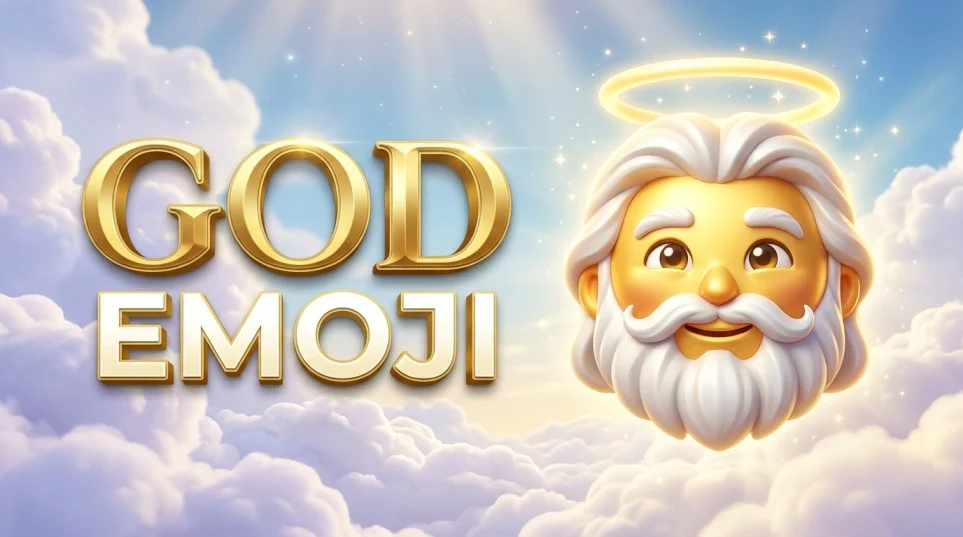
The god emoji is a popular search term for emojis that represent God, faith, prayer, blessings, and spiritual beliefs. There is no single emoji officially named “God,” so people often use symbols such as 🙏, ✝️, ☪️, 🕉️, and 🛐 to express religious feelings or refer to their beliefs. The best choice depends on the religion, message, and personal meaning behind the symbol.
God-related emojis can express gratitude, ask for prayers, celebrate a religious occasion, or show respect for a spiritual tradition. Their meanings can also change with context. A praying hands emoji might mean “please,” “thank you,” or “I’m praying for you,” while a religious symbol may represent a specific faith. Understanding these differences helps you choose an emoji that communicates your intended message clearly and respectfully.
Quick Answer
The god emoji usually refers to emojis people use to represent God, religion, prayer, faith, or spiritual hope.
Common choices include 🙏 for prayer or gratitude, ✝️ for Christianity, ☪️ for Islam, 🕉️ for Hindu traditions, and 🛐 for a place of worship.
What Does the God Emoji Mean?
The phrase “god emoji” does not refer to one specific emoji. Instead, it describes several symbols people use when talking about God, religious beliefs, worship, blessings, or spiritual experiences.
For some people, the praying hands emoji 🙏 is the closest general option because it can represent prayer, hope, gratitude, or asking for help. Others prefer a symbol connected to their particular religion, such as the Latin cross ✝️, the Star and Crescent ☪️, or the Om symbol 🕉️.
The meaning depends on what the sender wants to communicate. Someone may use a religious emoji to show devotion, wish another person well, share a blessing, or mark a religious celebration. Another person may use the same symbol while discussing history, culture, or religious art.
Because people follow different beliefs, it is helpful to consider the context instead of assuming that every god-related emoji has the same meaning.
God Emoji Meaning in Text Messages
In text messages, god-related emojis often help people express feelings that are difficult to communicate with words alone. They may be used to show that someone is praying, expressing thanks, asking for a blessing, or sharing an important religious moment.
Here are a few common examples:
- “Please pray for my family 🙏” means the sender is asking for prayers or support.
- “Thank God everything went well 🙏” expresses relief or gratitude.
- “May God bless you ❤️🙏” shares a kind wish or blessing.
- “Wishing you peace and happiness ✝️” may communicate a Christian sentiment.
- “Celebrating a special religious occasion 🛐” uses a worship-related symbol to refer to faith or religious practice.
Not every use is strictly religious. For example, 🙏 can also communicate a polite request or a heartfelt thank-you. The words around the emoji help clarify the intended meaning.
What Does 🙏 Mean When Someone Sends It?
The 🙏 emoji is one of the most common symbols people associate with prayer and spirituality. Its official name is Folded Hands, and its meaning depends on the conversation.
When someone sends it in a religious context, it may mean:
- They are praying for someone.
- They are asking God for help or guidance.
- They are expressing gratitude to God.
- They are wishing someone blessings or protection.
- They are showing respect for a religious moment.
For example, if a friend tells you they have an important medical appointment and you reply with 🙏, you may be expressing hope and support. If someone shares good news and adds 🙏, they may be thanking God or expressing gratitude.
The emoji does not automatically mean that someone is praying to a particular deity. The sender’s beliefs and the message itself provide the relevant context.
Is the God Emoji Religious?
Yes, many emojis people call “god emojis” are used in religious contexts. However, the phrase covers a range of symbols, and not all of them represent the same religion or belief.
The folded hands emoji 🙏 is widely used for prayer, gratitude, and requests. The cross ✝️ is closely associated with Christianity, while ☪️ is commonly associated with Islam. The Om symbol 🕉️ has important spiritual significance in Hindu traditions and is also used in some other Indian religious contexts.
The symbol 🛐 represents a place of worship and can be used in different religious settings. It does not identify one specific faith by itself.
People may also use religious emojis in educational, historical, cultural, or decorative contexts. Therefore, seeing a religious symbol in a message does not always reveal the sender’s personal beliefs.
Can 🙏 Mean “God Bless You”?
Yes. In the right context, 🙏 can accompany the phrase “God bless you” or communicate a similar wish for kindness, protection, or spiritual support.
For example:
- “God bless you and your family 🙏”
- “Wishing you strength and peace 🙏”
- “May your prayers be answered 🙏”
In these messages, the emoji adds a sense of sincerity or spiritual feeling.
However, 🙏 does not literally spell out “God bless you.” It is a folded-hands symbol whose meaning comes from how people use it. Some people interpret it as prayer, while others use it to express thanks, politeness, or a heartfelt request.
If you want your meaning to be clear, adding a few words is often better than relying on the emoji alone.
Does the God Emoji Mean Prayer or Thank You?
It can mean either, depending on the situation. The 🙏 emoji is commonly used for both prayer and gratitude, which is why people sometimes interpret it differently.
When someone writes, “Please keep me in your prayers 🙏,” the emoji supports the idea of prayer. When someone says, “Thank you for helping me 🙏,” it may express sincere appreciation.
The same symbol can also appear in a message such as “Thank God for this blessing 🙏,” where gratitude and religious belief overlap.
Context is especially important when the message is short. If someone sends only 🙏, they might be saying thanks, asking politely, showing respect, or referring to prayer. It is best not to assume one meaning without considering the conversation.
Does the God Emoji Represent One Religion?
No. There is no single emoji that represents every idea of God across all religions. Different communities use different symbols to express faith, worship, or spiritual identity.
Some emojis are closely associated with particular religious traditions. For example, ✝️ is widely recognized as a Christian symbol, while ☪️ is associated with Islam. The Om symbol 🕉️ is significant in Hinduism and appears in other Indian religious traditions as well.
Other symbols are broader. The folded hands emoji 🙏 can be used to communicate prayer or gratitude without identifying a specific religion. The place of worship emoji 🛐 can refer to worship in a more general way.
Not everyone within a religion uses the same symbols, and religious practices vary between individuals and communities. Choosing a symbol that fits the context helps avoid suggesting a meaning you did not intend.
Related Religious Emojis and Their Meanings
The following emojis are commonly associated with God, prayer, faith, or religious practice. Their specific meanings can vary according to personal beliefs and cultural context.
| Emoji | Official Name | Common Meaning | Tone | Where or When It Is Used |
|---|---|---|---|---|
| 🙏 | Folded Hands | Prayer, gratitude, request | Sincere, respectful | Prayers, thanks, and heartfelt messages |
| ✝️ | Latin Cross | Christianity and Christian faith | Religious, reverent | Christian messages and religious occasions |
| ☪️ | Star and Crescent | Islam and Muslim cultural identity | Religious, symbolic | Islamic references and related celebrations |
| 🕉️ | Om | Sacred sound and spiritual significance | Spiritual, reverent | Hindu traditions and spiritual contexts |
| 🛐 | Place of Worship | Worship and religious devotion | Respectful, solemn | Discussing prayer or places of worship |
| 📿 | Prayer Beads | Prayer, meditation, religious practice | Reflective, spiritual | Religious devotion and meditation |
| 🕊️ | Dove | Peace, hope, and sometimes spiritual themes | Peaceful, gentle | Messages about peace, hope, or comfort |
| 🤲 | Palms Up Together | Prayer, asking, giving, or receiving | Hopeful, sincere | Supplication, support, and heartfelt wishes |
🙏 vs. 🤲: What’s the Difference?
The 🙏 emoji shows folded hands and is commonly used for prayer, gratitude, and polite requests. It can express a heartfelt message without identifying a specific religion.
The 🤲 emoji shows hands held open with palms facing upward. It can represent asking for something, offering support, receiving a gift, or making a prayerful supplication. In some Muslim contexts, this gesture is associated with making dua, or supplication.
Although the two emojis can overlap in religious conversations, their gestures are different. Folded hands often suggest prayer or thanks, while open palms can suggest asking, receiving, or offering.
✝️ vs. ☪️: What’s the Difference?
The ✝️ emoji is the Latin Cross, a symbol strongly associated with Christianity. People may use it when discussing Christian faith, church, religious celebrations, or Christian beliefs.
The ☪️ emoji is the Star and Crescent, a symbol commonly associated with Islam and Muslim cultural identity. It may appear in conversations about Islamic traditions or religious occasions.
These symbols are not interchangeable. Each has its own cultural and religious associations, so it is best to choose the one that fits the subject you are discussing.
Is the God Emoji Used for Blessings?
Yes. People often use 🙏, 🕊️, or 🤲 when sending blessings, good wishes, or messages of hope. The choice depends on the message and the sender’s intention.
For example, someone might write “May God guide you 🙏” to express a religious wish. Another person might use 🕊️ in a message about peace or comfort without intending a specifically religious meaning.
Religious symbols can make a blessing feel personal, but the accompanying words are what explain the message most clearly. A symbol alone may not communicate whether the sender means prayer, gratitude, peace, or general goodwill.
Is the God Emoji Appropriate for Every Conversation?
Not always. Religious emojis can be meaningful and comforting in the right context, but people have different beliefs and levels of comfort with religious language.
In a message to someone who has asked for prayers, 🙏 may feel supportive. In a discussion about a religious holiday, a relevant religious symbol may be appropriate. A professional or unfamiliar conversation, however, it can be useful to consider the audience before using a faith-specific symbol.
This does not mean religious emojis should be avoided. It simply means that the intended meaning and the recipient’s context matter. When in doubt, a respectful message in plain words can communicate your intention clearly.
God Emoji in Social Media Comments
God-related emojis often appear in social media comments when people react to personal news, religious celebrations, inspirational messages, or difficult experiences.
Common examples include:
- 🙏 to show support, prayer, or sincere gratitude.
- ❤️🙏 to express care and offer prayers.
- 🕊️ to communicate peace, hope, or remembrance.
- ✝️ when discussing Christianity or a Christian celebration.
- ☪️ when discussing Islam or a related cultural occasion.
- 🤲 to express a heartfelt request or prayer.
The intended meaning depends on the post. An emoji under a personal announcement may communicate encouragement, while the same emoji under a religious message may express devotion or agreement.
It is also worth remembering that social media symbols can be interpreted differently by different audiences. A short written comment can make your intention clearer and help prevent misunderstandings.
Text Message Examples
1. Asking for prayers
- Person A: “My family is going through a difficult time.”
- Person B: “I’m keeping you in my prayers 🙏”
Meaning: The sender is expressing spiritual support and concern.
2. Expressing gratitude
- Person A: “The results came back better than expected.”
- Person B: “Thank God! 🙏❤️”
Meaning: The sender is showing relief, happiness, and gratitude.
3. Sending a blessing
- Person A: “I’m starting a new job tomorrow.”
- Person B: “May God bless you with success 🙏”
Meaning: The sender is wishing the other person well.
4. Talking about faith
- Person A: “My faith gives me strength during difficult days.”
- Person B: “Wishing you peace and strength 🕊️”
Meaning: The reply offers encouragement and hope.
5. Discussing a religious occasion
- Person A: “We’re celebrating an important day with our family.”
- Person B: “I hope it brings you happiness and peace 🙏”
Meaning: The sender is sharing a respectful and supportive wish without assuming specific details about the occasion.
Common Misunderstandings About the God Emoji
1. Thinking There Is One Official God Emoji
There is no single emoji officially named “God.” People use different symbols depending on their beliefs and the message they want to express.
2. Assuming 🙏 Always Means Prayer
The folded hands emoji can also mean thank you, please, or a heartfelt request. The surrounding words help clarify its meaning.
3. Treating All Religious Symbols as Interchangeable
Religious symbols can have distinct meanings and cultural significance. A cross, a Star and Crescent, and the Om symbol should not be treated as identical representations of faith.
4. Assuming an Emoji Reveals Someone’s Religion
A person may use a religious emoji while discussing culture, history, art, or another person’s beliefs. One emoji alone does not necessarily identify someone’s personal faith.
5. Believing Every Use Is Serious or Religious
Some people use 🙏 casually to say thanks or make a polite request. The symbol can have religious significance without every message using it being a religious statement.
How to Respond to the God Emoji
The best response depends on the message that accompanies the emoji and the relationship you have with the sender.
- If someone asks for prayers: “I’ll keep you in my thoughts and prayers 🙏”
- If someone thanks you: “You’re very welcome ❤️”
- If someone sends a blessing: “Thank you. Wishing you peace and happiness too.”
- If someone shares a religious celebration: “Wishing you and your family a peaceful and joyful celebration.”
- If someone expresses a difficult feeling: “I’m sorry you’re going through this. I’m here for you.”
You do not have to use a religious emoji in return if it does not fit your beliefs. A kind, thoughtful reply can still show respect and support.
Popular God Emoji Combinations
These combinations can help express faith, gratitude, hope, or spiritual support in messages. Their meanings are informal and may vary by person.
| Combination | Common Meaning |
|---|---|
| 🙏❤️ | Prayer, love, or heartfelt support |
| 🤲🙏 | Prayer or a sincere request for help |
| 🕊️🙏 | Peace, prayer, or spiritual hope |
| ✝️🙏 | Christian prayer or devotion |
| 🙏✨ | Hope, blessings, or a spiritual moment |
| ❤️🕊️ | Love, peace, and comfort |
| 📿🙏 | Prayer or religious devotion |
Choose a combination that suits the message rather than adding several symbols without a clear purpose. When a message is sensitive, a few sincere words can be more meaningful than a long row of emojis.
Frequently Asked Questions
1. What is the god emoji?
“God emoji” is a general search term for emojis people use to represent God, prayer, faith, or religious beliefs. Common examples include 🙏, ✝️, ☪️, 🕉️, and 🛐.
2. Which emoji is most commonly used for prayer?
The 🙏 Folded Hands emoji is widely used to express prayer, gratitude, or a heartfelt request. The 🤲 Palms Up Together emoji can also represent supplication or prayer in relevant contexts.
3. Does 🙏 mean God?
Not by itself. The emoji represents folded hands and is often associated with prayer, thanks, or requests. People may use it when talking about God, but it does not specifically name or depict God.
4. What emoji means “God bless you”?
There is no single emoji that literally means “God bless you.” People often write the phrase alongside 🙏 to express a blessing or sincere good wish.
5. Is there an emoji that represents every religion?
No single emoji represents every religion or every understanding of God. Some symbols are linked to specific traditions, while others, such as 🙏, are used more broadly.
6. What is the difference between 🙏 and 🤲?
🙏 shows folded hands and commonly communicates prayer or gratitude. 🤲 shows open palms and may represent asking, receiving, offering, or making a supplication.
7. Can I use the god emoji to say thank you?
Yes. The 🙏 emoji is often used to express sincere thanks. It can make a message feel warm or heartfelt, even when the sender is not specifically referring to prayer.
8. What does 🕊️ mean in a religious message?
The dove emoji often represents peace, hope, or comfort. It can carry spiritual associations in some contexts, but it does not always indicate a specific religious belief.
9. Is it disrespectful to use religious emojis casually?
Not necessarily. People use symbols in different ways, but religious symbols may hold deep meaning for some communities. Consider the context and use them respectfully, especially when discussing beliefs that are not your own.
Conclusion
The god emoji is a broad term for symbols people use to express prayer, faith, gratitude, blessings, and spiritual hope. The 🙏 emoji is a common choice for prayer or thanks, while ✝️, ☪️, and 🕉️ have associations with particular religious traditions. Other symbols, such as 🛐, 🤲, and 🕊️, can communicate worship, supplication, or peace.
No single emoji communicates every meaning of God, and the same symbol can be interpreted differently depending on the conversation. Choose an emoji that fits your intended message, respect its cultural or religious context, and add words when you want your meaning to be clear.
Read More Related Articles:
- Moaning Emoji Meaning | What It Really Says in Texts, Chats …
- Winking Emoji Meaning | Flirty Signals, Hidden Humor & More …
- Dragon Emoji Meaning | Power, Myth, Magic & Hidden …