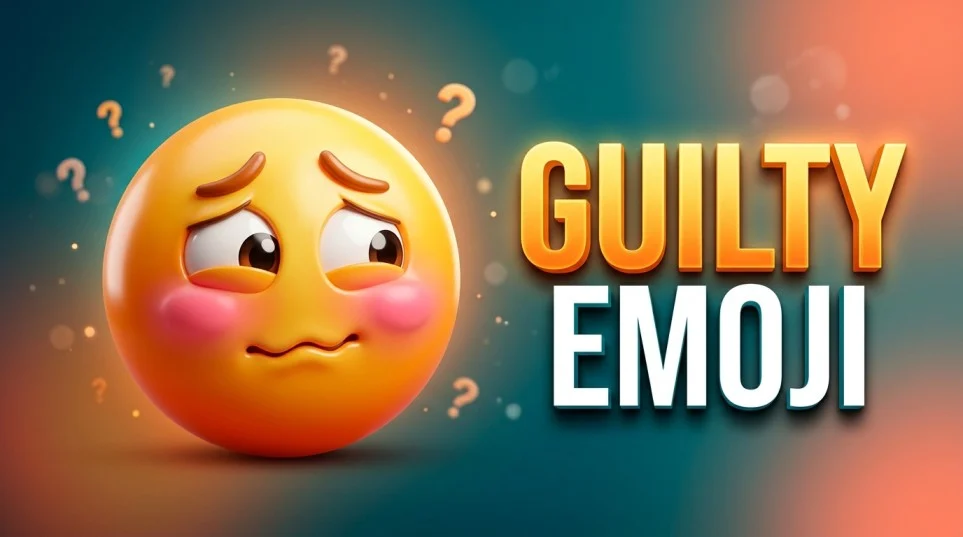
The guilty emoji is a term people use when describing an emoji that expresses guilt, regret, embarrassment, or the feeling of being caught doing something wrong. Although there is no single official emoji named “Guilty Face,” several emojis can communicate this emotion depending on the conversation. A pleading expression may suggest remorse, a nervous smile can hint at awkwardness, and a face looking away may make someone seem shy or uncomfortable.
The meaning depends on the situation and the person sending it. Someone might use a guilty-looking emoji after admitting a small mistake, teasing a friend, or confessing to something harmless. In other conversations, the same expression may suggest genuine regret or an attempt to apologize. Understanding the surrounding words helps you figure out whether the sender feels truly sorry or is simply being playful.
Quick Answer
The guilty emoji usually represents guilt, regret, embarrassment, nervousness, or the feeling of being caught doing something wrong.
Its exact meaning depends on the emoji used, the message, and whether the conversation is serious or playful.
What Does the Guilty Emoji Mean?
The guilty emoji represents the uncomfortable feeling someone may have after making a mistake, breaking a promise, hiding something, or doing something they think another person will disapprove of.
People often use emojis to express feelings that are difficult to explain in words. A guilty-looking face can make a confession seem softer, show embarrassment, or signal that someone knows they have done something questionable.
For example, imagine a friend asks whether you ate the last slice of pizza. You could reply with a nervous-looking face to suggest that you are responsible but do not want to admit it directly. The expression adds humor to the confession.
The guilty emoji can communicate several related emotions:
- Guilt: Feeling responsible for doing something wrong.
- Regret: Wishing you had made a different choice.
- Embarrassment: Feeling uncomfortable about something you did.
- Nervousness: Worrying that someone will discover the truth.
- Playful mischief: Admitting to a harmless act with a cheeky attitude.
- Remorse: Feeling genuinely sorry for hurting someone or making a mistake.
Not every guilty-looking emoji communicates all these emotions. The intended meaning depends on the expression and the surrounding conversation.
Guilty Emoji Meaning in Text Messages
In text messages, a guilty-looking emoji can add emotional context to a short reply. It may help someone admit a mistake, soften an awkward confession, or show that they know they have crossed a line.
For example, someone might send a pleading face after forgetting to reply to a friend’s message. The emoji can make the apology feel more personal and less formal.
Here are some common ways a guilty emoji may be used:
- Admitting a mistake: “I forgot to call you.”
- Confessing playfully: “Okay, I ate your fries.”
- Showing embarrassment: “I accidentally liked your old picture.”
- Expressing regret: “I shouldn’t have said that.”
- Reacting to being caught: “How did you find out?”
- Softening an apology: “I’m sorry I forgot.”
A guilty-looking emoji can make a message sound sincere, awkward, cute, or humorous. However, an emoji alone cannot prove that someone genuinely feels guilty. Their words and behavior provide better clues.
What Does a Guilty Emoji Mean From Someone?
When someone sends you a guilty-looking emoji, its meaning depends on what happened before the message.
If they made a mistake, the emoji may show that they feel bad about it. If you are joking with each other, it may simply be a playful admission.
If someone sends it after an apology, they may be trying to express regret or show that they understand why you are upset.
If someone sends it after being questioned, it may suggest embarrassment or the feeling of being caught. They could be joking, though, so avoid assuming they are hiding something.
If someone sends it during teasing, it may mean they know they have done something cheeky and expect you to laugh.
If someone sends it after a serious disagreement, it could communicate discomfort or remorse. In that situation, the actual apology and any effort to correct the mistake matter more than the emoji.
A single emoji is not enough to determine someone’s intentions. Consider the conversation as a whole before deciding what the sender means.
Is the Guilty Emoji Positive?
The guilty emoji is neither entirely positive nor entirely negative. Its tone depends on the emotion behind it.
In a playful conversation, it can make a small confession funny and friendly. For example, someone might use a guilty-looking face after admitting they watched an episode of a show without their partner.
In a serious conversation, the same type of expression may suggest regret, shame, or discomfort. Someone who hurt a friend’s feelings might use it to show that they recognize their mistake.
The emoji can therefore carry different emotional tones:
- Playful: Admitting to a harmless mistake.
- Cute: Showing embarrassment in a lighthearted way.
- Apologetic: Communicating regret after a mistake.
- Awkward: Reacting to an uncomfortable situation.
- Serious: Expressing remorse when someone has been hurt.
The surrounding words usually make the intended tone clearer.
Can the Guilty Emoji Be Sarcastic?
Yes. A guilty-looking emoji can be sarcastic when someone uses it to pretend to feel bad about something they do not actually regret.
For example, a friend might say, “Sorry I finished the chocolate. Not sorry.” A nervous or pleading expression could make the response sound deliberately cheeky.
Sarcastic uses often include:
- Pretending to apologize for a harmless action.
- Acting embarrassed about something the sender finds funny.
- Admitting a small offense without taking it seriously.
- Teasing someone who already knows what happened.
- Making a confession sound more dramatic than necessary.
The emoji does not automatically indicate sarcasm. A genuine apology can use a similar expression. Look at the words, the relationship between the people, and the situation to understand the tone.
The Difference Between Guilt, Embarrassment, and Regret
Guilt, embarrassment, and regret are related emotions, but they do not mean exactly the same thing.
Guilt usually involves feeling responsible for something wrong. A person may feel guilty for breaking a promise or hurting someone’s feelings.
Embarrassment involves feeling awkward or self-conscious. Someone might feel embarrassed after sending a message to the wrong person, even if nobody was harmed.
Regret means wishing something had happened differently. A person may regret making a decision, whether or not it was morally wrong.
A guilty-looking emoji can communicate any of these feelings, which is why context matters.
For example, someone who accidentally spills a drink might use an embarrassed expression. Someone who lies to a friend might use a guilty-looking face. Someone who turns down an opportunity and later wishes they had accepted it might express regret.
These feelings can overlap, but they are not interchangeable. Choosing the right emoji can help communicate the intended emotion more clearly.
Does the Guilty Emoji Mean “I’m Sorry”?
Sometimes, but not always.
A guilty-looking emoji can support an apology by showing that someone feels embarrassed or remorseful. However, it does not automatically mean “I’m sorry.”
For example, someone might send a pleading face after saying, “I forgot your birthday.” The emoji may reinforce their apology and show that they feel bad.
On the other hand, someone might use a similar face after admitting that they ate the last cookie. In that case, the expression may be playful rather than a serious apology.
If you want to apologize clearly, use words that explain what happened and acknowledge the other person’s feelings. An emoji can add warmth, but it should not replace a meaningful apology when the situation is serious.
Related Emojis and Their Meanings
Several emojis can express feelings associated with guilt, regret, or embarrassment. Each has its own common interpretation, so the best choice depends on what you want to communicate.
| Emoji | Official Name | Common Meaning | Tone | Where or When It Is Used |
|---|---|---|---|---|
| 🥺 | Pleading Face | Asking for forgiveness, tenderness, or vulnerability | Soft, emotional | Apologies, requests, or showing regret |
| 😳 | Flushed Face | Shock, embarrassment, or feeling exposed | Awkward, surprised | Unexpected situations or embarrassing moments |
| 😔 | Pensive Face | Sadness, disappointment, or regret | Serious, subdued | Reflecting on mistakes or expressing disappointment |
| 😬 | Grimacing Face | Nervousness, discomfort, or awkwardness | Tense, uneasy | Reacting to mistakes or uncomfortable situations |
| 🫣 | Face with Peeking Eye | Shyness, nervous curiosity, or reluctance to look | Shy, playful | Awkward confessions or watching something embarrassing |
| 😓 | Downcast Face with Sweat | Stress, worry, or relief after difficulty | Anxious, tired | Explaining a difficult situation or mistake |
| 😅 | Grinning Face with Sweat | Nervous laughter, relief, or mild embarrassment | Lighthearted, awkward | Admitting a small mistake or an uncomfortable moment |
| 🙈 | See-No-Evil Monkey | Shyness, embarrassment, or avoiding something awkward | Playful, bashful | Reacting to embarrassing messages or situations |
🥺 vs. 😳: What’s the Difference?
The pleading face 🥺 often communicates vulnerability, a request for forgiveness, or an attempt to soften a message. Someone might use it when asking for another chance or admitting a small mistake.
The flushed face 😳 is more closely associated with surprise, embarrassment, or feeling exposed. It can suggest that someone has been caught off guard or does not know how to react.
For example, “I’m sorry I forgot 🥺” may sound apologetic, while “You saw that message? 😳” suggests embarrassment or surprise.
Both emojis can appear in guilty situations, but they emphasize different feelings.
😔 vs. 😬: What’s the Difference?
The pensive face 😔 often expresses sadness, disappointment, or reflection. It can suit a serious apology or a message about regretting a decision.
The grimacing face 😬 usually communicates tension, nervousness, or discomfort. It may fit a situation in which someone realizes they have made an awkward mistake.
For example, “I shouldn’t have said that 😔” can sound reflective and regretful. “I sent the message to the wrong group 😬” sounds more nervous and awkward.
The first emphasizes emotional regret, while the second highlights discomfort.
Is the Guilty Emoji Flirty?
A guilty-looking emoji can sometimes appear in flirty conversations, but it is not automatically romantic.
Someone might use a pleading face or a shy expression after sending a teasing message. The emoji can make the interaction feel playful, bashful, or affectionate.
For example, a person might say, “Okay, I was hoping you’d text me first 🥺.” In that context, the expression may make the message seem sweet or flirtatious.
However, the same emoji can be used between friends, family members, or people joking about an ordinary mistake.
To understand whether the message is flirty, look at the words, the previous conversation, and the way the person normally communicates. Do not assume romantic interest from a single emoji.
Is the Guilty Emoji Rude?
Usually, a guilty-looking emoji is not rude by itself. It can communicate embarrassment, regret, or a playful admission.
However, it may seem dismissive if someone uses it instead of taking responsibility for a serious mistake. For example, responding to a hurt person’s concerns with a joking emoji may make the apology appear insincere.
Its tone can also be misunderstood when the recipient expects a serious response.
To avoid confusion, consider the situation before using it. A playful expression may work well after a harmless mistake, while a direct apology is more appropriate when someone’s feelings have been hurt.
Guilty Emoji on Social Media
On social media, guilty-looking emojis often appear in comments, captions, and replies where people admit to something, react to an awkward moment, or joke about their own behavior.
Common examples include:
- Confession posts: Admitting to a funny or harmless habit.
- Embarrassing moments: Reacting to an awkward photo or situation.
- Relatable jokes: Acknowledging a habit that others recognize.
- Apology comments: Showing regret after making a mistake.
- Playful teasing: Acting guilty when friends reveal a secret or call someone out.
The tone varies from one platform and community to another. In a funny post, the emoji may be lighthearted. Under a serious discussion, it could appear insensitive if it makes the situation seem like a joke.
Always consider the original post and the conversation before interpreting the emoji.
Text Message Examples
These examples show how a guilty-looking emoji can change the tone of a message.
1. Admitting a small mistake
- Person A: “Did you eat the last cookie?”
- Person B: “Maybe 🥺”
Meaning: The sender is playfully admitting responsibility or hoping the other person will not be upset.
2. Apologizing for a late reply
- Person A: “You disappeared yesterday!”
- Person B: “I’m sorry, I forgot to reply 😔”
Meaning: The emoji adds a regretful tone to the apology.
3. Feeling embarrassed
- Person A: “You sent that message to the whole group.”
- Person B: “I just realized 😳”
Meaning: The sender feels surprised or embarrassed by the mistake.
4. Being caught teasing someone
- Person A: “I know you changed my phone wallpaper.”
- Person B: “I have no idea what you’re talking about 😅”
Meaning: The sender is joking and may be pretending not to know anything.
5. Expressing genuine remorse
- Person A: “That comment really hurt my feelings.”
- Person B: “I’m sorry. I shouldn’t have said it 😔”
Meaning: The sender is acknowledging the mistake and expressing regret. The words matter more than the emoji alone.
Common Misunderstandings About the Guilty Emoji
1. Assuming It Always Means Someone Is Lying
A guilty-looking expression may suggest that someone feels caught, but it does not prove that they are lying or hiding something. They may simply feel embarrassed or nervous.
2. Confusing Guilt With Embarrassment
Guilt usually involves feeling responsible for something wrong, while embarrassment is often about feeling awkward or self-conscious. The same emoji can represent either emotion.
3. Believing It Always Means “I’m Sorry”
An emoji can support an apology, but it can also be playful or sarcastic. If the situation is serious, clear words are more meaningful than an emoji alone.
4. Assuming It Is Always Cute or Flirty
Some people use guilty-looking expressions to appear shy or affectionate, but others use them to express genuine regret or discomfort. The context determines the tone.
5. Thinking One Emoji Has a Single Fixed Meaning
There is no single emoji that always means guilt. People choose different faces to express regret, awkwardness, nervousness, or embarrassment.
How to Respond to a Guilty Emoji
The best response depends on what the other person is communicating.
- If they are joking: Respond with a playful comment or a laughing emoji.
- If they admit a small mistake: Let them know you understand, especially if the situation is not serious.
- If they seem embarrassed: Reassure them instead of making the moment more uncomfortable.
- If they apologize sincerely: Acknowledge the apology and explain how you feel if necessary.
- If the meaning is unclear: Ask what they mean rather than assuming they have done something wrong.
For example, if someone sends a guilty-looking face after admitting they ate your snack, you might reply, “I knew it!” If they use it after hurting your feelings, a calmer response may be more appropriate.
The goal is to respond to the actual situation rather than judging the person based only on an emoji.
Popular Guilty Emoji Combinations
People sometimes combine emojis to express more specific emotions related to guilt, embarrassment, or regret.
| Combination | Common Meaning |
|---|---|
| 🥺😔 | Feeling sorry or asking for forgiveness |
| 😳😅 | Awkward surprise followed by nervous laughter |
| 😬😔 | Discomfort and regret |
| 🙈🥺 | Shyness, embarrassment, or a pleading reaction |
| 😅🙈 | Laughing off an awkward or embarrassing moment |
| 🥺🙏 | Asking for forgiveness or making a heartfelt request |
These combinations are informal. Their meanings may change depending on the message and the relationship between the people communicating.
Frequently Asked Questions
1. What is the guilty emoji?
The guilty emoji is a general term for an emoji used to express guilt, regret, embarrassment, or nervousness. There is no single official emoji named “Guilty Face.”
2. Which emoji is best for expressing guilt?
The best choice depends on the situation. 🥺 can suggest pleading or vulnerability, 😔 can express regret, and 😬 can communicate discomfort after a mistake.
3. Does 🥺 mean guilt?
Not always. The pleading face can express vulnerability, affection, sadness, or a request. In the right context, it may also suggest remorse or a desire for forgiveness.
4. Does a guilty-looking emoji mean someone is hiding something?
Not necessarily. It may communicate nervousness, embarrassment, or playful mischief. An emoji alone cannot establish whether someone is hiding information.
5. Can I use a guilty emoji in an apology?
Yes. A guilty-looking emoji can add warmth or emotion to an apology, especially after a small mistake. For serious situations, explain what happened and apologize clearly.
6. Is the guilty emoji sarcastic?
It can be. Someone may use a guilty-looking face to pretend to feel sorry about a harmless or funny action. However, it can also express genuine regret.
7. Is the guilty emoji flirty?
Sometimes. In a playful conversation, a pleading or shy expression may seem flirtatious. Its meaning depends on the words, the relationship, and the overall tone.
8. What’s the difference between a guilty emoji and an embarrassed emoji?
A guilty emoji suggests responsibility or regret, while an embarrassed emoji suggests feeling awkward or self-conscious. Some expressions can communicate both feelings.
9. How should I respond when someone sends a guilty emoji?
Consider the context. You can joke along if the situation is lighthearted, offer reassurance if they feel embarrassed, or discuss the issue directly if they seem genuinely sorry.
Conclusion
The guilty emoji is a useful way to express guilt, regret, embarrassment, or nervousness in digital conversations. Depending on the situation, it can make a confession seem playful, soften an apology, or communicate discomfort after a mistake.
There is no single emoji that always represents guilt. Pleading, pensive, flushed, and grimacing faces can all convey related feelings in different contexts. To understand what someone means, pay attention to their words and the situation rather than relying on the emoji alone.
Read More Related Articles:
- Troll Emoji Meaning | Decode the Mischief, Sarcasm, and …
- Rocket Emoji Meaning and Symbolism for Messages, Goals …
- Dragon Emoji Meaning | Power, Myth, Magic & Hidden …