Quick Answer:
😬 usually means nervousness, awkwardness, embarrassment, or tension. It can also soften an uncomfortable statement or show a “yikes” reaction.
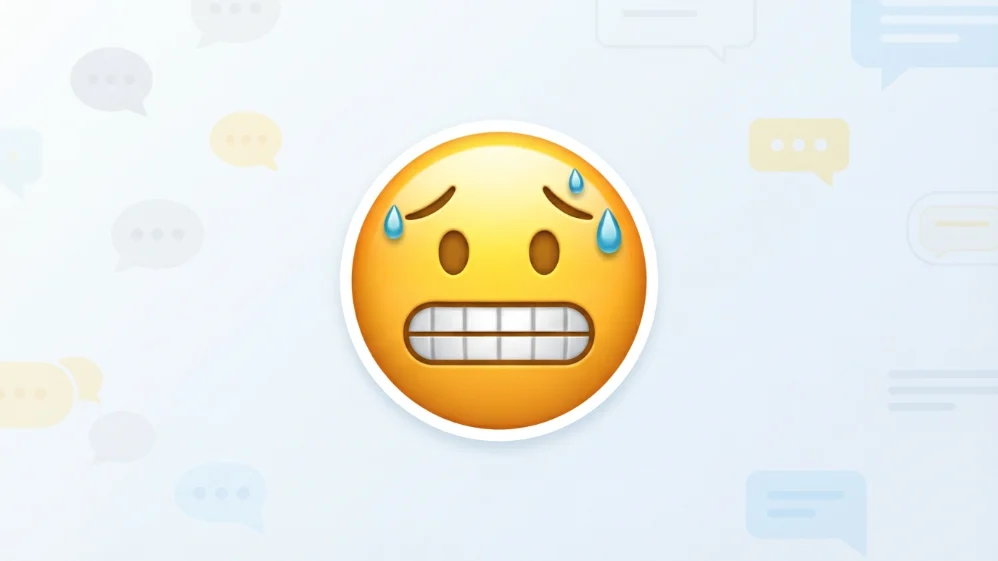
The nervous emoji 😬 is officially called Grimacing Face. It shows a face with a tense expression and exposed teeth, which is why people often use it when something feels awkward, uncomfortable, embarrassing, or nerve-racking. Unicode lists 😬 as Grimacing Face, while common emoji references also associate it with tense feelings such as nervousness and awkwardness.
In texts, however, 😬 does not have just one meaning. Someone might use it before an uncomfortable conversation, after making a mistake, when admitting something embarrassing, or as a playful way to say “Well, this is awkward.” The surrounding words and situation usually tell you which meaning is intended.
😬 Nervous Emoji:
The 😬 emoji commonly expresses nervousness, awkwardness, embarrassment, discomfort, or tension.
It can also be playful, especially when someone wants to acknowledge an uncomfortable situation without making the message sound too serious.
What Does the Nervous Emoji 😬 Mean?
Although many people call 😬 the nervous emoji, its official Unicode name is Grimacing Face. The emoji depicts a face with a stretched, tense mouth and visible teeth.
That expression can communicate several closely related feelings:
- Nervousness
- Awkwardness
- Embarrassment
- Discomfort
- Tension
- Uneasiness
- An uncomfortable reaction
- A forced or uneasy smile
- “Yikes”
- “Oops”
For example:
“I have to give a presentation in five minutes 😬”
Here, 😬 clearly communicates nervousness.
But consider:
“I accidentally replied to the wrong group chat 😬”
Now the emoji expresses embarrassment and discomfort.
And:
“You were right about me 😬”
This could communicate an awkward admission rather than fear.
The face stays the same, but the surrounding words change the emotional meaning.
What Does 😬 Mean in Texting?
In texting, 😬 is often used when someone wants to show that a situation is not completely comfortable.
It can act almost like a visual version of:
- “Uh-oh.”
- “This is awkward.”
- “Yikes.”
- “I’m nervous.”
- “That was uncomfortable.”
- “Oops.”
- “I don’t know about this.”
- “Well… this isn’t ideal.”
For example:
“I forgot her name while talking to her 😬”
The emoji makes the embarrassment obvious.
Another example:
“My boss just asked to speak with me 😬”
Here, the sender may be nervous or worried about what is coming next.
The emoji can also make a difficult statement feel less harsh:
“I don’t think that was your best idea 😬”
Instead of sounding completely blunt, the emoji signals discomfort and softens the criticism.
Why Do People Use 😬?
The expression on 😬 looks physically tense. The visible teeth and stretched mouth can resemble the facial reaction people make when they feel uncomfortable or unsure.
That makes it useful for situations where the sender wants to show an emotional reaction without explaining it in several words.
For example:
“I have to call the dentist tomorrow 😬”
The emoji adds a nervous reaction.
Or:
“I just realized I sent that text to my teacher instead of my friend 😬”
The emoji communicates the immediate “Oh no” feeling.
It can also be used for situations that are awkward but not genuinely serious.
“We both reached for the last slice at the same time 😬”
Here, the emoji may make the situation sound funny and awkward rather than stressful.
Is 😬 a Nervous Emoji or an Awkward Emoji?
It can be either.
The term “nervous emoji” is an informal description of how people commonly use 😬. Its official name is Grimacing Face, not Nervous Face. Unicode’s current emoji list identifies it as U+1F62C, Grimacing Face.
The difference usually comes from context.
Nervous
“My interview starts in ten minutes 😬”
The sender is probably anxious or tense.
Awkward
“I just waved back at someone who wasn’t waving at me 😬”
The main feeling is embarrassment or awkwardness.
Uncomfortable
“He kept asking personal questions 😬”
The emoji can communicate discomfort with the situation.
Playful
“Okay, maybe I ate the last cookie 😬”
Here, the emoji can make a confession sound humorous.
So, nervousness is one common interpretation, but it is not the only one.
What Does 😬 Mean From Someone?
When someone sends 😬 to you, look at the words immediately before or after it.
For example:
“I might have told your secret 😬”
This likely signals embarrassment or concern.
“Are you sure you want to do that? 😬”
This may communicate doubt or discomfort.
“I have to meet your parents tomorrow 😬”
This likely means nervousness.
“That movie was… interesting 😬”
Here, the emoji may suggest an awkward or negative reaction without directly saying the movie was bad.
The sender’s usual communication style also matters. Some people use 😬 frequently as a lighthearted reaction, while others use it only when they genuinely feel uncomfortable.
One emoji should not be treated as proof of a particular emotion.
Does 😬 Mean Anxiety?
It can suggest anxiety or nervousness, especially when the message describes an uncertain or stressful event.
For example:
“Waiting for my test results 😬”
The emoji can communicate worry.
However, 😬 does not automatically mean that someone has an anxiety disorder or is experiencing serious anxiety. In ordinary texting, it is often simply a visual way to show that something feels tense, awkward, or uncomfortable.
That distinction matters because emoji use is informal and highly dependent on context.
Does 😬 Mean Embarrassment?
Yes. Embarrassment is one of the common uses of 😬.
For example:
“I called my teacher ‘Mom’ today 😬”
The emoji fits because the sender is acknowledging an embarrassing moment.
Another example:
“I tripped walking into the room in front of everyone 😬”
Here, 😬 communicates the uncomfortable feeling that follows an awkward mistake.
It can also be used when someone realizes they have said too much:
“I probably shouldn’t have said that 😬”
The emoji adds a clear sense of regret or awkwardness.
Can 😬 Mean “Yikes”?
Yes. In casual conversation, 😬 can work as a visual version of “yikes.”
For example:
“He paid $300 for that? 😬”
The emoji can signal discomfort, surprise, or disapproval.
Similarly:
“I just saw the final exam schedule 😬”
The meaning may be closer to “Oh no” than literal nervousness.
This use is especially common when the sender wants to react to an uncomfortable situation without writing a long response.
Is 😬 a Negative Emoji?
Not necessarily.
The emoji usually carries some form of tension or discomfort, but the overall message can still be playful or harmless.
For example:
“I may have eaten all the pizza 😬”
The situation is not necessarily serious. The emoji simply creates a joking, slightly guilty tone.
Compare that with:
“They just canceled my surgery appointment 😬”
The same emoji appears in a much more serious context.
This is why it is better to describe 😬 as a tense or uncomfortable emoji rather than simply a negative emoji.
Can 😬 Be Sarcastic?
Yes. The emoji can be used sarcastically when the words and situation create an ironic contrast.
For example:
“Another three-hour meeting. Can’t wait 😬”
The phrase “can’t wait” sounds positive, but 😬 suggests the opposite.
Another example:
“Love getting surprise homework on Friday night 😬”
The emoji signals that the statement is not meant completely literally.
Still, sarcasm comes from the entire message, not from 😬 alone.
Can 😬 Be Flirty?
Sometimes, but 😬 is not primarily a flirting emoji.
A person might use it in a playful romantic conversation:
“So… when are you taking me out? 😬”
Here, the emoji may make the question feel shy or playful.
But in most contexts, 😬 is more strongly associated with nervousness, awkwardness, tension, or embarrassment than romance.
If someone sends 😬 during a romantic conversation, consider the words and the existing relationship before deciding whether it is flirting.
Nervous vs. Awkward: How Context Changes 😬
One of the most useful ways to understand 😬 is to ask what caused the tension.
| Situation | Likely Meaning of 😬 |
|---|---|
| “My job interview starts in five minutes 😬” | Nervousness |
| “I forgot his name again 😬” | Embarrassment |
| “We have to talk about what happened 😬” | Tension |
| “I sent that message to the wrong person 😬” | Awkwardness |
| “I may have eaten your leftovers 😬” | Playful guilt |
| “The bill was way higher than I expected 😬” | Discomfort or concern |
| “I have to meet her parents tomorrow 😬” | Nervous anticipation |
| “That joke did not go over well 😬” | Awkwardness |
The important point is that the emoji often communicates the emotional reaction to a situation, rather than naming one exact emotion.
Related Emojis and How They Differ From 😬
Several emojis can communicate nervousness, worry, awkwardness, embarrassment, or discomfort. However, each one has a slightly different emotional focus.
| Emoji | Official Name | Common Meaning | Tone | Where or When It Is Used |
|---|---|---|---|---|
| 😬 | Grimacing Face | Nervousness, awkwardness, tension, embarrassment | Tense, awkward, uneasy | Uncomfortable moments, mistakes, nervous situations |
| 😅 | Grinning Face with Sweat | Relief, nervous laughter, awkward humor | Light, embarrassed, relieved | Close calls, mistakes, “that was almost bad” moments |
| 😰 | Anxious Face with Sweat | Worry, anxiety, nervousness | Worried, stressed | Difficult situations, fear, concern |
| 😥 | Sad but Relieved Face | Disappointment mixed with relief | Sad, relieved, emotional | Difficult outcomes that could have been worse |
| 😓 | Downcast Face with Sweat | Stress, disappointment, pressure | Tired, uncomfortable | Difficult tasks, stressful situations |
| 😟 | Worried Face | Concern, worry, uneasiness | Serious, concerned | Personal worries or uncertain situations |
| 😳 | Flushed Face | Shock, embarrassment, surprise | Embarrassed, startled | Awkward compliments, surprises, embarrassing moments |
| 🫠 | Melting Face | Overwhelm, embarrassment, exhaustion, awkwardness | Playful, overwhelmed | Situations that feel painfully awkward or too much |
| 😮💨 | Face Exhaling | Relief, exhaustion, frustration, or a sigh | Relieved, tired, resigned | After stress, disappointment, or finally finishing something |
The most commonly confused pair is probably 😬 and 😅.
Both can appear after an awkward mistake, but 😬 tends to emphasize tension or discomfort, while 😅 often adds relief or nervous laughter.
😰 is another important comparison. It generally looks more worried and distressed, while 😬 can remain relatively playful or socially awkward.
😳 focuses more strongly on embarrassment or surprise, especially when someone feels suddenly exposed or caught off guard.
😬 vs. 😅: What’s the Difference?
These two emojis are often used in similar situations.
😬 Grimacing Face:
“I think I made things awkward 😬”
The focus is discomfort or tension.
😅 Grinning Face with Sweat:
“I almost sent that message to my boss 😅”
The focus may be relief that the mistake was avoided.
A simple way to remember the difference is:
😬 = “This is awkward.”
😅 = “That was close!”
Of course, real-world usage can overlap.
😬 vs. 😰: What’s the Difference?
Both can communicate nervousness.
😬 is often lighter and can suggest social awkwardness, embarrassment, or an uneasy reaction.
😰 generally communicates stronger worry or distress.
For example:
“I have to give a speech tomorrow 😬”
This can sound like ordinary nervousness.
“I don’t know what I’m going to do if the results are bad 😰”
This sounds more serious and worried.
The surrounding message is still the deciding factor.
😬 vs. 😳: What’s the Difference?
😳 Flushed Face is commonly associated with embarrassment, surprise, or feeling suddenly self-conscious.
😬 Grimacing Face is more about tension, awkwardness, or an uncomfortable reaction.
Compare:
“He complimented me in front of everyone 😳”
This suggests embarrassment or surprise.
“I forgot his name while introducing him 😬”
This suggests an awkward mistake.
Both can appear in embarrassing situations, but they emphasize different reactions.
😬 vs. 🫠: What’s the Difference?
These emojis can overlap when a situation is extremely awkward.
😬 says:
“This is uncomfortable.”
🫠 can say:
“This is so embarrassing or overwhelming that I can’t deal with it.”
For example:
“I called my new boss by my old boss’s name 😬”
is a straightforward awkward reaction.
“I called my new boss by my old boss’s name in front of everyone 🫠”
can make the embarrassment sound more dramatic and humorous.
Text Message Examples With 😬
“I have to tell my parents what happened 😬”
Likely meaning: Nervousness or dread.
The upcoming conversation makes the sender uncomfortable.
“I just realized I sent that to the wrong person 😬”
Likely meaning: Embarrassment.
The sender has made an awkward mistake.
“You weren’t supposed to see that 😬”
Likely meaning: Awkwardness or embarrassment.
The emoji softens the uncomfortable admission.
“The interview was harder than I expected 😬”
Likely meaning: Nervousness or concern.
The sender is describing a stressful experience.
“I may have taken the last cookie 😬”
Likely meaning: Playful guilt.
The emoji makes the confession sound lighthearted.
“We need to talk about yesterday 😬”
Likely meaning: Tension.
The emoji suggests that the upcoming conversation may be uncomfortable.
How Should You Respond to 😬?
The best response depends on why the sender used the emoji.
- If they are nervous
“You’ve got this. Don’t worry!”
- If they made an embarrassing mistake
“Haha, it happens 😅”
- If they are worried
“What happened?”
- If they are joking
“Okay, now I’m curious 😬”
- If the situation sounds serious
“Are you okay?”
- If you are unsure what the emoji means, respond to the actual words rather than trying to decode the emoji by itself.
Can You Copy and Paste the Nervous Emoji?
Yes. The emoji commonly called the nervous emoji is:
😬
You can copy it directly from here and use it in a text, message, comment, caption, or post.
Its official Unicode name is Grimacing Face, so searching for “Grimacing Face” can also help identify the exact character.
Official Name and Unicode Details
The official Unicode name for 😬 is Grimacing Face.
Its Unicode code point is U+1F62C. Unicode currently lists it under the Smileys & Emotion category.
The emoji was introduced with Unicode 6.1, which dates to 2012. Emojipedia notes that the character is designed around a grimacing expression with gritted or exposed teeth and has been associated with tense feelings such as awkwardness, embarrassment, and nervousness.
Different platforms may draw the face slightly differently. The shape, eyes, teeth, and proportions can vary, but the basic expression remains recognizable as a tense grimace.
Common Misunderstandings About 😬
Does 😬 always mean nervous?
No. It can also mean awkward, embarrassed, uncomfortable, tense, or playfully guilty.
Is 😬 the official nervous emoji?
No. Grimacing Face is the official Unicode name. “Nervous emoji” is an informal description based on common usage.
Does 😬 mean fear?
Not necessarily. It can show nervousness or discomfort, but stronger fear may be better communicated by other emojis depending on the situation.
Does 😬 mean embarrassment?
It can. The emoji is often useful when someone has made a mistake or ended up in an awkward situation.
Is 😬 a bad emoji?
Not inherently. It usually communicates tension or discomfort, but it can be humorous and lighthearted.
Does 😬 mean someone is angry?
Usually not. Its tense teeth-baring expression can sometimes look intense, but its common interpretations are more closely related to awkwardness, nervousness, embarrassment, and discomfort. Emojipedia also notes that the expression can sometimes be misunderstood because its gritted teeth may look like a smile from a distance.
Is 😬 the same as 😅?
No. They can overlap, especially after awkward situations. 😬 generally emphasizes tension or discomfort, while 😅 often adds nervous laughter or relief.
Conclusion
The nervous emoji 😬, officially called Grimacing Face, is a flexible way to show nervousness, awkwardness, embarrassment, tension, or discomfort. It can also add a playful “oops” or “yikes” feeling to an otherwise ordinary message.
If someone sends 😬, do not assume that they are seriously anxious or upset. Read the words around it and consider what is happening in the conversation. In one message it may mean “I’m nervous,” while in another it may simply mean “That was awkward.”
The best interpretation comes from the context, wording, and relationship, not from the emoji alone.
Read More Related Articles:
- Heart Hands Emoji Meaning | What Does Mean in Texts?
- Red Heart Emoji ❤️ Meaning | What Does ❤️ Mean in Texts?