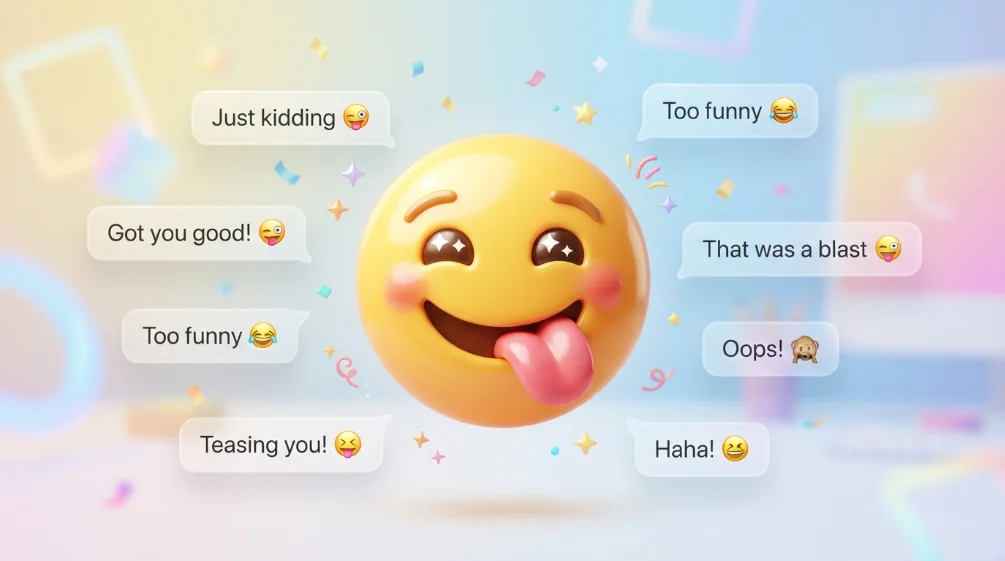
The tongue out emoji 😛, officially called Face with Tongue, usually expresses playfulness, silliness, joking, teasing, or a lighthearted mood. It can feel like saying “just kidding,” “I’m being silly,” or “I’m having fun.” In some conversations, the tongue-out expression can also carry a mildly suggestive meaning, so context matters. Unicode identifies 😛 as U+1F61B and lists terms such as “stuck-out,” “sweet,” “fun,” and “party” among its associated keywords.
When someone sends 😛, the surrounding words usually tell you how to read it. “I ate the last cookie 😛” sounds teasing, while “That was so much fun 😛” feels playful. It can also soften a joke that might otherwise sound too serious or blunt. Because 😛 has several possible tones, it is better to read the whole message instead of assuming that the tongue-out emoji always means the same thing.
Quick Answer:
😛 usually means playful teasing, silliness, joking, or “just kidding.”
It can also express fun, excitement, or a cheeky attitude, while some contexts may give it a suggestive or flirtatious tone.
What Does the Tongue Out Emoji 😛 Mean?
The tongue out emoji 😛 is a yellow face with a big grin and its tongue sticking out. Its official Unicode name is Face with Tongue, and its code point is U+1F61B.
The most common informal meanings include:
- Playfulness
- Silliness
- Teasing
- Joking
- Mischief
- Excitement
- Lighthearted fun
- “Just kidding”
- A cheeky reaction
- Occasionally, flirtation or suggestiveness
Emojipedia describes 😛 as a playful expression that can communicate fun, excitement, silliness, cuteness, happiness, or jesting. It is generally less goofy than 😜 and less animated than 😝.
The emoji does not have one guaranteed meaning. A sentence such as “You didn’t see that 😛” can sound mischievous, while “I was only joking 😛” makes the playful meaning much clearer.
Why Do People Use the Tongue Out Emoji?
People often use 😛 when they want to make a message feel less serious.
A short sentence can sometimes sound blunt in text because the reader cannot hear the sender’s voice. Adding 😛 can signal that the statement is meant playfully.
For example:
“I finished the pizza without you 😛”
The emoji turns a potentially annoying statement into playful teasing.
Another example:
“I was kidding 😛”
Here, the emoji reinforces that the sender is not being serious.
It can also be used simply because the sender wants to express a goofy or cheerful mood without adding a lot of words.
😛 Meaning in Text Messages
The tongue out emoji can take on different meanings depending on what appears around it.
Playful teasing
“Guess who got there first 😛”
The sender is probably teasing you in a lighthearted way.
Just kidding
“I’m keeping your gift for myself 😛”
The emoji can signal that the statement is playful rather than serious.
Being silly
“Look what I made 😛”
Here, 😛 can simply make the message feel goofy and fun.
Mischief
“I may have eaten the last cookie 😛”
The emoji suggests a cheeky confession rather than a serious apology.
Excitement or fun
“That party was so much fun 😛”
In this context, the emoji adds an energetic, playful tone.
Affectionate teasing
“You really thought you could beat me? 😛”
Between people who already joke with each other, it can make competitive teasing sound friendly.
Is 😛 a Flirting Emoji?
Sometimes, but it is not automatically a flirting emoji.
The tongue-out expression can make a message sound cheeky or playful, and that can overlap with flirting. In a romantic or suggestive conversation, 😛 may carry a more flirtatious tone.
For example:
“You know exactly what you’re doing 😛”
Depending on the conversation, this could be playful teasing or flirting.
But consider:
“I beat you at Mario Kart again 😛”
That is much more likely to be simple teasing.
The emoji itself does not prove romantic interest. The relationship, wording, conversation history, and overall tone matter more.
Emojipedia also notes that because the tongue is visibly sticking out, 😛 can be interpreted in suggestive ways in some contexts.
What Does 😛 Mean From Someone?
If someone sends you 😛, they are often trying to make the conversation feel playful or less serious.
Depending on the situation, they may be saying:
- “I’m teasing you.”
- “I’m just joking.”
- “Don’t take me too seriously.”
- “I’m being silly.”
- “I’m being cheeky.”
- “I know I’m being mischievous.”
- “I’m having fun.”
If they send it after a compliment, it may feel playful or flirtatious. If they send it after a joke, it probably just reinforces the humor.
Avoid reading too much into the emoji by itself. A single 😛 cannot reliably tell you whether someone is flirting, joking, or simply being silly.
Is 😛 Rude or Childish?
It can sometimes feel childish, but that is not necessarily negative.
The tongue-out expression has a long association with playful teasing and joking. Unicode’s keywords for 😛 include terms such as “awesome,” “cool,” “nice,” “party,” “sweet,” and “stuck-out,” which fit its generally lighthearted character.
Whether it feels rude depends on what accompanies it.
“You’re wrong 😛”
could sound playful between friends.
But:
“You don’t know what you’re talking about 😛”
could come across as mocking or dismissive.
The words matter more than the emoji alone.
Can 😛 Be Sarcastic?
Yes. 😛 can make sarcasm feel more obvious by adding a playful facial expression.
For example:
“Oh sure, you were totally on time 😛”
The emoji signals that the sender probably does not mean the statement literally.
It can also soften a teasing comment:
“You’re such a show-off 😛”
Without the emoji, the same sentence could sound more critical. With 😛, it is more likely to be understood as friendly teasing, assuming the relationship supports that interpretation.
😛 Meaning in Relationships
In a relationship, 😛 can be used for playful banter, teasing, affection, or flirtation.
For example:
“You miss me already? 😛”
This can sound affectionate and teasing.
Or:
“You know I was right 😛”
This is more likely playful competition.
In a romantic conversation, the emoji may sometimes add a cheeky or suggestive layer. However, there is no universal romantic meaning attached to 😛.
The safest interpretation comes from the complete conversation rather than the emoji alone.
Tongue Out Emoji vs. Flirting
The distinction depends heavily on the message.
More likely playful:
“I stole your fries 😛”
More likely teasing:
“You really thought you could win? 😛”
Potentially flirtatious:
“Maybe I’ll tell you later 😛”
The third example has a more suggestive tone because of the wording, not simply because 😛 appears.
This is why an emoji should not be treated as proof of attraction or romantic interest.
Emojis Similar to the Tongue Out Emoji 😛
| Emoji | Official Name | Common Meaning | Tone | Where or When It Is Used |
|---|---|---|---|---|
| 😛 | Face with Tongue | Playfulness, teasing, silliness, joking | Playful, cheeky | Jokes, teasing, casual texts |
| 😜 | Winking Face with Tongue | Goofy joking, mischief, playful teasing | Cheeky, goofy | Jokes, banter, playful reactions |
| 😝 | Squinting Face with Tongue | Stronger silliness, joking, exaggerated reactions | Goofy, energetic | Funny reactions, teasing, exaggerated jokes |
| 🤪 | Zany Face | Wild, goofy, eccentric humor | Very silly, chaotic | Absurd jokes, playful reactions |
| 😋 | Face Savoring Food | Enjoying food or something delicious | Happy, playful | Food conversations and tasty reactions |
| 👅 | Tongue | Literal tongue, licking, or tongue-related references | Neutral to playful | Body-related references, jokes, licking references |
| 😏 | Smirking Face | Smugness, knowing attitude, or suggestive tone | Confident, sly | Teasing, flirtation, knowing remarks |
| 😉 | Winking Face | Playfulness, joking, or a knowing hint | Light, suggestive, playful | Jokes, teasing, subtle hints |
Unicode officially identifies 😛 as Face with Tongue, 😜 as Winking Face with Tongue, and 😝 as Squinting Face with Tongue. These three are especially easy to confuse because they share the same basic tongue-out expression.
The most important difference is intensity. 😛 is usually the straightforward playful option. 😜 adds a wink, which can make the message feel more mischievous or knowingly cheeky. 😝 adds tightly closed eyes, giving the reaction a stronger, more exaggerated feel. Emojipedia describes 😜 as generally goofier than 😛 and 😝 as more animated than 😛.
😛 vs. 😜: What’s the Difference?
The difference is mainly in the eyes and resulting tone.
😛 Face with Tongue has an open-eyed, big-grin expression. It usually feels simple, playful, silly, or teasing.
😜 Winking Face with Tongue adds a wink. That can make it feel more mischievous, cheeky, or like an obvious joke.
Compare:
“I ate your fries 😛”
This sounds playful.
“I ate your fries 😜”
The wink makes the teasing feel more deliberate or mischievous.
Neither emoji automatically means flirting, although either can appear in flirtatious conversations.
😛 vs. 😝: What’s the Difference?
😝 is Squinting Face with Tongue, with tightly closed eyes and a more exaggerated expression. Unicode lists keywords including “gross,” “horrible,” “taste,” “whatever,” and “yolo” for this emoji.
In simple terms:
- 😛 = playful and straightforward
- 😝 = more exaggerated and goofy
For example:
“That was fun 😛”
feels casually playful.
“That was absolutely ridiculous 😝”
feels more energetic and over-the-top.
😛 vs. 👅: What’s the Difference?
These two are sometimes called tongue emojis, but they serve different purposes.
😛 is a complete facial expression. It communicates an attitude or reaction.
👅 Tongue is a standalone body-part emoji. It can literally represent a tongue or be used in licking-related and other contextual references. Emojipedia describes 👅 as a tongue sticking out and notes that it can be used as a childish sign of defiance or for licking in different contexts.
So if you want to show a playful facial reaction, 😛 is usually clearer. If you are specifically referring to the tongue itself, 👅 makes more sense.
😛 vs. 😋: What’s the Difference?
😋 is Face Savoring Food. It is commonly associated with enjoying something delicious or tasty. Unicode lists keywords including “delicious,” “eat,” “hungry,” “savor,” and “yum.”
Compare:
“That cake was amazing 😋”
The emoji clearly connects to enjoying food.
“That cake was amazing 😛”
This sounds more playful and may not specifically mean the food tasted good.
How to Use 😛 Without Being Misunderstood
If you want 😛 to clearly communicate playful teasing, put it after words that establish the joke.
For example:
“I totally forgot your birthday 😛 Just kidding!”
The added words remove ambiguity.
If you’re using it in a professional or serious conversation, consider leaving it out. The tongue-out expression is strongly casual and playful, so it may not fit a formal message.
In a close friendship, though, it can be a simple way to make teasing sound less harsh.
How to Respond to 😛
Your response depends on what the sender appears to mean.
If they’re teasing you
“Oh, you think you’re funny 😛”
If they’re joking
“Okay, okay, I get it 😂”
If they’re being playful
“You’re ridiculous 😂”
If the message feels flirty
“Hmm, should I be suspicious? 😏”
If you’re unsure
“Wait, are you teasing me? 😛”
A good response should match the existing tone rather than assuming that the sender is flirting.
Tongue Out Emoji Examples in Text
“I got the last slice 😛”
Likely playful teasing.
“Just kidding 😛”
Clearly signals that the previous statement was not serious.
“You really believed me? 😛”
Suggests cheeky teasing or mischief.
“That was such a fun night 😛”
Adds a playful, energetic tone.
“Maybe I’ll tell you later 😛”
Could sound flirtatious or suggestive depending on the conversation.
“Oops, I did it again 😛”
Can communicate playful mischief rather than a serious apology.
These examples are illustrations only. The same emoji can feel different when the relationship, subject, and wording change.
Can 😛 Mean “Just Kidding”?
Yes. This is one of its natural uses.
For example:
“I’m taking your seat 😛”
The emoji can suggest that the statement is playful.
Similarly:
“You’re my least favorite person 😛”
between close friends could be affectionate teasing rather than an actual insult.
When the message could be interpreted literally, 😛 can help signal that the sender is joking.
Can 😛 Mean “I’m Being Silly”?
Absolutely.
A person might use 😛 after saying something intentionally ridiculous:
“I have decided to become a professional pancake critic 😛”
The emoji reinforces the silly tone.
This use is especially straightforward because there is no serious emotional meaning that needs to be decoded.
Is 😛 Appropriate for Work Messages?
Usually, it depends on the workplace and relationship.
With a close coworker in a casual conversation, it may be fine:
“I finished the report before you 😛”
In a formal email, client message, or serious work discussion, it can seem overly casual or childish.
If you are unsure about the tone, a simple smile such as 🙂 may communicate friendliness with less risk of being misunderstood.
Frequently Asked Questions
What is the official name of 😛?
The official Unicode name is Face with Tongue. Its code point is U+1F61B.
What does 😛 mean from a girl or guy?
Its meaning does not depend on the sender’s gender. 😛 can indicate joking, teasing, silliness, excitement, or a cheeky mood regardless of who sends it.
Does 😛 mean flirting?
It can be used while flirting, especially when the surrounding message is playful or suggestive. However, 😛 alone does not prove romantic interest.
Is 😛 a sarcastic emoji?
It can be. The emoji often helps show that a statement is teasing, exaggerated, or not meant completely seriously.
Is 😛 rude?
Not inherently. It is usually playful, but it can feel mocking or disrespectful if the surrounding message is insulting or the situation is serious.
What is the difference between 😛 and 😜?
😛 is Face with Tongue and generally has a straightforward playful or silly expression. 😜 is Winking Face with Tongue, which adds a wink and often makes the reaction more mischievous or goofy.
What is the difference between 😛 and 😝?
😝 is Squinting Face with Tongue and generally looks more exaggerated and energetic than 😛.
What does 👅 mean compared with 😛?
👅 is the standalone Tongue emoji, while 😛 is a facial expression. 👅 can refer literally to the tongue or to licking, whereas 😛 more often communicates a playful attitude.
Can 😛 be suggestive?
Yes. Because the emoji visibly sticks out its tongue, some conversations may give it a suggestive meaning. That interpretation depends strongly on context and should not be assumed from the emoji alone.
Final Takeaway
The tongue out emoji 😛, officially called Face with Tongue, is mainly a playful expression used for teasing, silliness, joking, mischief, and lighthearted reactions. It can also appear in affectionate or flirtatious conversations, and in some contexts its tongue-out expression may feel suggestive.
The easiest way to understand 😛 is to read it together with the message around it. Compared with 😜 and 😝, it usually gives the simplest tongue-out playful reaction. When you want to show a joke, tease a friend, or make a casual message feel less serious, 😛 can add exactly that cheeky touch.
Read More Related Articles:
- Robot Emoji Meaning | What It Really Says in Texts, Chats …
- Handshake Emoji Meaning | What Does Mean in Texts?
- Thank You Emoji Meaning | Best Emojis to Say Thanks