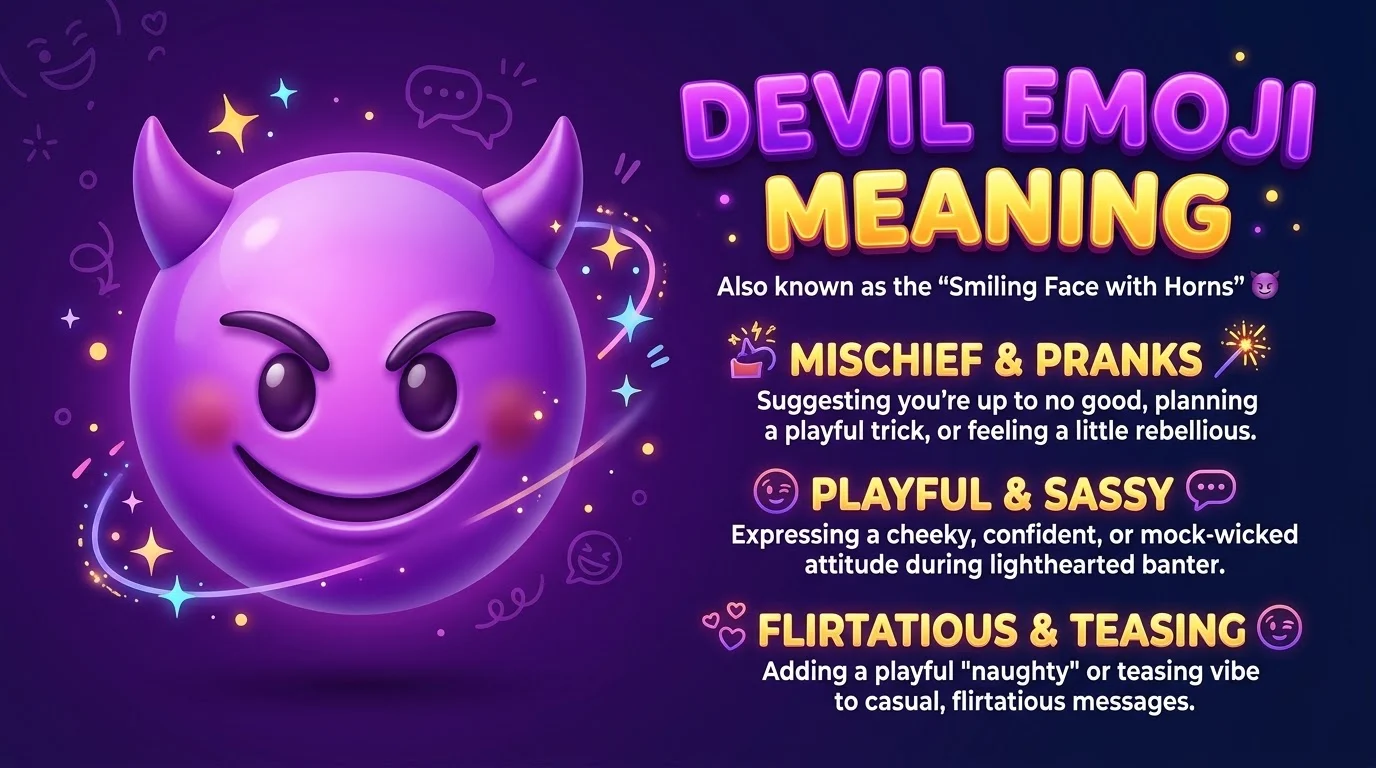
The devil emoji 😈 is a playful symbol of mischief, cheeky behavior, confidence, and naughty intentions. Its purple face, pointed horns, and wide grin give it a slightly wicked appearance, but its message is not usually as serious as it looks. People often use it when they have a secret plan, want to tease someone, or are joking about doing something a little daring. It can turn an ordinary message into something more mysterious, bold, or entertaining.
The meaning can become more personal when the emoji appears in a conversation with a crush, close friend, or partner. In those situations, it may suggest flirting, playful temptation, or a teasing attitude. However, it does not always have a romantic meaning. Sometimes it simply shows that someone is feeling mischievous or enjoying a harmless moment of trouble.
Quick Answer
The devil emoji 😈 usually represents mischief, naughty behavior, teasing, confidence, or playful trouble.
In flirting, it can suggest a cheeky or suggestive mood, but its meaning depends on the conversation.
What Does the Devil Emoji 😈 Mean?
The devil emoji 😈 commonly represents someone feeling mischievous, playful, or a little naughty. Its wide grin makes it look like the sender knows something others do not, has a secret idea, or is about to cause harmless trouble.
People use it when they want to add a cheeky personality to a message. For example, someone might send it after admitting to eating the last piece of cake, planning a surprise, or teasing a friend about a funny mistake.
It can also communicate confidence or excitement. A person who is ready for a challenge might add 😈 to show they feel bold and determined.
Although the emoji has a devil-like appearance, it does not automatically suggest evil intentions. In everyday conversations, its tone is often humorous, playful, and slightly rebellious.
😈 Meaning in Text Messages
In text messages, the devil emoji changes the tone of a sentence by adding mischief, teasing, or a hint of attitude. It can make a statement sound less serious and more entertaining.
Here are some common meanings:
- Mischief: The sender is joking about causing harmless trouble.
- Naughty behavior: Someone is admitting to doing something cheeky.
- Flirting: The emoji adds a bold or suggestive tone to a personal message.
- Confidence: The sender feels daring, competitive, or ready for a challenge.
- Secret plans: Someone is hinting that they have something unexpected in mind.
- Playful excitement: The sender is looking forward to an entertaining experience.
For example, “I have a surprise planned for tonight 😈” sounds more mysterious and teasing than the same sentence without the emoji.
The words still carry the main message, but the devil emoji adds a playful signal that the sender may be up to something.
What Does 😈 Mean From Someone?
When someone sends you 😈, they may be teasing you, sharing a mischievous thought, or trying to make the conversation more exciting. The meaning depends on your relationship and what was being discussed before the emoji appeared.
If a friend sends it after mentioning a prank, they are probably joking about causing trouble. If a crush sends it after a compliment or playful comment, it may have a flirty meaning.
Here is how it can come across in different situations:
- From a friend: They may be joking about a naughty plan or harmless prank.
- From a crush: They could be teasing you or adding a little flirtation.
- From a partner: It may suggest playful romance or a cheeky mood.
- From a competitor: It can show confidence and a desire to win.
- From someone sharing a secret: They may be hinting at a surprise or unexpected idea.
Do not assume that someone is flirting just because they send 😈. Some people use it as a regular reaction when they are excited, joking, or feeling playful.
Is the Devil Emoji Positive?
Yes, the devil emoji is often positive in casual conversations. Its appearance may suggest something wicked, but its everyday tone is usually more playful than threatening.
People use it to communicate excitement, humor, confidence, and a willingness to have fun. It can also show that someone is enjoying a small act of rebellion.
For example:
- “The weekend is finally here 😈”
- “I’m ready to win this game 😈”
- “One more dessert won’t hurt 😈”
In these messages, the emoji adds enthusiasm and a mischievous attitude. It makes the sender sound playful rather than genuinely harmful.
However, the emoji can feel negative when it appears beside an insulting comment, an unfriendly joke, or a statement about revenge. Its tone should always be understood through the surrounding words.
Can 😈 Be Sarcastic?
Yes, the devil emoji can be sarcastic when someone wants to make a cheeky or ironic comment.
Imagine a friend asking who finished the last slice of pizza. You reply, “I have absolutely no idea 😈.” The emoji hints that you probably know exactly what happened.
It can also make exaggerated statements sound humorous. Someone might use it after pretending to be a troublemaker or joking about breaking a small rule.
In some conversations, it communicates a knowing attitude, almost as if the sender is saying, “I know what I’m doing.”
The difference between playful sarcasm and genuine hostility depends on the situation. Among close friends, it can be part of a shared joke. During an argument, it may sound more provocative.
Why Do People Use the Devil Emoji?
People use 😈 because it communicates a recognizable attitude without needing a long explanation. Its grin and horns create an impression of someone who is confident, playful, and perhaps planning something unexpected.
It is especially useful when a message needs a little personality. A simple statement such as “I have an idea” can feel ordinary, while “I have an idea 😈” suggests that the idea might involve a surprise, challenge, or harmless trouble.
The emoji also works well when people want to exaggerate their behavior for humor. Someone who eats dessert before dinner is not necessarily doing anything wrong, but adding 😈 makes the small act seem like a dramatic rebellion.
That contrast is part of its appeal: it turns ordinary moments into playful mischief.
Does 😈 Mean Someone Is Evil?
Not usually. The devil emoji has horns and a mischievous grin, but people often use it in a lighthearted way rather than to describe genuine evil.
It may represent a fictional villain, a spooky character, or a devil-themed costume in some situations. In casual messages, however, it more commonly suggests naughty behavior, teasing, or playful confidence.
For example:
- “I stole an extra cookie 😈” is likely a joke about a harmless action.
- “My villain era starts today 😈” may be an exaggerated way of expressing confidence or independence.
- “I have a plan for the competition 😈” suggests a bold or mischievous attitude.
The emoji can communicate a darker tone in the right context, but the smiling expression often keeps its everyday meaning playful.
Does 😈 Mean “Thank You”?
No, the devil emoji does not normally mean “thank you.” Its common uses are connected to mischief, teasing, confidence, and playful behavior.
Someone might include it in a thank-you message to make the response sound cheeky.
For example:
“Thanks for helping me plan this surprise 😈”
Here, the word “thanks” expresses appreciation, while the emoji suggests that the surprise may involve something unexpected or mischievous.
If you want to express gratitude clearly, use words that communicate appreciation. The devil emoji works better as an extra expression of personality than as a replacement for a thank-you.
Does 😈 Mean Flirting or Being Naughty?
The devil emoji can be flirty, particularly when someone sends it during a playful conversation with a crush or romantic partner.
Its confident grin can suggest teasing, attraction, or a slightly suggestive mood. It may also make a compliment or invitation feel more daring.
For example:
- “You looked really good today 😈”
- “I have a little surprise planned for us 😈”
- “You are making it difficult to behave 😈”
These messages can sound flirtatious because the emoji adds a cheeky feeling to the words.
It can also suggest naughty humor without being romantic. Friends may use it when discussing a prank, a guilty pleasure, or a daring plan.
The important point is that 😈 does not have one fixed romantic meaning. The relationship between the people and the message itself provide the best clues.
Related Face Emojis and Their Meanings
Some emojis share the devil emoji’s playful, teasing, or expressive personality. However, their facial expressions and common uses make them different.
| Emoji | Official Name | Common Meaning | Tone | Where or When It Is Used |
|---|---|---|---|---|
| 😈 | Smiling Face with Horns | Mischief, naughty behavior, teasing | Playful, cheeky | Jokes, flirting, and daring plans |
| 👿 | Angry Face with Horns | Anger, evil, or devilish behavior | Intense, annoyed | Frustration and dramatic reactions |
| 😇 | Smiling Face with Halo | Innocence, kindness, or pretending to be good | Sweet, playful | Joking about good behavior |
| 😏 | Smirking Face | Confidence, knowing humor, or flirtation | Sly, teasing | Cheeky comments and personal conversations |
| 😜 | Winking Face with Tongue | Joking, silliness, or playful teasing | Lighthearted | Friendly banter |
| 😎 | Smiling Face with Sunglasses | Confidence, coolness, or approval | Relaxed, confident | Celebrating an achievement |
| 🤭 | Face with Hand Over Mouth | Surprise, giggling, or keeping a secret | Shy, amused | Funny secrets and unexpected moments |
| 😡 | Enraged Face | Strong anger or frustration | Angry, intense | Arguments and upsetting situations |
😈 vs. 👿: What’s the Difference?
The main difference between 😈 and 👿 is the expression and mood they usually communicate.
The smiling devil 😈 has a wide grin, which gives it a mischievous and playful personality. It is commonly used for cheeky jokes, teasing, naughty plans, and suggestive humor.
The angry devil 👿 has a frowning expression and usually communicates anger, frustration, or a more menacing idea. It feels less playful than its smiling counterpart.
For example:
- “I have a surprise for you 😈” suggests a playful or mysterious plan.
- “I’m so annoyed right now 👿” communicates frustration.
Both have devil-like features, but the smile makes 😈 more suitable for lighthearted situations.
😈 vs. 😇: What’s the Difference?
The devil and angel emojis represent two contrasting personalities.
The devil emoji 😈 is associated with mischief, naughty behavior, and playful trouble. The angel emoji 😇 usually suggests innocence, kindness, or good intentions.
People sometimes use these two emojis together to joke about their different sides.
For example:
“Me when I’m behaving 😇 and me when I get a bad idea 😈”
This combination creates a funny contrast between acting innocent and enjoying a little mischief.
Is 😈 Flirty?
Yes, 😈 can be flirty when the conversation already has a playful or romantic tone. It often makes a message sound more confident, teasing, or suggestive.
Someone might use it when complimenting a crush, joking with a partner, or hinting at a surprise. The emoji can add an extra layer of personality without changing the basic words.
For example:
- “You know how to get my attention 😈”
- “I was hoping you would say that 😈”
- “Tonight might be interesting 😈”
However, the emoji alone is not proof that someone likes you. It may simply be their usual way of joking or expressing excitement. Look at the full conversation before deciding whether the message is romantic.
Is 😈 Rude?
The devil emoji is not automatically rude. Most casual uses are playful, teasing, or humorous.
It can become uncomfortable when someone uses it after an insulting statement, an aggressive joke, or a comment that the other person does not appreciate. In those situations, the grin may make the sender appear dismissive or provocative.
For example, sending 😈 after a friendly joke about winning a game may seem harmless. Sending it after deliberately upsetting someone may make the message feel disrespectful.
If you are unsure how it will be received, consider the person, situation, and tone of the conversation. It is generally better suited to casual interactions than serious discussions.
Devil Emoji in Social Media Comments
The devil emoji works well in social media comments because it can express confidence, mischief, or admiration with a cheeky twist.
People may use it under photos, funny posts, fashion content, or playful challenges. Its meaning changes depending on what they are reacting to.
Some common uses include:
- Under a confident photo: It may suggest a bold look or strong attitude.
- On a funny post: It can show appreciation for a mischievous joke.
- Under a stylish outfit: It may communicate admiration with a teasing tone.
- During a challenge: It can suggest competitive confidence.
- Around Halloween: It may represent a devil costume or spooky theme.
- In a flirty comment: It can add a suggestive or cheeky feeling.
For example, someone might comment 😈 under a friend’s picture to show that the photo has a bold or playful vibe. Another person might use it under a prank post because they enjoy the troublemaking humor.
The post and the relationship between the people help determine the intended meaning.
Text Message Examples
Here are five everyday examples showing how the devil emoji can be used naturally in conversations.
1. Admitting to a harmless mistake
- Person A: “Who finished the chocolate?”
- Person B: “I might know something about that 😈”
Meaning: The sender is playfully admitting that they may be responsible.
2. Teasing a crush
- Person A: “You always make me laugh.”
- Person B: “Maybe I’m secretly trouble 😈”
Meaning: The sender is using the emoji to make the reply cheeky and possibly flirty.
3. Planning a surprise
- Person A: “What are we doing this weekend?”
- Person B: “You’ll find out soon enough 😈”
Meaning: The emoji creates curiosity and suggests that something unexpected is planned.
4. Showing competitive confidence
- Person A: “I think I can beat you this time.”
- Person B: “Keep dreaming 😈”
Meaning: The sender is showing playful confidence and enjoying the challenge.
5. Breaking a small rule
- Person A: “Are you really having dessert before dinner?”
- Person B: “Absolutely. Don’t judge me 😈”
Meaning: The emoji makes the small act of rebellion sound funny and mischievous.
Common Misunderstandings About 😈
1. It Always Means Something Evil
The devil emoji looks like a little demon, but it is often used for ordinary jokes and playful situations. It does not automatically suggest harmful intentions.
2. It Always Has a Sexual Meaning
The emoji can be suggestive in some conversations, but it is also common in friendly teasing, jokes, and discussions about harmless trouble.
3. It Means the Sender Is Angry
The smiling expression usually gives 😈 a playful tone. The angry devil 👿 is more closely associated with frustration and anger.
4. It Always Means Someone Is Flirting
A crush or partner might use it flirtatiously, but friends also use it for everyday humor. The emoji alone cannot confirm romantic interest.
5. It Is Rude to Send to Everyone
It is not inherently rude, but it may feel too cheeky or suggestive in formal or unfamiliar conversations. Consider the relationship before using it.
How to Respond to 😈
The best response depends on why the person sent the devil emoji. You can match their playful mood, tease them back, or ask what they mean.
Here are some natural replies:
- If they are joking: “What are you planning now?”
- If they are flirting: “Should I be curious?”
- If they mention a surprise: “Now you’ve got my attention!”
- If they are being competitive: “Let’s see what you’ve got.”
- If they are teasing you: “You’re definitely trouble!”
- If you are confused: “What’s with that mischievous smile?”
You do not need to send another devil emoji to respond. A simple sentence can communicate your reaction just as clearly.
Popular Devil Emoji Combinations
The devil emoji can create different moods when combined with other expressions. These pairings are often used for jokes, flirting, confidence, or playful secrets.
| Combination | Common Meaning |
|---|---|
| 😈😇 | Showing both a naughty and innocent side |
| 😈😉 | Cheeky teasing or flirtation |
| 😈😂 | A mischievous joke or funny plan |
| 😈❤️ | Playful affection or cheeky romance |
| 😈🔥 | Bold confidence or exciting energy |
| 😈👀 | A secret plan or teasing hint |
| 😈🤭 | A naughty secret or something amusing |
| 😈💋 | A suggestive or romantic message |
These combinations do not have fixed definitions. People often create their own meanings, so the surrounding message is still important.
Frequently Asked Questions
1. What does the devil emoji 😈 mean?
The devil emoji usually means mischief, naughty behavior, teasing, confidence, or playful trouble. It can also suggest flirtation depending on the conversation.
2. What does 😈 mean from a girl?
When a girl sends 😈, she may be joking, teasing, sharing a mischievous idea, or flirting. The meaning depends on her words and the relationship between you.
3. What does 😈 mean from a guy?
A guy may use the devil emoji to show confidence, playful excitement, naughty humor, or flirtation. It can also be a reaction to a funny or daring idea.
4. Is the devil emoji flirty?
It can be flirty when used in a romantic or teasing conversation. It may suggest attraction or a cheeky mood, but it does not always have a romantic meaning.
5. What is the difference between 😈 and 👿?
😈 has a smiling expression and usually represents playful mischief or teasing. 👿 has an angry expression and is more commonly used for frustration, anger, or menacing behavior.
6. Does 😈 mean someone is evil?
Not usually. Most people use it humorously to express naughty behavior, mischief, or a playful attitude rather than to describe someone as genuinely evil.
7. Can I use 😈 with friends?
Yes. Friends often use it when joking about a prank, sharing a secret plan, teasing each other, or talking about harmless trouble.
8. Does 😈 mean naughty?
It can. The devil emoji often suggests naughty or mischievous behavior, especially when someone is joking about doing something cheeky or slightly rebellious.
9. Is 😈 positive or negative?
It is often playful and positive in casual conversations, but it can feel negative when used with an aggressive or unfriendly message. Context determines its tone.
Conclusion
The devil emoji 😈 is a cheeky symbol of mischief, playful trouble, confidence, and sometimes flirting. Its wide grin gives messages a teasing personality, making it useful for jokes, secret plans, bold comments, and lighthearted conversations.
Although it looks devilish, it does not usually suggest genuine evil or bad intentions. Its meaning depends on the words around it and the relationship between the sender and receiver. Whether it appears in a text, a flirty exchange, or a social media comment, 😈 adds a little mischief and attitude to the message.
Discover More Post:
- Windows Emoji Shortcut | Master Faster Typing and Hidden …
- Peach Emoji Meaning | Sweet Signals, Hidden Hints & More …
- Two Hearts Emoji Meaning | What Really Says About Love …