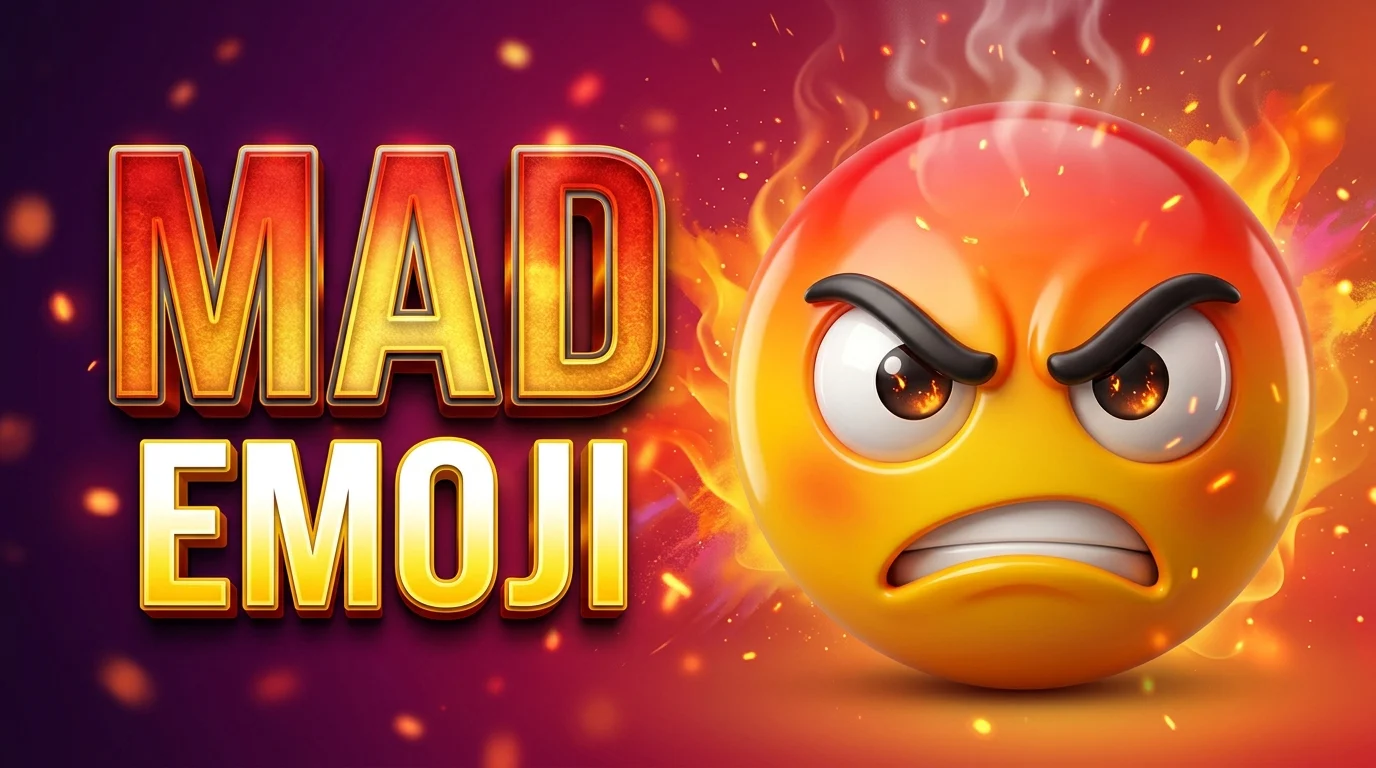
The mad emoji is used to express anger, irritation, frustration, or strong displeasure in digital conversations. It helps people show that something has upset them without writing a long explanation. Depending on the situation, it can communicate anything from mild annoyance to serious anger. Some people also use it playfully when complaining about small problems or teasing friends.
The meaning of a mad emoji is not always as simple as it looks. A red angry face may suggest intense frustration, while a less intense expression can show that someone is irritated but still in control. The words around it, the relationship between the people, and the situation all help reveal what the sender really means.
Quick Answer
The mad emoji usually means anger, frustration, annoyance, or being upset about something.
It can express genuine anger or playful frustration, depending on the conversation and the person sending it.
What Does the Mad Emoji Mean?
The mad emoji represents a negative emotional reaction. People use it when something feels unfair, irritating, disappointing, or difficult to tolerate. It can also show that someone strongly disagrees with a situation or does not approve of what happened.
The expression can communicate several feelings:
- Anger: Something has upset the sender.
- Annoyance: A person or situation is getting on their nerves.
- Frustration: Something is not going as expected.
- Disapproval: The sender does not agree with an action or decision.
- Playful irritation: The person is pretending to be angry in a lighthearted way.
For example, someone might send a mad emoji after receiving disappointing news, dealing with a delayed delivery, or hearing an annoying comment. In a friendly conversation, the same expression might simply mean, “You are getting on my nerves, but I am not seriously upset.”
Mad Emoji Meaning in Text Messages
In text messages, a mad emoji adds an emotional tone that plain words may not communicate clearly. It can make a complaint sound stronger, show dissatisfaction, or tell someone that a comment has crossed a line.
Its meaning often depends on the sentence that comes before it.
Here are some common examples:
- “You forgot again 😠” shows annoyance about repeated behavior.
- “I waited for an hour 😡” communicates stronger frustration.
- “You ate the last slice? 😤” can express playful irritation.
- “That was not fair 😠” shows disagreement or disapproval.
- “I cannot believe this happened again 🤬” communicates intense anger.
A mad emoji can also change how a short reply feels. For example, “Fine 😠” may sound irritated rather than accepting. Without the emoji, the word “Fine” could have several possible meanings.
What Does the Mad Emoji Mean From Someone?
When someone sends you a mad emoji, they may be showing that something in the conversation or situation has bothered them. However, it does not automatically mean they are angry with you.
The surrounding message can help you understand the reason.
- If they are responding to something you said: They may disagree with your comment or feel hurt by it.
- If they are talking about a problem: They are probably frustrated with the situation rather than with you.
- If they are joking with you: The emoji may be a playful way to complain or act dramatic.
- If they send it without words: They may want you to notice their frustration or ask what happened.
For example, if a friend sends “You started the movie without me 😡,” they may be pretending to be angry because they wanted to watch it together. But if someone sends the same emoji after a serious disagreement, it may communicate genuine displeasure.
The best way to understand the sender is to consider the conversation instead of assuming the worst.
Is the Mad Emoji Positive or Negative?
The mad emoji generally has a negative emotional tone because it represents anger, irritation, or frustration. It is usually not the right choice when someone wants to express happiness, gratitude, or affection.
However, a negative expression does not always mean a negative conversation.
Friends and family members often use angry faces jokingly. Someone might send one after a friend cancels plans, steals a snack, or makes a harmless joke at their expense. In that situation, the emoji adds humor rather than starting an argument.
The difference is usually clear from the relationship and the surrounding words. A playful complaint between close friends may feel harmless, while the same expression in a tense conversation can make the disagreement feel more serious.
Can the Mad Emoji Be Sarcastic?
Yes. A mad emoji can be used sarcastically when someone wants to pretend that a small inconvenience is a major problem.
For example:
- “You finished all the chocolate without me 😡”
- “My favorite show ended on a cliffhanger 😤”
- “You got the bigger slice again 😠”
These messages may not communicate real anger. Instead, the emoji makes the complaint sound exaggerated and funny.
It can also communicate genuine sarcasm when someone is disappointed by another person’s behavior. A message such as “Great, another delay 😠” may show that the sender is unhappy rather than genuinely pleased.
The words and situation determine whether the expression is playful, sarcastic, or serious.
What Is the Difference Between 😠 and 😡?
Both faces express anger, but they usually communicate different levels of intensity.
The yellow angry face 😠 often suggests irritation, displeasure, or controlled anger. It can show that someone is annoyed without necessarily being furious.
The red angry face 😡 usually feels more intense. Its flushed appearance makes it useful when someone wants to communicate strong anger, outrage, or serious frustration.
For example:
- “You changed the plans again 😠” suggests annoyance.
- “I cannot believe you did that 😡” communicates stronger anger.
These are common interpretations, not strict rules. A person may use either emoji playfully or seriously depending on their communication style.
Does the Mad Emoji Mean Frustration?
Yes. Frustration is one of the most common reasons people use a mad emoji.
Frustration happens when something prevents a person from getting what they want or causes repeated difficulties. It may come from technical problems, delays, misunderstandings, broken promises, or unexpected changes.
For example, someone might write:
- “My internet stopped working again 😠”
- “I have been trying to fix this all morning 😡”
- “The website keeps crashing 😤”
In these situations, the sender may not be angry with another person. They are expressing irritation about something that is making their day harder.
This distinction matters because frustration and personal anger are not always the same thing.
Does the Mad Emoji Mean Someone Is Upset With You?
Not necessarily. A mad emoji can express a general reaction to something that happened rather than a personal attack.
If someone sends it after you make a joke, they may be pretending to be offended. If they use it while describing a difficult day, they may simply be sharing their mood.
However, it can indicate that your words or actions have bothered them, especially when it appears after a disagreement or serious conversation.
Look for other clues:
- Did they mention something you did?
- Are their words unusually short or direct?
- Have they been expressing frustration throughout the conversation?
- Do they normally use angry emojis as jokes?
If the meaning is unclear, asking calmly is usually better than guessing.
Related Angry Emojis and Their Meanings
Several emojis can express anger, frustration, or irritation, but each one adds a slightly different emotional feeling.
| Emoji | Official Name | Common Meaning | Tone | Where or When It Is Used |
|---|---|---|---|---|
| 😠 | Angry Face | Anger, annoyance, or displeasure | Direct, serious | Complaints and disagreements |
| 😡 | Enraged Face | Strong anger or outrage | Intense, emotional | Major frustrations or strong reactions |
| 😤 | Face with Steam From Nose | Frustration, determination, or pride | Forceful, expressive | Showing frustration or confidence |
| 🤬 | Face with Symbols on Mouth | Extreme anger or swearing | Very strong | When someone is extremely upset |
| 🙄 | Face with Rolling Eyes | Irritation, disbelief, or sarcasm | Dismissive | Reacting to annoying comments |
| 😒 | Unamused Face | Displeasure or lack of interest | Cold, unimpressed | Showing dissatisfaction |
| 👿 | Angry Face with Horns | Anger or mischievous attitude | Playful or fierce | Joking about revenge or mischief |
| 💢 | Anger Symbol | Sudden irritation or frustration | Dramatic | Emphasizing an angry reaction |
How to Choose the Right Angry Emoji
The best emoji depends on how strongly you want to express your feelings.
Use 😠 when you are annoyed or want to show clear displeasure. Choose 😡 when the situation feels more serious or you want to communicate stronger anger. The 🤬 emoji is more extreme and can suggest that someone is so upset that they are ready to swear.
The 😤 emoji is different because it can express determination or pride rather than anger alone. Meanwhile, 🙄 and 😒 are often better for showing sarcasm, disbelief, or being unimpressed.
Choosing the right expression helps your message communicate the intended emotion without making it unnecessarily harsh.
Is the Mad Emoji Rude?
The mad emoji can feel rude when it is sent during a serious conversation, especially without any explanation. It may make the receiver feel blamed, criticized, or attacked.
For example, replying only with 😡 after someone shares an idea can appear dismissive or hostile. The other person may not understand what went wrong or why you are upset.
However, it is not automatically rude. Friends may use angry faces to tease each other, complain about small things, or express exaggerated reactions.
If you want to avoid misunderstandings, add a few words explaining your feelings. A message such as “I am frustrated because the plans changed at the last minute 😠” communicates more clearly than sending an angry face alone.
Is the Mad Emoji Flirty?
The mad emoji is not usually considered a flirty expression, but it can appear in playful or teasing conversations.
Someone might send it after a harmless joke, a missed call, or a friendly complaint. In that situation, it can create a mock-angry reaction that keeps the conversation light.
For example:
- “You forgot to text me 😠”
- “You are making fun of me again 😡”
- “You owe me a coffee now 😤”
These messages may be playful rather than serious. Whether they feel flirty depends on the relationship, the words, and the conversation’s overall tone.
A mad emoji by itself is not enough to prove romantic interest. It is better to look at the complete conversation before interpreting it that way.
Mad Emoji on Social Media
On social media, the mad emoji is commonly used to react to frustrating news, disappointing updates, unfair situations, and opinions people strongly disagree with.
Its meaning can change slightly depending on the platform and the type of content.
Instagram: People may use angry faces in comments when reacting to disappointing posts, frustrating experiences, or dramatic moments.
TikTok: The emoji can show disagreement, irritation, or an exaggerated reaction to a video.
Facebook: Users may include angry faces when discussing upsetting stories, personal complaints, or controversial topics.
WhatsApp: It often appears in private conversations to show annoyance, frustration, or playful anger toward friends and family.
X: People may use it to express displeasure about public events, opinions, or unexpected developments.
On public platforms, an angry emoji can make a reaction look stronger because readers do not always know the person behind the comment. Adding a short explanation can help prevent the message from being misunderstood.
Text Message Examples
Here are five realistic situations showing how a mad emoji can change the tone of a conversation.
1. When Someone Is Annoyed
- Person A: “I forgot to bring your book.”
- Person B: “You promised you would bring it 😠”
Meaning: The sender is irritated because the other person did not keep a promise.
2. When Something Goes Wrong
- Person A: “The power went out again.”
- Person B: “Seriously? This is the third time today 😡”
Meaning: The emoji shows frustration about a repeated problem.
3. When Friends Are Joking
- Person A: “I ate the last piece of pizza.”
- Person B: “You did not save me any? 😤”
Meaning: The sender is pretending to be upset in a playful way.
4. When Someone Disagrees
- Person A: “I think changing the plan at the last minute is fine.”
- Person B: “I completely disagree 😠”
Meaning: The sender is expressing strong displeasure or disagreement.
5. When Someone Feels Ignored
- Person A: “Sorry, I did not see your message.”
- Person B: “I have been waiting for your reply all day 😡”
Meaning: The sender may feel frustrated because they expected a response earlier.
Common Misunderstandings About the Mad Emoji
1. Thinking It Always Means Serious Anger
An angry face can be playful. Friends sometimes use it to exaggerate small complaints or tease each other.
2. Assuming the Sender Is Angry With You
The person may be upset about work, traffic, a technical problem, or something completely unrelated to your conversation.
3. Treating All Angry Faces as Identical
Different expressions can communicate different levels of anger. A mild frown does not always carry the same intensity as a red, furious face.
4. Confusing Frustration With Dislike
Someone can be frustrated with a situation without disliking the people involved. An angry emoji alone does not prove that a relationship has changed.
5. Assuming It Is Always Rude
The emoji can sound harsh in a serious discussion, but it can also be part of friendly teasing. Context makes a major difference.
How to Respond to a Mad Emoji
Your response should depend on the situation and whether the sender seems genuinely upset.
If someone appears seriously angry, avoid responding with another angry emoji immediately. A calm reply can help you understand the problem.
Here are some natural ways to respond:
- If they seem upset: “What’s wrong? Did something happen?”
- If you made a mistake: “I’m sorry. I didn’t mean to upset you.”
- If they are frustrated with a problem: “That sounds really annoying. I hope it gets sorted out.”
- If they are joking: “Okay, okay! I’ll make it up to you.”
- If you are unsure: “Are you actually mad, or are you joking?”
A thoughtful response can prevent a small misunderstanding from becoming a bigger disagreement. Pay attention to the sender’s words and tone instead of reacting only to the emoji.
Popular Angry Emoji Combinations
Angry emojis can appear alongside other symbols to make a reaction more expressive. These combinations are informal and can communicate different feelings depending on the message.
| Combination | Common Meaning |
|---|---|
| 😡💢 | Strong anger or irritation |
| 😠🙄 | Annoyance mixed with disbelief |
| 🤬😤 | Intense frustration |
| 😡🔥 | Feeling furious or outraged |
| 😤💪 | Determination after a frustrating situation |
| 😠😭 | Being upset or frustrated to the point of tears |
These combinations are useful in casual conversations, but they do not have fixed meanings. The surrounding words help explain whether the sender is genuinely angry, joking, or simply being dramatic.
Frequently Asked Questions
1. What does the mad emoji mean?
The mad emoji usually expresses anger, annoyance, frustration, or displeasure. It can also be used jokingly when someone wants to exaggerate a small complaint.
2. What is the difference between 😠 and 😡?
The 😠 emoji generally shows annoyance or controlled anger, while 😡 often communicates stronger anger or outrage. Both can be used seriously or playfully.
3. Does the mad emoji mean someone is angry at me?
Not always. The sender may be frustrated with a situation rather than with you. Read the surrounding message before deciding what they mean.
4. Can the mad emoji be used jokingly?
Yes. Friends often use it to pretend they are angry about harmless situations, such as someone stealing food or forgetting a small favor.
5. Does the mad emoji mean frustration?
Yes. It is often used when plans go wrong, something keeps failing, or a person feels unable to solve a problem.
6. Is the mad emoji rude?
It can seem rude in serious conversations because it communicates strong displeasure. In friendly conversations, however, it may simply be playful teasing.
7. What emoji shows extreme anger?
The 🤬 emoji is often used for extreme anger or intense frustration. The 😡 emoji also communicates strong anger, while 😠 usually feels less intense.
8. Can the mad emoji be sarcastic?
Yes. Someone may use it to make a small complaint sound dramatic or to express sarcasm about an annoying situation.
9. What is the best response to a mad emoji?
If the sender seems genuinely upset, ask what happened or acknowledge their feelings. If they are joking, a lighthearted response may be more appropriate.
Conclusion
The mad emoji is a direct way to express anger, annoyance, frustration, and strong displeasure in digital conversations. It can show that something has gone wrong, communicate disagreement, or add a dramatic reaction to an everyday complaint.
However, an angry expression does not always signal a serious problem. Friends may use it playfully, while someone facing a difficult situation may use it to express genuine frustration. The surrounding words, relationship, and tone are the best clues to its intended meaning.
Understanding these differences helps you use the mad emoji more clearly and interpret it without jumping to conclusions.
Discover More Post:
- Windows Emoji Shortcut | Master Faster Typing and Hidden …
- Peach Emoji Meaning | Sweet Signals, Hidden Hints & More …
- Two Hearts Emoji Meaning | What Really Says About Love …