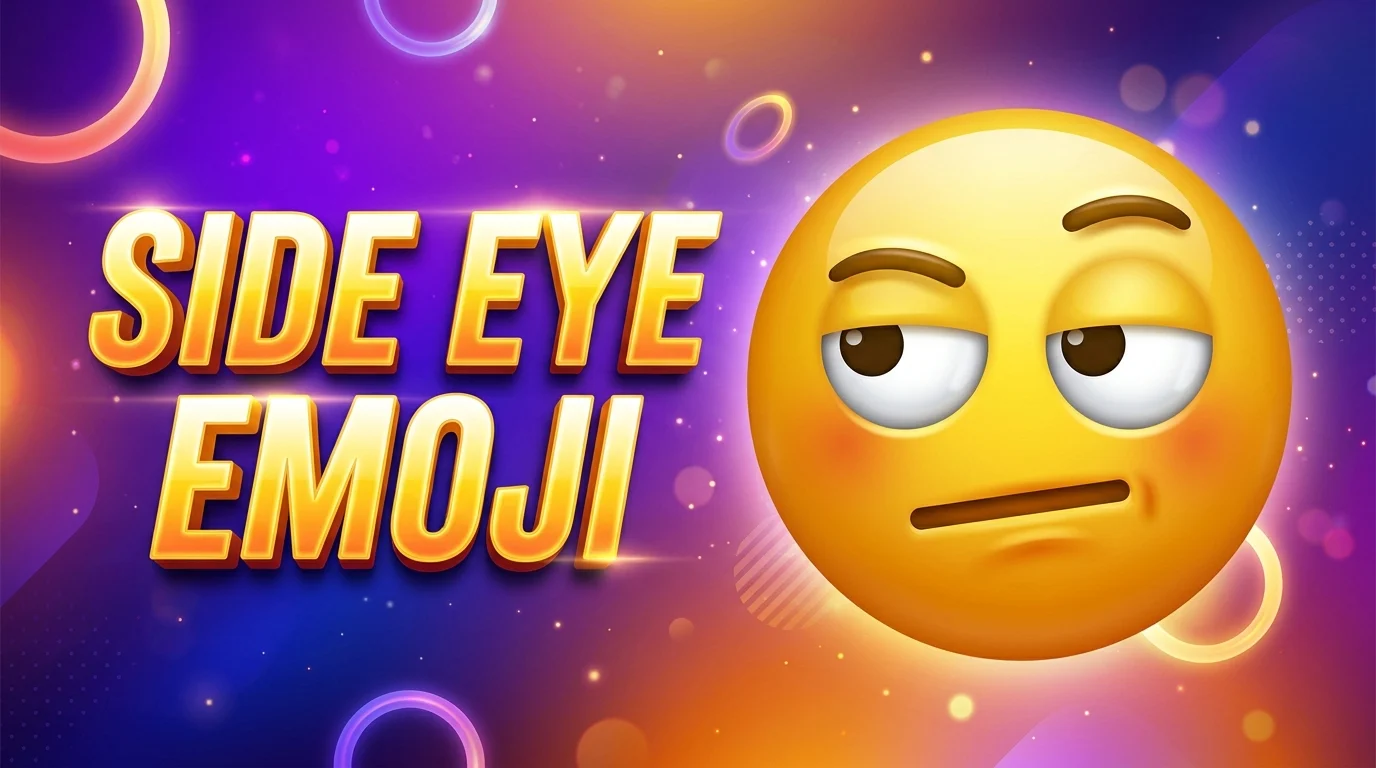
The side eye emoji is a popular way to express suspicion, disbelief, judgment, or quiet annoyance in digital conversations. It represents the familiar sideways glance people give when something sounds questionable, awkward, or difficult to believe. Instead of explaining their reaction in a full sentence, someone can use an emoji to suggest that they have noticed something unusual.
There is not just one emoji that people call the side eye. The eyes emoji 👀 can suggest watching or noticing something, while 😒 and 🙄 often communicate disapproval or annoyance. The raised eyebrow emoji 🤨 can express doubt or skepticism. Depending on the conversation, these expressions can feel funny, sarcastic, curious, or genuinely judgmental.
Quick Answer
The side eye emoji usually expresses suspicion, skepticism, disbelief, or silent judgment. People use it when something seems questionable, awkward, or unbelievable.
The expression can also be playful or sarcastic, depending on the message and relationship between the people communicating.
What Does the Side Eye Emoji Mean?
The side eye is a facial expression in which someone looks sideways at another person or situation. It commonly communicates doubt, suspicion, criticism, or disbelief without requiring words.
In digital conversations, people use several emojis to recreate this expression. The most common choices include 👀, 😒, 🙄, and 🤨, although each one has a slightly different tone.
Here are the meanings people commonly associate with a side eye reaction:
- Suspicion: Something seems unusual or dishonest.
- Disbelief: You find a statement difficult to accept.
- Judgment: You silently disapprove of someone’s behavior.
- Sarcasm: You are making a teasing or ironic comment.
- Annoyance: Something has irritated or disappointed you.
- Curiosity: You have noticed something and want to know more.
The side eye is often more expressive than a plain text response because it communicates an unspoken reaction. It can make a conversation feel playful, dramatic, or slightly confrontational without requiring a direct explanation.
Side Eye Emoji Meaning in Text Messages
In text messages, side eye emojis are often used as quick reactions to something questionable. They can show that the sender is unconvinced, surprised, or quietly judging what they have just read.
For example, if a friend says they are only five minutes away but has not even left home, you might respond with 👀 or 🤨. The reaction suggests that you do not completely believe them.
Common meanings in texting include:
- “I don’t believe you.” The message sounds suspicious or exaggerated.
- “What are you trying to say?” You sense an unusual meaning behind someone’s words.
- “That was awkward.” Something has made the conversation uncomfortable.
- “I’m watching you.” You have noticed someone’s behavior.
- “Really?” You are surprised or doubtful about what happened.
The expression can also make a serious-sounding response less harsh. Between close friends, it may be a playful way to challenge a statement without starting an argument.
What Does the Side Eye Emoji Mean From Someone?
When someone sends you a side eye emoji, they may be questioning something you said or reacting to something they noticed. However, it does not automatically mean they are angry or upset.
The surrounding conversation can help you understand their intention.
If they send 👀 after a surprising statement: They may be curious or want to know more.
If they send 😒 after your explanation: They may be unimpressed or doubtful.
If they send 🙄 after something repetitive: They may be showing annoyance or playful frustration.
If they send 🤨 after an unusual comment: They may be questioning whether your statement makes sense.
If they use a side eye during friendly banter: They may simply be teasing you.
For example, imagine telling someone that you did not eat the last slice of pizza while standing beside an empty pizza box. A side eye response would suggest that they are not convinced.
Before assuming the person is upset, consider your usual communication style with them. A friend who regularly jokes with you may use these expressions very differently from someone having a serious disagreement.
Is the Side Eye Emoji Positive or Negative?
The side eye expression is generally associated with skepticism or disapproval, so it often has a negative or doubtful tone. However, it is not always meant to be rude.
Its emotional tone depends on the situation and the relationship between the people communicating.
Positive or playful uses:
- Teasing a friend about an obvious excuse.
- Reacting humorously to a surprising confession.
- Showing mock suspicion during friendly conversation.
- Playfully questioning someone’s confidence.
Negative uses:
- Showing genuine distrust.
- Expressing disappointment.
- Reacting to a questionable decision.
- Indicating that someone’s explanation seems dishonest.
For example, sending 👀 after a friend says they are going to start exercising every morning may be playful if they have made the same promise many times. Sending 😒 during a serious disagreement may communicate genuine disapproval.
The emoji itself does not determine whether the reaction is friendly or unfriendly. The words around it and the relationship between the sender and receiver matter.
Can the Side Eye Emoji Be Sarcastic?
Yes. Sarcasm is one of the common ways people use side eye expressions.
They can communicate that someone does not fully accept what another person has said, especially when the statement sounds exaggerated, ironic, or unbelievable.
For example:
- “I definitely did not eat your fries.” 👀
- “I finished all my work in two minutes.” 🤨
- “I never check your profile.” 😏
In these situations, the emoji adds an unspoken reaction. It suggests that the sender has doubts but may be choosing humor instead of directly challenging the statement.
The sarcastic meaning is usually easier to recognize when the conversation is already playful. In a serious discussion, the same expression may sound more judgmental than funny.
The Silent Judgment Meaning of the Side Eye Emoji
One reason the side eye expression is so recognizable is that a sideways glance can communicate judgment without words.
People often make this expression when they notice something strange, hear an unexpected comment, or disagree with someone’s behavior. In digital conversations, emojis recreate that reaction.
It can suggest thoughts such as:
- “I noticed that.”
- “That was an interesting choice.”
- “Are you sure about that?”
- “Something is not adding up.”
- “I have questions, but I am not going to ask them.”
This silent judgment does not always mean serious criticism. Sometimes it is simply a humorous way to show that a friend has said something ridiculous.
Does the Side Eye Emoji Mean Someone Is Lying?
Not necessarily. A side eye reaction can express suspicion, but it does not prove that someone believes another person is lying.
It may be used when a statement sounds exaggerated, an excuse seems questionable, or someone’s behavior appears inconsistent. It can also be sent purely for entertainment.
For example, if someone says they have not bought anything recently but keeps showing new shopping bags, a friend might respond with 👀. The reaction suggests doubt, but it may be completely playful.
The difference between suspicion and an accusation is important. A person can question something without directly calling someone dishonest.
Side Eye Emoji vs. Eye Roll: What’s the Difference?
The side eye and eye roll expressions can both communicate annoyance or disbelief, but they do not always express the same reaction.
The side eye usually suggests that someone is observing or questioning something. It can feel quiet, suspicious, or judgmental.
The rolling eyes emoji 🙄 more directly communicates frustration, impatience, or annoyance. It often suggests that the person is tired of hearing something or does not take it seriously.
For example, a side eye reaction might mean, “I am not sure I believe that.” An eye roll might mean, “Here we go again.”
The two expressions can overlap, especially in sarcastic conversations, but their emotional emphasis is different.
Related Face Emojis and Their Meanings
Several face emojis can express reactions similar to the side eye. However, each one communicates a slightly different emotion or level of intensity.
| Emoji | Official Name | Common Meaning | Tone | Where or When It Is Used |
|---|---|---|---|---|
| 👀 | Eyes | Watching, noticing, or showing interest | Curious, suspicious | Reacting to gossip or something unexpected |
| 😒 | Unamused Face | Displeasure or dissatisfaction | Unimpressed, annoyed | Responding to irritating comments |
| 🙄 | Face with Rolling Eyes | Annoyance, disbelief, or impatience | Sarcastic, dismissive | Reacting to repetitive or frustrating situations |
| 🤨 | Face with Raised Eyebrow | Doubt or questioning | Skeptical, curious | Responding to questionable statements |
| 😏 | Smirking Face | Confidence, teasing, or suggestiveness | Playful, sly | Flirting or making a knowing comment |
| 😑 | Expressionless Face | No visible reaction or emotional exhaustion | Dry, unimpressed | Responding to something ridiculous |
| 😬 | Grimacing Face | Awkwardness or discomfort | Nervous, embarrassed | Reacting to uncomfortable situations |
| 😐 | Neutral Face | Little or no visible emotion | Neutral, restrained | Giving a plain or emotionless reaction |
Side Eye Emoji vs. Rolling Eyes Emoji
The side eye expression usually communicates suspicion or quiet judgment. It can suggest that someone has noticed something questionable and is watching carefully.
The rolling eyes emoji 🙄 more directly shows annoyance, impatience, or disbelief. It often communicates that someone is tired of hearing something.
For example, if a friend gives an unbelievable excuse, 👀 can suggest doubt. If the friend keeps repeating the same excuse, 🙄 may better express frustration.
Side Eye Emoji vs. Raised Eyebrow Emoji
The raised eyebrow emoji 🤨 is often used to question something or express skepticism. It can communicate curiosity as well as suspicion.
The side eye expression tends to feel more like a silent observation or judgment. The raised eyebrow can seem more direct, as if someone is asking, “Are you sure?”
Both can express doubt, but the raised eyebrow often emphasizes questioning, while the side eye emphasizes the reaction itself.
Is the Side Eye Emoji Flirty?
The side eye expression can be flirty in certain conversations, but flirting is not its main meaning.
Someone might use it playfully when a person makes a cheeky comment, gives a compliment, or says something slightly bold. In that situation, the expression can suggest teasing curiosity or mock suspicion.
For example:
- Person A: “You looked really good today.”
- Person B: “👀 Are you trying to impress me?”
Here, the reaction is playful rather than genuinely suspicious.
The smirking face 😏 can also create a knowing or flirtatious side glance. However, a side eye reaction may communicate discomfort or doubt instead. If someone sends it after an uncomfortable comment, it should not automatically be interpreted as flirting.
Look at the overall conversation before deciding what the sender means.
Is the Side Eye Emoji Rude?
It can be rude, especially when used during a serious conversation or disagreement. The expression may make someone feel judged, questioned, or disrespected.
For example, sending 😒 after someone shares an important personal decision might seem dismissive. It can suggest that you disapprove without giving a clear reason.
Among friends, however, the same emoji may be a harmless joke. People often use it to tease one another about exaggerated stories, silly excuses, or playful behavior.
To avoid misunderstandings, consider the situation before sending it. A direct sentence may be better when you need to communicate genuine concern or disagreement.
Side Eye Emoji on Social Media
On social media, side eye expressions are useful for reacting to posts, comments, and situations that seem suspicious, awkward, or unbelievable.
People may use them when they notice an unexpected detail, disagree with a public statement, or want to show that something deserves a closer look.
Common social media uses include:
- Reacting to a questionable comment.
- Showing disbelief about a surprising announcement.
- Responding to an exaggerated story.
- Teasing someone over a funny mistake.
- Expressing silent judgment about an unusual situation.
- Suggesting that there may be more to a story.
The eyes emoji 👀 is especially useful when someone wants to show that they are watching something unfold. The unamused face 😒 and rolling eyes 🙄 can communicate a more negative reaction.
The expression is not always serious. A single emoji can add a playful reaction to a comment, while the same emoji in a heated discussion may feel critical or dismissive.
Text Message Examples
Here are realistic examples showing how side eye expressions can be used in different conversations.
1. When You Do Not Believe Someone
- Person A: “I only spent five dollars at the store.”
- Person B: “You came home with four bags. 👀”
Meaning: The sender doubts the other person’s statement and is teasing them.
2. When Someone Makes a Strange Excuse
- Person A: “I forgot my phone at home again.”
- Person B: “🙄 You said that yesterday too.”
Meaning: The sender is questioning the repeated excuse and showing mild annoyance.
3. When a Friend Says Something Unexpected
- Person A: “I think pineapple belongs on every pizza.”
- Person B: “🤨 Every pizza?”
Meaning: The sender is expressing playful disbelief.
4. When Someone Is Being Suspicious
- Person A: “Why are you asking who I was talking to?”
- Person B: “No reason. Just curious.”
- Person A: “👀”
Meaning: The sender suspects there is another reason behind the question.
5. When Someone Makes a Flirty Comment
- Person A: “You always look better than everyone else.”
- Person B: “😏 That was smooth.”
Meaning: The sender is responding with playful teasing and may be enjoying the compliment.
Common Misunderstandings About the Side Eye Emoji
1. Thinking It Always Means Anger
The side eye can express annoyance, but it is often used for humor, teasing, or mild disbelief. It does not automatically mean someone is angry.
2. Assuming Someone Is Accusing You of Lying
The expression may show doubt without making a direct accusation. A person might simply find your statement surprising or difficult to believe.
3. Confusing It With an Eye Roll
A side eye suggests observation or suspicion, while an eye roll more clearly communicates annoyance or impatience. Their meanings can overlap, but they are not identical.
4. Assuming It Is Always Rude
Among close friends, the expression can be a playful reaction. In a serious conversation, it may feel judgmental. The relationship and context make a difference.
5. Treating It as a Flirting Signal
Although it can be used playfully in a flirty conversation, it does not automatically indicate romantic interest. It may simply express skepticism or surprise.
6. Thinking There Is Only One Side Eye Emoji
People use different emojis to recreate a sideways glance. 👀 often suggests watching or noticing, 🤨 communicates questioning, and 😒 or 🙄 usually feels more disapproving.
How to Respond to the Side Eye Emoji
Your response depends on the situation and the tone of the person who sent it. If the conversation is playful, you can respond with humor. If the person seems genuinely doubtful, a clear explanation may be more helpful.
- If they are teasing you: “What? I’m telling the truth!”
- If they doubt your statement: “I promise, that’s exactly what happened.”
- If they seem suspicious: “Why are you looking at me like that?”
- If they are joking: “Don’t judge me!”
- If they seem annoyed: “Did I say something wrong?”
- If they are curious: “I’ll tell you what happened.”
You can also ask what they mean if the reaction is unclear. This is especially useful when the conversation involves a serious topic rather than friendly teasing.
Popular Emoji Combinations
Side eye expressions can be paired with other emojis to make a reaction feel more specific.
| Combination | Common Meaning |
|---|---|
| 👀😂 | Watching something funny or reacting with playful disbelief |
| 🙄😒 | Strong annoyance or exaggerated judgment |
| 👀🍿 | Watching drama or waiting to see what happens |
| 🤨❓ | Questioning someone’s statement |
| 😏👀 | A knowing, teasing, or flirty glance |
| 😬👀 | Watching an awkward situation unfold |
| 👀💀 | Shock or disbelief about something hilarious |
These combinations are informal and can vary between conversations. The words accompanying them usually provide the clearest clue about the intended reaction.
Frequently Asked Questions
1. What does the side eye emoji mean?
The side eye emoji generally expresses suspicion, doubt, judgment, or disbelief. People use several emojis, including 👀, 😒, 🙄, and 🤨, to communicate this reaction.
2. Does the side eye emoji mean someone is judging you?
It can suggest judgment, but not always in a serious way. Friends often use it to tease each other or react humorously to unexpected comments.
3. Is the side eye emoji sarcastic?
Yes. Side eye expressions are commonly used sarcastically to show that someone does not believe a statement or finds a situation ridiculous.
4. What does 👀 mean in a text?
The eyes emoji 👀 often means “I’m watching,” “I noticed that,” or “Tell me more.” It can communicate curiosity, interest in gossip, suspicion, or a knowing reaction.
5. What does the side eye emoji mean from a girl?
It can mean that she is doubtful, teasing, suspicious, or unimpressed. The meaning depends on the conversation and her usual communication style. It does not automatically indicate anger or romantic interest.
6. What does the side eye emoji mean from a guy?
A guy may use a side eye expression to communicate disbelief, playful judgment, annoyance, or suspicion. The surrounding message helps clarify whether he is joking or being serious.
7. Is the side eye emoji negative?
It often has a skeptical or disapproving tone, but it can also be playful. Its meaning depends on the relationship and the situation.
8. Is the side eye emoji flirty?
Sometimes. It can be used to tease someone after a bold compliment or cheeky comment, but it is not automatically a sign of flirting.
9. What is the difference between side eye and rolling eyes?
Side eye usually suggests suspicion, observation, or quiet judgment. Rolling eyes more directly expresses annoyance, frustration, or impatience.
10. When should you use a side eye emoji?
Use it when something seems questionable, surprising, awkward, or funny. It works especially well in casual conversations where a playful or skeptical reaction is appropriate.
Conclusion
The side eye emoji is a simple but expressive way to communicate suspicion, disbelief, sarcasm, and silent judgment. People use different emoji faces to recreate this familiar sideways glance, with 👀 suggesting attention or suspicion, 🤨 expressing doubt, and 😒 or 🙄 communicating stronger disapproval or annoyance.
Its meaning depends on the situation, the message, and the relationship between the people communicating. When you understand the context, it becomes easier to tell whether the side eye is a joke, a warning sign, or simply a reaction to something unexpected.
Discover More Post:
- Nails Emoji Meaning Explained | Confidence, Sass & Style in …
- Battery Emoji Meaning | Power, Low Energy & Life’s Daily …
- Frowning Emoji Meaning | Decode the Mood Behind the Face …