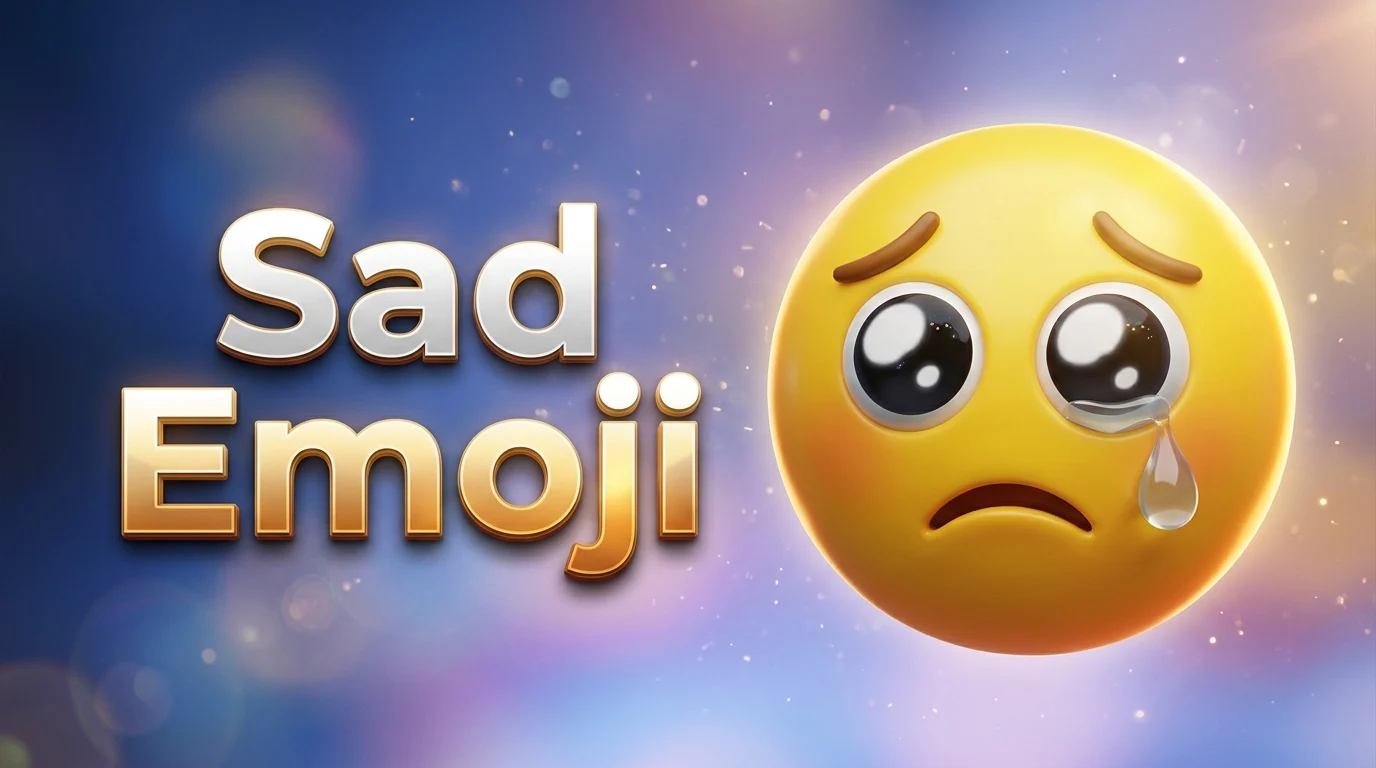
The sad emoji is a simple way to express feelings that can sometimes be difficult to explain in words. People use sad-looking faces in text messages, social media comments, and online conversations to show disappointment, hurt, loneliness, sympathy, or emotional pain. Depending on the situation, it can communicate anything from a little sadness to deep heartbreak.
One of the most recognizable sad faces is 😢, which shows a face with a tear running down its cheek. However, people also use other sad expressions, such as 😞, ☹️, and 😭, to communicate different levels of sadness. The meaning depends on the message, the relationship between the people, and the emotion the sender wants to express.
Quick Answer
The sad emoji 😢 commonly expresses sadness, disappointment, hurt feelings, or sympathy. It can show genuine emotional pain or a softer reaction to something upsetting.
What Does the Sad Emoji 😢 Mean?
The sad emoji 😢 represents sadness and emotional discomfort. It is commonly used when someone feels hurt, disappointed, upset, or moved by something emotional. The visible tear makes the expression more emotional than a simple unhappy face.
People often send this emoji when something does not go as expected. It can express disappointment about canceled plans, an upsetting conversation, missing someone, or hearing unfortunate news.
However, the sad emoji does not always indicate serious sadness. Sometimes it communicates a small disappointment or a tender emotional reaction. For example, someone might use it after hearing that a favorite restaurant has closed or that a friend cannot attend an event.
Its meaning can change depending on the conversation:
- Sadness: Feeling unhappy about something that happened.
- Disappointment: Being let down by a person or situation.
- Heartbreak: Expressing emotional pain after a difficult experience.
- Sympathy: Showing that you care about someone else’s sadness.
- Loneliness: Communicating that you miss someone or feel alone.
- Emotional sensitivity: Reacting to something touching or upsetting.
The sad emoji gives a message an emotional tone without requiring a long explanation.
Sad Emoji Meaning in Text Messages
In text messages, the sad emoji helps communicate feelings that plain words may not fully express. It can make a short reply sound more emotional, gentle, or personal.
For example, someone might write, “I really wanted to see you today 😢.” The emoji shows that the person feels disappointed rather than simply stating that the meeting did not happen.
Its meaning can also depend on the words around it:
- “I miss you 😢” expresses sadness caused by distance or separation.
- “That’s really unfortunate 😢” communicates sympathy.
- “I didn’t get the job 😢” shows disappointment.
- “You are leaving already? 😢” suggests that someone will miss another person.
- “I feel so alone today 😢” expresses loneliness or emotional vulnerability.
The emoji can make a message feel more sincere because it gives the receiver a visual clue about the sender’s feelings.
What Does 😢 Mean From Someone?
When someone sends you 😢, they may be expressing their own sadness or responding emotionally to something you have said.
The exact meaning depends on the situation. If the conversation involves bad news, the sender may be showing sympathy. If you have canceled plans, they might be disappointed. If you are discussing a personal problem, the emoji may communicate that they feel emotionally affected.
Here are a few possible interpretations:
- They feel sad: Something has upset them.
- They miss you: They may be expressing that they wish you were together.
- They feel disappointed: They expected a different outcome.
- They care about your situation: They are reacting sympathetically to your problem.
- They want emotional support: They may be showing vulnerability and hoping for understanding.
One sad emoji is not enough to determine someone’s complete emotional state. Consider the conversation and their usual communication style before deciding what they mean.
Is the Sad Emoji Positive or Negative?
The sad emoji is generally associated with negative emotions because it represents unhappiness, disappointment, or emotional pain. However, its purpose in a conversation is not always negative.
For example, someone might send 😢 after hearing that a close friend is moving away. The emotion is sad, but the message may also communicate affection and how much that friendship matters.
Similarly, someone might use it when reacting to a touching story, a heartfelt goodbye, or an emotional memory.
The emoji can therefore communicate several feelings:
- Negative emotion: Sadness, frustration, or disappointment.
- Care and affection: Feeling emotional because someone matters.
- Sympathy: Showing concern for another person’s difficult experience.
- Nostalgia: Feeling sad while remembering the past.
Its basic expression remains sad, but the emotional purpose can be caring, supportive, or affectionate.
Can the Sad Emoji Be Dramatic or Playful?
Yes. The sad emoji can sometimes be used dramatically or playfully, especially in casual conversations.
Not every use of 😢 means someone is genuinely upset. Friends may exaggerate their sadness to make a situation sound more emotional or humorous.
For example:
- “You ate the last slice of pizza 😢”
- “My weekend is almost over 😢”
- “You finished the series without me 😢”
- “I have to wake up early tomorrow 😢”
In these situations, the sender may not be seriously unhappy. The emoji adds a playful sense of disappointment and makes the message more expressive.
However, context matters. If someone is discussing a personal loss, relationship problem, or difficult experience, the same emoji is more likely to represent genuine sadness.
Does the Sad Emoji Mean Crying?
The sad emoji 😢 can suggest that someone is close to tears or emotionally affected, but it does not always mean they are actively crying.
It usually represents sadness through a tearful facial expression. A person may use it to show disappointment, hurt feelings, sympathy, or a quiet emotional reaction without suggesting intense crying.
Other emojis communicate stronger crying reactions. For example, 😭 often represents intense crying, overwhelming emotion, or even exaggerated laughter in informal online conversations.
The difference is mainly emotional intensity. The sad emoji often communicates a softer or quieter feeling, while a loudly crying face can suggest a much stronger reaction.
Does 😢 Mean “I’m Sorry”?
Sometimes. The sad emoji can accompany an apology, but it does not automatically mean “I’m sorry.”
Someone might send “I didn’t mean to hurt you 😢” to show regret and sadness about the situation. In this case, the emoji makes the apology feel more emotional.
It can also appear when someone responds to another person’s problem:
- “I’m sorry that happened 😢”
- “I wish I could help you 😢”
- “That’s really difficult to hear 😢”
In these examples, the emoji communicates sympathy and emotional concern.
If someone sends only 😢 after you share bad news, they may be showing that they feel sorry for you. It is not necessarily an apology for something they did.
Related Sad Emojis and Their Meanings
Several emojis express sadness, but they do not all communicate the same emotional intensity. Some suggest disappointment, while others represent crying, worry, or emotional pain.
| Emoji | Official Name | Common Meaning | Tone | Where or When It Is Used |
|---|---|---|---|---|
| 😢 | Crying Face | Sadness, disappointment, sympathy | Emotional, gentle | Upsetting news or disappointing situations |
| 😞 | Disappointed Face | Regret, unhappiness, frustration | Quiet, disappointed | When something does not go as planned |
| ☹️ | Frowning Face | Unhappiness or dissatisfaction | Simple, serious | Expressing general displeasure |
| 😭 | Loudly Crying Face | Intense crying or overwhelming emotion | Dramatic, emotional | Heartbreak or exaggerated reactions |
| 😔 | Pensive Face | Thoughtfulness, sadness, regret | Quiet, reflective | Difficult memories or personal worries |
| 😥 | Sad but Relieved Face | Sadness mixed with relief or stress | Worried, emotional | Difficult situations that have improved |
| 🥺 | Pleading Face | Vulnerability, pleading, tenderness | Soft, emotional | Asking for comfort or expressing affection |
| 😿 | Crying Cat | Sadness expressed through a cat face | Cute, emotional | Playful sadness or sympathy |
😢 vs. 😭: What’s the Difference?
Both emojis express sadness, but they usually communicate different levels of emotional intensity.
The 😢 emoji represents a softer expression of sadness. It can suggest disappointment, hurt feelings, or sympathy without showing overwhelming distress.
The 😭 emoji represents much stronger crying or an intense emotional reaction. People also use it informally when something is extremely funny, surprising, or overwhelming.
For example:
- “I miss my family 😢” expresses sadness and longing.
- “I can’t believe this happened 😭” communicates a stronger emotional reaction.
Choose 😢 for a quieter feeling and 😭 when you want to express something more dramatic.
😢 vs. 😞: What’s the Difference?
The difference between these two emojis is the way they express unhappiness.
The 😢 emoji includes a tear, making sadness and emotional pain more noticeable. It is useful when someone wants to show that something has genuinely affected them.
The 😞 emoji has a disappointed expression without a visible tear. It is commonly used when plans fail, expectations are not met, or someone feels discouraged.
For example:
- “I wish you were here 😢” expresses emotional sadness.
- “I didn’t pass the test 😞” expresses disappointment.
Both can communicate unhappiness, but 😢 often feels more emotional, while 😞 can feel more restrained.
Is the Sad Emoji Flirty?
The sad emoji is not usually considered a flirty emoji, but it can appear in affectionate or romantic conversations.
Someone might send 😢 when they miss their partner, feel disappointed about canceled plans, or wish they could spend more time together.
For example:
- “I wanted to see you tonight 😢”
- “You are leaving so soon? 😢”
- “I already miss you 😢”
These messages can feel affectionate because they communicate that the sender values the other person’s company.
However, the emoji alone does not prove romantic interest. Friends and family members also use it to express that they miss someone or feel disappointed about being apart.
Is the Sad Emoji Rude?
No. The sad emoji is generally not considered rude because it communicates unhappiness rather than an insult or offensive reaction.
However, it can seem inappropriate if someone uses it in a serious conversation without offering meaningful support.
For example, if a person shares a painful experience and receives only 😢, they might appreciate the sympathy but still feel that the response is too brief.
It can also be misunderstood when someone uses it sarcastically. A person might send it after a minor inconvenience as a joke, while another person interprets the message as genuine sadness.
To avoid confusion, add a few words when the situation is important. A simple “I’m sorry you’re going through this 😢” communicates more clearly than the emoji alone.
Sad Emoji in Social Media Comments
The sad emoji is common in social media comments because it allows people to react emotionally without writing a long response.
People often use it under posts about difficult experiences, emotional memories, disappointing announcements, and personal updates.
Common examples include:
- Under sad news: Showing sympathy or concern.
- Under farewell posts: Expressing that someone will be missed.
- Under emotional stories: Showing that the story affected them.
- Under disappointing announcements: Reacting to something they wish had gone differently.
- Under nostalgic posts: Expressing sadness about a memory or a past experience.
It can also appear in humorous comments when someone wants to exaggerate a small disappointment.
The meaning depends on the post. Under a serious personal update, it usually communicates sympathy. Under a funny post, it may simply be a playful reaction.
Text Message Examples
Here are realistic examples of how people use the sad emoji in everyday conversations.
1. When Someone Cancels Plans
- Person A: “Sorry, I can’t make it today.”
- Person B: “I was really looking forward to seeing you 😢”
Meaning: Person B feels disappointed because the plans will not happen.
2. When Missing Someone
- Person A: “I wish we lived closer.”
- Person B: “Same here. I miss you 😢”
Meaning: The emoji expresses sadness caused by distance and separation.
3. After Receiving Bad News
- Person A: “I didn’t get the position I applied for.”
- Person B: “I’m really sorry to hear that 😢”
Meaning: Person B is showing sympathy and emotional support.
4. When Feeling Lonely
- Person A: “What are you doing tonight?”
- Person B: “Nothing much. Feeling a little lonely 😢”
Meaning: The sender is communicating sadness and may want someone to talk to.
5. When a Favorite Show Ends
- Person A: “I just watched the final episode.”
- Person B: “Now I don’t know what to watch next 😢”
Meaning: The emoji expresses playful sadness about something enjoyable coming to an end.
Common Misunderstandings About 😢
1. Thinking It Always Means Serious Sadness
The sad emoji can express a small disappointment or a playful reaction. It does not always mean someone is deeply upset.
2. Confusing It With Intense Crying
A single tear does not communicate exactly the same feeling as an emoji showing loud, heavy crying. 😢 often expresses a softer emotional reaction.
3. Assuming It Always Means “I’m Sorry”
The emoji can show sympathy, but it is not automatically an apology. The surrounding words help explain the sender’s intention.
4. Thinking It Is Only Used in Romantic Conversations
People use the sad emoji with friends, relatives, coworkers, and romantic partners. It is a general emotional expression rather than a relationship-specific symbol.
5. Assuming the Sender Wants Attention
Sometimes people use 😢 simply to communicate how they feel. It does not automatically mean they are asking for attention or sympathy.
6. Ignoring the Message Context
The same emoji can express genuine sadness, disappointment, or playful exaggeration. Reading the surrounding message helps prevent misunderstandings.
How to Respond to 😢
Your response should depend on the reason someone sent the sad emoji. If the person seems genuinely upset, a kind and supportive reply is usually better than a joke.
Here are some natural ways to respond:
- If they are sad: “I’m sorry you’re feeling this way. Want to talk about it?”
- If they are disappointed: “I know you were hoping for something different.”
- If they miss you: “I miss you too. Hopefully, we can meet soon.”
- If they received bad news: “That sounds really difficult. I’m here if you need me.”
- If they are joking: “Don’t worry, things will get better!”
- If you are unsure: “What’s wrong? Is everything okay?”
A thoughtful response shows that you understand the emotion instead of simply reacting to the symbol.
Popular Combinations
People sometimes combine the sad emoji with other symbols to communicate more specific emotions.
| Combination | Common Meaning |
|---|---|
| 😢💔 | Heartbreak or emotional pain |
| 😢❤️ | Sadness mixed with love or affection |
| 😢🥺 | Vulnerability and a need for comfort |
| 😢🙏 | Sadness combined with a hopeful request |
| 😢🫂 | Emotional support, comfort, or a virtual hug |
| 😢😭 | Strong sadness or intense crying |
| 😢😔 | Disappointment and quiet sadness |
| 😢💭 | Thinking about something upsetting or missing the past |
These combinations can make a message feel more expressive, but their meaning still depends on the conversation.
Frequently Asked Questions
1. What does the sad emoji 😢 mean?
The sad emoji usually expresses sadness, disappointment, hurt feelings, or sympathy. It can also communicate that someone misses another person or feels emotional about a situation.
2. What does 😢 mean from a girl?
When a girl sends 😢, she may be expressing sadness, disappointment, sympathy, or that she misses someone. The meaning depends on the conversation, not simply on who sends it.
3. What does 😢 mean from a guy?
A guy may use 😢 to show that something has upset him, that he feels disappointed, or that he misses someone. It can also be a playful reaction to a minor inconvenience.
4. Does the sad emoji mean heartbreak?
It can represent heartbreak, especially when someone is discussing a breakup, separation, or emotional disappointment. However, it is also used for everyday sadness and smaller disappointments.
5. Is 😢 different from 😭?
Yes. 😢 generally communicates softer sadness or disappointment, while 😭 often represents intense crying or an exaggerated emotional reaction.
6. Does 😢 mean someone is crying?
Not necessarily. It represents a tearful expression, but the sender may simply feel sad, disappointed, or sympathetic without actually crying.
7. Can the sad emoji be sarcastic?
Yes. People sometimes use it to exaggerate disappointment about minor situations, such as missing a favorite meal or having to wake up early. In those cases, it may be playful rather than serious.
8. Is the sad emoji appropriate for serious messages?
It can be appropriate when expressing sympathy or sadness. However, adding thoughtful words is often better when someone is dealing with a serious problem or emotional experience.
9. What is the best response to the sad emoji?
A supportive response such as “Are you okay?” or “I’m here if you want to talk” works well when someone seems genuinely sad. If the conversation is playful, a lighthearted reply may be more suitable.
Conclusion
The sad emoji 😢 is a simple but meaningful way to communicate sadness, disappointment, sympathy, and emotional vulnerability. It can express anything from missing someone to feeling hurt by an unexpected situation.
Its meaning is not limited to one emotion or type of conversation. Sometimes it reflects genuine sadness, while other times it adds a playful or dramatic touch to an ordinary message. Understanding the surrounding words and situation helps you interpret it correctly and respond with the right tone.
Discover More Post:
- Nails Emoji Meaning Explained | Confidence, Sass & Style in …
- Battery Emoji Meaning | Power, Low Energy & Life’s Daily …
- Frowning Emoji Meaning | Decode the Mood Behind the Face …