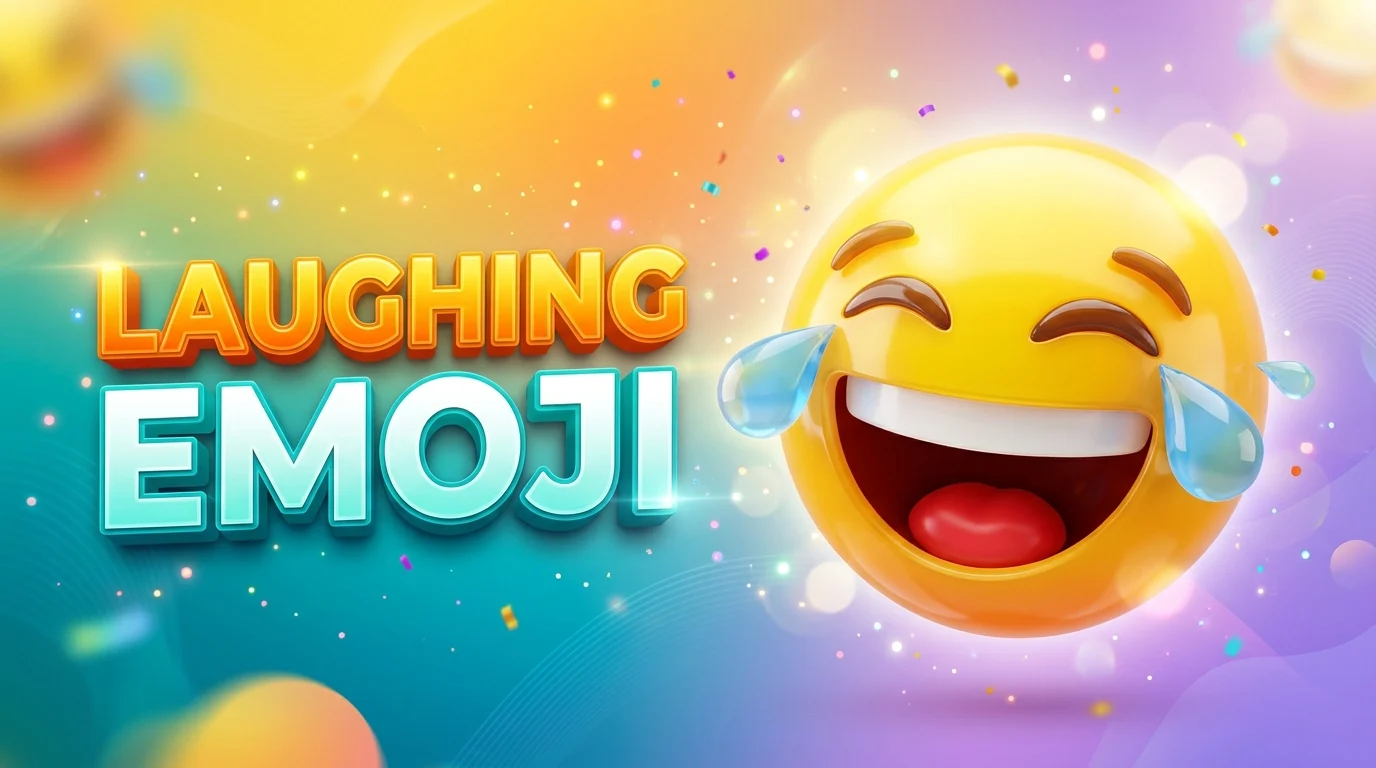
The laughing emoji is one of the most familiar ways to show that something is funny in a digital conversation. People use it to react to jokes, share happiness, express amusement, and make ordinary messages feel more playful. Depending on the expression, it can communicate anything from a small laugh to uncontrollable laughter.
However, a laughing emoji does not always mean the same thing. It can show genuine amusement, friendly teasing, excitement, awkwardness, or even sarcasm. Its meaning depends on the conversation, the relationship between the people, and the way it appears alongside words. Understanding these differences can help you read messages more naturally and avoid confusing a playful reaction with a serious one.
Quick Answer
The laughing emoji usually expresses amusement, happiness, or a strong reaction to something funny.
In some conversations, it can also suggest teasing, nervous laughter, embarrassment, or sarcasm.
What Does the Laughing Emoji Mean?
The term laughing emoji can describe several smiley faces, but the most recognizable one is 😂, commonly called the Face with Tears of Joy. Its expression combines a wide grin, smiling eyes, and tears, making it a natural choice when something feels genuinely funny.
People use laughing emojis to communicate reactions that might otherwise be difficult to express through words alone. A short reply such as “That was hilarious 😂” tells the other person that the message made them laugh. Adding the emoji can also make a comment feel warmer and less serious.
Depending on the symbol, a laughing emoji can communicate:
- Genuine laughter: Something is funny or entertaining.
- Happiness: The sender feels cheerful and amused.
- Playful teasing: The sender is joking with someone.
- Awkward laughter: The sender is unsure how to react.
- Sarcasm: The sender is using humor to show irony or disbelief.
- Over-the-top amusement: The situation feels ridiculously funny.
The important point is that a laughing emoji does not always mean the sender is literally laughing out loud. Sometimes it simply adds a lighthearted tone to the message.
Laughing Emoji Meaning in Text Messages
In text messages, a laughing emoji usually shows that the sender finds something funny. It can be a response to a joke, a funny memory, an unexpected comment, or a playful situation.
For example, if someone writes, “I walked into the wrong classroom,” replying with 😂 suggests that you find the mistake amusing without necessarily making fun of the person.
It can also soften a sentence that might otherwise sound too direct.
Consider the difference:
- “You forgot again.”
- “You forgot again 😂”
The first message may sound like a complaint. The second can feel more like friendly teasing, depending on the relationship and conversation.
People also use multiple laughing emojis to make their reaction feel stronger. One 😂 may show a simple laugh, while 😂😂😂 can suggest that the sender finds something especially funny. Still, repeated emojis do not have a fixed intensity for everyone.
What Does the Laughing Emoji Mean From Someone?
When someone sends you a laughing emoji, they are usually reacting positively to something in the conversation. They may find your message funny, enjoy your sense of humor, or want to keep the exchange light.
However, the meaning depends on what came before it.
- After a joke: They probably found your joke funny.
- After a personal story: They may be laughing with you or responding to an amusing detail.
- After a mistake: They may be teasing you in a friendly way.
- After a serious message: They might be uncomfortable, confused, or using humor to avoid a serious response.
- After a sarcastic comment: They may be agreeing with the sarcasm or making the tone more playful.
A laughing emoji by itself is not proof that someone is flirting, mocking you, or dismissing your feelings. Look at the words around it and the person’s usual communication style before deciding what they mean.
Is the Laughing Emoji Positive?
Most of the time, yes. Laughing emojis are generally associated with amusement, friendliness, and positive reactions. They can make a conversation feel relaxed and help people share a funny moment.
For example, a friend might send 😂 after hearing good news with a funny twist. Someone might also use 😆 to show excitement or 😹 to react playfully to a silly picture.
But a positive-looking expression does not guarantee a positive intention. A laughing emoji can also be used to tease someone, make a sarcastic point, or show disbelief.
The surrounding message is what helps reveal the intended tone.
Can the Laughing Emoji Be Sarcastic?
Yes. A laughing emoji can make sarcasm more obvious, especially when the words express frustration or disbelief.
For example:
- “That was a brilliant idea 😂” could be sincere praise or sarcastic criticism.
- “Sure, because that always works 😂” may suggest that the sender doubts the idea.
- “I’m definitely not late again 😂” can show that the sender knows they have a habit of arriving late.
Sarcasm is easier to recognize when the words and the emoji seem to contradict each other. However, it is not always easy to identify sarcasm through text. If the message feels unclear, consider the sender’s usual sense of humor rather than assuming the worst.
Does the Laughing Emoji Mean Someone Is Making Fun of You?
Not automatically. A laughing emoji can be used to laugh with someone rather than laugh at them.
If a friend sends 😂 after you share an embarrassing story, they may simply be enjoying the funny part of the experience. They might also be trying to make you feel comfortable about a small mistake.
The tone can feel different when the emoji appears after an insult, criticism, or personal insecurity. In that situation, it may come across as mocking.
A useful way to understand the difference is to consider the target of the joke:
- Laughing with you: The humor is shared, and both people seem comfortable.
- Laughing at the situation: The sender finds the event amusing without necessarily criticizing anyone.
- Laughing at you: The message focuses on your mistake or embarrassment in a way that may feel hurtful.
If you are unsure, the rest of the conversation usually provides more clues than the emoji alone.
Does the Laughing Emoji Mean Thank You?
Usually, no. A laughing emoji is mainly a reaction to humor, not a direct way to express gratitude.
However, it can appear in a thank-you message when someone wants to keep the tone friendly or playful.
For example:
- “Thanks for reminding me 😂” suggests that the sender appreciates the reminder and finds the situation funny.
- “You saved me today 😂” can express gratitude with a lighthearted tone.
- “Thank you, I really needed that laugh 😂” connects appreciation with amusement.
If someone wants to express gratitude clearly, words such as “thank you” or a more suitable appreciative expression make the intention easier to understand.
Does the Laughing Emoji Mean Something Is Extremely Funny?
It can, but not every laughing emoji expresses the same level of amusement. Some faces suggest a gentle smile, while others represent loud or exaggerated laughter.
The familiar 😂 often communicates that something is funny enough to bring tears to someone’s eyes. 🤣 usually gives an even more dramatic impression, as if the person cannot stop laughing. 😆 feels energetic and cheerful, while 😅 often combines laughter with relief or awkwardness.
People may also use 😭 or 💀 as laughter reactions in informal online conversations. In those cases, the symbols can mean “I’m laughing so hard” or “That was unbelievably funny,” rather than expressing sadness or death. Emojipedia+2
Related Laughing Emojis and Their Meanings
Not every laughing emoji communicates humor in exactly the same way. Some express strong laughter, while others suggest a softer, nervous, or more playful reaction.
| Emoji | Common Meaning | Tone | Where or When It Is Used |
|---|---|---|---|
| 😂 | Laughing so hard that tears appear | Amused, cheerful | Funny jokes, stories, and messages |
| 🤣 | Extremely intense laughter | Hysterical, exaggerated | Something that feels unbelievably funny |
| 😆 | Big, cheerful laugh | Energetic, playful | Exciting or amusing conversations |
| 😄 | Happy, friendly laughter | Warm, positive | Casual chats and happy reactions |
| 😅 | Nervous or awkward laughter | Embarrassed, relieved | Mistakes and uncomfortable moments |
| 😹 | Cat-like laughter | Silly, playful | Funny animal posts and humorous chats |
| 🤭 | Quiet or hidden laughter | Shy, mischievous | Secret jokes and moments when someone is trying not to laugh |
| 😭 | Crying from laughter in informal use | Dramatic, exaggerated | Extremely funny or overwhelming moments |
😂 vs. 🤣: What’s the Difference?
Both emojis express laughter, but 🤣 generally gives a stronger and more exaggerated reaction.
The 😂 emoji shows a face laughing so hard that tears appear. It works for everyday jokes, funny comments, and amusing stories. It is often a natural choice when you want to show that something made you laugh.
The 🤣 emoji represents rolling on the floor laughing. Its tilted face and tightly closed eyes create a more dramatic expression. It is often used when a joke feels especially hilarious.
In simple terms, 😂 is a familiar everyday laugh, while 🤣 can suggest uncontrollable laughter. The difference is a matter of tone, not a strict rule.
😂 vs. 😆: What’s the Difference?
The 😂 emoji focuses on laughter so strong that it brings tears, while 😆 shows a wide, cheerful grin with tightly closed eyes.
Use 😂 when reacting to a joke or something genuinely funny. Use 😆 when you want to express a happy, excited, or playful reaction.
For example, “That story was hilarious 😂” emphasizes amusement. “We finally won 😆” sounds more like excitement and happiness.
😂 vs. 😅: What’s the Difference?
These two emojis can both appear after a funny moment, but their emotional tones are different.
The 😂 emoji usually communicates clear amusement. The 😅 emoji combines a smile with a drop of sweat, making it useful for awkward laughter, nervousness, or relief.
For example:
- “I can’t believe you said that 😂” suggests genuine laughter.
- “I forgot my keys again 😅” suggests embarrassment or a slightly uncomfortable laugh.
If a situation is funny but also a little awkward, 😅 may communicate the mixed feeling better than 😂.
Is the Laughing Emoji Flirty?
A laughing emoji can appear in flirty conversations, but it is not automatically romantic.
Someone might send 😂 after a playful joke because they enjoy talking to you. It can make the conversation feel relaxed and show that they appreciate your humor.
For example:
- “You always know how to make me laugh 😂”
- “I wasn’t expecting that answer 😂”
- “You’re actually funny 😂”
These messages can feel friendly or flirty depending on the relationship, the conversation, and what the person says next.
The emoji alone does not confirm romantic interest. Look for a broader pattern of affectionate or playful communication before interpreting it as flirting.
Is the Laughing Emoji Rude?
Usually, no. The laughing emoji is generally friendly and playful. However, it can seem rude when someone uses it in a serious or sensitive conversation.
For example, replying with 😂 to someone’s personal problem may make them feel that you are not taking their feelings seriously. Sending it after an insult can also make the message appear mocking.
It is usually appropriate when:
- Both people are sharing a joke.
- The conversation is casual and playful.
- Someone tells a funny story.
- You are laughing at your own mistake.
It may be inappropriate when:
- Someone is discussing a painful experience.
- The other person is asking for serious help.
- The emoji follows a personal insult.
- The sender uses it to dismiss someone’s feelings.
When the topic is serious, a thoughtful written response is often better than a laughing reaction.
Laughing Emoji in Social Media Comments
On social media, laughing emojis are common reactions to jokes, funny posts, unexpected situations, and entertaining comments. They can communicate a reaction without requiring a long reply.
On Instagram, someone might use 😂 under a funny caption or a relatable post. On TikTok, people may use 😂, 😭, or 💀 to react to an unexpected moment or a joke that feels especially funny. In group chats, laughing emojis can help everyone share the same reaction.
The meaning can also depend on the community. Some people prefer 😂 for ordinary laughter, while others use 😭 or 💀 for exaggerated reactions. These informal habits change, so it is better not to assume that everyone uses the same symbol in the same way. Emojipedia+2
Text Message Examples
Here are realistic examples showing how laughing emojis can change the tone of everyday messages.
1. Reacting to a funny story
- Person A: “I waved at someone who wasn’t waving at me.”
- Person B: “That would happen to me too 😂”
Meaning: Person B finds the situation funny and is sharing the amusement.
2. Friendly teasing
- Person A: “I woke up five minutes before my meeting.”
- Person B: “Your timing is always perfect 😂”
Meaning: The sender is playfully teasing the other person.
3. Laughing at a mistake
- Person A: “I sent the message to the wrong group.”
- Person B: “Oh no, what did you send? 😂”
Meaning: The sender finds the situation amusing, though the other person may feel embarrassed.
4. Showing excitement
- Person A: “We’re going on vacation next week!”
- Person B: “That’s amazing 😆”
Meaning: The emoji adds cheerful excitement to the response.
5. Awkward laughter
- Person A: “I called my teacher by the wrong name.”
- Person B: “I would never recover from that 😅”
Meaning: The sender understands the awkwardness and responds with nervous humor.
6. Strong laughter
- Person A: “My little brother tried to teach the dog how to dance.”
- Person B: “I need to see that 😂🤣”
Meaning: The sender thinks the situation sounds extremely funny.
Common Misunderstandings About the Laughing Emoji
1. Thinking It Always Means Genuine Happiness
A laughing emoji often expresses amusement, but it can also communicate awkwardness, sarcasm, or nervousness. The message around it helps clarify the emotion.
2. Assuming It Is Always Friendly
Although it is usually playful, a laughing emoji can feel hurtful when used after a serious comment or personal mistake.
3. Believing It Always Means Someone Is Laughing Out Loud
People often use laughing emojis as simple reactions. They may find a message amusing without actually laughing.
4. Confusing All Laughing Emojis
😂, 🤣, 😆, and 😅 have different expressions and emotional tones. Choosing one over another can change how a message feels.
5. Assuming It Is a Sign of Flirting
A laughing emoji can make a conversation playful, but it does not prove romantic interest. Friendly humor and flirting are not the same thing.
6. Thinking Repeated Emojis Have One Fixed Meaning
Sending 😂😂😂 may emphasize amusement, but people use repeated emojis differently. The number of symbols does not provide a reliable measure of how funny something is.
How to Respond to a Laughing Emoji
Your response depends on the message that came before the emoji. If someone sends a laughing emoji after your joke, you can continue the humor or simply acknowledge their reaction.
- If they laughed at your joke: “I knew you’d find that funny!”
- If they are teasing you: “Don’t laugh, it actually happened!”
- If they share a funny story: “That’s hilarious. What happened next?”
- If they use it after an awkward moment: “At least I can laugh about it now.”
- If you are unsure what they mean: “Are you laughing with me or at me?”
You do not need to respond with another emoji every time. A natural sentence can keep the conversation going just as well.
Frequently Asked Questions
1. What is the most common laughing emoji?
😂 is one of the most recognizable laughing emojis. It usually expresses strong amusement, happiness, or a reaction to something funny.
2. What does 😂 mean from a girl?
It generally means the same thing it does from anyone else: laughter, amusement, or playful teasing. The surrounding conversation helps explain whether the tone is friendly, sarcastic, or possibly flirty.
3. What does 😂 mean from a guy?
A guy may use 😂 to show that he finds something funny, enjoys the conversation, or is joking with you. It does not automatically indicate romantic interest.
4. What is the difference between 😂 and 🤣?
😂 represents laughter with tears of joy, while 🤣 gives a more exaggerated impression of uncontrollable laughter. Both are used to react to funny situations.
5. Can 😂 mean sarcasm?
Yes. When paired with ironic or exaggerated words, 😂 can make a sarcastic comment feel more obvious. The meaning depends on the conversation.
6. Does the laughing emoji mean someone likes you?
Not necessarily. It can show that someone enjoys your humor or feels comfortable talking to you, but it is not enough to establish romantic interest.
7. Why do people use 😭 instead of 😂 for laughing?
In informal online conversations, 😭 can represent laughing so hard that someone is crying. It is often used as an exaggerated reaction to something extremely funny.
8. Is the laughing emoji rude?
It is usually friendly, but it can feel rude if someone sends it in response to a serious problem, personal struggle, or embarrassing situation.
9. Which laughing emoji should I use for an awkward situation?
😅 is often a good choice because it combines a smile with a nervous or relieved expression. It can show that something is funny but also a little uncomfortable.
Conclusion
The laughing emoji is a simple way to express humor, happiness, and playful reactions in digital conversations. While 😂 is commonly used for genuine amusement, other laughing faces can communicate stronger laughter, nervousness, or a more exaggerated reaction.
Its meaning is not always limited to humor. Depending on the conversation, it can also suggest teasing, sarcasm, or awkwardness. Paying attention to the message and the relationship between the people helps you understand the intended tone.
Discover More Post:
- Nails Emoji Meaning Explained | Confidence, Sass & Style in …
- Battery Emoji Meaning | Power, Low Energy & Life’s Daily …
- Frowning Emoji Meaning | Decode the Mood Behind the Face …