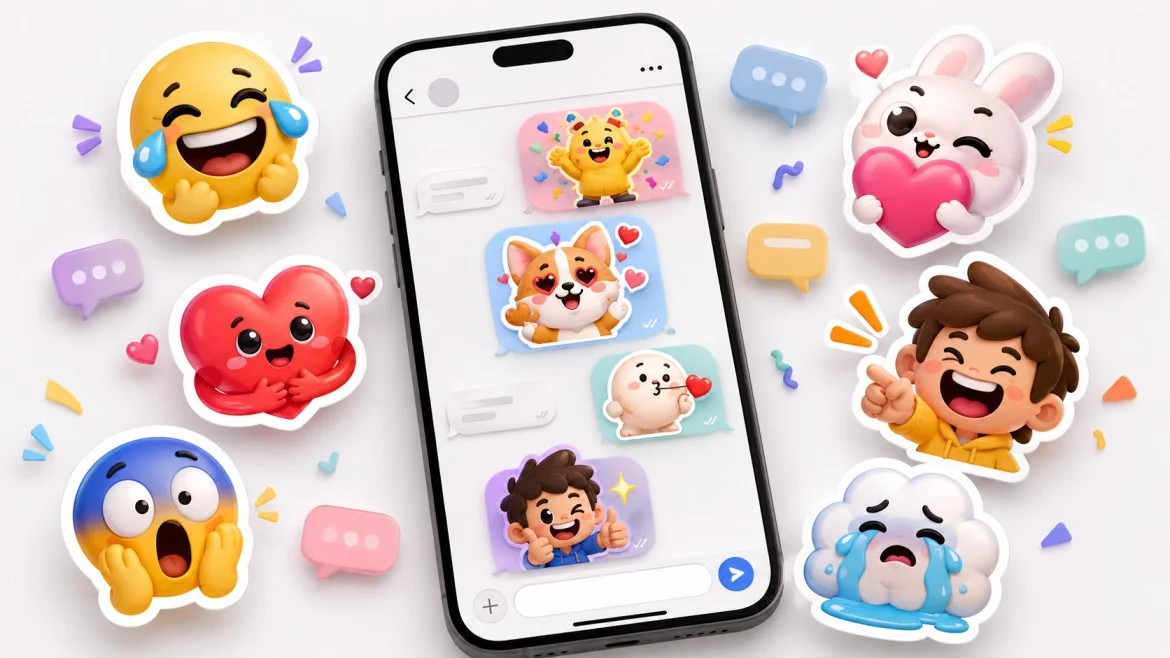
Emoji stickers are visual reactions used in chats and social conversations to express feelings, humor, affection, excitement, surprise, or personality without relying only on words. Unlike standard Unicode emojis such as 😂, ❤️, or 👍, stickers are usually larger graphic images and can be static or animated. They may come from built-in sticker collections, downloadable packs, or custom designs.
The meaning of an emoji sticker depends heavily on its artwork and the situation in which it is sent. A laughing sticker might mean “that is hilarious,” while a heart sticker can show affection, appreciation, or simple friendliness. Stickers can also feel more expressive than a single emoji because their larger format gives them room for characters, gestures, text, and visual details. Research on messaging behavior has found that stickers are often used as more self-contained expressions, while emojis commonly modify or add emotion to written messages.
Quick Answer:
Emoji stickers are larger visual reactions used in digital conversations to communicate emotions, jokes, affection, reactions, or personality.
They are similar to emojis but are not the same thing. Standard emojis are part of Unicode and can appear inline with text, while stickers are generally image-based graphics that are created and distributed through individual apps or sticker collections.
What Are Emoji Stickers?
Emoji stickers are graphic images designed to communicate an idea or reaction visually.
They can show:
- Facial expressions
- Emotions
- Characters
- Animals
- Gestures
- Objects
- Short phrases
- Memes
- Reactions
- Animated scenes
A regular emoji might look like this:
😂
A sticker could show a cartoon character laughing, crying with laughter, holding its stomach, and surrounded by exaggerated visual effects.
That difference gives stickers more room to communicate a complete reaction.
The term emoji sticker is also used casually because some stickers are designed around familiar emoji faces or emoji-like characters. Technically, however, a sticker is not automatically a Unicode emoji.
Emojipedia explains that emojis are part of the Unicode Standard, while stickers and emotes do not follow the same Unicode system.
Emoji Stickers vs. Regular Emojis
The easiest way to understand the difference is to think of an emoji as a standardized character and a sticker as a graphic.
Standard emojis are encoded in Unicode. This allows characters such as 😊 and ❤️ to be inserted directly into text across supported devices and platforms. Their artwork can look different on Apple, Google, Samsung, and other systems, but the underlying emoji character remains the same.
Stickers work differently. They are generally image-based, can be much larger, and may be static or animated. Sticker collections can also contain custom artwork that is not part of Unicode.
This means a sticker can communicate a much more specific reaction than a single emoji.
For example:
“I can’t believe you did that 😂”
uses an emoji to add emotion to a sentence.
A large laughing sticker can communicate the reaction by itself without any written message.
What Do Emoji Stickers Mean?
There is no single meaning for all emoji stickers.
The meaning comes from the image, words, relationship, and conversation around the sticker.
A heart-themed sticker may communicate:
- Love
- Affection
- Appreciation
- Support
- Friendship
- Gratitude
A crying sticker might communicate:
- Genuine sadness
- Missing someone
- Disappointment
- Emotional overwhelm
- Playful exaggeration
A laughing sticker may communicate:
- Something is genuinely funny
- The sender is teasing
- The sender finds a situation ridiculous
- The sender wants to make the conversation lighter
This is why interpreting a sticker works differently from looking up the meaning of a specific Unicode emoji. A sticker can contain several visual clues at once.
Why Do People Use Emoji Stickers?
People use stickers because they can communicate a reaction quickly and visually.
A sticker can make a message feel:
- More expressive
- More playful
- More personal
- More humorous
- More affectionate
- More dramatic
- More casual
Research into emoji and sticker use has found that people often use emojis to modify text, soften its tone, or add emotional emphasis, while stickers are more often used for self-contained expressions, humor, personality, and specific reactions.
For example, instead of writing:
“That is so funny. I can’t stop laughing.”
someone might simply send a large laughing sticker.
The sticker becomes the response.
Emoji Stickers in Texting
In everyday texting, stickers can work as complete replies or as additions to written messages.
As a complete response
Friend: “I finally finished the project!”
You might send a celebratory sticker.
The sticker communicates:
“That’s great!”
without requiring a full sentence.
Alongside text
“You actually did it! 😂”
followed by a funny reaction sticker can make the message feel more animated.
As emotional support
Someone might send a comforting sticker after a friend says:
“Today has been awful.”
A supportive character, heart, hug, or comforting image can communicate empathy without needing a long explanation.
Are Emoji Stickers the Same as Emojis?
No. They can look similar, but they are technically different.
Unicode emojis are standardized characters. The Unicode Consortium maintains emoji data and charts that identify emoji characters, sequences, names, and related information.
Stickers are generally images rather than Unicode characters. They can be designed independently by artists, companies, communities, or users.
This difference also explains why a sticker may contain artwork or wording that has no equivalent Unicode emoji.
Emoji Stickers vs. Emoticons
Emoji stickers are also different from emoticons.
An emoticon uses ordinary keyboard characters to create an expression.
Examples include:
🙂
🙁
😉
Emoji are graphical characters such as:
😀 😢 ❤️ 👍
Stickers are usually larger images or animations.
So the basic difference is:
Emoticon: punctuation and keyboard characters
Emoji: standardized Unicode character
Sticker: image or animation
Modern messaging apps can make these categories feel visually similar, but technically they are different forms of digital expression. Academic research also distinguishes emojis, emoticons, and stickers by their technical structure and use.
What Is the Difference Between an Emoji Sticker and a Custom Sticker?
A custom sticker is a sticker created or selected by a user rather than being limited to a standard built-in set.
For example, someone could turn:
- A personal photo
- A drawing
- A pet
- A cartoon character
- A reaction image
- A piece of artwork
into a sticker, depending on what the messaging service allows.
This makes stickers much more flexible than standard Unicode emojis.
A Unicode emoji has to fit within the Unicode emoji system, while custom stickers can represent highly specific people, jokes, expressions, and situations.
Are Emoji Stickers Animated?
Some are.
Stickers can be static or animated depending on the service and sticker collection. Academic research has identified stickers as capable of static and animated forms, while Unicode emojis are standardized characters whose appearance can vary by platform.
An animated sticker might:
- Wave
- Dance
- Cry
- Laugh
- Blow a kiss
- Celebrate
- Clap
- React dramatically
Animation can make the reaction feel stronger because movement becomes part of the message.
What Do Cute Emoji Stickers Mean?
Cute stickers often add warmth or playfulness to a conversation.
A cute animal, smiling character, heart, or blushing character may suggest:
- Affection
- Friendliness
- Excitement
- Appreciation
- Playful embarrassment
- Support
However, “cute” does not automatically mean romantic.
For example, sending a cute sticker to a close friend may simply be part of a playful friendship.
Context matters more than the artwork alone.
Are Emoji Stickers Flirty?
They can be, but a sticker does not automatically mean flirting.
A sticker showing a kiss, heart, blush, or affectionate character may feel romantic when used between people who are already flirting.
The same sticker could also be playful or friendly between close friends.
Consider:
“Goodnight ❤️”
A heart may carry different weight depending on the relationship.
Likewise, an affectionate sticker can feel romantic in one conversation and completely casual in another.
Avoid treating one sticker as proof of attraction. The surrounding conversation and relationship provide much stronger clues.
Can Emoji Stickers Be Sarcastic?
Yes.
Stickers are especially useful for exaggerated or sarcastic reactions because their artwork can make the intended tone more obvious.
For example, someone might respond to:
“I only spent three hours fixing this tiny problem.”
with an exaggerated applause or crying sticker.
The intended meaning might be:
“Wow, what an achievement.”
but in a joking or sarcastic way.
A dramatic sticker can therefore strengthen humor without requiring the sender to explain the joke.
Can Emoji Stickers Be Rude?
A sticker is not automatically rude, but some reactions can easily come across that way.
A laughing sticker sent after someone’s mistake could be friendly teasing or an insensitive response.
A dismissive character might communicate:
- “Whatever.”
- “I don’t care.”
- “That’s ridiculous.”
- “Not interested.”
The same sticker can land differently depending on the relationship.
If the subject is serious, a joking sticker may feel dismissive even if the sender intended humor.
Related Emojis and Reactions to Use With Stickers
Because emoji stickers often communicate emotions that can also be expressed with standard emojis, it helps to know which Unicode emojis are closest in meaning.
| Emoji | Official Name | Common Meaning | Tone | Where or When It Is Used |
|---|---|---|---|---|
| 😂 | Face with Tears of Joy | Strong laughter or amusement | Joyful, humorous | Funny messages, jokes, reactions |
| 😭 | Loudly Crying Face | Intense crying or dramatic emotion | Emotional, dramatic, sometimes humorous | Sadness, frustration, exaggerated reactions |
| 🥹 | Face Holding Back Tears | Feeling touched, grateful, or emotional | Tender, affectionate | Sweet moments, appreciation, emotional replies |
| ❤️ | Red Heart | Love, affection, care, or appreciation | Warm, affectionate | Relationships, friendship, support |
| 🥰 | Smiling Face with Hearts | Affection, love, or feeling delighted | Loving, sweet | Compliments, affection, romantic or friendly messages |
| 🤣 | Rolling on the Floor Laughing | Very strong laughter | Highly playful | Extremely funny reactions |
| 🥺 | Pleading Face | Vulnerability, pleading, or a cute request | Soft, emotional, playful | Requests, affection, sympathy |
| 🤗 | Smiling Face with Open Hands | Warmth, welcome, or a hug-like reaction | Friendly, supportive | Greetings, comfort, appreciation |
The key difference is that these are Unicode emojis, while an emoji sticker can combine similar emotions with larger artwork, text, characters, and animation. Unicode’s current emoji charts provide the standardized names and character information for these emoji.
If you want a small reaction that fits naturally inside a sentence, a regular emoji is usually the simpler choice. If you want the reaction itself to become the main message, a sticker can be more expressive.
How to Choose Between an Emoji and a Sticker
Choose a regular emoji when you want to:
- Add emotion to written text
- Keep your response short
- Make a sentence warmer
- Add humor without taking over the conversation
- Use a standardized character
Choose a sticker when you want to:
- Send a complete reaction
- Make the response more visual
- Show a specific personality or mood
- Use a character or scene
- Make a dramatic or funny reaction
- Communicate without writing a sentence
For example:
“Thank you ❤️”
is simple and direct.
A large animated thank-you sticker can make the same idea feel more energetic or personal.
Emoji Sticker Examples for Different Situations
When someone shares good news
“You got the job!”
A celebration sticker can communicate excitement and congratulations.
When a friend tells a funny story
“No way 😂”
A laughing sticker can reinforce the humor and make the response more playful.
When someone is having a bad day
“I’m sorry you’re dealing with that.”
A comforting sticker can add warmth without turning the response into a joke.
When someone sends a cute photo
“Stoppp, this is adorable 🥹”
A cute or heart-themed sticker can reinforce the affectionate reaction.
When teasing a friend
“You really thought that would work? 😂”
A dramatic reaction sticker can make the teasing feel more playful.
The same sticker can have different meanings in different situations, so the message around it still matters.
How to Respond to an Emoji Sticker
There is no single correct response.
Match your reply to the sticker’s apparent purpose.
- If it is funny
“I can’t 😂”
- If it is supportive
“Aww, thank you ❤️”
- If it celebrates something
“Let’s gooo! 🎉”
- If it is affectionate
“You’re too sweet 🥹”
- If you don’t understand it
“Wait, what does that sticker mean? 😂”
A natural response is usually better than trying to decode every tiny visual detail.
Why Sticker Meaning Can Be Hard to Understand
Stickers are more flexible than standard emojis, which can also make them more ambiguous.
A sticker may combine:
- Facial expression
- Body language
- Text
- Color
- Character
- Animation
- Cultural references
- Humor
The recipient has to interpret all of those elements together.
This is different from a standardized emoji where the underlying character has an official Unicode identity.
Research on stickers also suggests that their larger size and self-contained nature can make them more expressive and intense than emojis used alongside text.
Do Emoji Stickers Have Official Meanings?
Usually, individual stickers do not have the same standardized naming system as Unicode emojis.
Unicode provides standardized emoji characters and related data. Stickers are generally created outside that system, so their interpretation comes from the artwork, accompanying text, sticker pack, and context.
That is why you can look up the official name of 😂, but a custom cartoon sticker may have no universal official meaning at all.
A sticker pack may give a character its own recurring personality or style, which can also influence how its stickers are understood.
Why Do Stickers Feel More Expressive Than Emojis?
One reason is size.
A standard emoji can sit next to words:
“I’m so happy 😂”
A sticker can occupy a much larger part of the conversation and show an entire character reacting.
Research into Facebook Messenger communication found that stickers were associated with more expressive, specific, fun, cute, and personality-driven uses, while emojis were often used to modify text, express emotion, emphasize a message, or soften its tone.
This does not mean stickers are always better. It simply means they serve slightly different communication roles.
Common Misunderstandings About Emoji Stickers
A heart sticker does not always mean romance
It can express friendship, gratitude, support, or affection.
A crying sticker does not always mean genuine sadness
It may be dramatic humor or playful exaggeration.
A laughing sticker does not always mean the sender is laughing at you
It could be a reaction to the situation rather than the person.
A cute sticker does not automatically mean flirting
The relationship and conversation matter.
A sticker does not always have one universal meaning
Custom artwork can be interpreted differently by different people.
Frequently Asked Questions
What are emoji stickers?
Emoji stickers are larger graphic images or animations used in digital conversations to express emotions, reactions, ideas, humor, or personality. They are similar to emojis but are generally image-based rather than standardized Unicode characters.
Are emoji stickers the same as emojis?
No. Unicode emojis are standardized characters that can appear inline with text. Stickers are generally larger images or animations and are not part of the Unicode emoji character set.
What do emoji stickers mean in text?
Their meaning depends on the sticker’s artwork and context. They can express laughter, sadness, love, support, excitement, surprise, frustration, or many other reactions.
Are emoji stickers better than emojis?
Neither is universally better. Emojis are useful for adding emotion to written messages, while stickers can work as larger, more complete reactions.
Can I use emoji stickers for flirting?
Yes, affectionate or playful stickers can be used in flirting, but a sticker alone does not prove romantic interest.
Can emoji stickers be animated?
Yes. Stickers can be static or animated, depending on the sticker system and app.
Can I create my own emoji stickers?
Many messaging services allow users to create or add custom stickers, although the exact features depend on the service. Custom stickers can be based on personal images, artwork, or other designs.
Why do people send stickers instead of text?
A sticker can communicate a complete reaction quickly and visually. It can also make a conversation feel more playful, personal, humorous, or expressive. Research has found that stickers are often used for self-contained reactions and personality-driven communication.
Final Takeaway
Emoji stickers are a flexible form of visual communication that sits alongside, rather than simply replacing, standard emojis. A regular emoji such as 😂 or ❤️ works as a standardized Unicode character that can be placed directly into text, while a sticker usually works as a larger image or animation with much more room for personality and detail.
The meaning of an emoji sticker comes from more than its picture. The words around it, the relationship between the people chatting, the situation, and the style of the sticker all shape how it is understood. When you want a quick emotional accent, an emoji may be enough. When the reaction itself is the message, a sticker can make that feeling much more visible.
Read More Related Articles:
- Robot Emoji Meaning | What It Really Says in Texts, Chats …
- Handshake Emoji Meaning | What Does Mean in Texts?
- Thank You Emoji Meaning | Best Emojis to Say Thanks