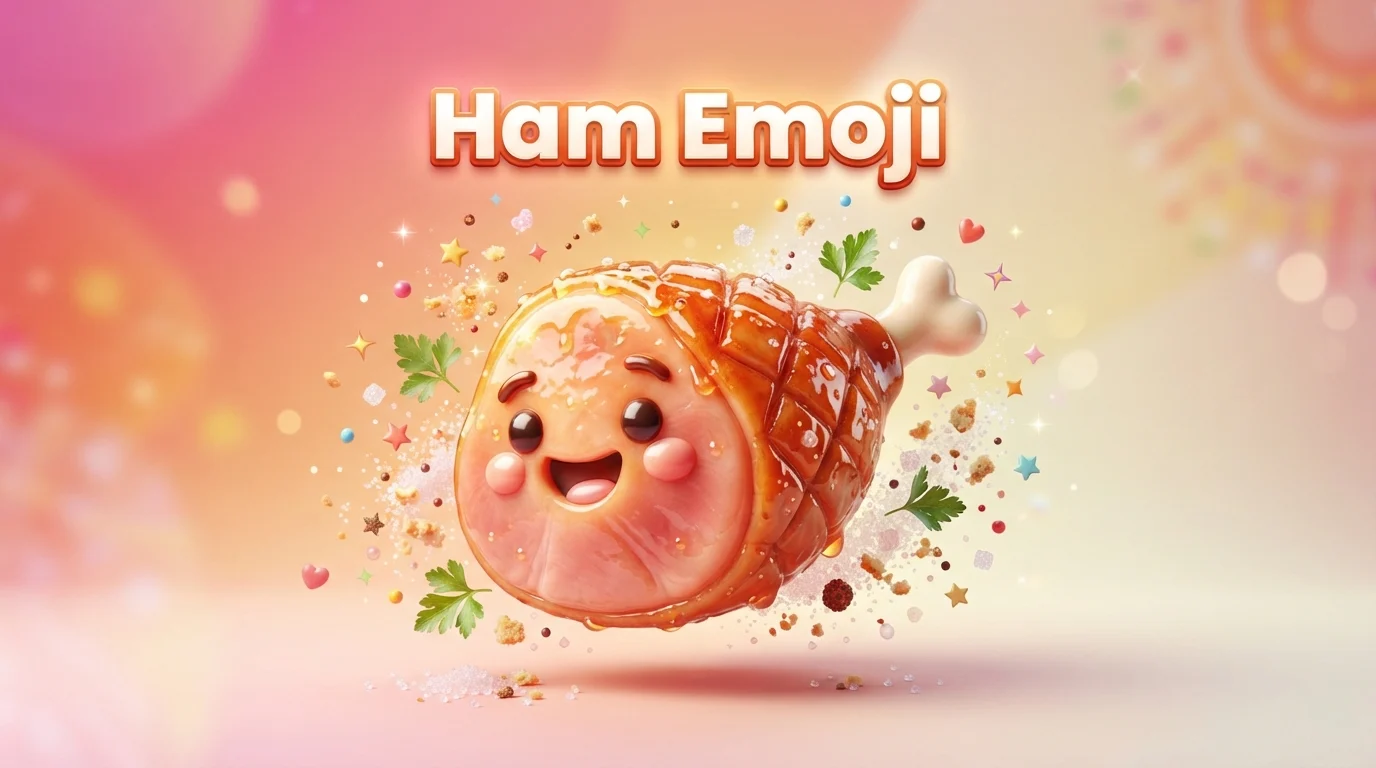
The ham emoji 🍖 officially represents Meat on Bone, a piece of cooked meat attached to a bone. It is commonly used for food, meals, cooking, barbecue, grilling, or a hearty meat dish. Because its design resembles a ham hock, people may casually call it the ham emoji. In messages, 🍖 can describe a meal, a craving, a recipe, or a food post.
Its meaning can change with context, especially in jokes or slang. This guide explains what 🍖 means in texts, how it differs from similar food emojis, and when it fits naturally. You will also find examples, misunderstandings, response ideas, copy and paste options, and Unicode details. The key point is simple: 🍖 suggests meat, while its official name is Meat on Bone.
Quick Answer
The ham emoji 🍖 usually represents meat, a meat-based meal, cooking, barbecue, or a hearty food craving. Although people commonly call it the ham emoji because it resembles a ham hock, its official Unicode name is Meat on Bone.
What Does the Ham Emoji 🍖 Mean?
The 🍖 emoji is officially called Meat on Bone. Unicode identifies it with the code point U+1F356 and places it among food symbols. Its visual design shows a piece of meat attached to a bone.
Because the image can look like a ham hock, many people naturally refer to it as the ham emoji.
Its most common meanings include:
- Meat
- Ham or ham-like food
- A cooked meat dish
- Barbecue or grilling
- Eating or a meal
- A craving for meat
- Food-related humor
- A hearty or indulgent meal
The exact meaning depends on the conversation.
For example:
“Dinner was amazing 🍖”
Here, 🍖 simply reinforces the idea of a hearty meat-based meal.
But:
“I need some 🍖 after that workout.”
The emoji may emphasize hunger or wanting a substantial meal.
🍖 Meaning in Text Messages
In texting, the ham emoji is usually straightforward. Someone may use it when talking about:
- What they are eating
- A barbecue
- A restaurant meal
- Cooking
- A recipe
- Meat cravings
- Holiday food
- A big dinner
- Food jokes
For example:
“Making dinner tonight 🍖”
This most likely means the person is preparing a meat-based meal.
Another example:
“That barbecue was 🔥🍖”
Here, 🍖 visually reinforces the barbecue or grilled-food theme.
The emoji does not automatically carry a hidden emotional meaning. In most food-related conversations, its literal meaning is the best starting point.
What Does 🍖 Mean From Someone?
If someone sends you 🍖 by itself, the safest interpretation is meat or food.
The surrounding conversation can make the meaning more specific.
If You Were Talking About Dinner
“What are you having tonight? 🍖”
The emoji likely represents the meal or a meat dish.
If You Were Discussing Cooking
“Finally got the grill going 🍖🔥”
Here, it suggests grilling or barbecue food.
If Someone Is Hungry
“I haven’t eaten all day. I need 🍖.”
The emoji represents a substantial or satisfying meal.
If Someone Sends It as a Joke
“Bro went straight for the 🍖 😂”
The meaning depends on the joke and the surrounding conversation.
The emoji alone does not prove that the sender is flirting, making a sexual reference, or using slang.
Is the Ham Emoji Flirty?
Usually, no. 🍖 is primarily a food emoji.
Someone could use it in a playful or suggestive conversation, but that meaning would come from the surrounding words rather than from the standard meaning of the emoji.
For example:
“That steak looks amazing 🍖”
This is clearly food-related.
If someone uses 🍖 alongside suggestive wording, the interpretation may change, but it is better to consider the complete message rather than assigning a hidden meaning to the emoji itself.
Can 🍖 Mean “Going Ham”?
The phrase “going ham” is a separate slang expression that can refer to acting with extreme energy, intensity, or enthusiasm.
Someone might use 🍖 alongside words such as:
“He went ham on that game 🍖🔥”
In that sentence, the words “went ham” create the slang meaning. The emoji adds a visual connection to the phrase.
However, 🍖 does not automatically mean “going ham” whenever it appears. A message about dinner may simply be talking about meat.
Can 🍖 Be Used as a Joke?
Yes. Food emojis are often flexible in humorous messages.
For example:
“Me after seeing the buffet: 🍖👀”
The emoji helps create a playful reaction to food.
Another example:
“No vegetables today. 🍖😂”
Here, the tone is humorous rather than technical or literal.
The same emoji can feel completely different depending on the wording around it.
Emotional Tone of 🍖
The ham emoji does not represent a facial expression, so it does not have a built-in emotional tone like 😂, 😢, or 😡.
Its tone usually comes from context.
Neutral
“We are having ham for dinner 🍖”
Simple and literal.
Excited
“BBQ tonight! 🍖🔥”
The surrounding emojis and words make it feel enthusiastic.
Playful
“Bring me the biggest piece 🍖😂”
The emoji contributes to a humorous food-related message.
Indulgent
“I deserve a huge dinner after today 🍖”
Here, the emoji can reinforce the idea of a hearty meal.
Ham Emoji vs. Similar Food Emojis
| Emoji | Official Name | Common Meaning | Tone | Where or When It Is Used |
|---|---|---|---|---|
| 🍖 | Meat on Bone | Meat, ham-like food, hearty meal | Casual, food-focused | Meals, barbecue, cooking, food posts |
| 🍗 | Poultry Leg | Chicken, turkey, drumstick | Casual, appetizing | Poultry dishes, dinners, cooking |
| 🥩 | Cut of Meat | Steak, chop, or meat | Food-focused, hearty | Steak dinners, grilling, restaurants |
| 🥓 | Bacon | Bacon, breakfast, meat | Casual, playful | Breakfast, recipes, food jokes |
| 🍔 | Hamburger | Burger or fast food | Casual, upbeat | Lunch, dinner, fast food |
| 🌭 | Hot Dog | Hot dog or sausage | Casual, playful | Cookouts, sports events, snacks |
| 🥪 | Sandwich | Sandwich or quick meal | Neutral, casual | Lunch, snacks, meal discussions |
| 🍳 | Cooking | Cooking, fried egg, breakfast | Casual, practical | Recipes, breakfast, cooking |
| 🍽️ | Fork and Knife with Plate | Meal, dining, restaurant | Neutral, food-focused | Restaurant meals, dinner plans |
The closest visual and semantic alternatives are 🍗 Poultry Leg and 🥩 Cut of Meat. 🍗 specifically points toward poultry, while 🥩 focuses on a cut of meat such as steak or a chop. Unicode lists these separately from 🍖, which is officially Meat on Bone.
If you want to emphasize a general bone-in meat dish, 🍖 is a natural choice. If you specifically mean chicken or turkey, 🍗 is clearer. For steak or a meat cut without a visible bone, 🥩 is usually more precise.
🍖 vs. 🍗: What’s the Difference?
The biggest difference is the type of food suggested.
🍖 Meat on Bone is a general bone-in meat symbol.
🍗 Poultry Leg specifically represents a poultry leg, commonly understood as chicken or turkey.
For example:
“We are having chicken tonight 🍗”
is more specific than:
“We are having meat tonight 🍖”
If the exact type of meat is not important, 🍖 works well.
🍖 vs. 🥩: What’s the Difference?
🍖 shows meat attached to a bone, while 🥩 represents a cut of meat.
Use 🍖 when you want to suggest:
- Bone-in meat
- A ham-like dish
- Barbecue
- A hearty meat meal
Use 🥩 when you want to suggest:
- Steak
- A meat cut
- Grilling steak
- A restaurant steak dinner
Unicode’s emoji data identifies 🥩 as Cut of Meat, with keywords including chop, lambchop, porkchop, and steak.
🍖 vs. 🥓: What’s the Difference?
🥓 is specifically Bacon, while 🍖 is the broader Meat on Bone symbol.
For example:
“Breakfast with bacon 🥓”
is specific.
“BBQ tonight 🍖”
is more general.
If bacon is the subject, 🥓 is the better choice. If you’re talking about a large meat dish or bone-in meat, 🍖 fits better.
Realistic Text Message Examples
Talking About Dinner
Message:
“Dinner is finally ready 🍖”
Likely meaning: The person is emphasizing a meat-based meal.
Talking About Barbecue
Message:
“Grill is fired up 🍖🔥”
Likely meaning: The emoji represents meat being prepared on the grill.
Expressing Hunger
Message:
“I could seriously use some 🍖 right now.”
Likely meaning: The sender wants a hearty meal or is craving meat.
Food Humor
Message:
“Me pretending I only want a small portion 🍖😂”
Likely meaning: A playful joke about eating a large amount of food.
Talking About a Restaurant
Message:
“That place serves the best ribs 🍖”
Likely meaning: The emoji reinforces the meat or restaurant-food topic.
Common Misunderstandings About the Ham Emoji
🍖 Does not officially mean ham
The common name “ham emoji” makes sense because of its appearance, but Unicode’s official name is Meat on Bone.
🍖 Does not always mean pork
The emoji represents meat on a bone rather than a specific animal. Unicode’s annotations identify the concepts as “bone” and “meat.”
🍖 Does not automatically mean “going ham”
That slang meaning comes from the phrase itself. The emoji can accompany the phrase, but its basic meaning remains food or meat.
🍖 Is not automatically sexual
Some emojis can acquire suggestive meanings in particular conversations. However, 🍖 does not have a standard sexual meaning. Context is necessary before interpreting an unusual use.
🍖 Does not guarantee a specific dish
A person using 🍖 may mean ham, ribs, another bone-in meat, barbecue, or simply food in general.
How to Respond to the Ham Emoji
Your response can be simple if the conversation is about food.
If someone sends 🍖 while talking about dinner
“That sounds good!”
If they are talking about barbecue
“Now I’m hungry 😂”
If they send 🍖 with a food photo
“That looks delicious!”
If you are unsure what they mean
“What are you having?”
If they are clearly joking
“😂 You really went all in.”
There is no special response required for 🍖. Match the tone of the message around it.
Ham Emoji Copy and Paste
🍖
Copy and paste the ham emoji into texts, captions, comments, recipes, or food-related posts.
Useful combinations include:
- 🍖🔥 for grilled or barbecue food
- 🍖🍽️ for a meal
- 🍖😋 for enjoying meat or a hearty dish
- 🍖😂 for food humor
- 🍖🥩 for a meat-focused meal
- 🍖🍔 for a casual food theme
- 🍖👀 for showing interest in food
Official Name and Technical Details
The official Unicode name of 🍖 is MEAT ON BONE.
- Emoji: 🍖
- Official Unicode name: Meat on Bone
- Code point: U+1F356
- Unicode category: Food symbol
- Unicode version: 6.0
- Emoji version: 1.0
Unicode’s current character charts identify U+1F356 as MEAT ON BONE, while its emoji charts list 🍖 among food-related emoji.
Emojipedia describes the character as a piece of meat on a bone and notes that its appearance can resemble a ham hock. This is why “ham emoji” is a common descriptive name even though it is not the official Unicode name.
Different platforms can render the emoji with small visual differences, such as changes in color, shape, bone size, or meat texture. The underlying Unicode character remains U+1F356.
Frequently Asked Questions
What does the ham emoji 🍖 mean?
The ham emoji 🍖 usually represents meat, a meat-based meal, cooking, barbecue, or a hearty food craving. Its official name is Meat on Bone.
Is 🍖 actually a ham emoji?
Not officially. Unicode calls 🍖 Meat on Bone. It can look like a ham hock, which is why people commonly call it the ham emoji.
What does 🍖 mean in texting?
In texting, 🍖 usually refers to meat, food, dinner, barbecue, cooking, or a craving for a hearty meal.
What is the difference between 🍖 and 🍗?
🍖 represents general meat on a bone, while 🍗 specifically represents a poultry leg such as chicken or turkey.
What is the difference between 🍖 and 🥩?
🍖 shows meat attached to a bone, while 🥩 represents a cut of meat such as steak or a chop.
Does 🍖 mean “going ham”?
It can be used alongside the phrase “going ham,” but the emoji itself does not automatically mean that slang expression.
Is 🍖 a flirty emoji?
Not normally. 🍖 is primarily a food emoji. Any unusual or suggestive interpretation depends on the surrounding conversation.
Can 🍖 mean barbecue?
Yes. It can naturally represent barbecue, grilling, or grilled meat when the context involves cooking outdoors or a barbecue meal.
Conclusion
The ham emoji 🍖 is officially called Meat on Bone and is mainly used to represent meat, food, cooking, barbecue, or a hearty meal. Calling it the ham emoji is understandable because its design resembles a ham hock, but the official Unicode name is broader.
When you see 🍖 in a message, start with the literal food meaning. If the conversation includes phrases such as “going ham” or a joke, the context may add another layer. For clearer food communication, choose 🍗 for poultry, 🥩 for a cut of meat, and 🥓 for bacon.
Read More Related Articles:
- Peace Emoji Meaning | Symbolism, Uses & Positive Vibes …
- Yikes Emoji Meaning | Reactions, Uses & Hidden Emotional …
- X Emoji Meaning | What It Really Means in Texts and Chats in …