Quick Answer:
😴 usually means sleeping, feeling sleepy, tired, or ready for bed.
It can also be used playfully to mean something is boring or to signal “good night,” depending on context.
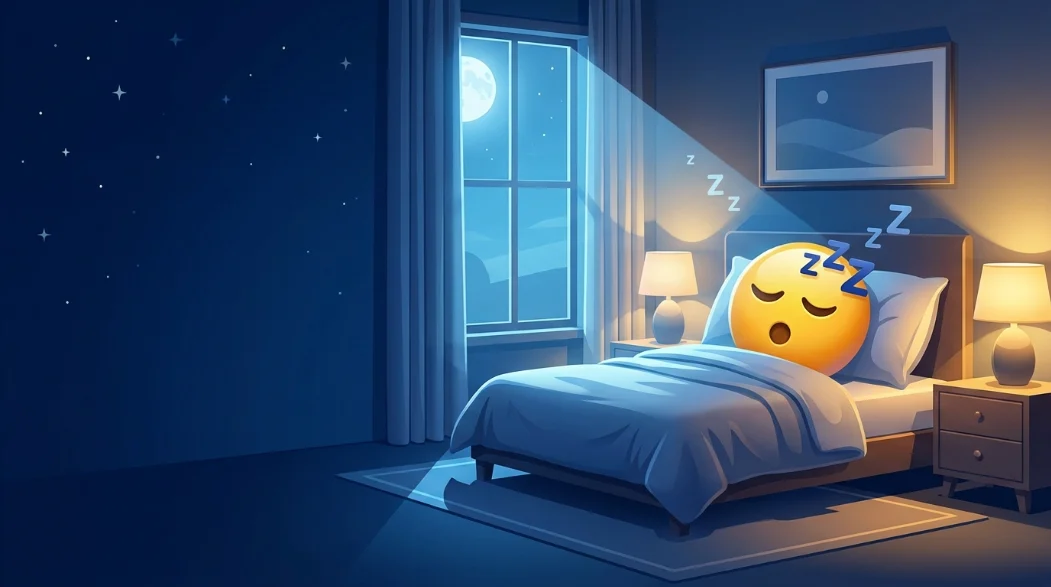
The sleep emoji 😴, officially called Sleeping Face, usually represents sleeping, sleepiness, bedtime, or being tired. Its closed eyes, open mouth, and floating “Zzz” symbols make the meaning fairly easy to recognize. People often use it in texts to say they are going to sleep, feel exhausted, or want to wish someone good night. It can also describe a nap, dreaming, or simply being in a sleepy mood.
Context can give 😴 a slightly different meaning. Someone might use it literally after saying they are heading to bed, while another person might use it jokingly to say a movie, conversation, or topic is boring. The emoji itself does not automatically express sadness, annoyance, or a particular relationship feeling. The surrounding words and the situation provide most of the extra meaning.
What Does the Sleep Emoji 😴 Mean?
The most common meaning of 😴 is sleeping or feeling sleepy.
The emoji shows a yellow face with closed eyes, an open mouth, and three “Zzz” symbols above the head. Those visual elements represent sleep or light snoring.
People may use 😴 when they are:
- Going to bed
- Feeling sleepy
- Taking a nap
- Extremely tired
- Talking about sleep
- Saying good night
- Joking about being bored
- Describing someone who has fallen asleep
For example:
“I can barely keep my eyes open 😴”
Here, the emoji clearly communicates sleepiness.
But:
“That meeting was 😴”
uses the emoji more figuratively to suggest that the meeting was boring.
😴 Meaning in Text Messages
In texting, 😴 is often a simple way to communicate “I’m sleepy” or “I’m going to sleep.”
For example:
“I have work at 6 tomorrow 😴”
This probably means the sender is tired or preparing for bed.
It can also replace a longer phrase:
“Goodnight 😴”
In that situation, the emoji adds a visual sleep-related feeling to the goodnight message.
Another common use is describing how tired someone feels:
“After that workout, I’m done 😴”
The person is not necessarily asleep yet. They are using the emoji to exaggerate their level of tiredness.
Emotional Tone of 😴
The Sleeping Face emoji generally has a calm, sleepy, relaxed, or tired tone.
Its emotional effect depends on the message.
Calm and sleepy
“I’m heading to bed now 😴”
This is a straightforward use.
Tired
“Long day. I need sleep 😴”
Here, it emphasizes exhaustion.
Cute or playful
“Five more minutes in bed 😴”
The emoji can make the message feel lighthearted.
Bored
“Another three-hour lecture 😴”
Here, 😴 is being used figuratively to communicate boredom.
The emoji itself does not guarantee that the sender is actually asleep.
Does 😴 Mean “Good Night”?
It can.
When someone sends 😴 alongside a bedtime message, it can reinforce the idea of going to sleep or saying good night.
For example:
“Good night, sleep well 😴”
or:
“I’m off to bed 😴”
In these messages, the meaning is direct.
However, sending 😴 by itself does not always mean “good night.” It might simply mean the person is tired, sleepy, or bored.
Can 😴 Mean Tired?
Yes. 😴 can represent tiredness or sleepiness, especially when someone is talking about needing rest.
For example:
“I stayed up until 2 a.m. 😴”
The emoji helps communicate the consequence of not getting enough sleep.
There is a small difference between being tired and being asleep. 😴 can be used for both ideas, but the exact wording tells you which one the sender intends.
Compare:
“I’m so tired 😴”
with:
“He’s already asleep 😴”
The first expresses a feeling. The second describes a sleeping state.
Can 😴 Mean Bored?
Yes, but this is a secondary, contextual use.
Emojipedia notes that Sleeping Face can sometimes be used to represent something boring or a “snooze.”
For example:
“That movie was three hours of 😴”
Here, the sender probably does not mean that they literally fell asleep. They are using sleep as a humorous way to say the movie was dull.
Similarly:
“Me pretending to pay attention in this meeting 😴”
uses the emoji for comic exaggeration.
When the surrounding message talks about an activity rather than actual sleep, the boredom meaning becomes more likely.
What Does 😴 Mean From Someone?
If someone sends you 😴, look at the message around it before deciding what they mean.
It could indicate:
- They are tired.
- They are going to sleep.
- They just woke up or are still sleepy.
- They want to say good night.
- They are joking about being exhausted.
- They think something is boring.
- They are exaggerating how tired they feel.
For example:
“I’m going to bed 😴”
Means they are probably ending the conversation for the night.
“I’m exhausted 😴”
Emphasizes tiredness.
“Your story has me like 😴”
Could jokingly mean the story is boring.
The emoji alone is not enough to determine the sender’s exact intention.
Is 😴 Flirty?
😴 is not normally a flirty emoji.
It is primarily associated with sleep, tiredness, bedtime, and sometimes boredom. If it appears in a romantic conversation, the surrounding words matter much more than the emoji.
For example:
“Goodnight ❤️😴”
The ❤️ adds the affectionate element. 😴 mainly reinforces the bedtime idea.
Likewise:
“Wish you were here 😴”
could have a romantic tone because of the sentence, but the Sleeping Face itself does not prove romantic interest.
Avoid reading too much into 😴 without considering the full conversation.
Is 😴 Cute or Playful?
It can be.
Because the face looks peacefully asleep and includes cartoon-style Zzz symbols, people can use it in lighthearted messages.
For example:
“Me after eating Thanksgiving dinner 😴”
The emoji exaggerates the idea of becoming sleepy after a big meal.
Another example:
“Just five more minutes… 😴”
This can jokingly represent someone who does not want to get out of bed.
The playful meaning comes from the situation, not from an official alternate definition.
😴 vs. 😪: What’s the Difference?
These two emojis are especially easy to confuse.
😴 is Sleeping Face, with Zzz symbols showing sleep.
😪 is Sleepy Face, which has a blue bubble coming from the nose. Emojipedia notes that the two can be confused, but 😪 is commonly associated with tiredness or sleepiness and has additional interpretations such as sadness or illness.
A simple way to remember the difference:
😴 = clearly sleeping or sleepy
😪 = sleepy, tired, or potentially exhausted, with a different visual expression
If you want to make the idea of actual sleep obvious, 😴 is usually the clearer choice.
Related Sleep and Tired Emojis
| Emoji | Official Name | Common Meaning | Tone | Where or When It Is Used |
|---|---|---|---|---|
| 😴 | Sleeping Face | Sleeping, sleepy, bedtime | Calm, tired, playful | Goodnight texts, sleep, naps |
| 😪 | Sleepy Face | Sleepiness, tiredness | Tired, weary | Exhaustion, feeling sleepy |
| 🥱 | Yawning Face | Yawning, tiredness, boredom | Tired, casual | Long days, boring situations |
| | Face with Bags Under Eyes | Lack of sleep, exhaustion | Exhausted, weary | Late nights, fatigue |
| 😫 | Tired Face | Exhaustion, frustration | Intense, dramatic | Feeling overwhelmed or worn out |
| 💤 | Zzz | Sleep, sleeping, drowsiness | Calm, sleepy | Bedtime, naps, sleeping |
| 🛌 | Person in Bed | Someone sleeping or resting in bed | Relaxed, restful | Bedtime, rest, accommodation |
| 🛏️ | Bed | Bed, sleeping, resting | Neutral, cozy | Bedroom, bedtime, rest |
| 🌙 | Crescent Moon | Nighttime, evening | Calm, peaceful | Night messages and bedtime |
The most important distinction is between 😴 and 😪. Sleeping Face gives a clearer visual signal of sleep, while Sleepy Face focuses more on being sleepy or tired and has a different visual design.
🥱 Yawning Face is useful when you want to show tiredness or boredom without directly saying that someone is asleep. 💤 Zzz is more of a sleep symbol than a facial expression.
Face with Bags Under Eyes is better when the main idea is being worn out from lack of sleep rather than actually sleeping. Unicode lists it with keywords including exhausted, fatigued, late, sleepy, tired, and weary.
Text Message Examples Using 😴
Going to bed
“I’m calling it a night 😴”
Likely meaning: The sender is going to sleep.
Feeling exhausted
“Today completely drained me 😴”
Likely meaning: They are very tired and need rest.
Saying good night
“Goodnight! 😴”
Likely meaning: A simple bedtime message.
Joking about boredom
“Another meeting that could’ve been an email 😴”
Likely meaning: The meeting felt boring.
Taking a nap
“Wake me up in an hour 😴”
Likely meaning: The sender plans to sleep or nap.
Playful exaggeration
“Me after one productive hour 😴”
Likely meaning: A humorous exaggeration of becoming tired quickly.
Common Misunderstandings About 😴
😴 Does not always mean the person is literally asleep
Someone can use it while still awake to say they are tired or ready for bed.
😴 does not automatically mean boredom
Boredom is a recognized contextual use, but sleep and sleepiness are the primary ideas associated with the emoji.
😴 is not the same as 😪
The two represent related ideas but have different designs and slightly different common uses.
😴 does not automatically mean sadness
Unlike some sleepy or tear-related emojis, Sleeping Face does not inherently communicate sadness.
😴 does not prove someone is ending a conversation
It can suggest bedtime, but the sender may simply be saying they are tired.
How to Respond to 😴
Your response can be simple and match the situation.
If they say:
“I’m going to bed 😴”
You could reply:
“Goodnight! Sleep well 😊”
If they say:
“I’m exhausted 😴”
A supportive response might be:
“You definitely need some rest.”
If they’re joking about being tired:
“Same 😂”
If they seem to be using 😴 to say something is boring:
“😂 Okay, I’ll try to make it more interesting.”
There is no special response required for the emoji itself. Focus on the message surrounding it.
Copy and Paste the Sleep Emoji
😴
You can copy and paste it into texts, captions, comments, or social posts.
Common combinations include:
- 😴💤 = sleeping
- 😴🌙 = bedtime or nighttime
- 😴🛏️ = going to bed
- 😴⏰ = sleeping before an alarm
- 😴☕ = tired and needing coffee
- 😴❤️ = affectionate goodnight
- 😴😂 = joking about being extremely tired
Official Name and Technical Details
The official Unicode name for 😴 is SLEEPING FACE.
- Emoji: 😴
- Unicode code point: U+1F634
- Unicode version: 6.1
- Emoji version: 1.0
- Common name: Sleeping Face
- Main concept: Sleep, sleeping, or sleepiness
Unicode lists 😴 as sleeping face with keywords including sleep, sleeping, good night, nap, night, tired, yawn, and Zzz.
Emojipedia states that Sleeping Face was approved as part of Unicode 6.1 in 2012 and added to Emoji 1.0 in 2015.
The exact artwork can look different across platforms. The underlying emoji remains the same, but vendors can use different visual designs. For example, Google has its own version of the Sleeping Face emoji.
Frequently Asked Questions
What does 😴 mean?
😴 usually means sleeping, feeling sleepy, being tired, or going to bed. It can also be used jokingly for boredom.
What is the official name of 😴?
The official Unicode name is Sleeping Face.
Does 😴 mean good night?
It can. When used with “good night” or a bedtime message, 😴 reinforces the idea of sleeping.
Does 😴 mean tired?
Yes. It is commonly used to express sleepiness or tiredness, especially when someone needs rest.
Can 😴 mean bored?
Yes. In some contexts, people use it figuratively to say something is boring or dull.
Is 😴 a flirty emoji?
Not normally. It is primarily a sleep-related emoji. Any romantic meaning comes from the surrounding conversation rather than the emoji itself.
What is the difference between 😴 and 😪?
😴 is Sleeping Face and clearly depicts sleep with Zzz symbols. 😪 is Sleepy Face and is more focused on sleepiness or tiredness, with a blue nose bubble.
What is the difference between 😴 and 🥱?
😴 focuses on sleeping or being sleepy. 🥱 Yawning Face focuses on yawning, tiredness, and sometimes boredom.
Can I use 😴 to say I am going to bed?
Yes. It is one of the most natural uses of the emoji.
Conclusion
The sleep emoji 😴 mainly represents sleep, sleepiness, tiredness, or bedtime. It works naturally in goodnight messages, conversations about rest, and jokes about being exhausted.
Its meaning can shift when the context changes. In a message about a boring meeting or movie, 😴 may jokingly mean “this is putting me to sleep.” When choosing between similar emojis, 😴 is the clearest choice for actual sleep, while 😪, 🥱, and can better express different forms of tiredness.
Read More Related Articles:
- UwU Emoji Meaning | The Cute Internet Expression Behind …
- Warning Emoji Meaning | Hidden Messages, Real World Uses …
- Praying Emoji Meaning | A Deeper Look at Faith, Hope …