Quick Answer:
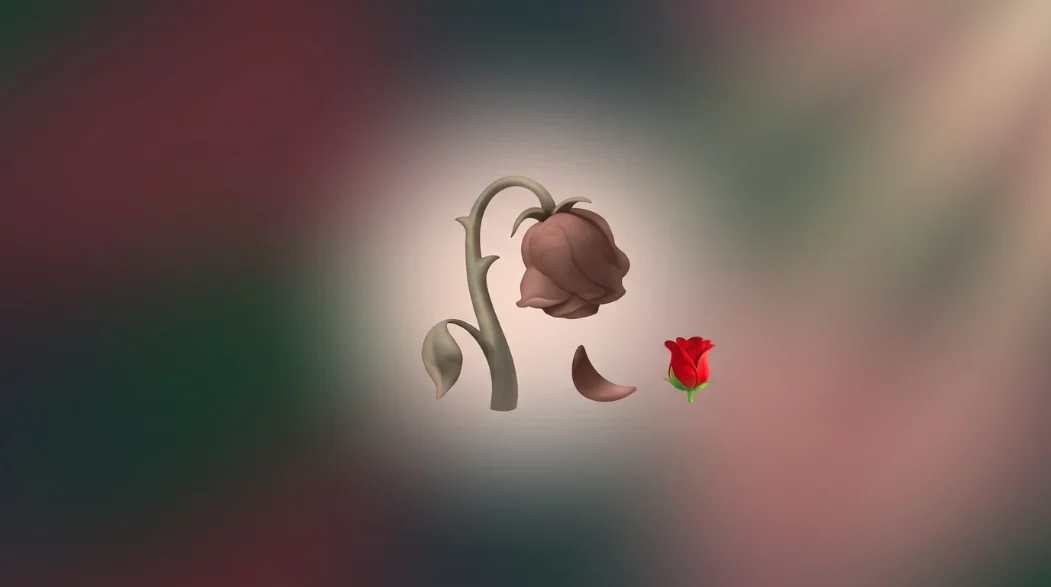
The dead rose emoji 🥀 is officially called Wilted Flower and commonly suggests sadness, loss, disappointment, fading love, or something that has come to an end.
The dead rose emoji 🥀 usually represents a wilted or fading flower, but people often use it to express emotions that feel just as faded: heartbreak, disappointment, loss, sadness, or the end of something meaningful. Although many people call it the “dead rose emoji,” its official Unicode name is Wilted Flower. Unicode identifies 🥀 as U+1F940 and lists “dying,” “flower,” and “wilted” among its associated keywords.
In texts, captions, and comments, 🥀 can be serious or playful. Someone might use it after talking about a breakup, a lost opportunity, or a painful memory. Someone else might add it to a joke about a small inconvenience simply to make the situation sound dramatically tragic. The surrounding words are what tell you how seriously to take it.
What Does the Dead Rose Emoji 🥀 Mean?
The most common meaning of 🥀 is that something has faded, ended, or lost its former beauty or strength.
That idea can apply to many situations:
- Heartbreak or lost love
- Sadness or disappointment
- The end of a relationship
- A friendship that has faded
- Loss or remembrance
- A dream or opportunity that did not work out
- Nostalgia for something from the past
- A dramatic or ironic reaction
The visual itself is a wilted flower, so the emoji naturally lends itself to ideas of fading, decline, endings, and sadness. Unicode officially identifies it as “wilted flower,” not specifically as a dead rose or heartbreak symbol.
The phrase “dead rose” is therefore a common informal name, while Wilted Flower is the official Unicode name.
🥀 Meaning in Text Messages
In texting, 🥀 often adds emotional weight to a sentence.
For example:
“I really thought things would work out 🥀”
This suggests disappointment or emotional loss.
But the same emoji can be much more dramatic in a casual message:
“My favorite restaurant was closed today 🥀”
Here, the sender is probably exaggerating a minor disappointment for humor.
It can also appear by itself:
“🥀”
When sent alone, the meaning is less specific. It may suggest sadness, emotional exhaustion, heartbreak, a gloomy mood, or simply a reaction to something disappointing.
What Does 🥀 Mean in Love and Relationships?
In a romantic context, 🥀 can symbolize love that has faded, heartbreak, separation, or the end of a relationship.
For example:
“We used to be so happy together 🥀”
The wilted flower suggests that something once beautiful has changed.
It can also express a softer kind of heartbreak:
“I still think about how things used to be 🥀”
Here, the emoji adds nostalgia and sadness rather than direct anger.
However, 🥀 does not automatically mean a breakup. It could refer to disappointment in a relationship, unreturned feelings, a difficult period, or simply a sad romantic mood.
Context matters more than the emoji alone.
Is the Dead Rose Emoji Flirty?
Usually, no.
The dead rose emoji generally has a melancholy or fading quality rather than a romantic or flirtatious one. If someone sends 🥀 during a romantic conversation, it could relate to lost feelings, emotional vulnerability, disappointment, or dramatic humor.
Compare:
“You looked amazing tonight 🌹”
This has a positive, affectionate tone.
“Things just aren’t the same anymore 🥀”
This sounds reflective or sad.
The emoji by itself cannot establish whether someone is interested in you romantically. Look at the complete message and the existing relationship between the people involved.
Can 🥀 Mean Heartbreak?
Yes. Heartbreak is one of the common contextual interpretations of 🥀.
The imagery makes sense because a wilted flower can represent something that was once alive and beautiful but has faded.
For example:
“I really thought we were going somewhere 🥀”
This could communicate emotional disappointment without directly saying “I’m heartbroken.”
Still, 🥀 is usually more symbolic and indirect than 💔.
💔 says heartbreak much more directly.
🥀 can leave more room for meanings such as fading love, disappointment, nostalgia, or an ending.
Can 🥀 Mean Sadness?
Yes, but its sadness often feels quiet, symbolic, or reflective.
Compare:
“I miss the old days 🥀”
with:
“I can’t stop crying 😭”
The first has a more poetic or understated quality. The second communicates visible, intense crying.
That makes 🥀 useful when someone wants to suggest sadness without using a crying face.
Can 🥀 Be Used Sarcastically?
Yes.
The wilted flower can be used as a deliberately dramatic reaction to something that is not actually serious.
For example:
“They ran out of fries 🥀”
The sender probably is not experiencing genuine emotional loss. The emoji makes the small inconvenience sound exaggeratedly tragic.
Another example:
“My phone died at 2% 🥀”
The tone may be humorous because the situation is frustrating but relatively minor.
So, if 🥀 appears after an ordinary inconvenience, don’t automatically interpret it as deep sadness.
What Does 🥀 Mean From Someone?
When someone sends you 🥀, consider the message immediately before it.
It might mean:
“That hurt.”
The sender is reacting emotionally to something disappointing.
“It’s over.”
The emoji may represent the end of a relationship, situation, plan, or chapter.
“I miss how things used to be.”
It can carry nostalgia.
“That was tragic.”
The sender may be using dramatic humor.
“I’m in a sad mood.”
Sometimes the emoji simply sets an emotional tone.
If the emoji appears alone, there may not be enough information to know which interpretation is intended.
🥀 Meaning on Social Media
On social media, 🥀 can work as both an emotional symbol and a visual mood marker.
A caption such as:
“Some chapters are better left behind 🥀”
may use it to emphasize an ending or reflective mood.
A comment such as:
“That ending hurt 🥀”
can express disappointment about a movie, show, story, or other piece of content.
It can also be used ironically when people want to make an ordinary situation sound much more tragic than it really is.
Emojipedia has also documented an online meme trend in which 🥀 was used as an alternative to 💔 for expressions of sadness, especially in TikTok-related meme culture.
That means a reader should not assume every 🥀 on social media represents genuine heartbreak.
Dead Rose Emoji 🥀 vs. Red Rose 🌹
The difference between 🥀 and 🌹 is especially important.
The 🌹 Rose emoji is associated with ideas such as love, beauty, elegance, and affection in Unicode’s emoji annotations. 🥀, by contrast, is officially the Wilted Flower and is associated with ideas such as a wilted or dying flower.
This creates a useful visual contrast:
“Everything was beautiful 🌹”
suggests something positive.
“Now it’s all different 🥀”
suggests fading or loss.
People can even use the two together to create a before-and-after feeling:
“Then 🌹 Now 🥀”
The exact meaning still depends on the accompanying words.
Related Emojis and Their Meanings
| Emoji | Official Name | Common Meaning | Tone | Where or When It Is Used |
|---|---|---|---|---|
| 🥀 | Wilted Flower | Fading love, sadness, loss, disappointment | Melancholy, dramatic | Emotional texts, captions, endings |
| 🌹 | Rose | Love, beauty, affection, appreciation | Romantic, warm | Compliments, romance, appreciation |
| 💔 | Broken Heart | Heartbreak, emotional pain | Intense, direct | Breakups, loss, sad messages |
| 🖤 | Black Heart | Dark affection, sadness, emotional depth | Dark, affectionate | Emotional messages, aesthetic captions |
| 😔 | Pensive Face | Quiet sadness or disappointment | Soft, subdued | Personal messages, disappointment |
| 😢 | Crying Face | Sadness or crying | Emotional, sincere | Sad news, emotional reactions |
| 😭 | Loudly Crying Face | Intense sadness or exaggerated emotion | Very emotional, sometimes playful | Strong reactions, dramatic jokes |
| 🍂 | Fallen Leaf | Autumn, change, fading, passing time | Reflective, calm | Seasonal or nostalgic messages |
| 💐 | Bouquet | Flowers, celebration, appreciation | Warm, positive | Congratulations, thanks, affection |
The closest comparison is usually 🌹 versus 🥀 because both use flower imagery. 🌹 generally presents the flower as fresh and beautiful, while 🥀 presents it as wilted.
💔 is another important comparison. If you want to communicate unmistakable heartbreak, 💔 is more direct. If you want a softer image of something fading or coming to an end, 🥀 can leave more room for interpretation.
🥀 vs. 💔: What’s the Difference?
Both can express emotional pain, but they do not communicate it in exactly the same way.
🥀 Wilted Flower often feels symbolic. It can suggest that something has faded, ended, or lost its former beauty.
💔 Broken Heart is more direct. It clearly points toward heartbreak or emotional pain.
For example:
“I miss what we had 🥀”
feels reflective.
“You broke my heart 💔”
is much more direct.
Neither emoji guarantees a particular emotional state. The wording around it remains important.
🥀 vs. 😔: What’s the Difference?
😔 Pensive Face focuses on the person’s emotional state.
🥀 Wilted Flower focuses more on the situation or something that has faded.
Compare:
“I’m feeling down today 😔”
This directly communicates sadness.
“Some things just don’t last forever 🥀”
This uses symbolism to communicate an ending or fading feeling.
🥀 vs. 😭: What’s the Difference?
😭 Loudly Crying Face is visually much more intense.
🥀 can suggest quiet sadness, fading feelings, disappointment, or melancholy.
😭 can communicate overwhelming emotion or dramatic crying.
For a subtle emotional message, 🥀 may fit better. For a visibly intense reaction, 😭 is clearer.
Text Message Examples
1. Lost love
Message:
“Things between us just slowly faded 🥀”
Likely meaning: The sender is describing a relationship or connection that gradually ended.
2. Everyday disappointment
Message:
“They canceled the concert 🥀”
Likely meaning: The person is disappointed. The emoji may simply add emotional emphasis.
3. Dramatic humor
Message:
“My internet went down during the best part of the movie 🥀”
Likely meaning: The sender is jokingly treating an inconvenience as a tragedy.
4. Nostalgia
Message:
“I miss how simple everything used to be 🥀”
Likely meaning: The emoji reinforces a reflective feeling about the past.
5. Serious emotional context
Message:
“I don’t think we’ll ever be friends again 🥀”
Likely meaning: The sender may be expressing genuine sadness about the end of a friendship.
Common Misunderstandings About the Dead Rose Emoji
It does not always mean a breakup
A breakup is one possible interpretation, but 🥀 can also express general sadness, disappointment, nostalgia, or an ending.
It is not officially called the Dead Rose Emoji
“Dead rose” and “wilted rose” are common informal descriptions. The official Unicode name is Wilted Flower.
It does not always represent serious sadness
The emoji can be used for dramatic or ironic reactions to minor problems.
It is not the same as 🌹
🌹 and 🥀 may look related, but their visual symbolism is quite different. A rose suggests a living bloom, while the wilted flower represents a flower that has lost its vitality.
It does not prove romantic feelings
If someone sends 🥀 in a personal conversation, don’t assume they are confessing heartbreak or romantic feelings. The surrounding message provides the necessary context.
How to Respond to 🥀
Your response should match the seriousness of the conversation.
If the person sounds genuinely sad
“I’m sorry. Do you want to talk about it?”
If they’re talking about a disappointment
“Yeah, that’s rough.”
If they’re being playful
“Not the dramatic wilted flower 😂”
If you’re unsure what happened
“What happened?”
If the message seems emotional but unclear
“Are you okay?”
A simple, natural response is usually better than trying to decode the emoji by itself.
Copy and Paste the Dead Rose Emoji
🥀
You can copy and paste it into texts, captions, comments, bios, or messages.
Some combinations include:
- 🥀💔 for heartbreak
- 🥀🌹 for fading or lost love
- 🥀🖤 for a darker emotional mood
- 🥀😔 for quiet sadness
- 🥀😭 for intense sadness
- 🥀✨ for a more aesthetic or poetic feeling
- 🥀🍂 for fading, change, or nostalgia
The combination can change the emotional impression, so choose one that matches the message.
Official Name and Technical Details
The emoji commonly called the dead rose emoji is officially named WILTED FLOWER by Unicode.
- Emoji: 🥀
- Official Unicode name: WILTED FLOWER
- Unicode code point: U+1F940
- Unicode version: 9.0
- Emoji version: 3.0
- Category: Miscellaneous Symbols and Pictographs
- Common keywords: flower, wilted, dying
Unicode’s current emoji charts list U+1F940 as 🥀 wilted flower, while its annotations include “dying,” “flower,” and “wilted.”
The character was included in Unicode 9.0. Unicode’s documentation also links the wilted flower to the rose character, reflecting their visual relationship.
Its appearance can vary somewhat between platforms because each vendor creates its own emoji artwork. The underlying Unicode character remains the same.
Frequently Asked Questions
What does the dead rose emoji 🥀 mean?
It usually represents something that has wilted, faded, ended, or lost its former beauty. In messages, this can translate into sadness, disappointment, heartbreak, loss, nostalgia, or dramatic humor.
What is the official name of the dead rose emoji?
The official Unicode name is Wilted Flower, not Dead Rose. 🥀 is the Unicode character U+1F940.
Does 🥀 mean heartbreak?
It can. 🥀 is often used symbolically for heartbreak or lost love, but it can also represent other kinds of disappointment, endings, or sadness.
Is 🥀 the same as 🌹?
No. 🌹 is the Rose emoji and generally has positive associations such as love, beauty, and affection. 🥀 is the Wilted Flower and has a more faded or melancholy visual meaning.
What does 🥀 mean from a crush?
It depends on the message. In a romantic conversation, it might suggest sadness, fading feelings, disappointment, or a dramatic mood. It does not automatically signal romantic interest.
Can 🥀 be used as a joke?
Yes. Someone can use it to make a small disappointment sound dramatically tragic, such as losing Wi-Fi or missing out on a favorite snack.
Is 🥀 a sad emoji?
It can be. Its wilted appearance naturally lends itself to sadness, loss, disappointment, and fading feelings, although context can make it playful or ironic.
Why do people call 🥀 a dead rose?
The character visually resembles a wilted rose in many emoji designs, and “dead rose” is an informal name people use for it. Unicode’s official name is Wilted Flower.
Conclusion
The dead rose emoji 🥀 is officially the Wilted Flower, and its central idea is something that has faded, wilted, or come to an end. In everyday messages, that can mean heartbreak, sadness, disappointment, nostalgia, loss, or simply a dramatically bad moment.
The best way to understand 🥀 is to read it with the message around it. Next to 🌹, it can suggest a contrast between love and fading feelings. Next to 💔, it can reinforce heartbreak. On its own, it may simply create a quiet, melancholy mood.
In short, 🥀 often says “something beautiful has faded”, but whether that means genuine sadness or playful drama depends on the context.
Read More Related Articles:
- UwU Emoji Meaning | The Cute Internet Expression Behind …
- Warning Emoji Meaning | Hidden Messages, Real World Uses …
- Praying Emoji Meaning | A Deeper Look at Faith, Hope …








3 thoughts on “Dead Rose Emoji Meaning | What It Really Says About Love, Loss & Silence 2026”