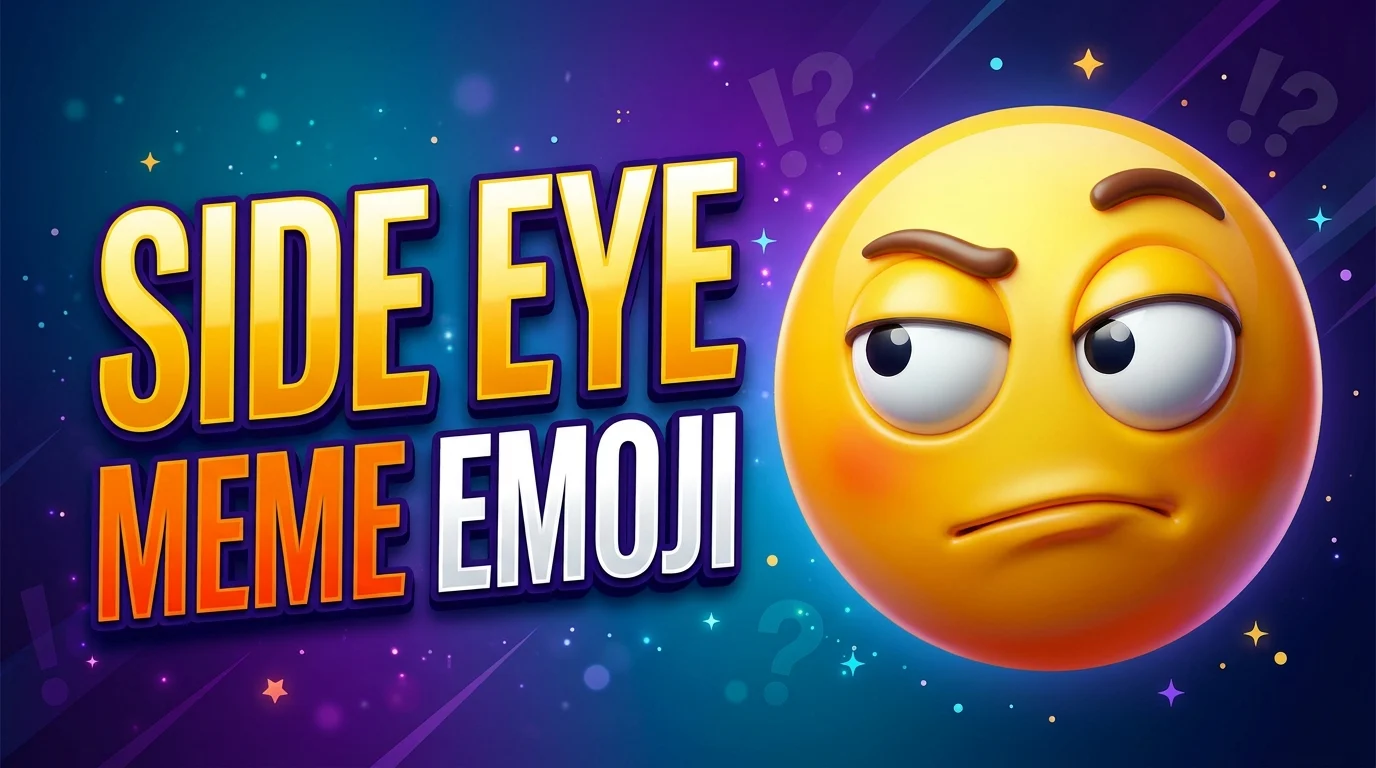
The side eye meme emoji represents that familiar look people give when something seems suspicious, ridiculous, awkward, or hard to believe. It is the digital version of silently asking, “Really?” without saying a word. People use side eye expressions in text messages, social media comments, and memes to show doubt, playful judgment, disbelief, or curiosity about what someone has said or done.
There is no single emoji that everyone uses for the side eye meme. The eyes emoji 👀 can suggest that someone has noticed something interesting, while the unamused face 😒 or rolling eyes 🙄 can communicate annoyance and disbelief. The right choice depends on the situation and the reaction you want to express. Understanding these differences helps you recognize the joke, avoid misunderstandings, and use the side eye meme emoji naturally in everyday conversations.
Quick Answer
The side eye meme emoji expresses suspicion, disbelief, judgment, or curiosity through a sideways glance or unimpressed reaction.
People commonly use 👀, 😒, and 🙄 to recreate the side eye feeling, depending on whether the mood is curious, sarcastic, playful, or annoyed.
What Does the Side Eye Meme Emoji Mean?
The side eye meme emoji represents a reaction in which someone looks sideways at another person or situation with doubt, suspicion, or judgment. It communicates an unspoken response without requiring a full sentence.
Imagine your friend says they are already on the way, but you know they have not even left home. Sending a side eye reaction captures your disbelief in a playful way.
The meaning can change depending on the context. Someone might use the expression because they suspect a person is hiding something, find a comment ridiculous, or simply want to see how a situation develops.
Common interpretations include:
- Suspicion: Something does not seem right.
- Disbelief: You find a statement difficult to believe.
- Judgment: You silently question someone’s behavior.
- Sarcasm: You are reacting to a ridiculous or exaggerated comment.
- Curiosity: You have noticed something interesting and want more details.
- Awkwardness: Someone has said or done something embarrassing.
- Playful teasing: You are jokingly questioning a friend.
The side eye meme can communicate criticism, but it is not always negative. Among friends, it can be a funny reaction to an unbelievable excuse or an awkward moment.
Side Eye Meme Emoji Meaning in Text Messages
In text messages, a side eye emoji can replace a sentence that expresses doubt or disbelief. Instead of typing a long response, someone can send a single reaction to show that they noticed something questionable.
For example, if a friend says, “I only spent five minutes shopping,” after being gone for three hours, a side eye reaction suggests that you are not convinced.
The eyes emoji 👀 often works when you want to show curiosity or draw attention to something unexpected. The unamused face 😒 is more suitable when you feel disappointed or unimpressed. The rolling eyes emoji 🙄 communicates a stronger sense of exasperation or sarcasm.
Here are some common texting interpretations:
- “You said you forgot my birthday? 👀” suggests suspicion or surprise.
- “That is your excuse? 😒” expresses disappointment or disbelief.
- “Sure, you finished everything in two minutes. 🙄” adds sarcasm.
- “Wait, what happened between them? 👀” shows curiosity about a situation.
A side eye reaction can also make a conversation more playful. However, when the topic is serious, the same expression may sound dismissive or judgmental.
What Does the Side Eye Meme Emoji Mean From Someone?
When someone sends you a side eye reaction, the meaning depends on your conversation, your relationship, and what happened immediately before the message.
If a friend sends it: They may be teasing you, questioning your explanation, or reacting to something funny. Close friends often use side eye expressions without intending genuine criticism.
If someone sends it after a surprising statement: They may be expressing disbelief or asking you to explain yourself.
If someone sends it during gossip: The eyes emoji 👀 may mean they are interested in the situation and want to know what happens next.
If someone sends it after you make a mistake: They might be pointing out the mistake playfully, although the reaction can also communicate genuine annoyance.
If someone sends it during flirting: The eyes emoji 👀 can suggest interest or curiosity, especially when paired with a teasing message. However, it does not automatically mean romantic attraction.
The best way to understand the reaction is to consider the entire message rather than assuming the emoji has one fixed meaning.
Is the Side Eye Meme Emoji Positive?
The side eye meme emoji can be positive, negative, or neutral depending on how it is used.
In a friendly conversation, it may express amusement or playful disbelief. For example, if your friend claims to be the best cook in the world after making instant noodles, a side eye reaction can be a lighthearted way to challenge the claim.
In a more serious conversation, the same reaction may communicate criticism or frustration. Sending 😒 after someone shares an idea could make them feel that you do not respect their opinion.
The eyes emoji 👀 can be more neutral because it often means that you are watching, noticing, or waiting for more information. Even so, it can suggest suspicion or judgment in the right context.
The key is context. A side eye reaction between close friends may be funny, while the same reaction in a tense discussion may make the situation worse.
Can the Side Eye Meme Emoji Be Sarcastic?
Yes. Sarcasm is one of the most recognizable uses of a side eye reaction.
People use it when someone makes an exaggerated claim, gives an unbelievable excuse, or says something that seems obviously untrue. Rather than directly arguing, the sender uses an emoji or meme to show that they are not convinced.
For example:
- “You definitely did all that work yourself. 🙄”
- “Oh, you just happened to forget again? 😒”
- “And we are supposed to believe that? 👀”
In these examples, the emojis add a skeptical tone to the words.
The rolling eyes emoji 🙄 is especially useful for showing exasperation or an “I cannot believe this” reaction. The eyes emoji 👀 can communicate suspicion more subtly, leaving the recipient to interpret the meaning.
Sarcasm can be funny when both people understand the joke. When the relationship is unfamiliar or the topic is sensitive, however, it can be easy to misinterpret.
The Side Eye Meme: When One Look Says Everything
The side eye meme is popular because it turns a familiar facial expression into a quick, recognizable reaction. A person does not always need to explain their disbelief or annoyance when a look can communicate the same feeling.
The expression often appears in situations involving questionable excuses, awkward comments, exaggerated confidence, or unexpected behavior. The humor comes from the contrast between what someone says and what the reaction suggests.
For example, imagine someone announces that they are going to start waking up at 5 a.m. every day after repeatedly sleeping until noon. A side eye meme communicates the audience’s doubt without needing a detailed response.
The phrase “side eye” can also be used on its own in captions or comments. People may write “the side eye is real” when reacting to something suspicious or ridiculous.
The phrase “bombastic side eye” adds an exaggerated sense of judgment or disapproval. It is a humorous expression rather than a separate emoji meaning, and its exact tone depends on the situation.
Does the Side Eye Meme Emoji Mean Judgment?
It can. A side eye reaction often suggests that someone is silently evaluating a statement, decision, or behavior.
The judgment may be playful rather than serious. If your friend wears sunglasses indoors and insists that the look is fashionable, a side eye reaction can express humorous disbelief.
In another situation, the reaction might communicate genuine disapproval. For example, sending 😒 after someone makes an insensitive comment can suggest that you are unimpressed with what they said.
The difference often comes down to tone and relationship. A joking reaction between close friends may feel harmless, while a similar reaction during a disagreement can seem disrespectful.
The eyes emoji 👀 can also imply that someone has noticed questionable behavior. However, it may simply express interest, so it should not automatically be interpreted as judgment.
Does the Side Eye Meme Emoji Mean Suspicion?
Suspicion is another common interpretation. People use a side eye expression when a statement, excuse, or situation does not seem convincing.
For example, if someone says they have no idea who ate the last slice of cake while standing beside an empty plate, a side eye reaction communicates your doubts.
The eyes emoji 👀 is useful for this type of reaction because it can suggest that you have noticed something and are paying attention. The raised eyebrow face 🤨 can make the skepticism more direct.
However, suspicion does not always mean that you believe someone has done something wrong. Sometimes the reaction simply means that you need more information.
A side eye emoji can therefore express anything from lighthearted curiosity to serious doubt, depending on the conversation.
Related Emojis and Their Meanings
Several emojis can communicate a reaction similar to the side eye meme, but each one has a slightly different tone.
| Emoji | Official Name | Common Meaning | Tone | Where or When It Is Used |
|---|---|---|---|---|
| 👀 | Eyes | Curiosity, attention, suspicion | Curious or suggestive | Noticing drama or asking for more details |
| 😒 | Unamused Face | Displeasure, annoyance, skepticism | Negative or unimpressed | Reacting to frustrating comments |
| 🙄 | Face with Rolling Eyes | Exasperation, sarcasm, disbelief | Sarcastic or dismissive | Responding to an unbelievable excuse |
| 🤨 | Face with Raised Eyebrow | Doubt, questioning, suspicion | Skeptical | Challenging a questionable statement |
| 😏 | Smirking Face | Smugness, playful confidence, suggestiveness | Sly or teasing | Flirting or making a knowing remark |
| 🤔 | Thinking Face | Thought, uncertainty, consideration | Reflective | Considering whether something makes sense |
| 😑 | Expressionless Face | Frustration, boredom, lack of reaction | Dry or unimpressed | Responding to repetitive or awkward behavior |
| 🫣 | Face with Peeking Eye | Nervous curiosity, embarrassment, reluctance | Shy or awkward | Watching an uncomfortable situation unfold |
👀 vs. 😒: What’s the Difference?
The eyes emoji 👀 generally suggests that you have noticed something, are curious, or want to see what happens next. It can express suspicion, but it does not necessarily communicate disapproval.
The unamused face 😒 is more directly associated with displeasure, annoyance, or feeling unimpressed.
For example, “What happened after that? 👀” expresses curiosity, while “You did it again? 😒” communicates frustration.
Use 👀 when you want to show interest or draw attention to something. Choose 😒 when you want your reaction to feel more negative or unimpressed.
🙄 vs. 🤨: What’s the Difference?
The rolling eyes emoji 🙄 often communicates exasperation, sarcasm, or the feeling that someone has said something ridiculous.
The raised eyebrow emoji 🤨 expresses doubt or questioning. It can suggest that you are examining a claim and want to know whether it makes sense.
For example, “Of course you forgot again. 🙄” sounds exasperated, while “You finished the entire project in ten minutes? 🤨” sounds skeptical.
Both can express disbelief, but 🙄 often feels more dismissive, while 🤨 feels more questioning.
Is the Side Eye Meme Emoji Flirty?
Sometimes, but it depends on the emoji and the conversation.
The eyes emoji 👀 can suggest attraction or interest when someone is reacting to a compliment, an attractive photo, or a playful message. It may communicate that the sender has noticed someone and wants them to know it.
The smirking face 😏 can also create a teasing or flirtatious tone. When paired with 👀, it may suggest a knowing look or playful interest.
For example:
- “You look different today 👀” may suggest interest or curiosity.
- “So you finally noticed me? 😏” sounds teasing and potentially flirty.
- “You think you’re charming, don’t you? 🙄” may be playful sarcasm rather than flirting.
A side eye reaction alone is not proof that someone likes you. Look at the surrounding conversation and the person’s overall communication style before drawing conclusions.
Is the Side Eye Meme Emoji Rude?
It can be rude if it makes someone feel judged, dismissed, or mocked. The rolling eyes emoji 🙄 and unamused face 😒 are especially likely to sound negative when used during a serious conversation.
For example, if someone shares a genuine concern and receives 🙄 in response, they may feel that their feelings are not being taken seriously.
However, side eye reactions are not automatically offensive. Friends often use them to tease each other, react to silly situations, or joke about familiar habits.
To avoid misunderstandings, consider the situation before sending one. If you are discussing a sensitive subject or communicating with someone you do not know well, a clear verbal response may work better than a sarcastic emoji.
Side Eye Meme Emoji on Social Media
The side eye meme emoji is useful on social media because it communicates a reaction quickly. It can appear in comment sections, captions, group chats, and discussions about unexpected or controversial situations.
On TikTok, Instagram, and other social platforms, 👀 may suggest that a post contains interesting details or that someone wants to see how a situation develops. The same emoji can also hint at gossip, curiosity, or suspicion.
The rolling eyes emoji 🙄 is more suitable for posts that seem ridiculous or frustrating. The raised eyebrow face 🤨 can be used when questioning a claim, while 😒 conveys a more openly unimpressed reaction.
People also use the phrase “side eye” in captions without including an emoji. For example, a caption such as “Giving this explanation the side eye” suggests that the person does not fully believe what they are hearing.
The humor usually depends on a recognizable contrast between the situation and the reaction. A small emoji can make the comment feel more playful, sarcastic, or dramatic.
Text Message Examples
Here are realistic examples of how people may use side eye reactions in everyday conversations.
1. Questioning an excuse
- Person A: “I didn’t see your message for the entire day.”
- Person B: “But you replied to everyone else? 👀”
Meaning: The sender is suspicious and wants an explanation.
2. Reacting to an unbelievable claim
- Person A: “I finished a whole week’s worth of work in one hour.”
- Person B: “Sure you did. 🙄”
Meaning: The sender is expressing disbelief through sarcasm.
3. Teasing a friend
- Person A: “I’m never going to procrastinate again.”
- Person B: “You said that yesterday. 😒”
Meaning: The sender is playfully pointing out a repeated habit.
4. Showing curiosity about gossip
- Person A: “Something happened at the party last night.”
- Person B: “Wait, what happened? 👀”
Meaning: The sender wants to hear the details.
5. Questioning a surprising statement
- Person A: “I don’t even like chocolate.”
- Person B: “You’ve eaten chocolate every day this week. 🤨”
Meaning: The sender is questioning whether the statement is true.
Common Misunderstandings About the Side Eye Meme Emoji
1. Thinking it always means anger
A side eye reaction can express annoyance, but it can also communicate curiosity, playful judgment, or disbelief. The tone depends on the situation.
2. Assuming 👀 always means suspicion
The eyes emoji can suggest suspicion, but it is also commonly used to show interest, draw attention, or ask for more details.
3. Believing every side eye is an insult
Friends may use the reaction jokingly without intending to offend anyone. However, the recipient’s interpretation may differ from the sender’s intention.
4. Confusing curiosity with flirtation
An eyes emoji may suggest romantic interest in some conversations, but it can just as easily mean that someone is curious about a situation.
5. Treating every side eye emoji as identical
Different emojis create different impressions. The eyes emoji often feels curious, the unamused face feels displeased, and the rolling eyes emoji often communicates exasperation.
6. Ignoring the surrounding message
An emoji rarely tells the whole story by itself. The words, relationship, and previous messages help determine what the sender means.
How to Respond to a Side Eye Meme Emoji
The best response depends on why the person sent the reaction.
- If they seem curious: Explain what happened or share the missing details.
- If they are joking: Respond with a playful comment or laugh along.
- If they question your explanation: Clarify what you meant instead of assuming they are angry.
- If they seem annoyed: Ask whether something is bothering them.
- If the reaction feels flirty: Reply playfully if you are comfortable with that tone.
- If you cannot tell what they mean: Ask a simple question rather than guessing.
For example, if someone replies with 👀 after you mention a surprising event, you could say, “I know, right? There’s more to the story.”
If they send 🙄 after you make a joke, you could respond with humor if you know they are teasing. If the conversation feels tense, a direct question may be more helpful.
Frequently Asked Questions
1. What does the side eye meme emoji mean?
The side eye meme emoji usually expresses suspicion, disbelief, judgment, or curiosity. It represents a look that questions something without directly saying it.
2. Which emoji is used for the side eye meme?
People commonly use 👀, 😒, 🙄, and 🤨 to create a side eye reaction. The eyes emoji suggests attention or curiosity, while the other faces can communicate annoyance, disbelief, or skepticism.
3. What does the side eye meme mean on TikTok?
On TikTok, a side eye reaction can express disbelief, playful judgment, suspicion, or interest in a situation. The meaning depends on the post, caption, and conversation.
4. What does bombastic side eye mean?
“Bombastic side eye” is a humorous phrase for an exaggerated look of judgment or disbelief. People use it when someone does or says something especially questionable or ridiculous.
5. Is the side eye meme emoji sarcastic?
It can be. People often use side eye reactions to respond sarcastically to unbelievable excuses, exaggerated claims, or comments they find ridiculous.
6. Does the side eye meme emoji mean someone is angry?
Not necessarily. It can express mild annoyance, but it can also be playful, curious, or teasing. The surrounding conversation helps determine the intended tone.
7. What is the difference between 👀 and 🙄?
The eyes emoji 👀 often suggests curiosity, attention, or suspicion. The rolling eyes emoji 🙄 more commonly communicates exasperation, sarcasm, or disbelief.
8. Can the side eye meme emoji be flirty?
Yes, especially when someone uses 👀 or 😏 in a playful conversation. However, the reaction alone does not prove romantic interest.
9. Is it rude to send someone a side eye emoji?
It can seem rude when used to dismiss someone or criticize a serious statement. Among friends, it may simply be a playful reaction. Context and tone make the difference.
Conclusion
The side eye meme emoji is a simple way to express suspicion, disbelief, curiosity, or playful judgment without writing a full response. Whether someone uses 👀 to show interest, 😒 to communicate displeasure, or 🙄 to express exasperation, the reaction depends on the situation.
Although the side eye meme is often associated with sarcasm and judgment, it does not always carry a negative meaning. It can be funny, teasing, or curious when used among people who understand each other’s humor. To interpret it correctly, pay attention to the message, the relationship, and the context rather than relying on the emoji alone.
Read More Related Articles:
- Moan Emoji Meaning | What It Really Means in Texts, Chats …
- Troll Emoji Meaning | Decode the Mischief, Sarcasm, and …
- Rocket Emoji Meaning and Symbolism for Messages, Goals …