Quick Answer:
The sweat emoji 😓 usually expresses stress, nervousness, worry, embarrassment, or relief after a difficult moment.
Its exact meaning depends on the message and situation, and it can sometimes suggest feeling uncomfortable or emotionally drained.
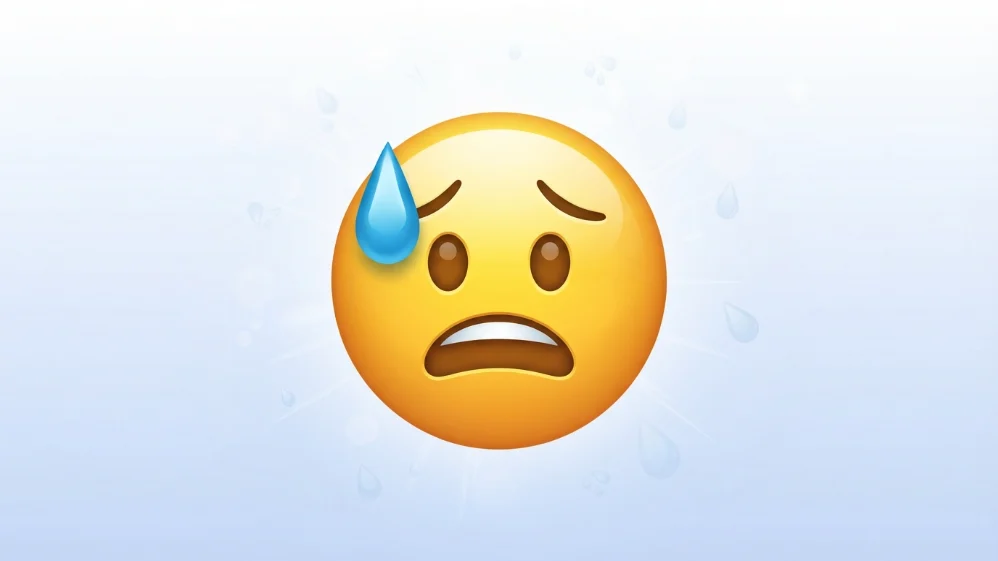
The sweat emoji 😓 is officially called Downcast Face with Sweat. It shows a worried or disappointed face with a single drop of sweat, making it useful for situations where someone feels stressed, uncomfortable, nervous, or relieved after something difficult.
For example, someone might text “I almost missed my flight 😓” to show stress and relief. Another person might use it after making an awkward mistake: “I sent that message to the wrong person 😓.”
Although 😓 often has a negative or uncomfortable tone, it does not always mean something serious. In casual conversations, it can soften an awkward statement, show mild embarrassment, or communicate the feeling of getting through a difficult situation.
What Does the Sweat Emoji 😓 Mean?
The sweat emoji 😓 usually communicates stress, worry, nervousness, discomfort, embarrassment, or a difficult emotional moment.
Its official Unicode name, Downcast Face with Sweat, gives an important clue about its expression. The face looks downcast while a drop of sweat appears on the forehead.
People often use 😓 when they want to show that something is:
- Stressful
- Difficult
- Uncomfortable
- Awkward
- Embarrassing
- Nerve wracking
- Emotionally tiring
- Fortunately over
The emoji can also communicate a sense of relief after stress.
For example:
“I thought I lost my wallet 😓”
This could mean the person was worried and uncomfortable about losing it.
Another example:
“That meeting is finally over 😓”
Here, 😓 can suggest emotional exhaustion or relief after getting through something stressful.
The emoji is therefore more flexible than simply meaning “sweating.”
What Does 😓 Mean in Texting?
In texting, 😓 often adds an uncomfortable or worried emotional tone to a message.
Someone may use it when they are admitting something awkward, describing a stressful event, or talking about a situation that made them nervous.
For example:
“I forgot to submit my assignment 😓”
The emoji reinforces the person’s stress or regret.
Or:
“I have to give a presentation tomorrow 😓”
Here, 😓 suggests nervousness or anxiety about the upcoming situation without necessarily indicating a serious emotional problem.
It can also make a message sound less harsh or less confident:
“I might be a little late 😓”
The emoji makes the statement feel more apologetic and uncomfortable.
The exact meaning depends heavily on the words surrounding it.
Why Do People Use the Sweat Emoji?
The sweat drop gives 😓 a visual connection to pressure or discomfort.
When people are stressed or nervous, they may describe themselves as sweating. The emoji turns that idea into a facial expression.
It can therefore help communicate an emotional reaction that would otherwise require more words.
Instead of saying:
“I am really nervous and uncomfortable about this situation.”
Someone might simply write:
“I have no idea what to say 😓”
The emoji does not completely replace the sentence. Instead, it adds emotional information that helps the reader understand how the message should sound.
Does 😓 Mean Stress?
Yes. Stress is one of the common interpretations of 😓.
For example:
“Three exams this week 😓”
This suggests that the person feels pressured or overwhelmed by the situation.
Another example:
“My car broke down on the way to work 😓”
Here, the emoji communicates frustration and stress.
However, 😓 does not necessarily indicate severe stress. It can describe something as simple as an inconvenient, uncomfortable, or tiring situation.
Does 😓 Mean Nervousness?
It can.
The sweat drop makes 😓 suitable for situations where someone feels nervous about what is happening.
For example:
“I have to meet my new boss tomorrow 😓”
The emoji suggests nervous anticipation.
Or:
“I’m about to go on stage 😓”
Here, the meaning is closer to nervousness than sadness.
If the message involves an upcoming event, interview, presentation, conversation, or difficult task, 😓 may communicate nervousness or apprehension.
Can 😓 Mean Embarrassment?
Yes. 😓 can express embarrassment or awkwardness, especially when someone has made a mistake.
For example:
“I called my teacher ‘Mom’ today 😓”
The emoji makes the embarrassment clear.
Another example:
“I accidentally liked a post from five years ago 😓”
The situation is awkward, while the emoji emphasizes the uncomfortable feeling.
In these cases, 😓 is often closer to “That was embarrassing” than “I am stressed.”
Can 😓 Mean Relief?
Surprisingly, yes.
One of the more useful contextual meanings of 😓 is relief after something stressful has ended or turned out well.
For example:
“I found my keys. They were in my jacket the whole time 😓”
The person was worried, but the problem is now solved.
Another example:
“We made it to the airport just in time 😓”
Here, the emoji can suggest:
“That was stressful, but we made it.”
This use can be especially confusing because the situation may have a positive outcome even though the emoji looks worried.
The surrounding words usually make the meaning clear.
Is 😓 a Sad Emoji?
It can express a downcast or unhappy feeling, but sadness is not its only or primary interpretation.
The official name is Downcast Face with Sweat, so the expression combines a low or worried mood with a sweat drop.
Compare:
“I miss my old friends 😓”
This may communicate sadness or emotional discomfort.
But:
“I have three deadlines tomorrow 😓”
is clearly about stress.
And:
“That was embarrassing 😓”
is about awkwardness.
So, while 😓 can accompany sadness, the context determines whether the main emotion is sadness, stress, nervousness, embarrassment, or relief.
Is 😓 a Nervous Emoji?
Yes, it can work as a nervous emoji.
It is particularly useful when someone feels uncertain about what is about to happen.
For example:
“I hope they like my presentation 😓”
The emoji suggests nervous anticipation.
However, 😰 Anxious Face with Sweat may communicate a stronger sense of fear or anxiety.
That distinction matters when choosing between the two.
Is the Sweat Emoji Negative?
Usually, 😓 has a slightly negative or uncomfortable emotional tone, but it does not necessarily indicate a serious problem.
It can describe:
- A stressful moment
- A small mistake
- An awkward situation
- Nervous anticipation
- Emotional exhaustion
- Relief after difficulty
The tone can also be softened by humor.
For example:
“I just ate the spiciest wings of my life 😓”
This could be playful rather than genuinely distressed.
What Does 😓 Mean From Someone?
If someone sends you 😓, they may be communicating that they feel stressed, embarrassed, nervous, uncomfortable, or relieved.
Consider the difference between these messages:
“I completely forgot our meeting was today 😓”
This probably expresses embarrassment or regret.
“I have to talk to my parents about it 😓”
This likely communicates nervousness or discomfort.
“I finally finished the project 😓”
This can suggest exhaustion and relief.
The emoji alone cannot tell you which emotion the sender intends. The message itself provides the strongest clue.
Is 😓 a Flirting Emoji?
Not usually.
The sweat emoji is more commonly associated with stress, nervousness, embarrassment, or discomfort than romance.
However, it can appear in a flirtatious conversation if the surrounding words create that tone.
For example:
“You looked really good tonight 😓”
Depending on the relationship and conversation, the emoji could make the compliment sound shy, nervous, or playfully flustered.
But 😓 by itself is not evidence that someone is flirting.
If you are trying to understand a message, consider the complete conversation instead of assigning romantic meaning to the emoji alone.
Can 😓 Be Used Between Friends?
Yes.
Friends can use 😓 when discussing embarrassing mistakes, stressful plans, difficult situations, or awkward moments.
For example:
“I forgot my wallet again 😓”
A friend might respond:
“You do this every time 😂”
In this context, 😓 communicates mild frustration or embarrassment and does not carry a romantic meaning.
It is also common in conversations about school, work, travel, deadlines, appointments, and everyday problems.
Can 😓 Be Sarcastic or Funny?
Yes.
Like many expressive emojis, 😓 can be used playfully when the situation is not actually serious.
For example:
“I have to eat the last slice of pizza 😓”
The person is pretending that the situation is difficult or tragic.
The humor comes from exaggerating a minor problem.
Another example:
“My favorite team won again. Life is hard 😓”
Here, the surrounding words make the emoji playful and ironic.
Without the surrounding context, however, 😓 normally suggests some kind of discomfort or difficulty.
Sweat Emoji Examples in Text Messages
“I have a huge exam tomorrow 😓”
Likely meaning: Stress or nervousness.
The upcoming exam creates pressure, while the emoji shows the emotional reaction.
“I accidentally sent the email too early 😓”
Likely meaning: Embarrassment or worry.
The emoji communicates that the sender feels uncomfortable about the mistake.
“I thought I lost my phone 😓”
Likely meaning: Stress followed by relief.
The situation may have been frightening or frustrating, but the emoji can suggest that the person has recovered from the moment.
“That conversation was so awkward 😓”
Likely meaning: Embarrassment or discomfort.
Here, the meaning is closely connected to social awkwardness.
“I finally finished everything 😓”
Likely meaning: Exhaustion and relief.
The emoji can communicate the feeling of getting through a difficult task.
“I have to wake up at 5 a.m. tomorrow 😓”
Likely meaning: Dread or mild frustration.
The situation is inconvenient rather than necessarily serious.
Related Emojis and Their Meanings
Several emojis can express stress, sadness, nervousness, embarrassment, or relief. Choosing the right one depends on how intense the feeling is and what you want the reader to understand.
| Emoji | Official Name | Common Meaning | Tone | Where or When It Is Used |
|---|---|---|---|---|
| 😓 | Downcast Face with Sweat | Stress, discomfort, embarrassment, nervousness, relief | Worried, uncomfortable, tired | Difficult tasks, awkward moments, stressful situations, relief |
| 😰 | Anxious Face with Sweat | Anxiety, fear, worry, nervousness | More intense, anxious | Serious worry, fear, stressful situations |
| 😥 | Sad but Relieved Face | Sadness mixed with relief | Sad, gentle, relieved | Difficult situations that have ended better than expected |
| 😞 | Disappointed Face | Disappointment, sadness, discouragement | Sad, subdued | Bad news, unmet expectations, disappointment |
| 😔 | Pensive Face | Sadness, reflection, regret | Quiet, thoughtful | Emotional messages, regret, difficult thoughts |
| 😣 | Persevering Face | Frustration, struggle, determination | Strained, frustrated | Difficult tasks, pain, challenging moments |
| 😖 | Confounded Face | Frustration, confusion, distress | Strong, troubled | Confusing or frustrating situations |
| 😩 | Weary Face | Exhaustion, frustration, being fed up | Dramatic, tired | Long days, difficult tasks, overwhelming situations |
| 😅 | Grinning Face with Sweat | Nervous laughter, awkwardness, relief | Light, playful, relieved | Close calls, mistakes, awkward or funny moments |
| 🥵 | Hot Face | Physical heat, exhaustion, intense effort | Intense, uncomfortable | Hot weather, exercise, spicy food, exaggerated reactions |
The most important comparison is between 😓, 😰, 😥, and 😅.
😓 Downcast Face with Sweat is useful for general stress, discomfort, embarrassment, or emotional pressure.
😰 Anxious Face with Sweat usually gives a stronger impression of anxiety or fear.
😥 Sad but Relieved Face combines sadness with a sense that something has worked out or is finally over.
😅 Grinning Face with Sweat is generally lighter and more playful. It can mean nervous laughter, awkwardness, or relief after a close call.
😓 vs. 😰: What’s the Difference?
These two emojis are especially easy to confuse.
😓 often communicates stress, discomfort, embarrassment, or being emotionally worn down.
😰 generally looks more anxious and alarmed, making it a better choice when fear or intense worry is the main feeling.
Compare:
“I have so much homework 😓”
This sounds stressed or overwhelmed.
“I think I heard someone break into the house 😰”
This suggests a much stronger level of fear or anxiety.
The expressions are similar, but 😰 usually carries greater emotional intensity.
😓 vs. 😥: What’s the Difference?
Both can appear in difficult situations, but they emphasize different emotions.
😓 focuses more on stress, discomfort, or pressure.
😥 is officially called Sad but Relieved Face, so it is particularly useful when sadness and relief appear together.
For example:
“I had to cancel the trip 😓”
This may communicate disappointment or stress.
“The surgery went well 😥”
This can suggest sadness or worry mixed with relief that the outcome was good.
😓 vs. 😅: What’s the Difference?
These emojis can both appear after an awkward or stressful event.
😓 looks more downcast and uncomfortable.
😅 has a smile, making it lighter and often more playful.
For example:
“I forgot the deadline 😓”
sounds genuinely worried or regretful.
“I forgot the deadline 😅”
can sound more like nervous laughter or an attempt to make the mistake seem lighter.
If you want to emphasize genuine discomfort, 😓 is usually more suitable. If you want to soften an awkward situation with humor, 😅 may work better.
😓 vs. 😩: What’s the Difference?
😓 can describe a stressful or uncomfortable moment.
😩 Weary Face tends to emphasize exhaustion, frustration, or being fed up.
Compare:
“I have one more assignment tonight 😓”
This suggests stress.
“I have been working all day and still have five assignments left 😩”
This communicates stronger exhaustion and frustration.
When Should You Use 😓?
The sweat emoji can be a good choice when you want to communicate:
- “That was stressful.”
- “I’m nervous about this.”
- “That was awkward.”
- “I made a mistake.”
- “I’m exhausted.”
- “That was uncomfortable.”
- “I’m relieved it worked out.”
It works especially well when the message needs a little emotional context.
For example:
“I barely caught the train 😓”
The emoji immediately tells the reader that the situation was stressful.
When Should You Avoid 😓?
You may want to choose another emoji if you want your emotional message to be very clear.
For example, if you mean strong fear, 😰 may communicate that better.
If you mean straightforward sadness, 😢 or 😔 may be clearer.
If you mean celebration or excitement, 😓 would probably send the wrong signal.
If you are sending an important professional message, consider whether the emoji fits the relationship and tone. In a casual workplace conversation it may be fine, but a formal message may be clearer without it.
How Should You Respond to 😓?
Your response depends on why the person used it.
If they are stressed
“You’ve got this. Take it one step at a time.”
If they are embarrassed
“Don’t worry, it happens.”
If they are nervous
“I’m sure it’ll go better than you think.”
If they are joking
“Haha, you’ll survive 😂”
If you are not sure
Respond to the words rather than trying to decode the emoji by itself.
For example:
“That sounds stressful. What happened?”
This gives the sender a chance to explain what they mean.
Can You Copy and Paste the Sweat Emoji?
Yes. Here it is:
😓
You can copy it directly and use it in texts, captions, comments, messages, or other supported platforms.
The emoji may look slightly different across devices and services because each platform can create its own visual artwork. The basic expression and Unicode identity remain the same.
Official Name and Unicode Details
The official Unicode name of 😓 is Downcast Face with Sweat.
Its Unicode code point is U+1F613.
The emoji was introduced in Unicode 6.0 and is also part of the Unicode emoji standard used across modern digital platforms.
The official name helps distinguish 😓 from visually similar emojis such as 😰 Anxious Face with Sweat and 😥 Sad but Relieved Face.
The appearance can vary slightly between Apple, Google, Samsung, Microsoft, and other platforms. Some designs may make the sweat drop or facial expression look slightly different, but the intended emoji character remains the same.
Common Misunderstandings About 😓
“😓 only means sweating.”
Not exactly. The sweat drop is part of the visual expression, but the emoji commonly communicates emotional pressure, stress, nervousness, discomfort, embarrassment, or relief.
“😓 always means sadness.”
No. Sadness is possible, but stress, awkwardness, nervousness, and relief are also common contextual meanings.
“😓 means someone is seriously anxious.”
Not necessarily. It can describe something as simple as a difficult assignment, an awkward mistake, or a tiring day.
“😓 is a romantic emoji.”
Usually not. It is primarily associated with stress, discomfort, nervousness, or embarrassment. A romantic interpretation depends on the surrounding conversation.
“😓 and 😰 mean exactly the same thing.”
They are similar, but 😰 generally conveys stronger anxiety or fear, while 😓 is broader and can express stress, embarrassment, discomfort, or relief.
“The emoji has one fixed meaning.”
No. Emoji meaning depends on context, wording, relationship, and the situation in which it is used.
Frequently Asked Questions
What does the sweat emoji 😓 mean?
😓 usually means stress, nervousness, discomfort, embarrassment, or emotional pressure. It can also express relief after a difficult situation is over.
What does 😓 mean in texting?
In texting, 😓 can mean “That was stressful,” “I’m nervous,” “That was awkward,” or “I’m relieved it worked out.” The surrounding message determines the most likely interpretation.
Does 😓 mean nervous?
It can. When used before an interview, presentation, difficult conversation, or other uncertain event, 😓 may communicate nervousness.
Does 😓 mean embarrassed?
It can. Someone may use 😓 after making an awkward mistake or describing an uncomfortable social situation.
Does 😓 mean relief?
Yes. It can express relief when a stressful situation has ended successfully, especially when the message describes a close call or difficult problem that has been resolved.
Is 😓 a sad emoji?
It can express sadness or a downcast mood, but it is not limited to sadness. Stress, discomfort, embarrassment, nervousness, and relief are also common interpretations.
What is the difference between 😓 and 😰?
😓 is commonly associated with stress, discomfort, embarrassment, and nervousness. 😰 usually communicates stronger anxiety, fear, or worry.
What is the difference between 😓 and 😅?
😓 has a more worried or downcast expression, while 😅 has a smile. 😅 often suggests nervous laughter, awkwardness, or relief with a lighter tone.
Is 😓 a flirting emoji?
Not by itself. It can appear in a flirty message when the surrounding words suggest attraction or shyness, but the emoji alone does not establish romantic interest.
What is the official name of 😓?
The official Unicode name is Downcast Face with Sweat.
Conclusion
The sweat emoji 😓 usually expresses stress, nervousness, discomfort, embarrassment, or the feeling of getting through a difficult situation. It can also communicate relief when something stressful has finally worked out.
Its meaning is flexible, so the best way to understand 😓 is to look at the words around it and the situation in which it appears. Compared with 😰, it is often less intense, while 😅 gives a more playful and smiling tone.
Whether someone uses 😓 after a stressful deadline, an awkward mistake, a nervous moment, or a close call, the emoji usually adds the same basic idea: “That was uncomfortable, but I’m getting through it.”
Read More Related Articles:
Thank You Emoji Meaning | Best Emojis to Say Thanks
Nerd Emoji Meme | Meaning, Uses, and Funny Examples in …
Red Heart Emoji ❤️ Meaning | What Does ❤️ Mean in Texts?