Quick Answer:
The LOL emoji 😂 usually means “that’s really funny” or “I’m laughing hard.” It can also make a message feel playful, amused, or joking.
The LOL emoji 😂 is commonly used to show laughter, amusement, or a strong reaction to something funny. Its official Unicode name is Face with Tears of Joy, and the tears represent laughing so hard that the person is crying.
When someone sends 😂 in a text, they may simply mean “LOL,” “That’s hilarious,” or “You made me laugh.” It can also soften a teasing comment, signal that something is meant as a joke, or add humor to an otherwise ordinary message.
However, 😂 does not always mean that someone is literally laughing out loud. Like other emojis, its meaning depends on the message, relationship, and situation.
What Does the LOL Emoji 😂 Mean?
The LOL emoji 😂 usually expresses laughter or strong amusement.
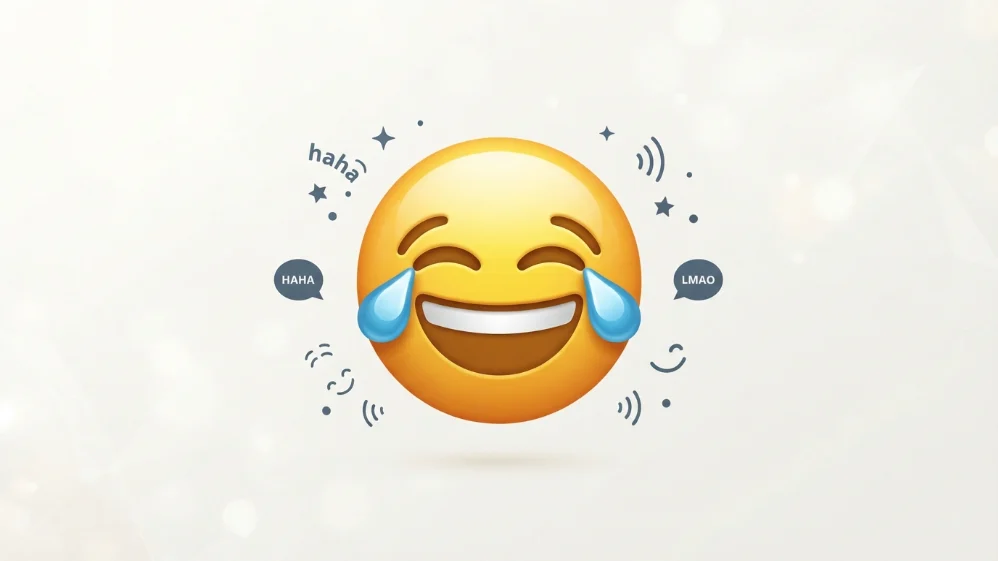
It shows a yellow face with a broad grin and tears coming from both eyes. The official Unicode name is Face with Tears of Joy, while “LOL emoji” is an informal term people commonly use because the emoji often replaces expressions such as “LOL,” “haha,” or “that’s hilarious.”
For example:
“You really thought that was going to work 😂”
The sender is probably laughing at the situation.
Or:
“I forgot my own password again 😂”
Here, 😂 shows that the sender finds their mistake funny.
The emoji can communicate laughter without requiring the sender to type “LOL.”
Why Do People Call 😂 the LOL Emoji?
“LOL” is short for “laughing out loud.” It is a text abbreviation used to show that something is funny or amusing.
😂 is not officially called the “LOL emoji.” Its official Unicode name is Face with Tears of Joy. Unicode lists keywords associated with the character that include terms such as “funny,” “haha,” “hilarious,” “laugh,” “lol,” and “rofl.”
So, calling 😂 the LOL emoji is a natural informal description of how people use it.
The distinction matters because the emoji’s official name describes the visual expression, while “LOL emoji” describes a common conversational use.
What Does 😂 Mean in Texting?
In texting, 😂 can serve several closely related purposes.
It Means Something Is Funny
“That video you sent me was hilarious 😂”
Here, the meaning is straightforward. The sender found the video funny.
It Shows a Strong Laugh
“I cannot believe you actually said that 😂”
The emoji suggests a stronger reaction than a simple smile.
It Shows Amusement at Yourself
“I walked into the wrong classroom 😂”
The sender is laughing at their own mistake.
It Makes Teasing Feel Playful
“You really need to learn how to cook 😂”
Without an emoji, this could sound harsh. Adding 😂 can signal that the statement is intended as playful teasing.
It Adds Humor to a Story
“Then I realized I had been waiting at the wrong restaurant for 20 minutes 😂”
The emoji helps show that the embarrassing situation is being told as a funny story.
Does 😂 Always Mean “LOL”?
No.
😂 usually communicates laughter or amusement, but the exact strength can vary.
Someone might use it after a mildly funny comment:
“I just spilled coffee on my shirt 😂”
Another person might use it after something they find extremely funny:
“That is the funniest thing I have heard all week 😂😂😂”
The number of emojis can also affect the perceived intensity, although there is no universal rule.
A single 😂 may be enough to mark a joke. Several 😂 emojis can make the reaction look more exaggerated or enthusiastic.
What Does 😂 Mean From Someone?
When someone sends you 😂, they are usually reacting positively to something funny, surprising, ridiculous, or playful.
For example:
“I told my boss I needed a vacation and accidentally sent it to the whole team 😂”
A reply of:
“😂”
would normally mean that the recipient finds the story funny.
But context still matters. The sender could be laughing at the situation, teasing you, reacting to something absurd, or simply keeping the conversation light.
The emoji by itself does not tell you exactly what the person is thinking.
Is 😂 a Good Sign in a Text?
Usually, 😂 indicates a positive or amused reaction, especially when it appears after something funny or playful.
For example:
“You are seriously impossible 😂”
can be affectionate teasing between friends.
But the same words could feel different in a tense conversation.
That is why it is better to interpret 😂 together with the rest of the message rather than treating it as a guaranteed sign that everything is positive.
Can 😂 Be Used for Sarcasm?
Yes. 😂 can be used with sarcasm or irony.
For example:
“Great, my phone died right before the important call 😂”
The person may not actually find the situation wonderful. The emoji can highlight the irony.
Another example:
“Love getting stuck in traffic for an hour 😂”
The sender is probably expressing frustration in a humorous way.
In these cases, the words provide the negative situation while 😂 signals that the person is presenting it humorously.
Can 😂 Be Rude?
It can feel rude in certain contexts.
For example:
“You actually believed that? 😂”
Depending on the relationship and conversation, this could sound playful or mocking.
Similarly:
“You failed the test 😂”
could be friendly teasing between close friends, but it could also come across as insensitive if the other person is upset.
The emoji does not automatically make a statement kind. The surrounding words and relationship still matter.
Is 😂 a Flirting Emoji?
😂 is not specifically a flirting emoji.
People can use it in flirtatious conversations because humor is often part of casual or romantic conversations. But seeing 😂 in a message does not by itself indicate romantic interest.
For example:
“You are actually pretty funny 😂”
could be friendly or slightly flirtatious.
But:
“My brother just sent me the weirdest video 😂”
has no obvious romantic meaning.
If you are trying to understand whether someone is flirting, look at the complete conversation rather than relying on 😂 alone.
😂 Meaning in Friendship
Among friends, 😂 is especially useful for showing that you are laughing at a joke, story, mistake, or shared experience.
For example:
“Remember when we got lost for three hours? 😂”
The emoji can reinforce a shared memory and make the message feel playful.
It can also turn ordinary teasing into a lighter exchange:
“You are never living that down 😂”
In a close friendship, 😂 can sometimes function almost like a verbal laugh.
😂 Meaning in Relationships
Romantic partners may use 😂 in exactly the same way friends do.
It can show that something is funny:
“You always make me laugh 😂”
It can soften teasing:
“You really forgot our anniversary dinner was tonight 😂”
Or it can simply react to a funny message:
“Stop, that is actually hilarious 😂”
The emoji does not have a separate romantic definition. Its emotional meaning comes from the surrounding conversation.
😂 vs. 🤣: What’s the Difference?
The two are very close.
😂 Face with Tears of Joy shows laughter so strong that tears appear.
🤣 Rolling on the Floor Laughing represents a more exaggerated form of laughter. Unicode gives 🤣 the official name Rolling on the Floor Laughing, and its associated keywords include “laugh,” “funny,” “hilarious,” “lol,” and “rofl.”
A simple way to think about them is:
😂 = That is really funny.
🤣 = That is absolutely hilarious.
This is not a strict rule. People often use them interchangeably.
😂 vs. 😭: Why Do People Use a Crying Emoji for Something Funny?
This can be confusing because 😭 is officially Loudly Crying Face, while 😂 is Face with Tears of Joy.
😂 was designed around the idea of laughing so hard that tears appear. 😭 can also be used informally for an extremely strong emotional reaction to something funny, especially in modern online conversations. Emojipedia notes that 😭 can sometimes overlap with 😂 when expressing strong amusement or other intense positive feelings.
For example:
“That was so funny 😂”
is a more traditional use of laughter.
While:
“I cannot breathe 😭”
may be an exaggerated reaction to something hilarious.
Neither usage creates a universal rule for every conversation.
Related Emojis and Their Meanings
| Emoji | Official Name | Common Meaning | Tone | Where or When It Is Used |
|---|---|---|---|---|
| 😂 | Face with Tears of Joy | Strong laughter or amusement | Funny, cheerful, playful | Jokes, funny stories, texts, comments |
| 🤣 | Rolling on the Floor Laughing | Extremely strong laughter | Exaggerated, hilarious | Very funny jokes, ridiculous situations, reactions |
| 😆 | Grinning Squinting Face | Big laugh or strong amusement | Energetic, playful | Jokes, teasing, excited reactions |
| 😅 | Grinning Face with Sweat | Nervous laughter, relief, awkward humor | Awkward, relieved, playful | Mistakes, close calls, uncomfortable moments |
| 😄 | Grinning Face with Smiling Eyes | Happiness and cheerful amusement | Warm, upbeat | Friendly messages, positive reactions |
| 😁 | Beaming Face with Smiling Eyes | Broad happiness or excitement | Cheerful, enthusiastic | Celebrations, good news, happy reactions |
| 😭 | Loudly Crying Face | Intense sadness or exaggerated emotion | Dramatic, emotional | Sadness, overwhelm, or humorous exaggeration |
| 🥲 | Smiling Face with Tear | Mixed or bittersweet emotion | Tender, bittersweet | Emotional happiness, awkward sadness, heartfelt reactions |
| 😹 | Cat with Tears of Joy | Laughing strongly in a cat expression | Playful, silly | Funny reactions, cat-related jokes, playful messages |
The most important comparisons are 😂, 🤣, 😭, and 😅.
😂 is the clearest choice when you want to show ordinary strong laughter. 🤣 usually pushes the reaction further. 😭 can express intense emotion and may be used humorously for something extremely funny. 😅 is different because the sweat often adds an element of nervousness, embarrassment, or relief.
What Is the Difference Between 😂 and 😆?
Both can show laughter, but their visual expressions create slightly different impressions.
😂 includes tears, making the laughter look especially strong.
😆 has tightly closed eyes and a broad open smile, giving it an energetic laughing expression without tears.
For example:
“That joke was so good 😂”
feels like strong laughter.
“You are ridiculous 😆”
can feel more playful and energetic.
The distinction is subtle, and people may use them interchangeably.
What Is the Difference Between 😂 and 😅?
The main difference is emotional context.
😂 normally communicates genuine amusement.
😅 can communicate laughter mixed with awkwardness, nervousness, embarrassment, or relief.
Compare:
“That was hilarious 😂”
with:
“I almost sent that message to my boss 😅”
The first is straightforward laughter. The second suggests an uncomfortable or close-call situation.
What Is the Difference Between 😂 and 🥲?
🥲 is Smiling Face with Tear, not a laughing emoji.
It can express tender happiness, gratitude, bittersweet feelings, or trying to stay positive while feeling emotional. Emojipedia specifically distinguishes it from 😂, which has a broad grin and tears associated with laughter.
For example:
“You remembered my birthday 🥲”
can communicate being touched or emotional.
While:
“You really did that 😂”
usually communicates amusement.
Examples of 😂 in Realistic Text Conversations
Example 1: Funny Story
Message:
“I walked into the meeting five minutes early and realized it was the wrong meeting 😂”
Likely meaning:
The sender is laughing at their own mistake.
Example 2: Friendly Teasing
Message:
“You really thought you could beat me at Mario Kart 😂”
Likely meaning:
Playful teasing rather than serious criticism.
Example 3: Sarcastic Situation
Message:
“My laptop crashed five minutes before I finished the assignment 😂”
Likely meaning:
The situation is frustrating, but the sender is using humor to describe it.
Example 4: Strong Reaction
Message:
“Stop 😂 That video is too funny.”
Likely meaning:
The sender is strongly amused.
Example 5: Mild Humor
Message:
“I forgot why I walked into the kitchen 😂”
Likely meaning:
The sender finds their own forgetfulness amusing.
Can You Use 😂 After a Serious Message?
Yes, but be careful.
If the topic is sensitive, 😂 can easily make your message sound dismissive.
For example:
“I missed my flight 😂”
may be fine if the person is joking about their bad luck.
But:
“I lost my job 😂”
could sound confusing or insensitive unless the context clearly shows that the sender is using humor to cope with the situation.
When the subject is serious, the words around the emoji become especially important.
How Should You Respond to 😂?
The best response depends on what the sender is laughing about.
If They Sent Something Funny
“😂😂 I’m dying.”
If They Are Telling a Funny Story
“No way 😂 What happened next?”
If They Are Teasing You
“Keep laughing 😂”
If You Want to Match Their Energy
“That was actually hilarious 😂”
If You Are Not Sure What They Mean
Respond to the words rather than trying to decode the emoji by itself.
For example:
“Wait, what happened? 😂”
This keeps the conversation natural while giving the sender a chance to explain.
When Should You Use the LOL Emoji 😂?
😂 works well when you want to show that you:
- Found something genuinely funny
- Are laughing at your own mistake
- Are playfully teasing someone
- Want to make a joke feel lighter
- Are reacting to a ridiculous situation
- Are laughing at a funny story
- Want to show a stronger reaction than a simple smile
It may be less suitable when the subject is serious, emotional, or sensitive unless the context clearly supports a humorous interpretation.
Can You Copy and Paste the LOL Emoji?
Yes. Here it is:
😂
You can copy and paste it into texts, captions, comments, messages, and other places that support emoji characters.
You can also combine it with other laughter emojis:
😂🤣
or use it with words:
LOL 😂
That is hilarious 😂
I can’t stop laughing 😂
Official Name and Unicode Details
The official Unicode name for 😂 is Face with Tears of Joy.
Its Unicode code point is U+1F602. Unicode lists it among the smiling face emojis and associates it with terms including crying, funny, happy, hilarious, joy, laugh, LOL, and tears.
The emoji was approved as part of Unicode 6.0 in 2010 and later added to Emoji 1.0 in 2015.
Different platforms can draw the face slightly differently. The shape of the eyes, mouth, tears, and overall proportions may vary, but the basic idea remains a face laughing so hard that tears of joy appear.
Common Misunderstandings About 😂
Does 😂 mean actual tears?
No. The tears are part of the emoji’s visual expression of laughter and joy.
Does 😂 always mean “LOL”?
No. “LOL” is one common use, but 😂 can also communicate amusement, playful teasing, irony, or laughter at an awkward situation.
Is 😂 the same as 🤣?
They are closely related, but 🤣 usually represents a more exaggerated form of laughter. People often use both in similar situations.
Is 😂 a sarcastic emoji?
It can be used sarcastically, but sarcasm comes from the surrounding message and situation rather than from the emoji alone.
Does 😂 mean someone is laughing at you?
Not necessarily. Someone may be laughing at a joke, a situation, themselves, or something you said. Context determines the target of the laughter.
Is 😂 rude?
Usually not. But it can feel rude or mocking when it follows an insulting, dismissive, or sensitive statement.
Does 😂 mean flirting?
Not by itself. It can appear in flirtatious conversations, but it is also extremely useful in ordinary friendly conversations.
Why do people use 😂 instead of typing LOL?
The emoji provides a quick visual reaction and can communicate laughter without spelling out the word. It can also make the emotional tone of a message clearer.
Frequently Asked Questions
What does the LOL emoji mean?
The LOL emoji 😂 usually means that something is funny, hilarious, or amusing. Its official Unicode name is Face with Tears of Joy.
What does 😂 mean from a girl?
It generally means she finds something funny or amusing. It can also soften teasing or show a playful reaction. The emoji alone does not establish flirting or romantic interest.
What does 😂 mean from a guy?
It generally has the same meaning: laughter, amusement, or a playful reaction. The sender’s gender does not give the emoji a separate universal definition.
What does 😂 mean in a text from someone you like?
It usually means they found something funny or are responding playfully. Whether the conversation is romantic depends on the surrounding messages and relationship, not on 😂 alone.
Is 😂 stronger than 😄?
Usually, yes in terms of visible laughter. 😂 shows tears of joy and tends to communicate a stronger laughing reaction, while 😄 primarily shows happiness and a cheerful smile.
Is 🤣 stronger than 😂?
Many people use 🤣 for a more exaggerated laughing reaction. However, there is no official rule requiring one emoji to represent a specific level of laughter.
What emoji means laughing out loud?
😂 is one of the most recognizable emojis for laughing out loud. 🤣 is another common choice when the reaction is intended to feel especially intense.
Can 😂 mean embarrassment?
Sometimes. If someone uses 😂 after describing an embarrassing mistake, the emoji may show that they are laughing at themselves or trying to make the awkward situation feel lighter.
Conclusion
The LOL emoji 😂 usually means laughter, amusement, or a strong reaction to something funny. Its official name, Face with Tears of Joy, describes the visual idea behind the emoji, while “LOL emoji” reflects one of its most common uses.
It can work in jokes, friendly teasing, funny stories, awkward situations, and casual conversations. In some contexts, it can also add sarcasm or soften a playful comment.
The safest way to understand 😂 is to look at the entire message. The emoji tells you that laughter or amusement is involved, but the surrounding words and situation determine exactly what the sender means.
Read More Related Articles:
Thank You Emoji Meaning | Best Emojis to Say Thanks
Nerd Emoji Meme | Meaning, Uses, and Funny Examples in …
Red Heart Emoji ❤️ Meaning | What Does ❤️ Mean in Texts?