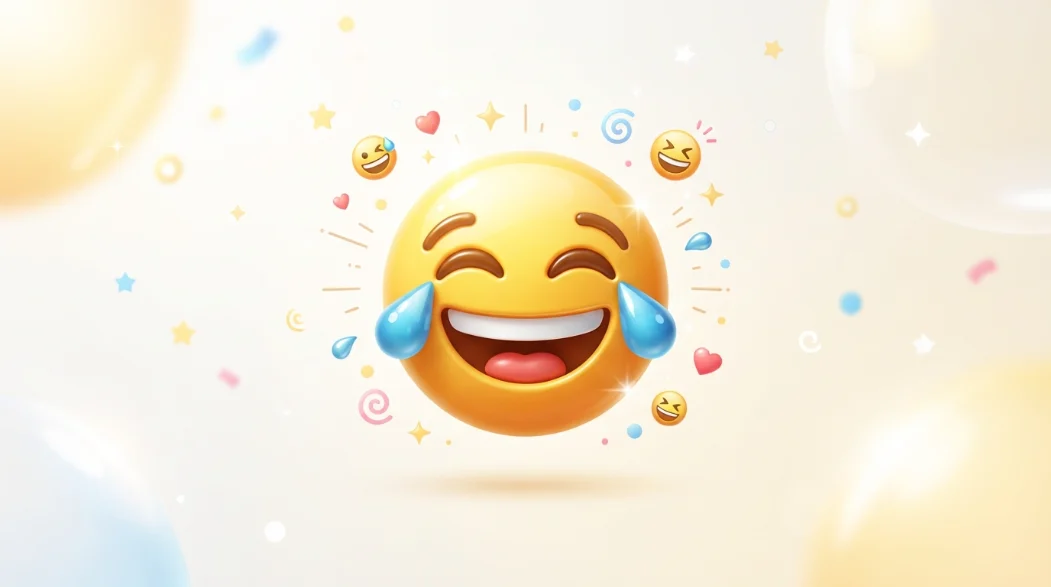
The joy emoji 😂 usually means something is very funny, amusing, or making you laugh hard. Its official Unicode name is Face with Tears of Joy, and the emoji combines a broad laughing expression with tears of laughter. It is often used as a reaction to a joke, funny story, ridiculous situation, or entertaining comment.
In texts and social media, 😂 can also add warmth and show that a message is being received humorously. It does not always mean the sender is literally crying from laughter. Depending on the conversation, it can express genuine amusement, playful exaggeration, or a strong reaction to something unexpected. The words around it and the relationship between the people chatting help determine the exact tone.
Quick Answer
😂 usually means “That is really funny” or “I’m laughing so hard.”
It can show genuine laughter, playful exaggeration, or an amused reaction to something ridiculous or unexpected.
What Does the Joy Emoji 😂 Mean?
The emoji commonly called the joy emoji is officially named Face with Tears of Joy.
It shows a laughing face with tears coming from its eyes. The basic idea is simple: something is so funny that the person is laughing to the point of tears.
In everyday texting, 😂 can communicate:
- That is hilarious.
- I am laughing.
- That was really funny.
- I cannot believe that happened.
- You are making me laugh.
- That situation is ridiculous.
- I am reacting playfully to what you said.
The emoji does not necessarily describe the sender’s physical reaction. Someone can use 😂 simply to show that they found a message amusing.
For example:
“You really tried to microwave ice cream 😂”
The sender may not literally be crying with laughter. The emoji simply tells you that they find the situation funny.
Why Is 😂 Called the Joy Emoji?
The word “joy” comes from the official Unicode keyword and name associated with the character. The full official name is Face with Tears of Joy.
This is different from saying that the emoji represents every kind of happiness. 😂 specifically connects strong amusement with tears of laughter.
That distinction matters because other happy emojis can communicate different feelings.
For example:
- 😊 can suggest warmth or a pleasant smile.
- 😄 can show a broad, cheerful smile.
- 🤣 can represent even stronger laughter.
- 😂 specifically combines laughter with tears.
So when someone searches for the joy emoji, they are often referring to 😂 because of its official name and its strong connection with laughter.
😂 Meaning in Text Messages
In a text, 😂 is most commonly a laughter reaction.
Someone may send it after:
“I forgot my own password again 😂”
Here, the emoji shows that the person sees the situation as funny.
It can also be used as a standalone response:
😂
In that case, the sender is essentially saying:
“That was hilarious.”
The strength of the reaction depends on the conversation. One 😂 can be casual, while several emojis can make the response feel more exaggerated:
😂😂😂
That often creates a stronger visual sense of laughter, although the exact intensity depends on the person using it.
What Emotional Tone Does 😂 Have?
😂 is usually positive, humorous, playful, and expressive.
Its tone can range from mild amusement to strong laughter.
Genuine amusement
“That joke was actually good 😂”
The sender is clearly showing that they found something funny.
Playful teasing
“You really thought that was going to work 😂”
The emoji softens the statement and signals that the comment is meant humorously.
Exaggerated reaction
“I cannot believe you actually said that 😂”
The sender may be dramatically emphasizing how funny or unexpected the comment was.
Laughing at an awkward situation
“We both showed up wearing the exact same outfit 😂”
Here, the emoji can make an embarrassing moment feel lighter.
The emoji itself is generally positive, but the surrounding words can change the overall tone.
Can 😂 Be Sarcastic?
Yes. 😂 can appear in sarcastic messages, but the emoji itself does not automatically mean sarcasm.
For example:
“Great, another meeting at 7 a.m. 😂”
The words may indicate that the person is joking about an unpleasant situation.
Another example:
“Love that my computer crashed right before I saved the file 😂”
The sender may be using humor to react to frustration.
In these cases, the sarcasm comes mainly from the wording and situation. 😂 reinforces the humorous presentation.
Does 😂 Mean Someone Is Really Happy?
Not necessarily.
😂 usually signals amusement, which is different from general happiness.
Someone can be happy without finding something funny. Likewise, someone can use 😂 while talking about an annoying or stressful situation to make the situation sound lighter.
For example:
“I missed the bus by literally ten seconds 😂”
The person may actually be frustrated. The emoji can turn that frustration into a humorous reaction.
This is why it is better to interpret 😂 as a laughter or amusement signal rather than assuming it always means the person feels happy overall.
Is 😂 Flirty?
😂 is not inherently a flirting emoji.
It can appear in a flirty conversation because people use humor while flirting, but the emoji alone does not establish romantic interest.
For example:
“You are actually making me laugh 😂”
This could be friendly or flirtatious depending on the broader conversation.
Compare it with:
“You are hilarious 😂”
That could simply be a friendly compliment.
If someone uses 😂 while talking to you romantically, consider the full conversation, their words, and your existing relationship instead of assigning a romantic meaning to the emoji alone.
What Does 😂 Mean From Someone?
When someone sends 😂 to you, they are usually reacting to something they found funny.
Depending on the message, it may mean:
- “That is hilarious.”
- “You made me laugh.”
- “I cannot believe you said that.”
- “That situation is funny.”
- “I am teasing you.”
- “I am laughing at how ridiculous this is.”
For example:
You: “I just walked into the wrong classroom.”
Them: “😂”
The likely meaning is simple amusement.
But consider:
You: “I told my boss I was late because my alarm clock betrayed me 😂”
Them: “😂 That excuse is wild.”
Here, the emoji is part of a playful reaction to the story.
The surrounding words provide the real context.
Related Emojis and Their Meanings
| Emoji | Official Name | Common Meaning | Tone | Where or When It Is Used |
|---|---|---|---|---|
| 😂 | Face with Tears of Joy | Laughing hard or finding something very funny | Joyful, humorous | Jokes, funny texts, amusing reactions |
| 🤣 | Rolling on the Floor Laughing | Extremely strong laughter | Very playful, exaggerated | Hilarious jokes, ridiculous situations |
| 😆 | Grinning Squinting Face | Strong amusement or a big laugh | Cheerful, energetic | Funny reactions and playful messages |
| 😄 | Grinning Face with Smiling Eyes | Happiness and cheerful smiling | Warm, upbeat | Friendly messages and positive reactions |
| 😁 | Beaming Face with Smiling Eyes | Big grin or enthusiastic happiness | Cheerful, excited | Good news, excitement, proud moments |
| 😊 | Smiling Face with Smiling Eyes | Warmth, friendliness, or contentment | Gentle, friendly | Appreciation, kind replies, pleasant conversations |
| 😹 | Cat with Tears of Joy | Laughing intensely in a playful cat form | Silly, humorous | Jokes, playful reactions, cat-related humor |
| 😅 | Grinning Face with Sweat | Nervous laughter, relief, or an awkward moment | Awkward, relieved, playful | Close calls, mistakes, uncomfortable humor |
| 😭 | Loudly Crying Face | Intense crying or exaggerated emotional reaction | Dramatic, emotional | Sadness, overwhelming reactions, or exaggerated humor |
The closest comparisons are 🤣, 😆, and 😅.
😂 is strongly associated with laughter and tears. 🤣 generally pushes the reaction further and can feel more exaggerated. 😆 also expresses strong amusement but does not include tears. 😅 is different because the sweat can suggest awkwardness, nervousness, or relief rather than pure laughter.
😂 vs. 🤣: What’s the Difference?
Both emojis communicate laughter, but their visual intensity differs.
😂 Face with Tears of Joy suggests strong amusement or laughing so hard that tears appear.
🤣 Rolling on the Floor Laughing represents an even more exaggerated form of laughter.
Compare:
“That was so funny 😂”
This sounds like strong amusement.
“I cannot stop laughing 🤣”
This feels more exaggerated and energetic.
Neither one has a guaranteed level of intensity. People may use them differently depending on their personal texting style.
😂 vs. 😆: What’s the Difference?
😂 includes tears and strongly emphasizes laughter.
😆, officially Grinning Squinting Face, shows a broad grin with tightly closed eyes and can express amusement, excitement, or a strong smile.
For a funny story, both may work:
“You actually did that 😂”
“You actually did that 😆”
The first emphasizes laughter more directly. The second can feel like a big, energetic grin.
😂 vs. 😅: What’s the Difference?
These two can be confused because both can appear after an awkward or funny situation.
😂 is mainly about laughter.
😅 can communicate nervousness, awkwardness, relief, or an uncomfortable laugh.
For example:
“I accidentally sent the message to the wrong person 😂”
This presents the mistake as funny.
“I accidentally sent the message to the wrong person 😅”
This can sound more like nervous embarrassment or relief.
😂 vs. 😭: Why Do People Confuse Them?
Both emojis can appear in exaggerated reactions.
😂 has tears caused by laughter.
😭 represents intense crying, officially called Loudly Crying Face.
However, in some casual online conversations, people may use 😭 for an exaggerated reaction to something funny or emotionally overwhelming.
That does not change the official meaning of the emoji. It simply shows how context can affect informal emoji use.
Text Message Examples
1. Reacting to a joke
“That was the worst joke I’ve ever heard 😂”
Likely meaning: The sender is jokingly saying the joke was funny or amusing.
2. Laughing at a friend
“You really wore that to the party 😂”
Likely meaning: Playful teasing rather than necessarily criticism.
3. Reacting to something unexpected
“He actually showed up with a birthday cake 😂”
Likely meaning: The sender finds the situation amusing or surprising.
4. Laughing at yourself
“I walked into the kitchen and completely forgot why I went there 😂”
Likely meaning: The sender is making light of their own mistake.
5. Lightening an awkward moment
“I called my teacher ‘Mom’ today 😂”
Likely meaning: The person is embarrassed but presenting the incident humorously.
Common Misunderstandings About 😂
It does not always mean extreme laughter
One person may use 😂 for a genuinely hilarious joke, while another may use it for something mildly amusing.
It does not automatically mean sarcasm
Sarcasm depends on the words and situation. 😂 can support sarcastic wording, but it does not create sarcasm by itself.
It does not automatically mean flirting
A person can use 😂 with a romantic partner, friend, coworker, or family member. The emoji alone does not identify the relationship.
It does not always mean the person is happy
Someone can use humor to respond to frustration, embarrassment, or an awkward situation.
It is not the same as every laughing emoji
😂, 🤣, 😆, and 😅 all communicate different visual and emotional cues.
How to Respond to 😂
Your response should match the conversation rather than the emoji alone.
If they are laughing at your joke
“😂 I knew you’d find that funny.”
If they are teasing you
“Okay, okay, don’t laugh at me 😂”
If they send 😂 after your story
“I know, it was a disaster 😂”
If you are not sure what they mean
Look at the message that caused the reaction. Usually, the easiest response is simply to continue the conversation.
You do not need to send another laughing emoji just because someone sent 😂.
Copy and Paste the Joy Emoji
😂
You can copy and paste it into texts, captions, comments, posts, and chats.
Common combinations include:
- 😂😂😂
- 😂🤣
- 😂😭
- 😂💀
- 😂❤️
- 😂🙈
- 😂👏
These combinations can add extra emotional cues, but the exact meaning depends on the surrounding message.
Official Name and Technical Details
The official Unicode name for 😂 is FACE WITH TEARS OF JOY.
- Emoji: 😂
- Unicode code point: U+1F602
- Unicode version: 6.0
- Emoji version: 1.0
- Category: Smileys & Emotion
- Meaning: Laughter expressed with tears of joy
Unicode lists 😂 as Face with Tears of Joy and associates it with concepts including crying, funny, happy, hilarious, joy, laugh, and tears. The character was introduced in Unicode 6.0 in 2010.
Different platforms can display the same Unicode emoji with small visual differences. The underlying character remains the same even when its design varies between services and devices.
Frequently Asked Questions
What does the 😂 emoji mean?
😂 usually means laughing hard, finding something very funny, or reacting with amusement. It is officially called Face with Tears of Joy.
Why is 😂 called the joy emoji?
It is commonly called the joy emoji because its official name is Face with Tears of Joy. The tears represent laughter rather than sadness.
Is 😂 a happy emoji?
Yes, it is generally associated with positive amusement and laughter. However, the exact tone depends on the message and situation.
Does 😂 mean laughing or crying?
The intended concept is laughing with tears of joy, not sadness. The tears are part of the exaggerated laughing expression.
What does 😂 mean from a girl or guy?
The basic meaning does not change based on gender. A person may use 😂 to show amusement, playful teasing, or laughter regardless of gender.
Is 😂 flirty?
Not by itself. 😂 can appear in a flirty conversation, but it is primarily a laughter emoji and does not prove romantic interest.
Is 😂 sarcastic?
It can be used with sarcasm, but the emoji itself is not inherently sarcastic. The surrounding words and context determine whether a message is sarcastic.
What’s the difference between 😂 and 🤣?
Both express laughter. 😂 is Face with Tears of Joy, while 🤣 is Rolling on the Floor Laughing. 🤣 often gives a more exaggerated visual impression of intense laughter.
What’s the difference between 😂 and 😅?
😂 focuses on laughter and tears of joy. 😅 can communicate nervous laughter, awkwardness, relief, or an uncomfortable situation.
Conclusion
The joy emoji 😂, officially called Face with Tears of Joy, is mainly used to show strong amusement, laughter, and a playful reaction. It can work after a joke, funny story, embarrassing moment, unexpected event, or teasing comment.
Its exact tone depends on context. It may represent genuine laughter, playful exaggeration, or humor used to make an awkward situation feel lighter. When choosing between similar emojis, remember the main distinction: 😂 emphasizes laughter, 🤣 intensifies the laugh, 😆 shows a strong grin, and 😅 adds an awkward or relieved feeling.
Discover More Post:
- Gasp Emoji | Meaning, Examples & What This Shocked …
- Rose Emoji Meaning | What It Really Says About Love …
- Praying Emoji Meaning | A Deeper Look at Faith, Hope …