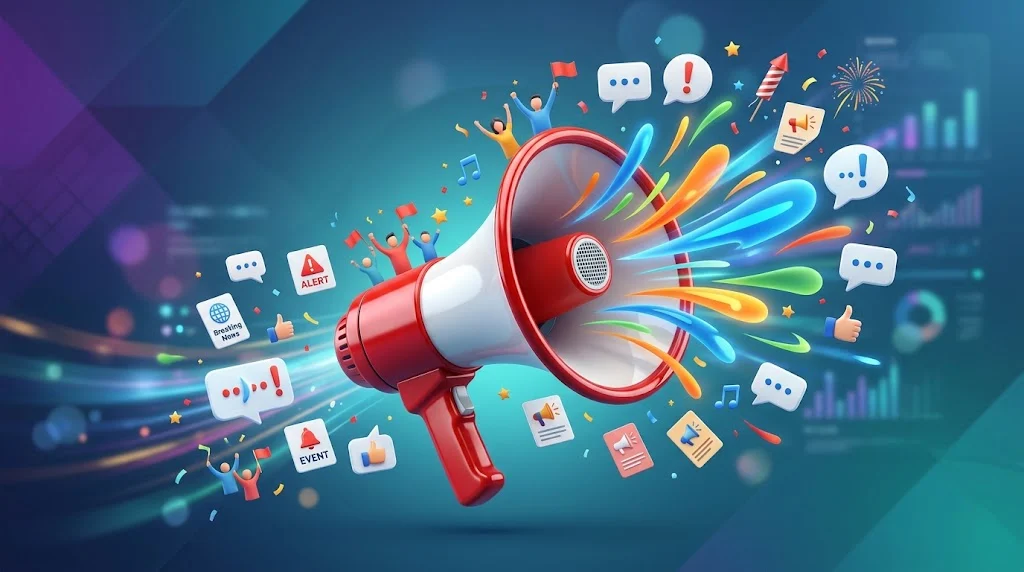
The megaphone emoji 📣 usually represents a megaphone, cheering, calling attention, or making your message heard. Its official Unicode name is Cheering Megaphone, and it depicts a handheld megaphone used to amplify someone’s voice. In everyday texting, 📣 can introduce an announcement, emphasize an important statement, show excitement, or suggest that someone is loudly cheering or calling out.
The exact meaning depends on the message around it. “Big news 📣” makes the emoji feel like an announcement, while “LET’S GO 📣” sounds more like cheering or hype. It can also be used playfully when someone wants to make a statement sound extra loud or dramatic. Like other emoji, its meaning can change with context rather than having one universal interpretation.
Quick Answer:
📣 usually means “listen up,” “announcement,” “cheering,” or “make your voice heard.”
It can add an energetic, loud, supportive, or attention-grabbing tone to a message, depending on context.
What Does the Megaphone Emoji 📣 Mean?
The 📣 emoji shows a handheld megaphone. Its official Unicode name is Cheering Megaphone, and its code point is U+1F4E3. It was approved in Unicode 6.0 in 2010 and added to Emoji 1.0 in 2015.
The most common uses of 📣 include:
- Making an announcement
- Calling attention to something
- Cheering for someone
- Showing excitement or hype
- Encouraging people to act
- Emphasizing an important statement
- Making a message feel louder or more dramatic
- Representing a real-life megaphone
Although its official name contains “Cheering,” the emoji is not limited to sports or celebrations. Its appearance naturally works for many situations where someone wants their voice or message to stand out.
What Does 📣 Mean in Text Messages?
In texts, 📣 often works like a visual “listen up” or “announcement” signal.
For example:
“I have some big news 📣”
Here, the emoji makes the sentence feel like a public announcement.
Another example:
“You absolutely crushed it today 📣”
This sounds like enthusiastic praise or cheering.
And:
“Everyone needs to hear this 📣”
The emoji emphasizes that the sender wants attention.
Because emoji meanings depend on context, 📣 can feel serious, excited, supportive, humorous, or dramatic without changing its basic visual idea.
📣 Meaning as an Announcement
One of the clearest uses of the megaphone emoji is to introduce information that the sender wants people to notice.
Examples include:
“Important update 📣 The event starts at 7 PM.”
“Announcement 📣 We finally finished the project!”
“Public service announcement 📣 Drink some water.”
In these examples, 📣 acts almost like a visual announcement marker.
It can make ordinary text feel more like something being broadcast to a group.
📣 Meaning for Cheering and Support
Because its official name is Cheering Megaphone, 📣 can also express loud support or encouragement.
For example:
“LET’S GO TEAM 📣”
“You got this! 📣”
“We are so proud of you 📣”
Here, the emoji suggests someone cheering loudly from the sidelines.
It can work especially well when the sender wants their encouragement to feel energetic rather than quiet or sentimental.
📣 Meaning for Hype and Excitement
📣 can add energy to a message when someone is excited about an event, announcement, achievement, or idea.
For example:
“The new season is finally here 📣”
“Weekend plans are officially locked in 📣”
“We won the game 📣🎉”
In this context, 📣 does not necessarily mean someone is literally holding a megaphone. It creates the feeling of broadcasting excitement.
Can 📣 Mean “Pay Attention”?
Yes. This is one of the most natural ways to interpret it in casual messages.
Someone may use 📣 before an important point:
“📣 Reminder: Your appointment is tomorrow.”
Or:
“📣 Please read this before you reply.”
The emoji visually suggests amplified speech, so it can make a message stand out.
That does not automatically make the sender angry or demanding. The surrounding words determine whether the tone feels helpful, urgent, playful, or bossy.
Can 📣 Be Used Sarcastically?
Yes.
The megaphone emoji can make a statement intentionally dramatic.
For example:
“📣 Breaking news: I finally cleaned my room.”
The event is not really a public announcement. The exaggerated presentation creates humor.
Another example:
“📣 Someone remembered to charge their phone.”
Depending on the relationship, this could be friendly teasing.
The emoji itself does not guarantee sarcasm. It simply gives the message a louder, more theatrical feel.
📣 Meaning From Someone
If someone sends you 📣 by itself, its meaning is not completely fixed.
Depending on the conversation, they may be suggesting:
- “Listen to this.”
- “I have an announcement.”
- “Pay attention.”
- “I’m cheering for you.”
- “This is exciting.”
- “I’m saying this loudly.”
- “Everyone needs to know this.”
- “Let’s hype this up.”
For example, if you tell a friend that you got a promotion and they respond:
“📣🎉”
they are probably celebrating your news.
If they send:
“📣 You need to hear this”
the emoji is functioning more like an attention signal.
Is 📣 Flirting?
📣 is not inherently a flirting emoji.
It can appear in playful or romantic conversations, but the emoji itself usually relates to cheering, announcements, attention, or emphasis.
For example:
“📣 You look amazing tonight.”
This could be playful flirting, but the romantic tone comes from the words and relationship context rather than the megaphone emoji alone.
Similarly:
“📣 My favorite person is online.”
could be affectionate or teasing without necessarily being romantic.
There is no universal rule that 📣 signals attraction.
📣 Meaning in Relationships
In a romantic relationship, friendship, or close connection, 📣 can be used to celebrate, encourage, tease, or emphasize something.
For example:
“📣 I am officially your biggest fan.”
This sounds supportive and affectionate.
Or:
“📣 You promised me movie night!”
This could be playful teasing.
The emoji can make a message feel louder and more expressive, but the actual emotional meaning comes mainly from the words and situation.
📣 for Social Media Posts and Captions
The megaphone emoji can work naturally in posts, captions, comments, and announcements where someone wants to draw attention to a message.
Examples:
“📣 New video is live!”
“📣 Save the date!”
“📣 Who’s coming tonight?”
“Big announcement 📣”
It can also be used to make a statement look more energetic:
“📣 Support your local team!”
This use fits the emoji’s basic idea of amplifying a message.
However, 📣 does not have a special universal meaning on every social platform. The Unicode Consortium notes that emoji meanings can vary with context, language, culture, and usage.
📣 vs. 📢: What’s the Difference?
- 📣 and 📢 are two of the easiest emojis to confuse because both represent devices used to make sound louder.
- 📣 is officially Cheering Megaphone. It shows a handheld megaphone and often fits cheering, hype, encouragement, or an energetic announcement.
- 📢 is officially Public Address Loudspeaker. It represents a loudspeaker used for public announcements and can also be used to highlight important information or suggest shouting.
A simple way to remember the difference is:
- 📣 = handheld megaphone, cheering, energetic callout
- 📢 = public-address speaker, announcement, information
There can still be overlap. Either emoji may be used to make a message feel loud or important.
Related Emojis for Announcements, Cheering, and Loud Messages
| Emoji | Official Name | Common Meaning | Tone | Where or When It Is Used |
|---|---|---|---|---|
| 📣 | Cheering Megaphone | Cheering, calling attention, amplifying a message | Energetic, supportive, dramatic | Announcements, encouragement, sports, hype |
| 📢 | Public Address Loudspeaker | Public announcement or important information | Informative, loud, attention-grabbing | Notices, reminders, alerts, emphasized posts |
| 🔊 | Speaker High Volume | Loud sound, volume, or strong audio | Energetic, forceful | Music, reactions, loud statements |
| 🗣️ | Speaking Head | Speaking, talking, or expressing an opinion | Conversational, direct | Discussions, statements, opinions |
| 🎤 | Microphone | Speaking, singing, performing, or addressing an audience | Public, expressive, confident | Speeches, music, performances |
| 📯 | Postal Horn | A horn or ceremonial announcement signal | Festive, traditional, attention-grabbing | Celebrations, announcements, dramatic messages |
| 🥳 | Partying Face | Celebration, excitement, or having fun | Joyful, festive | Parties, achievements, good news |
| 🎉 | Party Popper | Celebration or congratulations | Celebratory, upbeat | Announcements, milestones, parties |
The most important comparison is between 📣 and 📢. They both can draw attention to a message, but 📣 visually suggests a handheld megaphone and cheering, while 📢 is more closely associated with public-address announcements.
🗣️ is better when the focus is simply speaking or expressing an opinion. 🎤 suggests a microphone, performance, or public speaking. 🔊 focuses more directly on loud sound or volume.
📣 vs. 🔊: What’s the Difference?
📣 represents a physical megaphone used to amplify a person’s voice.
🔊 represents a speaker at high volume.
So:
“Everyone listen up 📣”
naturally fits the megaphone.
But:
“Turn this song up 🔊”
fits the loudspeaker more naturally.
They can overlap when someone wants to express loudness, but their visual ideas are different.
📣 vs. 🎤: What’s the Difference?
🎤 Microphone is associated with speaking, singing, performing, or addressing an audience.
📣 Cheering Megaphone is more about amplifying a voice, cheering, calling attention, or creating a loud announcement.
Compare:
“I’m going on stage tonight 🎤”
with:
“LET’S HEAR IT FOR THE WINNER 📣”
The first focuses on the person speaking or performing. The second feels more like cheering or rallying an audience.
How to Use the Megaphone Emoji Naturally
Use 📣 when you want your message to feel like it is being announced, amplified, or shouted with enthusiasm.
Good examples include:
- “Big news 📣”
- “Reminder 📣”
- “Let’s go! 📣”
- “You got this 📣”
- “Everyone needs to see this 📣”
- “Breaking news 📣”
- “Support our team 📣”
If your message is serious or sensitive, words should carry the main meaning. An emoji should not be expected to communicate important information by itself.
Does 📣 Mean Shouting?
It can suggest shouting or speaking loudly, but it does not automatically mean anger.
For example:
“I FINALLY PASSED 📣”
can feel excited rather than angry.
Similarly:
“📣 PLEASE REMEMBER TO BRING YOUR ID”
may simply emphasize an important reminder.
The words, capitalization, punctuation, and conversation all influence how loud or aggressive the message feels.
Is 📣 Rude?
Not usually.
📣 is generally neutral to energetic. It can become rude if the surrounding words are insulting, demanding, or mocking.
Compare:
“📣 You did an amazing job!”
This is supportive.
With:
“📣 Everyone knows you messed up.”
This could feel confrontational.
The emoji does not create the hostility by itself. The surrounding message determines the tone.
Megaphone Emoji Examples in Text
“📣 I have an announcement!”
The sender is drawing attention to upcoming information.
“You can do it! 📣”
The emoji adds loud encouragement.
“📣 Big sale this weekend!”
It makes the message feel promotional or attention-grabbing.
“We actually won 😭📣🎉”
The combination expresses strong excitement and celebration.
“📣 Breaking news: I made coffee before 8 AM.”
This uses the emoji humorously to exaggerate an ordinary event.
“Everyone listen 📣 I found the missing charger.”
The emoji creates a playful announcement tone.
What Does 📣 Mean With Other Emojis?
Emoji combinations can make the intended tone easier to understand.
📣🎉
Usually suggests an exciting announcement or celebration.
📣🥳
Can emphasize festive news or cheering.
📣🏆
Works naturally with winning, awards, or team support.
📣❤️
May suggest enthusiastic support or affection.
📣😂
Can make an announcement feel intentionally funny or dramatic.
📣📢
Strongly emphasizes loudness or an important announcement.
These combinations are not fixed codes. Their meaning still depends on the surrounding message.
Official Name and Technical Details
The emoji commonly called the megaphone emoji is officially named Cheering Megaphone.
- Emoji: 📣
- Official Unicode name: Cheering Megaphone
- Code point: U+1F4E3
- Unicode version: 6.0
- Emoji version: 1.0
- Category: Objects
- Basic concept: A handheld megaphone used to amplify a person’s voice
Emojipedia records that 📣 was approved as part of Unicode 6.0 in 2010 and added to Emoji 1.0 in 2015.
Different platforms can draw the same Unicode emoji differently. The underlying character remains the same even when its visual design varies between vendors.
Frequently Asked Questions
What does the megaphone emoji 📣 mean?
📣 usually represents a megaphone, cheering, calling attention, making an announcement, or amplifying a message. It can also add excitement or dramatic emphasis.
What is the official name of 📣?
The official Unicode name is Cheering Megaphone. Its Unicode code point is U+1F4E3.
What does 📣 mean in texting?
In texting, 📣 often means “listen up,” “announcement,” “pay attention,” “I’m cheering,” or “this is exciting.” The surrounding message determines the exact meaning.
Is 📣 a cheering emoji?
Yes. Its official name is Cheering Megaphone, and cheering is one of its natural uses.
What is the difference between 📣 and 📢?
📣 is a handheld Cheering Megaphone, while 📢 is a Public Address Loudspeaker. Both can emphasize messages, but 📣 tends to fit cheering and energetic callouts, while 📢 is more closely associated with public announcements.
Does 📣 mean “pay attention”?
It can. The megaphone image naturally suggests calling out to an audience, so it is often used before an important message or announcement.
Can 📣 be sarcastic?
Yes. Someone can use 📣 to make an ordinary statement sound exaggerated or theatrical for humor.
Is 📣 a flirting emoji?
Not inherently. It can appear in playful or affectionate conversations, but the emoji itself does not establish romantic interest.
Does 📣 mean yelling?
It can suggest loud speaking or shouting, but it does not necessarily indicate anger. Excitement, cheering, announcements, and playful exaggeration are also common interpretations.
Final Takeaway
The megaphone emoji 📣, officially called Cheering Megaphone, is mainly about amplifying a message, cheering, calling attention, or making something feel loud and energetic.
In a text, it might introduce an announcement, encourage someone, celebrate a win, or turn an ordinary sentence into a dramatic joke. When choosing between 📣 and similar emojis, think about the image you want to create: 📣 feels like a handheld callout, 📢 feels more like a public announcement, 🎤 focuses on speaking or performing, and 🔊 focuses on loud sound.
As with other emoji, context matters. The words around 📣 usually tell you whether the sender is being serious, supportive, excited, playful, or sarcastic.
Read More Related Articles:
- Hot Emoji Meaning | What Really Says in Texts, Chats, and …
- Excited Emoji Meaning | A Complete Guide to Its Energy …
- Mewing Emoji Meaning | What It Really Represents, How It’s …