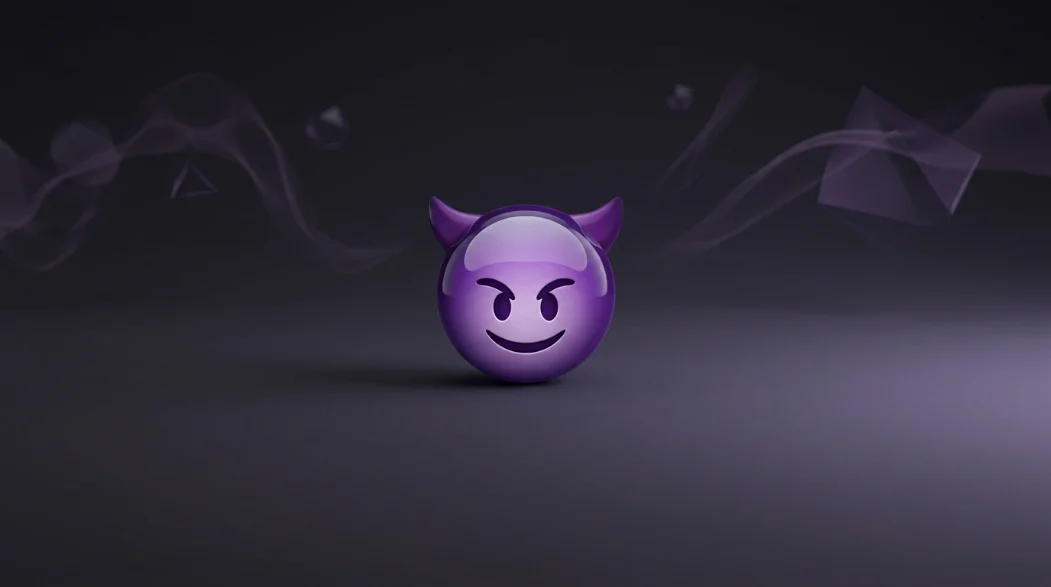
The evil emoji 😈 usually represents mischief, naughtiness, devilish behavior, or a playful sense of being “bad.” Its official Unicode name is Smiling Face with Horns, and its smiling expression makes it generally more playful than threatening. It can appear when someone is joking about breaking a rule, teasing another person, celebrating a mischievous idea, or adding a wicked twist to a message.
In texting, 😈 can also suggest flirting, confidence, excitement, or a deliberately naughty attitude, but those meanings depend heavily on context. The emoji itself does not prove romantic interest or bad intentions. The words around it, the relationship between the people, and the tone of the conversation usually determine what the sender actually means.
Quick Answer
The evil emoji 😈 usually means mischief, naughtiness, devilish behavior, or a playful “evil” mood.
In some conversations, it can also suggest teasing, flirting, confidence, or excitement.
What Does the Evil Emoji 😈 Mean?
The emoji most commonly called the evil emoji is 😈, whose official Unicode name is Smiling Face with Horns.
It shows a purple face with devil horns and a wide smile. Emojipedia describes it as commonly representing mischief, naughtiness, excitement, and “bad” or “wicked” behavior. It can also represent devils or devilish behavior, particularly in fantasy or Halloween-related contexts.
The important detail is the smile.
😈 generally feels more playful and mischievous than genuinely threatening.
For example:
“I may have eaten the last slice 😈”
Here, the sender is joking about doing something a little naughty.
Another example:
“Wait until you see what I bought 😈”
The emoji can make the message sound secretive, playful, or teasing.
It does not automatically mean that the person is actually evil.
Evil Emoji Meaning in Text
In text messages, 😈 can communicate several related ideas:
- “I’m feeling mischievous.”
- “I did something naughty.”
- “I have a wicked idea.”
- “I’m teasing you.”
- “I’m being playful.”
- “I’m up to something.”
- “This is going to be fun.”
- “I’m feeling a little dangerous.”
- “I know this is bad, but I like it.”
The exact meaning depends on the message.
For example:
“I ordered dessert even though I said I wouldn’t 😈”
This is playful and self-aware.
“I have a plan 😈”
This can suggest a mischievous or secret plan.
“You better watch out 😈”
This can sound teasing, playful, or slightly threatening depending on the relationship and conversation.
What Does 😈 Mean From Someone?
When someone sends 😈 to you, they may be trying to create a playful, mischievous, or teasing tone.
For example:
“I know something you don’t 😈”
This suggests they are teasing you or keeping something secret.
Or:
“Guess what I’m doing tonight 😈”
The emoji adds mystery and playful anticipation.
If someone sends:
“You are in trouble 😈”
It could be a joke between friends, playful teasing, or a flirtatious message.
The emoji alone cannot tell you which interpretation is correct. Look at the complete message and your existing communication style with that person.
Is the Evil Emoji Flirty?
It can be flirty, but 😈 is not automatically a flirting emoji.
Its playful and mischievous appearance makes it easy to use in flirtatious conversations.
For example:
“Maybe I should come over 😈”
Here, the words and context may make the message feel flirtatious.
But consider:
“I ate all the cookies 😈”
That is more likely playful than romantic.
Similarly:
“I have a surprise for you 😈”
Could be teasing, friendly, romantic, or simply humorous.
So, if you’re wondering whether 😈 means someone is attracted to you, don’t rely on the emoji alone. The surrounding conversation provides much stronger evidence.
😈 Meaning in Relationships
In a relationship, 😈 can add a playful, teasing, or slightly naughty tone to an otherwise ordinary message.
For example:
“You said you didn’t want dessert, so I ordered one for you 😈”
This can be affectionate and playful.
It may also be used when partners are joking around:
“You really thought I’d let you win? 😈”
Here, the emoji creates a competitive, mischievous tone.
In romantic conversations, the emoji can sometimes make a message feel more suggestive. However, that interpretation comes from the complete context rather than from 😈 itself.
Does 😈 Mean Evil or Bad?
Sometimes, yes.
The emoji can literally represent a devil, demon, evil character, or devilish behavior, especially in fantasy, Halloween, gaming, or storytelling contexts. Unicode’s CLDR data associates 😈 with terms such as demon, devil, evil, mischievous, and fantasy.
But in everyday texting, 😈 is often much lighter.
Someone might write:
“I stole your fries 😈”
They probably are not claiming to be evil.
The emoji simply turns the action into a playful confession.
😈 Meaning on Social Media
On social media, 😈 can add attitude to a caption or comment.
For example:
“Did something I probably shouldn’t have 😈”
This creates a playful sense of mystery.
A creator might also use it after a confident statement:
“Wait until the next update 😈”
Here, it can suggest that something exciting or unexpected is coming.
Because social media captions are often short, the emoji can carry some of the playful tone that would otherwise come from additional words.
When 😈 Is Used as a Joke
One of the most common everyday uses of 😈 is humorous exaggeration.
For example:
“I stayed up five minutes past my bedtime 😈”
The action is not genuinely evil. The emoji exaggerates the behavior for comedic effect.
Another example:
“I put ketchup on my fries first 😈”
The sender is pretending that a harmless choice is rebellious.
This is why 😈 often works well with jokes about breaking tiny rules or doing something mildly naughty.
When 😈 Can Sound Sarcastic
😈 can also appear in sarcastic messages.
For example:
“Oh no, I accidentally finished the whole pizza 😈”
The sender may be joking about an action they obviously enjoyed.
Another example:
“Guess I’ll have to take another vacation 😈”
The emoji can make the statement feel intentionally cheeky.
The sarcasm comes from the wording and situation. 😈 simply strengthens the playful attitude.
Emojis Similar to the Evil Emoji
| Emoji | Official Name | Common Meaning | Tone | Where or When It Is Used |
|---|---|---|---|---|
| 😈 | Smiling Face with Horns | Mischief, naughtiness, devilish behavior | Playful, mischievous | Teasing, jokes, playful confessions |
| 👿 | Angry Face with Horns | Anger, devilish behavior, frustration | Angry, intense | Strong reactions, fictional demons, frustration |
| 👹 | Ogre | Demon, monster, frightening or aggressive character | Intense, dramatic | Fantasy, horror, Halloween, exaggerated reactions |
| 👺 | Goblin | Goblin, mischief, strange or monstrous behavior | Mischievous, strange | Fantasy, jokes, Halloween |
| 😏 | Smirking Face | Smugness, confidence, suggestiveness | Suggestive, confident | Teasing, flirting, knowing reactions |
| 😼 | Cat with Wry Smile | Mischievous or smug attitude | Playful, cheeky | Jokes, teasing, playful reactions |
| 🦹 | Supervillain | Villainy, fictional evil, bad character | Dramatic, theatrical | Comics, games, fantasy stories |
| 💀 | Skull | Death, dead humor, shock, extreme reaction | Dark, dramatic | Dark jokes, disbelief, exaggerated reactions |
| 👻 | Ghost | Ghosts, spooky themes, playful fear | Spooky, playful | Halloween, jokes, supernatural themes |
The most important comparison is between 😈 and 👿.
😈 has a smile, so it usually feels mischievous, playful, or cheeky.
👿 has an angry expression, so it is better suited to anger, frustration, or a more aggressive devilish character. Emojipedia specifically notes that 👿 can represent devils, devilish behavior, anger, and frustration.
😈 vs. 👿: What’s the Difference?
These two emojis are easy to confuse because both have horns.
😈 Smiling Face with Horns
Usually suggests:
- Mischief
- Naughtiness
- Playful evil
- Teasing
- Excitement
- Devilish behavior
- A cheeky attitude
Example:
“I ate your leftovers 😈”
The tone is playful.
👿 Angry Face with Horns
Usually suggests:
- Anger
- Frustration
- Devilish behavior
- An angry demon or imp
- A stronger negative reaction
Example:
“You deleted my save file 👿”
The tone feels much more irritated.
Emojipedia describes 😈 as more playful and suggestive than its 👿 counterpart.
😈 vs. 😏: What’s the Difference?
😈 and 😏 can both appear in teasing or flirtatious messages, but they have different visual ideas.
😈 focuses on being mischievous, naughty, or devilish.
😏 Smirking Face focuses more on smugness, self-confidence, knowingness, or suggestiveness.
Compare:
“I have a little surprise for you 😈”
This feels mischievous.
“I know you liked that 😏”
This feels more suggestive or knowing.
If you want a playful “I’m being naughty” feeling, 😈 is usually clearer.
If you want a smug or knowing reaction, 😏 may fit better.
😈 vs. 👹: What’s the Difference?
👹 is more strongly associated with an ogre or monster.
It can represent a frightening, aggressive, or supernatural character.
😈 is much more suitable for everyday playful messages.
For example:
“I stayed up until 3 a.m. 😈”
works naturally as a playful confession.
Using 👹 instead would make the message feel much more dramatic or monstrous.
Text Message Examples
1. Playful confession
“Okay, I ate the last cookie 😈”
Likely meaning: The sender is jokingly admitting to doing something mildly naughty.
2. Secret plan
“I have an idea 😈”
Likely meaning: The sender may be planning something mischievous or exciting.
3. Friendly teasing
“You really thought I was going to let you win? 😈”
Likely meaning: Playful competitiveness.
4. Flirty context
“Maybe I’ll see you later 😈”
Likely meaning: Potentially flirtatious, depending on the existing relationship and conversation.
5. Halloween context
“Ready for Halloween 😈🎃”
Likely meaning: A literal devilish or spooky reference.
6. Humorous exaggeration
“I ignored my alarm again 😈”
Likely meaning: The sender is treating a harmless action as if it were mischievous.
Common Misunderstandings About 😈
It does not automatically mean evil
Although 😈 can represent evil or a devil, everyday users often use it for harmless mischief.
It does not automatically mean flirting
The emoji can be flirtatious, but it can also be used between friends, in jokes, or for Halloween.
It does not mean someone has bad intentions
A person may use 😈 simply to make a message sound cheeky or playful.
It is not the same as 👿
Both have horns, but 😈 has a smiling expression while 👿 has an angry expression.
It does not prove romantic interest
Even when 😈 appears in a flirty conversation, it should be interpreted alongside the actual words and relationship context.
How to Respond to 😈
There is no single correct response. Match your reply to the sender’s tone.
If they’re joking
“😂 You really did that?”
If they’re teasing you
“Oh, so that’s how we’re playing now?”
If they’re sharing a mischievous plan
“Okay, I’m listening 😈”
If the message feels flirty
“Oh really? 😏”
If you’re unsure
“What are you planning?”
A simple question can clarify the meaning without assuming that the sender is flirting or joking.
Copy and Paste the Evil Emoji
😈
You can copy and paste 😈 into texts, captions, comments, messages, and social media posts.
Common combinations include:
- 😈😏 for a cheeky or suggestive mood
- 😈😂 for playful mischief
- 😈🔥 for an intense or confident vibe
- 😈🎃 for Halloween or devilish themes
- 😈👀 for teasing or mystery
- 😈🖤 for a darker aesthetic
- 😈😜 for playful troublemaking
The combination changes the overall tone, so choose the surrounding emojis based on the message you want to convey.
Official Name and Technical Details
The official Unicode name of 😈 is SMILING FACE WITH HORNS.
- Emoji: 😈
- Unicode code point: U+1F608
- Official name: Smiling Face with Horns
- Unicode version: 6.0
- Emoji version: 1.0
- Category: Smileys & Emotion
- Common concepts: Devil, demon, evil, mischief, fantasy
Unicode’s CLDR data lists 😈 with keywords including demon, devil, evil, mischievous, fantasy, horns, smile, and smiling.
The emoji was approved as part of Unicode 6.0 in 2010 and added to Emoji 1.0 in 2015.
Its visual design can vary across platforms. The underlying Unicode character remains the same, but vendors can use different colors, facial details, horn shapes, and other design elements.
Frequently Asked Questions
What does the evil emoji 😈 mean?
The evil emoji 😈 usually represents mischief, naughtiness, devilish behavior, or a playful wicked attitude. It can also be used for teasing, excitement, or flirting depending on context.
What is the official name of 😈?
The official Unicode name is Smiling Face with Horns.
Is 😈 a devil emoji?
Yes, 😈 is commonly used as a devil emoji because it shows a smiling face with devil horns. Its official name, however, is Smiling Face with Horns.
Is 😈 a bad emoji?
Not necessarily. It can represent evil or devilish behavior, but in everyday messages it often describes harmless mischief or playful behavior.
Does 😈 mean flirting?
It can. 😈 sometimes adds a teasing or flirtatious tone, but the emoji alone does not prove romantic interest.
What does 😈 mean from a girl?
It can mean the same things it means from anyone: teasing, mischief, excitement, playfulness, or possibly flirting. The sender’s gender does not determine the emoji’s meaning.
What does 😈 mean from a guy?
It can suggest mischief, teasing, confidence, playfulness, or flirting depending on the conversation. The emoji itself does not establish romantic intent.
What is the difference between 😈 and 👿?
😈 has a smiling expression and is generally more playful or mischievous. 👿 has an angry expression and is more closely associated with anger, frustration, or an angry devilish character.
Can 😈 mean sarcasm?
Yes. It can add a cheeky or exaggerated tone to a sarcastic statement, but the wording and context create the sarcasm.
What emoji is similar to 😈?
Some related choices include 👿, 😏, 😼, 👹, 👺, 🦹, 💀, and 👻. The best choice depends on whether you want to express mischief, anger, smugness, fantasy evil, darkness, or something spooky.
Conclusion
The evil emoji 😈, officially called Smiling Face with Horns, usually represents mischief, naughtiness, devilish behavior, or a playful wicked attitude. It can make an ordinary message feel cheeky, teasing, dramatic, or slightly rebellious.
Its meaning can change with context. 😈 may be completely harmless between friends, playful in a joke, suggestive in a romantic conversation, or literal when discussing devils and Halloween. When choosing between similar emojis, remember the basic distinction: 😈 is playful and mischievous, while 👿 is more angry and intense.
Read More Related Articles:
- Silly Emoji | Meaning, Uses, Funny Reactions & Playful Ways to …
- Durr Emoji Meaning, Uses & Emotional Context
- Handshake Emoji Meaning | What Does Mean in Texts?