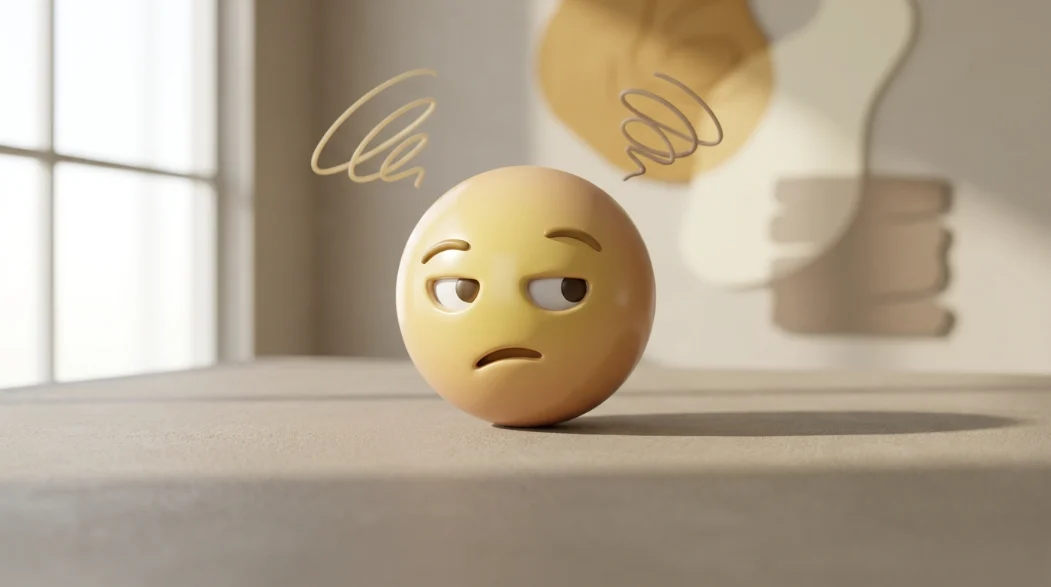
The annoyed emoji 😒 is commonly used to show irritation, displeasure, skepticism, or mild frustration. Its official Unicode name is Unamused Face, and its sideways-looking eyes and unimpressed expression often create the feeling of “Really?” or “I’m not impressed.” It can be used when someone is bothered by a situation, doubtful about what they just heard, or simply not happy with something.
In texts and social media, 😒 can range from mildly annoyed to openly dismissive. The exact meaning depends on the words around it and the relationship between the people communicating. It does not automatically mean anger or hostility. Sometimes it is simply a playful way to show that someone is unimpressed, skeptical, or tired of hearing the same thing.
Quick Answer
😒 usually means annoyed, unimpressed, irritated, skeptical, or displeased.
It can also communicate side-eye or a mild “I’m not impressed” reaction, depending on the conversation.
What Does the Annoyed Emoji 😒 Mean?
Although many people search for it as the annoyed emoji, 😒 is officially called Unamused Face.
The emoji shows a yellow face with slightly raised eyebrows, a frown, and eyes looking to the side. Its visual design can suggest irritation, displeasure, grumpiness, skepticism, or a side-eye reaction.
In everyday conversation, 😒 can communicate feelings such as:
- “That’s annoying.”
- “I’m not impressed.”
- “Seriously?”
- “I don’t believe you.”
- “That wasn’t necessary.”
- “I’m getting tired of this.”
- “Whatever.”
- “I’m skeptical about that.”
The emotion is usually negative but not necessarily intense. If someone wants to express stronger anger, emojis such as 😠 or 😡 may communicate that more clearly.
😒 Meaning in Text Messages
The annoyed emoji can have several meanings in texting.
Mild irritation
“You’re late again 😒”
Here, 😒 shows displeasure without necessarily expressing serious anger.
Disbelief or skepticism
“You really expect me to believe that? 😒”
The emoji adds a skeptical, unimpressed tone.
Feeling unimpressed
“That was your big excuse? 😒”
This suggests the sender is not convinced or impressed.
Side-eye
“Oh, so now you remember me 😒”
The emoji can make the message feel like a visual eye-roll or side-eye.
Playful annoyance
“You ate my fries again 😒”
Between friends, it may be exaggerated for humor rather than expressing genuine anger.
What Is the Emotional Tone of 😒?
The annoyed emoji usually sits somewhere between neutral displeasure and stronger frustration.
It is often less intense than 😡 Angry Face, but it can sound sharper than 😐 Neutral Face.
The tone may be:
- Mildly annoyed
- Unimpressed
- Skeptical
- Irritated
- Grumpy
- Dismissive
- Sarcastic
- Playfully bothered
The surrounding message matters a lot.
Compare:
“Okay 😒”
This may sound dismissive or annoyed.
“Haha, you really did that 😒😂”
Here, the additional 😂 can make the annoyance feel playful.
“I already told you twice 😒”
This sounds more genuinely frustrated.
Does 😒 Mean Someone Is Angry?
Not necessarily.
😒 can express annoyance without full anger. Someone may use it when they are bothered, disappointed, skeptical, or unimpressed.
For example:
“The meeting got moved again 😒”
This sounds irritated.
Compare:
“I’m so angry right now 😡”
The second message clearly communicates a stronger emotional reaction.
The annoyed emoji can therefore be useful when someone wants to show that something is bothering them without making the message look extremely angry.
Is 😒 a Side-Eye Emoji?
Yes, 😒 is commonly used to communicate side-eye.
The eyes looking toward the side are an important part of its visual expression. This can give the emoji a meaning similar to:
“Really?”
“Sure…”
“I’m watching you.”
“I don’t believe that.”
“That’s questionable.”
However, side-eye does not always mean hostility. Friends may use 😒 jokingly when teasing each other.
Can 😒 Be Sarcastic?
Yes.
The annoyed emoji can work well with sarcastic statements because its unimpressed expression reinforces the tone.
For example:
“Wow, what an amazing excuse 😒”
The words are already sarcastic, and 😒 makes the lack of sincerity clearer.
Another example:
“Yeah, because that worked so well last time 😒”
Here, the emoji supports the sarcastic reaction.
Still, 😒 itself does not automatically mean sarcasm. The surrounding words create most of the sarcastic meaning.
Is 😒 Rude?
It can feel rude, especially when sent by itself or added to a short, dismissive message.
For example:
“Whatever 😒”
may sound dismissive.
But:
“You seriously ate the last cookie 😒😂”
could be playful between friends.
The relationship, previous conversation, and wording all affect how the emoji is received.
If you’re communicating with someone you don’t know well, 😒 can sometimes come across as more negative than intended.
What Does 😒 Mean From Someone?
When someone sends 😒 to you, they may be saying that they are:
- Annoyed about something
- Unimpressed
- Skeptical
- Frustrated
- Giving you side-eye
- Jokingly irritated
- Questioning what you said
For example:
“You forgot again 😒”
This probably communicates genuine annoyance.
“You actually bought that? 😒”
This may communicate disbelief or skepticism.
“Okayyy 😒😂”
The 😂 makes it more likely that the annoyance is playful.
The emoji alone cannot tell you exactly what someone feels. Read it together with the message.
Is 😒 Flirty?
😒 is not normally a flirting emoji.
It can appear in playful flirting, especially when someone is pretending to be annoyed:
“You’re such a troublemaker 😒😂”
In that situation, the surrounding conversation may make the message playful or affectionate.
But 😒 by itself does not prove romantic interest.
If you’re trying to understand whether someone is flirting, look at the overall conversation, their wording, and the established relationship rather than treating one emoji as proof.
😒 Meaning in Relationships
In friendships or relationships, 😒 can communicate everyday irritation.
For example:
“You said you’d be here at 7 😒”
This may show genuine frustration.
It can also be used affectionately when the sender is pretending to be annoyed:
“You stole my hoodie again 😒❤️”
Here, the heart changes the overall tone and makes the message feel more affectionate.
The emoji does not have a special relationship meaning. Its interpretation comes from the surrounding message and the relationship between the people involved.
Emojis Similar to the Annoyed Emoji
| Emoji | Official Name | Common Meaning | Tone | Where or When It Is Used |
|---|---|---|---|---|
| 😒 | Unamused Face | Annoyance, displeasure, skepticism, side-eye | Mildly negative, unimpressed | Texts, reactions, teasing, complaints |
| 😑 | Expressionless Face | Frustration, boredom, emotional flatness | Dry, restrained | When something is irritating or exhausting |
| 🙄 | Face with Rolling Eyes | Exasperation, disbelief, annoyance | Dismissive, sarcastic | Reactions to frustrating or silly comments |
| 😠 | Angry Face | Anger, irritation, displeasure | Stronger negative emotion | Arguments, serious frustration, complaints |
| 😤 | Face with Steam From Nose | Frustration, determination, irritation | Intense, dramatic | Venting, strong reactions, emotional emphasis |
| 😐 | Neutral Face | Neutrality or lack of strong emotion | Flat, neutral | Unclear, ordinary, or unemotional reactions |
| 😞 | Disappointed Face | Disappointment, sadness, regret | Sad, subdued | Letdowns, mistakes, unhappy situations |
| 😕 | Confused Face | Confusion, uncertainty, mild concern | Uncertain, puzzled | When something does not make sense |
| 😩 | Weary Face | Frustration, exhaustion, distress | Dramatic, overwhelmed | Complaints, stressful or tiring situations |
The closest alternatives are 😑, 🙄, and 😠, but they are not interchangeable in every situation.
😒 Unamused Face is especially useful when the reaction is about being unimpressed, skeptical, or mildly irritated. 😑 Expressionless Face feels flatter and more emotionally restrained. 🙄 Face with Rolling Eyes makes the dismissive or exasperated reaction more obvious. 😠 Angry Face is better when the emotion has clearly moved into anger.
😒 vs. 😑: What’s the Difference?
Both emojis can communicate annoyance, but their expressions are different.
😒 looks to the side and has a displeased expression. It often feels like side-eye, skepticism, or being unimpressed.
😑 has a flat expression and can communicate frustration, boredom, or emotional exhaustion. Emojipedia notes that 😑 may convey frustration that is stronger than the more neutral 😐.
Compare:
“You seriously said that? 😒”
This sounds skeptical or unimpressed.
“You explained this for the fifth time 😑”
This sounds tired or frustrated.
😒 vs. 🙄: What’s the Difference?
Both can communicate annoyance or disbelief.
😒 gives more of a side-eye or unimpressed feeling.
🙄 more clearly communicates eye-rolling, exasperation, or dismissal.
For example:
“You forgot your keys again 😒”
This can sound like mild annoyance.
“You forgot your keys again 🙄”
This feels more like an obvious eye-roll.
Choose 😒 when you want a quieter unimpressed reaction. Choose 🙄 when you want the exasperation to be more obvious.
😒 vs. 😠: What’s the Difference?
The biggest difference is emotional intensity.
😒 usually communicates mild annoyance, skepticism, or displeasure.
😠 clearly communicates anger and can represent a stronger negative reaction.
Compare:
“You changed the plan again 😒”
Mild frustration.
“You changed the plan again without telling me 😠”
Stronger anger.
This distinction can help you avoid making a casual complaint look much more serious than intended.
😒 vs. 😤: What’s the Difference?
😤 is often more dramatic and emotionally intense.
It can communicate frustration, irritation, or determination, while 😒 tends to communicate unimpressed annoyance or skepticism.
For example:
“I can’t believe you did that 😒”
Sounds unimpressed.
“I am DONE with this 😤”
Sounds much more intense.
Text Message Examples
1. Mild annoyance
“You left the lights on again 😒”
Likely meaning: The sender is irritated by something small but noticeable.
2. Skepticism
“You expect me to believe that? 😒”
Likely meaning: The sender doubts what they were told.
3. Playful teasing
“You really ate the last slice 😒😂”
Likely meaning: The sender is pretending to be annoyed.
4. Feeling unimpressed
“That was your solution? 😒”
Likely meaning: The sender does not think the solution was convincing.
5. Genuine frustration
“I asked you three times already 😒”
Likely meaning: The sender is becoming genuinely irritated.
Common Misunderstandings About 😒
😒 Does not always mean serious anger
It usually communicates a milder negative reaction than an angry emoji such as 😠.
😒 does not always mean sarcasm
It can support sarcasm, but the surrounding words determine whether the message is actually sarcastic.
😒 does not automatically mean dislike
Someone can use it to express temporary annoyance without actually disliking the person.
😒 does not prove someone is upset with you
Sometimes people use it playfully or dramatically, especially with friends.
😒 is not the same as 🙄
Both can show annoyance, but 🙄 has a clearer eye-rolling expression, while 😒 is more associated with an unimpressed or side-eye reaction.
How to Respond to the Annoyed Emoji
Your response should depend on why the person appears annoyed.
- If you made a mistake
“Sorry, you’re right. My bad.”
- If they’re joking
“😂 Okay, okay, I get it.”
- If you’re not sure what bothered them
“Did I do something?”
- If they’re clearly frustrated
“I understand. What happened?”
- If the situation is playful
“Don’t give me that look 😭😂”
The best response addresses the actual conversation instead of focusing too much on the emoji itself.
Copy and Paste the Annoyed Emoji
😒
You can copy and paste it into texts, captions, comments, messages, or social posts.
Common combinations include:
- 😒🙄 = annoyed or unimpressed
- 😒😂 = playful annoyance
- 😒🤦 = frustration or disbelief
- 😒😑 = tired of something
- 😒💀 = exaggerated disbelief or annoyance
- 😒❤️ = playful or affectionate annoyance
The meaning of combinations can change based on the words around them.
Official Name and Technical Details
The official Unicode name of 😒 is UNAMUSED FACE.
- Emoji: 😒
- Official name: Unamused Face
- Unicode code point: U+1F612
- Unicode version: 6.0
- Emoji version: 1.0
- Basic concept: Unamused, displeased, skeptical, or irritated expression
Unicode’s emoji documentation identifies U+1F612 as UNAMUSED FACE.
The emoji was approved as part of Unicode 6.0 in 2010 and added to Emoji 1.0 in 2015.
Its visual appearance can vary slightly across platforms, but the core expression remains a sideways-looking, displeased face.
Frequently Asked Questions
What does 😒 mean?
😒 usually means annoyed, unimpressed, irritated, skeptical, or displeased. It can also communicate side-eye.
What is the official name of 😒?
The official Unicode name is Unamused Face.
Is 😒 the annoyed emoji?
😒 is commonly used as an annoyed emoji, although its official name is Unamused Face. It can represent irritation, displeasure, skepticism, and being unimpressed.
What does 😒 mean from a girl or guy?
The emoji does not have a different standard meaning based on the sender’s gender. Context, wording, relationship, and communication style matter more.
Is 😒 rude?
It can sound rude or dismissive in some messages, especially when used by itself. In friendly conversations, it can also be playful.
Is 😒 a flirting emoji?
Not usually. It primarily communicates annoyance, skepticism, or being unimpressed. It may appear in playful flirting, but the emoji alone does not indicate romantic interest.
What does 😒 mean from a friend?
A friend may use 😒 to show genuine annoyance, playful teasing, skepticism, or disbelief. The rest of the message usually makes the intended tone clearer.
What is the difference between 😒 and 🙄?
😒 usually gives a side-eye or unimpressed feeling, while 🙄 more clearly represents eye-rolling and exasperation.
What is the difference between 😒 and 😠?
😒 generally communicates mild annoyance or displeasure. 😠 communicates a stronger and more direct feeling of anger.
Can 😒 mean “whatever”?
Yes. In some contexts, 😒 can support a dismissive “whatever” feeling, especially when paired with short wording. However, it does not literally mean “whatever” in every message.
Conclusion
The annoyed emoji 😒, officially called Unamused Face, is mainly used to show mild irritation, displeasure, skepticism, or an unimpressed reaction. Its sideways eyes make it especially useful for expressing side-eye or a quiet “Really?” feeling.
The exact tone depends on context. 😒 can be genuinely annoyed, sarcastic, skeptical, or completely playful. If you need a stronger angry reaction, 😠 or 😤 may fit better, while 🙄 is often better for obvious eye-rolling. Looking at the full message is always the best way to understand what the sender means.
Read More Related Articles:
- Silly Emoji | Meaning, Uses, Funny Reactions & Playful Ways to …
- Durr Emoji Meaning, Uses & Emotional Context
- Handshake Emoji Meaning | What Does Mean in Texts?