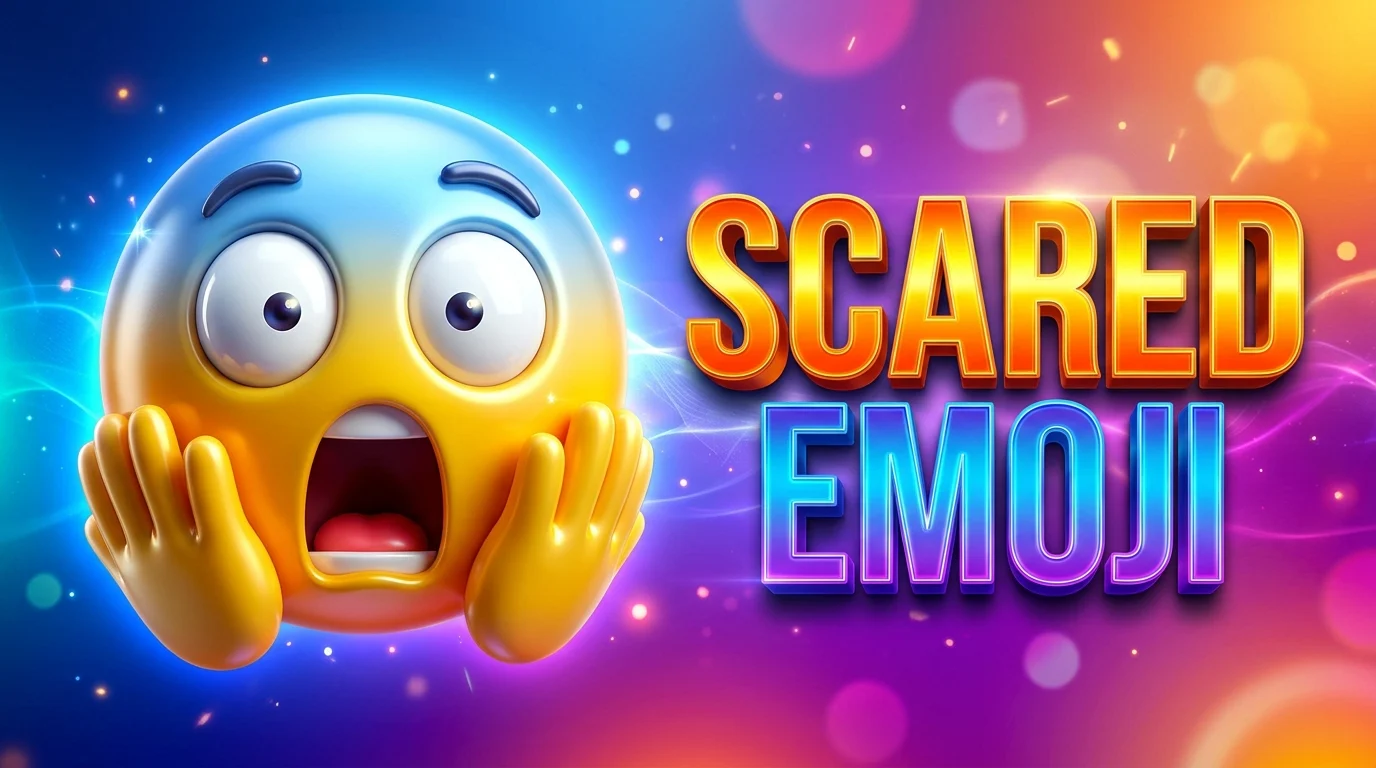
The scared emoji is commonly used to show fear, shock, nervousness, or an unexpected reaction. Its wide eyes and worried facial expression can communicate feelings that are difficult to explain with words alone. People often use it when something surprises them, makes them uncomfortable, or leaves them unsure about what might happen next. Depending on the conversation, the same expression can suggest genuine fear, playful panic, or dramatic disbelief.
The meaning is not always as serious as it looks. In casual messages, someone might use a scared face after hearing surprising news, seeing something creepy, or facing an awkward situation. In other conversations, it can show real worry or emotional discomfort. Understanding the surrounding message helps you recognize whether the sender is frightened, joking, or simply reacting dramatically.
Quick Answer
The scared emoji usually represents fear, nervousness, shock, or worry when something feels frightening or unexpected.
In casual texting, it can also express playful panic, awkwardness, or dramatic surprise.
What Does the Scared Emoji Mean?
The scared emoji can communicate several emotions, but its central meaning is fear or alarm. It is often used when someone feels frightened, startled, worried, or overwhelmed by something unexpected.
The expression usually features wide eyes, raised eyebrows, and a tense or open mouth. These facial details make the emotion easy to recognize, even without an explanation.
However, people do not always use it to describe a genuinely frightening experience. It can also add drama to an ordinary situation, such as receiving an unexpected message, hearing surprising news, or realizing that something embarrassing has happened.
Common meanings include:
- Fear: Something looks dangerous, creepy, or frightening.
- Shock: An unexpected event catches someone off guard.
- Nervousness: A situation makes someone feel uncertain or uneasy.
- Worry: Someone is concerned about what might happen.
- Awkwardness: An uncomfortable moment creates a nervous reaction.
- Playful panic: Something feels overwhelming, but the sender is joking.
The best interpretation depends on the message and the relationship between the people communicating.
Scared Emoji Meaning in Text Messages
In text messages, the scared emoji adds an emotional reaction to words. It can make a message feel more expressive by showing that something has caused fear, surprise, or nervousness.
For example, someone might send it after hearing that a difficult exam has been scheduled, receiving unexpected news, or being told about a frightening experience.
Here are some common texting situations:
- Reacting to frightening news: “You heard that noise outside? 😨”
- Showing nervousness: “My interview starts in five minutes 😨”
- Expressing surprise: “Wait, you did what? 😨”
- Showing playful fear: “I just watched the scariest movie 😨”
- Reacting to an awkward moment: “I accidentally sent that message to the wrong person 😨”
In each example, the emoji adds a feeling that the words alone might not communicate clearly.
It can also soften a serious statement when the sender wants to show concern without making the conversation feel too intense.
What Does the Scared Emoji Mean From Someone?
When someone sends you a scared emoji, they may be reacting to something you said or describing how they feel about a situation.
The meaning can change depending on the conversation.
- If they send it after surprising news: They may feel shocked or unable to believe what happened.
- If they send it after you mention a problem: They may be worried about you or concerned about the possible outcome.
- If they send it during a playful conversation: They may be pretending to panic for humor.
- If they send it after an awkward message: They may feel embarrassed, uncomfortable, or unsure how to respond.
- If they send it while discussing something frightening: They may genuinely feel scared.
It is important not to assume that the sender is always upset. A frightened-looking emoji can be a playful reaction, especially between friends who regularly joke with each other.
Is the Scared Emoji Positive or Negative?
The scared emoji usually carries a negative or uneasy emotion because it represents fear, worry, or discomfort. However, its use does not always mean something bad has happened.
For example, someone might use it while discussing an exciting challenge, an unexpected announcement, or a funny situation that feels overwhelming.
Its emotional tone can be understood in three ways:
- Negative: It communicates genuine fear, anxiety, or concern.
- Neutral: It expresses surprise or uncertainty without clearly showing whether the feeling is good or bad.
- Playful: It exaggerates a small problem or funny situation to make the conversation more entertaining.
The surrounding words are important. A message about a dangerous experience has a different meaning from a joking reaction to a friend’s unexpected announcement.
Can the Scared Emoji Be Sarcastic?
Yes. The scared emoji can be used sarcastically when someone wants to exaggerate fear or pretend that something is frightening.
For example:
“Another Monday morning. I’m terrified 😨”
The sender probably is not experiencing serious fear. Instead, the emoji makes an ordinary complaint sound dramatic.
It can also be used to tease someone who has said something surprising or made an exaggerated claim.
For example:
“You’re actually going to ask them out? 😨”
Here, the emoji may communicate playful disbelief rather than genuine alarm.
Sarcasm is more likely when the situation is harmless, the message sounds humorous, or the people involved regularly tease each other.
Scared Emoji vs. Shock: What’s the Difference?
Fear and shock are closely related, but they do not communicate exactly the same emotion.
Fear usually involves feeling threatened, unsafe, or worried about what might happen. Shock is the immediate reaction to something unexpected, whether it is frightening or not.
For example, hearing a strange noise in a dark room may cause fear. Finding out that a friend has suddenly moved to another country may cause shock without necessarily creating fear.
The scared emoji can express both emotions because its facial expression suggests a strong reaction. The message around it helps explain which feeling the sender intends.
Does the Scared Emoji Mean Anxiety?
Sometimes. People may use a scared-looking face to communicate anxiety, especially when they are worried about an upcoming event or uncertain outcome.
For example:
- “I have my results tomorrow 😨”
- “I don’t know how this meeting will go 😨”
- “They haven’t replied yet, and I’m getting nervous 😨”
In these situations, the emoji suggests uneasiness rather than immediate danger.
However, a single emoji does not establish that someone has an anxiety disorder or a serious mental health concern. It simply communicates an emotion in that particular conversation.
Related Emojis and Their Meanings
Several facial emojis can express fear, surprise, worry, or emotional discomfort. They may look similar, but their expressions suggest different reactions.
| Emoji | Official Name | Common Meaning | Tone | Where or When It Is Used |
|---|---|---|---|---|
| 😨 | Fearful Face | Fear, shock, or alarm | Frightened | Reacting to something scary or unexpected |
| 😱 | Face Screaming in Fear | Extreme fear or intense shock | Dramatic | Reacting to terrifying or unbelievable news |
| 😰 | Anxious Face with Sweat | Nervousness, worry, or stress | Uneasy | Facing pressure or uncertainty |
| 😧 | Anguished Face | Distress, concern, or shock | Troubled | Responding to upsetting news |
| 😳 | Flushed Face | Embarrassment or disbelief | Awkward, surprised | Reacting to an unexpected or uncomfortable moment |
| 😟 | Worried Face | Concern or uncertainty | Concerned | Thinking about a possible problem |
| 😬 | Grimacing Face | Awkwardness or tension | Uncomfortable | Reacting to an embarrassing situation |
| 😭 | Loudly Crying Face | Strong sadness or overwhelming emotion | Emotional | Expressing distress or an exaggerated reaction |
Scared Emoji vs. Screaming in Fear Emoji
The fearful face 😨 generally communicates fear, alarm, or nervous surprise. It can suggest that someone is frightened without showing an extremely dramatic reaction.
The screaming in fear face 😱 usually expresses a stronger reaction. It is often used when something seems terrifying, shocking, or almost unbelievable.
For example:
- “I heard something moving outside 😨” suggests fear and uneasiness.
- “There was a huge spider on my bed 😱” suggests a much more dramatic reaction.
Both can express fear, but the second face generally communicates greater intensity.
Scared Emoji vs. Anxious Face
The fearful face 😨 often suggests immediate fear or alarm, while the anxious face with sweat 😰 is commonly associated with nervousness, pressure, and worry.
For example:
- “That sudden noise scared me 😨”
- “My final results come out tomorrow 😰”
The first reaction is connected to something frightening. The second is more about uncertainty and anticipation.
Is the Scared Emoji Flirty?
The scared emoji is not usually considered a flirty symbol on its own. Its main purpose is to communicate fear, nervousness, surprise, or worry.
However, it can appear in playful or teasing conversations that have a romantic tone.
For example:
- “You’re making me nervous 😨”
- “I wasn’t expecting you to say that 😨”
- “Are you really asking me on a date? 😨”
Depending on the relationship, these messages might suggest shy excitement or playful nervousness.
Still, the emoji alone does not prove romantic interest. The sender’s words, communication style, and relationship with you provide more useful clues.
Is the Scared Emoji Rude?
No, the scared emoji is not generally considered rude. It usually communicates an emotional reaction rather than an insult or criticism.
However, it may feel dismissive or mocking in certain situations.
For example, sending a frightened face after someone shares a serious personal problem could make them feel that you are not taking their concern seriously. Similarly, using it to react to someone’s appearance, mistake, or personal difficulty might seem disrespectful.
In friendly conversations, it is usually harmless. In sensitive discussions, a thoughtful written response may communicate care more clearly.
Scared Emoji on Social Media
On social media, the scared emoji is often used to react quickly to surprising posts, frightening stories, unexpected announcements, and dramatic moments.
Its meaning can change slightly depending on the type of content.
On funny posts: It can show exaggerated panic or disbelief.
On scary stories: It communicates fear, suspense, or nervousness.
In comment sections: It can react to something unexpected or unbelievable.
On personal updates: It may show concern when someone shares difficult news.
In entertainment discussions: It can express a reaction to a frightening scene, shocking twist, or intense moment.
People also use scared-looking emojis for humorous exaggeration. A small inconvenience can become a dramatic emergency when accompanied by the right facial expression.
Text Message Examples
Here are five realistic examples showing how the scared emoji can be used in everyday conversations.
1. Reacting to scary news
- Person A: “Someone was walking around outside our house last night.”
- Person B: “Seriously? That’s frightening 😨”
Meaning: The sender is expressing genuine fear or concern.
2. Showing nervousness before an exam
- Person A: “Are you ready for tomorrow’s test?”
- Person B: “Not really. I haven’t finished studying 😨”
Meaning: The emoji communicates stress and nervousness about the upcoming exam.
3. Expressing surprise
- Person A: “I just found out we have an unexpected meeting today.”
- Person B: “Wait, today? 😨”
Meaning: The sender is surprised and possibly worried about the announcement.
4. Reacting playfully to a challenge
- Person A: “You have to sing in front of everyone tonight.”
- Person B: “Please don’t scare me like that 😨”
Meaning: The emoji exaggerates nervousness for humor.
5. Responding to an awkward situation
- Person A: “I accidentally called my teacher by the wrong name.”
- Person B: “Oh no, that’s so awkward 😨”
Meaning: The sender is reacting with secondhand embarrassment and disbelief.
Common Misunderstandings About the Scared Emoji
1. Thinking It Always Means Serious Fear
The scared emoji can communicate genuine fear, but it is also used for jokes, playful reactions, and exaggerated surprise.
2. Confusing Fear With Anxiety
Fear often relates to an immediate threat or frightening experience. Anxiety is more commonly associated with worry about uncertainty or what might happen. The emoji can represent either, depending on the context.
3. Assuming It Means Something Bad Happened
Someone may use the emoji after receiving exciting but unexpected news. A frightened expression does not automatically mean the situation is negative.
4. Treating It as an Angry Reaction
The scared emoji is not primarily used to express anger. It communicates alarm, worry, or fear rather than hostility.
5. Assuming Everyone Interprets It the Same Way
People have different texting habits. One person may use it for genuine concern, while another may use it whenever something feels surprising or awkward.
How to Respond to the Scared Emoji
Your response should depend on why the other person sent it. If they seem genuinely frightened, acknowledge their feelings. If they are joking, a playful response may be more appropriate.
Here are some natural ways to reply:
- If they seem genuinely scared: “Are you okay? What happened?”
- If they are worried: “Don’t stress too much. Let’s see what happens.”
- If they are surprised: “I know, I wasn’t expecting that either!”
- If they are joking: “Haha, don’t panic!”
- If they are reacting to something frightening: “That would scare me too.”
- If they feel awkward: “It’s okay. These things happen.”
The most helpful response is one that matches the sender’s actual emotion instead of assuming every scared-looking reaction is serious.
Frequently Asked Questions
1. What does the scared emoji mean?
The scared emoji usually represents fear, shock, nervousness, worry, or alarm. It can also be used for playful panic or exaggerated surprise in casual conversations.
2. Which emoji is the scared emoji?
The fearful face 😨 is commonly called the scared emoji. However, people may also use 😱 or 😰 when they want to express stronger fear or nervousness.
3. What does the scared emoji mean from a girl?
It can mean that she feels surprised, nervous, frightened, or uncomfortable. In a playful conversation, it may simply be a dramatic reaction. The surrounding message provides the best clue.
4. What does the scared emoji mean from a guy?
A guy may use it to show fear, disbelief, worry, or playful nervousness. It can also be a humorous reaction to unexpected news or an awkward situation.
5. Is the scared emoji the same as the shocked emoji?
Not exactly. The scared emoji usually suggests fear or alarm, while a shocked reaction can simply mean surprise. Something unexpected may cause shock without making someone afraid.
6. What is the difference between the scared emoji and the screaming emoji?
The scared face 😨 generally expresses fear or alarm, while the screaming in fear face 😱 often communicates a more intense or dramatic reaction.
7. Can the scared emoji mean embarrassment?
Yes. Some people use it when they feel awkward, exposed, or nervous about an embarrassing situation. The exact meaning depends on the message.
8. Is the scared emoji negative?
It usually has a negative or uneasy tone because it communicates fear or worry. However, people also use it humorously, so it does not always indicate a serious problem.
9. Can the scared emoji be sarcastic?
Yes. It can exaggerate fear in harmless situations, such as joking about a difficult task or reacting dramatically to an ordinary announcement.
Conclusion
The scared emoji is a useful way to express fear, shock, nervousness, and unexpected reactions in digital conversations. Although its expression looks frightened, its meaning is not always serious. People also use it to show playful panic, awkwardness, and dramatic disbelief.
The key is to understand the situation surrounding the emoji. Whether someone is reacting to frightening news, an upcoming challenge, or a funny surprise, the words and tone of the conversation help reveal what they really mean.
Read More Related Articles:
- Clapping Hands Emoji Meaning | A Cheerful Symbol of Praise …
- New Tired Emoji Meaning | The Exhausted Expression …
- Two Hearts Emoji Meaning | What Really Says About Love …