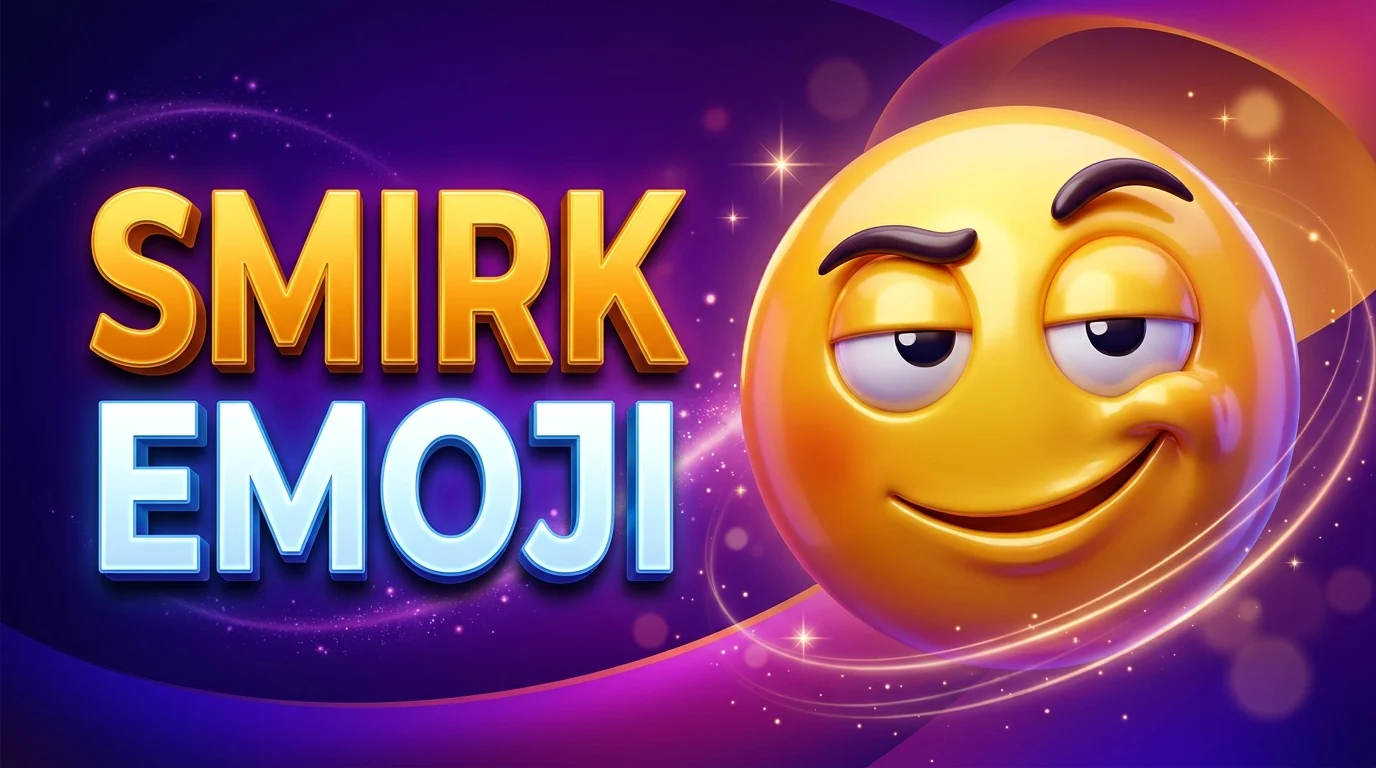
The smirk emoji 😏 is commonly used to express confidence, mischief, sarcasm, teasing, or a playful sense of satisfaction. Its sideways smile and raised eyebrow give it a knowing expression, making it different from a regular happy face. Depending on the conversation, it can sound flirty, cheeky, smug, or even slightly sarcastic.
People often use 😏 when they want to suggest something without saying it directly. It can add a playful twist to a message, hint at a private joke, or show that someone feels pleased with themselves. However, its meaning is not always obvious because the same expression can feel charming in one conversation and irritating in another.
Quick Answer
The smirk emoji 😏 usually means confidence, teasing, mischief, flirtation, or quiet satisfaction.
Its exact meaning depends on the message, relationship, and tone of the conversation.
What Does the Smirk Emoji 😏 Mean?
The smirk emoji shows a yellow face with a slight sideways smile and a raised eyebrow. Its expression looks knowing, confident, and a little mischievous.
Unlike a broad smile that clearly communicates happiness, 😏 often suggests an extra layer of meaning. Someone might use it when they feel clever, know something others do not, or want to make a playful comment.
Common meanings include:
- Mischief: Suggesting a playful plan or cheeky idea.
- Confidence: Showing that someone feels sure of themselves.
- Teasing: Making a lighthearted joke or playful remark.
- Flirting: Hinting at attraction or romantic interest.
- Sarcasm: Giving a message a dry or ironic tone.
- Satisfaction: Showing quiet pride after something goes well.
The emoji does not automatically mean that someone is flirting or being sarcastic. The words around it help reveal what the sender intends.
😏 Meaning in Text Messages
In text messages, 😏 can change the tone of a sentence without adding many words. It often makes a simple statement feel more playful, suggestive, or confident.
For example:
- “I know something you don’t 😏” suggests a secret or playful confidence.
- “Maybe I’ll tell you later 😏” creates a teasing sense of mystery.
- “I told you I could do it 😏” shows satisfaction or pride.
- “You’re looking good today 😏” may add a flirty tone.
Sometimes, the emoji is used simply because the sender wants to sound cheeky. It can soften a bold statement by making it feel less serious.
However, it can also make a message seem smug or overly confident. If the conversation is already tense, the same expression might come across as dismissive rather than playful.
What Does 😏 Mean From Someone?
When someone sends you 😏, they may be teasing you, flirting, joking, or expressing confidence. The meaning depends on what happened before the message and how that person usually communicates.
Here are some possible interpretations:
- After a compliment: They may be adding a playful or flirty hint.
- After a joke: They may be showing that they are being cheeky.
- After winning an argument: They may feel satisfied or a little smug.
- During a private conversation: They may be hinting at something without explaining it.
- After making a suggestion: They may want you to notice a playful or mischievous intention.
Do not assume that every smirk is romantic. A friend might use it to tease you, while a partner might use it to create a flirty mood. Someone you barely know could simply be making a confident or sarcastic comment.
The surrounding conversation is usually more useful than the emoji alone.
Is the Smirk Emoji Positive?
The smirk emoji can be positive, but it does not communicate happiness in the same straightforward way as a smiling face.
It often gives a message a playful, confident, or mischievous feeling. When friends are joking or someone is sharing a small victory, 😏 can make the conversation feel entertaining.
For example:
- “I saved you the last piece 😏” can sound playful.
- “I knew you would agree 😏” can suggest confidence.
- “Guess who got the promotion 😏” can express pride or satisfaction.
However, the emoji can also carry a negative tone. If someone uses it after criticizing another person, it may look sarcastic or smug.
Its positive or negative feeling depends on the situation, not just the expression itself.
Can 😏 Be Sarcastic?
Yes. The smirk emoji is often used to add sarcasm or irony to a message.
Its sideways smile can suggest that the sender does not mean a statement completely literally. It may communicate a knowing reaction, playful disbelief, or a hint that the sender thinks they are right.
For example:
- “Oh, you’re an expert now? 😏”
- “That went exactly as planned 😏”
- “Of course you remembered this time 😏”
These messages can sound funny between close friends, but they may feel rude if the relationship is not comfortable with teasing.
Sarcasm is especially difficult to understand in written conversations because readers cannot hear the speaker’s voice. The smirk emoji can provide a clue, but it does not guarantee that the message is meant as a joke.
The Flirty Side of the Smirk Emoji 😏
One of the most recognizable uses of 😏 is flirtation. Its knowing expression can make a compliment, suggestion, or playful question feel more suggestive.
Someone might send it when they want to show interest without making a direct romantic statement.
For example:
- “You always know how to make me smile 😏”
- “I was hoping you’d message me 😏”
- “Maybe we should spend some time together 😏”
In these situations, the emoji can make the message feel more confident and playful.
Still, it is not proof of romantic attraction. Some people use 😏 with friends, siblings, or coworkers simply to make a joke. Look at the person’s words, behavior, and relationship with you before deciding that the message is flirty.
Does 😏 Mean “I Know Something”?
It can. The smirk emoji often gives the impression that someone knows a secret, understands a hidden joke, or has information they are not ready to share.
For example:
- “I have a surprise for you 😏”
- “Just wait until tomorrow 😏”
- “I know what happened yesterday 😏”
The expression creates a sense of mystery. It can make the reader curious because the sender seems to know more than they are saying.
This use is usually playful rather than serious. It may also suggest that the sender is enjoying a private joke or waiting for the other person to figure something out.
Does 😏 Mean Confidence or Arrogance?
The smirk emoji can communicate either confidence or arrogance. The difference comes down to how the message treats other people.
When someone uses it after achieving something, it may show self-confidence or satisfaction. For example, “Got the highest score 😏” can sound like a playful celebration.
But when it is used to put someone down, it may appear arrogant. A message such as “I was right, obviously 😏” can suggest that the sender feels superior.
The emoji itself does not tell you whether the person is genuinely confident or trying to show off. The wording and situation make that distinction.
Related Face Emojis and Their Meanings
Several face emojis have expressions that can look playful, cheeky, or emotionally similar to 😏. However, each one communicates a slightly different feeling.
| Emoji | Official Name | Common Meaning | Tone | Where or When It Is Used |
|---|---|---|---|---|
| 😏 | Smirking Face | Mischief, confidence, teasing | Cheeky, knowing | Flirty messages and playful jokes |
| 😉 | Winking Face | Humor, friendliness, hints | Playful, light | Jokes and casual conversations |
| 😊 | Smiling Face with Smiling Eyes | Warmth and happiness | Friendly, sweet | Thank-you messages and kind replies |
| 😎 | Smiling Face with Sunglasses | Confidence and coolness | Relaxed, confident | Showing off or celebrating |
| 😈 | Smiling Face with Horns | Mischief or naughty intentions | Naughty, playful | Cheeky jokes and teasing |
| 🤭 | Face with Hand Over Mouth | Surprise, giggling, or embarrassment | Shy, amused | Reacting to secrets or funny moments |
| 🙄 | Face with Rolling Eyes | Annoyance or disbelief | Sarcastic, irritated | Responding to frustrating comments |
| 😌 | Relieved Face | Calmness and satisfaction | Peaceful, content | Expressing relief or quiet happiness |
😏 vs. 😉: What’s the Difference?
The smirk emoji 😏 and the winking face 😉 can both make a message feel playful, but their expressions communicate different things.
The smirk emoji often suggests confidence, teasing, mischief, or a hidden meaning. It can feel more suggestive or self-assured.
The wink emoji usually communicates friendliness, humor, or a lighthearted hint. It often makes a joke feel less serious.
For example:
- “I have a surprise for you 😏” may sound mysterious or suggestive.
- “I have a surprise for you 😉” usually sounds like a friendly hint.
The smirk carries a stronger sense of knowing confidence, while the wink often feels more openly playful.
😏 vs. 😈: What’s the Difference?
Both emojis can suggest mischief, but 😈 has a more openly naughty or devilish appearance.
The smirk emoji can communicate a subtle joke, confidence, or flirtation without necessarily suggesting trouble. The smiling face with horns often makes the mischievous meaning more obvious.
For example:
- “I have a little plan 😏” sounds clever or teasing.
- “I have a little plan 😈” sounds more mischievous or naughty.
Use 😏 when you want a knowing expression and 😈 when you want a stronger mischievous feeling.
Is 😏 Flirty?
Yes, the smirk emoji can be flirty, especially when it appears alongside compliments, romantic hints, or playful suggestions.
It may suggest that someone is interested but wants to keep the conversation light. Rather than making a direct confession, the sender uses the expression to add a little mystery.
For example:
- “You looked amazing today 😏”
- “I was thinking about you 😏”
- “Are you always this charming? 😏”
These messages can feel flirtatious because the emoji adds a knowing or suggestive tone.
However, context matters. A person who regularly uses 😏 with everyone may not be sending a romantic signal. Look at the overall conversation instead of treating one emoji as proof of attraction.
Is 😏 Rude?
The smirk emoji is not automatically rude, but it can come across as disrespectful in certain situations.
When used between friends, it may communicate harmless teasing. In a serious conversation, however, it can make someone seem smug, dismissive, or pleased about another person’s frustration.
For example:
- “I already told you that 😏” may sound condescending.
- “You should have listened to me 😏” can feel like someone is rubbing in a mistake.
- “Nice try 😏” may be playful or insulting, depending on the relationship.
If you want to avoid misunderstanding, use the emoji carefully when discussing sensitive subjects or responding to someone who is upset.
Smirk Emoji in Social Media Comments
On social media, 😏 is often used to react to posts, photos, jokes, and comments that suggest confidence or mischief.
Its meaning changes depending on the content.
- On selfies: It may suggest a confident or flirty reaction.
- On funny posts: It can show that the commenter understands the joke or enjoys the cheeky humor.
- On achievements: It may communicate pride, satisfaction, or a playful sense of victory.
In debates: It can make a reply look sarcastic or smug.
On romantic posts: It may suggest attraction or playful interest.
The emoji can make a short comment feel more expressive, but it can also be misunderstood. A reader might interpret a playful smirk as sarcasm if they do not know the commenter’s personality.
Text Message Examples
Here are five examples showing how 😏 can be used in different conversations.
1. Showing Confidence
- Person A: “Do you think you can finish the project today?”
- Person B: “Already finished it 😏”
Meaning: The sender is showing confidence and quiet satisfaction.
2. Playful Teasing
- Person A: “I didn’t eat your snacks.”
- Person B: “That’s exactly what someone who ate them would say 😏”
Meaning: The sender is joking and playfully suggesting the other person is guilty.
3. Flirting
- Person A: “I really enjoyed seeing you today.”
- Person B: “Maybe we should do it again soon 😏”
Meaning: The sender may be adding a romantic or suggestive hint.
4. Keeping a Secret
- Person A: “Why are you smiling?”
- Person B: “You’ll find out later 😏”
Meaning: The sender is creating curiosity and suggesting they know something.
5. Expressing Satisfaction
- Person A: “You were right about the answer.”
- Person B: “I knew it 😏”
Meaning: The sender is pleased about being correct and may be teasing the other person.
Common Misunderstandings About 😏
1. Thinking It Always Means Flirting
The smirk emoji can be flirty, but it is also used for sarcasm, confidence, jokes, and ordinary teasing. A romantic interpretation is not always correct.
2. Confusing It With a Regular Smile
A regular smiling face usually communicates straightforward happiness. The smirk has a more knowing expression and often suggests an additional meaning.
3. Assuming It Is Always Rude
Some people use 😏 to make harmless jokes or show playful confidence. It does not automatically mean the sender is being disrespectful.
4. Treating It as Proof of Attraction
One smirk emoji cannot confirm someone’s feelings. A person’s overall communication and behavior provide better clues.
5. Ignoring the Message Around It
The same emoji can feel charming, sarcastic, or arrogant depending on the words that come before it. Reading the full message is important.
How to Respond to 😏
Your response should match the tone of the conversation. If the sender is joking, you can reply playfully. If the message feels flirty, you can respond warmly if you are comfortable.
- For playful teasing: “Oh, I see what you’re doing!”
- For flirting: “Someone seems confident today.”
- For a mysterious message: “Now you’ve made me curious.”
- For a joke: “You’re too funny!”
- For a confident comment: “You really know it, don’t you?”
- When the meaning is unclear: “What does that smirk mean?”
You do not have to respond with another emoji. A short sentence can make your meaning clearer and prevent confusion.
Popular Combinations
The smirk emoji can appear with other symbols to create a more specific tone. These combinations are common in casual digital conversations.
| Combination | Common Meaning |
|---|---|
| 😏😉 | Playful flirting or teasing |
| 😏❤️ | Affection with a cheeky tone |
| 😏🔥 | Confidence or attraction |
| 😏😈 | Mischievous or naughty humor |
| 😏😂 | Laughing at a cheeky joke |
| 😏🙄 | Sarcastic or unimpressed reaction |
| 😏🤭 | A secret, playful embarrassment, or giggling |
| 😏✨ | Confidence with a little extra flair |
These combinations do not have fixed meanings. Their interpretation depends on the conversation and the people using them.
Frequently Asked Questions
1. What does the 😏 emoji mean?
The 😏 emoji usually represents a smirk, confidence, teasing, mischief, sarcasm, or flirtation. Its exact meaning depends on the context.
2. Does 😏 mean flirting?
It can. People often use it to add a playful or suggestive feeling to compliments and romantic messages. However, it can also be used between friends.
3. What does 😏 mean from a guy?
A guy may use 😏 to tease you, flirt, show confidence, or make a sarcastic joke. The surrounding message and his usual communication style help explain his intention.
4. What does 😏 mean from a girl?
A girl may use it to express playful confidence, flirtation, mischief, or sarcasm. It does not always indicate romantic interest.
5. Is the smirk emoji sarcastic?
Yes, it can be. The sideways smile often gives a message a knowing or ironic tone, especially when the words are teasing or exaggerated.
6. Is 😏 a good or bad emoji?
It can be either. It may feel charming and playful in a friendly conversation, but it can appear smug or dismissive in a serious discussion.
7. What is the difference between 😏 and 😉?
😏 usually suggests a knowing, confident, or mischievous expression. 😉 is generally lighter and often communicates humor, friendliness, or a playful hint.
8. Does 😏 mean someone is hiding something?
Sometimes. It can suggest that the sender knows a secret or is hinting at something without explaining it. However, it may simply be a playful expression.
9. Why would someone send 😏 after a compliment?
They may be making the compliment more playful, confident, or flirty. It can also suggest that they are teasing you, depending on the relationship.
Conclusion
The smirk emoji 😏 is a playful expression that can communicate confidence, teasing, mischief, sarcasm, and flirtation. Its sideways smile gives messages a knowing tone that a regular smile may not express.
Although it is often associated with flirting, it does not always signal romantic interest. Friends may use it for jokes, someone may send it after a small victory, and another person may use it to make a sarcastic comment. The best way to understand 😏 is to consider the words, relationship, and situation behind it.
Discover More Post:
- Windows Emoji Shortcut | Master Faster Typing and Hidden …
- Peach Emoji Meaning | Sweet Signals, Hidden Hints & More …
- Two Hearts Emoji Meaning | What Really Says About Love …