Quick Answer:
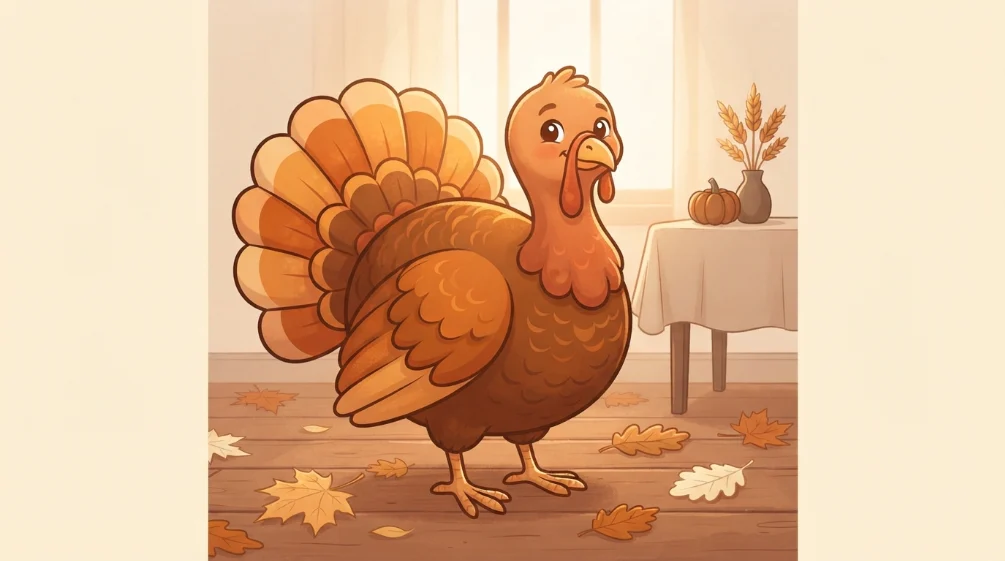
The turkey emoji 🦃 usually represents a turkey, Thanksgiving, food, or the fall holiday season.
It can also be used playfully when talking about someone acting silly or being a “turkey.”
The turkey emoji 🦃 usually represents a turkey bird, and in American conversations it can also bring up Thanksgiving, holiday meals, family gatherings, autumn, and seasonal food. Unicode lists the character with the short name “turkey,” while Emojipedia notes its connection to the bird traditionally eaten around Thanksgiving and Christmas.
In texts and social media, 🦃 can be completely literal, such as when someone is talking about a turkey dinner or seeing a wild turkey. It can also be playful or humorous depending on the message. The emoji does not automatically mean Thanksgiving, food, or an insult, so the surrounding words are important when figuring out what someone means.
What Does the Turkey Emoji 🦃 Mean?
The most direct meaning of 🦃 is simply a turkey.
It can represent:
- A turkey bird
- Thanksgiving
- A Thanksgiving meal
- Holiday cooking
- Autumn and seasonal gatherings
- Poultry or food
- A silly or playful reference to a person
Unicode’s current emoji data lists 🦃 as turkey and includes related keywords such as bird, gobble, and Thanksgiving.
The meaning becomes more specific based on how the emoji is used.
For example:
“We bought the turkey today 🦃”
Here, 🦃 has a literal food related meaning.
But:
“Happy Thanksgiving! 🦃🍂”
Here, it clearly represents the holiday and its seasonal traditions.
🦃 Meaning in Text Messages
When someone uses 🦃 in a text, it can mean several things depending on the conversation.
Talking About the Bird
Someone might use it when discussing wildlife, birds, farms, or animals.
“There were three turkeys in the yard this morning 🦃”
The meaning is literal.
Talking About Thanksgiving
This is one of the most natural uses in the United States.
“Are you ready for Thanksgiving? 🦃”
The emoji adds a clear Thanksgiving reference.
Talking About Food
The emoji can represent turkey as a meal or ingredient.
“Turkey sandwiches for lunch 🦃🥪”
Here, the bird represents the food rather than a live animal.
Adding a Seasonal Feeling
Someone may use 🦃 alongside fall or Thanksgiving emojis to create a seasonal message.
“Fall is finally here 🦃🍂🍁”
In this context, it contributes to an autumn and Thanksgiving theme.
Turkey Emoji Emotional Tone
Unlike many facial emojis, 🦃 does not have a built in emotional expression.
Its tone usually comes from the surrounding message.
Neutral
“I saw a turkey on the road 🦃”
This is simply descriptive.
Festive
“Happy Thanksgiving! 🦃🍁”
The emoji adds a holiday feeling.
Playful
“Look at this goofy turkey 😂🦃”
The combination creates a humorous tone.
Teasing
“You absolute turkey 🦃😂”
Here, the emoji can support a playful insult or teasing comment.
The words and relationship between the people chatting matter more than the emoji itself.
Does 🦃 Mean Thanksgiving?
It can, especially in the United States, but it does not always mean Thanksgiving.
The turkey has a strong cultural association with Thanksgiving, which is why 🦃 is frequently used in Thanksgiving messages.
For example:
“Happy Thanksgiving everyone! 🦃🍂”
The meaning is obvious from the surrounding words.
However:
“I saw a wild turkey while hiking 🦃”
has nothing to do with Thanksgiving.
So, 🦃 should be understood as a turkey first, with Thanksgiving being an important contextual association.
Does 🦃 Mean Food?
Yes, 🦃 can represent turkey as food.
For example:
“The turkey is almost ready 🦃🍽️”
The context makes it clear that the person is talking about a meal.
However, 🦃 is not exclusively a food emoji. It can also represent the living bird.
When the meaning could be unclear, nearby emojis can help:
🦃🍽️ suggests turkey as food.
🦃🍂 can suggest a turkey, fall, or Thanksgiving.
🦃🐦 puts more emphasis on the animal.
Can 🦃 Be Used as an Insult?
Sometimes.
In informal English, turkey can be used as a mild insult for someone who is acting foolish, clumsy, or annoying. The 🦃 emoji can reinforce that playful meaning.
For example:
“You forgot your keys again, you turkey 😂🦃”
This sounds teasing rather than seriously hostile.
However, 🦃 alone does not automatically insult someone. If someone sends:
“Look at this 🦃”
they could simply be showing you a turkey.
The wording and relationship between the people involved determine whether the use is affectionate teasing, humor, or something more negative.
What Does 🦃 Mean From Someone?
If someone sends you 🦃, look at the surrounding message before assigning a specific meaning.
They might be:
- Talking about Thanksgiving
- Sharing something about food
- Showing you a turkey
- Making an autumn themed post
- Making a joke
- Calling someone a turkey in a playful way
- Referring to a holiday dinner
For example:
“Guess what we’re having tomorrow? 🦃”
This likely refers to turkey as food.
But:
“You forgot the tickets again, turkey 😂”
This is more likely playful teasing.
The emoji by itself does not prove whether the sender is joking, criticizing, or simply talking about an animal.
Is the Turkey Emoji Flirty?
No, 🦃 is not normally a flirty emoji.
It can appear in a playful conversation between people who are flirting, but the emoji itself does not communicate romantic interest.
For example:
“You’re such a turkey 😂🦃”
This is more naturally playful teasing.
If someone says:
“Dinner at my place tomorrow 🦃❤️”
the romantic tone comes from the entire message and the heart, not from 🦃 alone.
Avoid treating 🦃 as a hidden romantic signal without additional context.
Turkey Emoji and Thanksgiving
The connection between 🦃 and Thanksgiving is especially relevant for American readers.
Turkey is strongly associated with Thanksgiving meals, which makes 🦃 useful in messages about:
- Thanksgiving dinner
- Family gatherings
- Holiday cooking
- Thanksgiving greetings
- Seasonal recipes
- Fall celebrations
- Holiday preparations
Common combinations include:
🦃🍂 for turkey and fall
🦃🍁 for Thanksgiving or autumn
🦃🍽️ for a turkey meal
🦃🥧 for Thanksgiving food
🦃❤️ for a warm holiday message
These combinations do not have fixed meanings. They simply make the intended theme easier to understand.
Related Bird and Food Emojis
| Emoji | Official Name | Common Meaning | Tone | Where or When It Is Used |
|---|---|---|---|---|
| 🦃 | Turkey | Turkey bird, Thanksgiving, turkey food | Festive, playful, neutral | Thanksgiving, food, wildlife, jokes |
| 🐔 | Chicken | Chicken, poultry, food | Neutral, casual | Food, animals, farming |
| 🐓 | Rooster | Rooster or male chicken | Energetic, symbolic | Birds, mornings, farming |
| 🐥 | Front-Facing Baby Chick | Baby bird or chick | Cute, cheerful | Animals, spring, playful messages |
| 🦆 | Duck | Duck or water bird | Friendly, playful | Animals, nature, jokes |
| 🦅 | Eagle | Eagle, strength, freedom | Proud, powerful | Nature, symbolism, national themes |
| 🦉 | Owl | Owl, wisdom, nighttime | Calm, thoughtful | Nature, studying, wisdom |
| 🍗 | Poultry Leg | Cooked poultry or a chicken leg | Casual, food focused | Meals, recipes, food jokes |
| 🍂 | Fallen Leaf | Fall, autumn, seasonal change | Warm, seasonal | Autumn posts, Thanksgiving themes |
The closest emoji depends on what you are trying to communicate.
- If you mean the turkey itself, 🦃 is the clearest choice.
- If you mean cooked poultry, 🍗 may communicate food more directly.
- If you want an autumn feeling, 🍂 or 🍁 may be better.
- If you want to emphasize another bird, 🐔, 🐓, 🦆, or 🦅 gives a more specific meaning.
🦃 vs. 🍗: What’s the Difference?
These two can both appear in conversations about a turkey dinner, but they emphasize different things.
🦃 Turkey represents the turkey itself and can refer to the animal, Thanksgiving, or turkey food.
🍗 Poultry Leg focuses more directly on cooked poultry or a meal.
Compare:
“The turkey is outside 🦃”
This clearly refers to the animal.
“Dinner is ready 🍗”
This focuses on food.
For Thanksgiving messages, using both can make the food context clearer:
“Thanksgiving dinner is ready! 🦃🍗”
🦃 vs. 🐔: What’s the Difference?
🦃 specifically represents a turkey, while 🐔 represents a chicken.
They are both birds and can both relate to poultry, but they should not be treated as interchangeable.
“We’re having turkey for Thanksgiving 🦃”
is more precise than using 🐔.
If you’re talking about chicken as food or the animal itself, 🐔 is the more appropriate choice.
🦃 vs. 🐓: What’s the Difference?
🦃 represents a turkey.
🐓 represents a rooster.
A rooster is an adult male chicken, so the two emojis represent different birds.
If the conversation is about Thanksgiving turkey, 🦃 is the natural choice. If the subject is a rooster, farm animals, or chickens, 🐓 is more accurate.
Turkey Emoji in Funny Messages
The turkey emoji can work well in jokes because the word “turkey” itself can have a playful meaning in informal English.
For example:
“Who ate the last slice? 🦃😂”
The emoji could simply reinforce a joke about Thanksgiving food.
Another example:
“You are such a turkey 😂🦃”
Here, it may act as a visual joke accompanying a mild tease.
The important point is that this humorous meaning comes from language and context, not from an official definition of 🦃 as an insult.
Text Message Examples
1. Thanksgiving greeting
“Happy Thanksgiving! 🦃🍂”
Likely meaning: A festive Thanksgiving greeting.
2. Talking about dinner
“The turkey is finally in the oven 🦃🍽️”
Likely meaning: The sender is preparing a turkey meal.
3. Seeing a wild turkey
“There was a huge turkey in the backyard 🦃”
Likely meaning: A literal reference to the bird.
4. Playful teasing
“You forgot your phone again, turkey 😂🦃”
Likely meaning: A lighthearted tease.
5. Seasonal post
“Cozy fall weekend 🍂🦃☕”
Likely meaning: An autumn or Thanksgiving season mood.
Common Misunderstandings About 🦃
🦃 does not always mean Thanksgiving
Thanksgiving is a major association, but the emoji can simply represent a turkey bird.
🦃 does not always mean food
A person can use it for wildlife, animals, or nature.
🦃 is not automatically an insult
“Turkey” can be a playful insult in some contexts, but the emoji itself is not inherently insulting.
🦃 is not a chicken emoji
Chicken and turkey are different birds. 🐔 is the chicken emoji, while 🦃 represents a turkey.
🦃 does not have a fixed romantic meaning
If it appears in a romantic conversation, the surrounding words determine the tone.
How to Respond to 🦃
There is no single response that fits every use.
- If someone sends a Thanksgiving message
“Happy Thanksgiving! 🦃🍂”
- If they are talking about dinner
“That sounds delicious!”
- If they spotted a turkey
“Seriously? Where did you see it?”
- If they’re joking with you
“😂 Okay, okay!”
- If you aren’t sure what they mean
“What does the turkey mean here? 😂”
A natural response should follow the actual conversation rather than the emoji alone.
Copy and Paste the Turkey Emoji
🦃
Useful combinations include:
- 🦃🍂 for turkey and fall
- 🦃🍁 for Thanksgiving or autumn
- 🦃🍽️ for a turkey meal
- 🦃🥧 for Thanksgiving food
- 🦃😂 for a turkey joke
- 🦃❤️ for a warm holiday message
- 🦃☕🍂 for a cozy fall theme
Official Name and Technical Details
The Unicode short name for 🦃 is turkey.
The character is:
- Emoji: 🦃
- Unicode code point: U+1F983
- Unicode name: TURKEY
- Unicode version: 8.0
- Emoji version: 1.0
- Category: Animals & Nature
- Subcategory: Animal Bird
Unicode’s emoji charts identify U+1F983 as “turkey,” with keywords including bird, gobble, and Thanksgiving.
The turkey emoji was approved as part of Unicode 8.0 in 2015 and added to Emoji 1.0 in 2015.
Its visual design can vary across platforms. Different services may change the turkey’s colors, body shape, head details, and feather styling while representing the same underlying Unicode character.
Frequently Asked Questions
What does the turkey emoji 🦃 mean?
The turkey emoji 🦃 represents a turkey bird. It can also refer to Thanksgiving, turkey food, autumn, holiday gatherings, or playful teasing depending on context.
Does 🦃 mean Thanksgiving?
It can. In the United States, 🦃 is strongly associated with Thanksgiving, but it can also simply represent the bird or turkey as food.
What does 🦃 mean in texting?
In texting, 🦃 can mean a turkey, Thanksgiving, turkey dinner, autumn, or a playful reference to someone being a “turkey.”
Is 🦃 a food emoji?
Not exclusively. 🦃 can represent the turkey bird or turkey as food. Nearby emojis such as 🍽️ or 🍗 can make the food meaning clearer.
Is 🦃 an insult?
It can support a playful insult when someone calls another person a “turkey,” but the emoji itself is not automatically insulting.
What is the official name of 🦃?
The Unicode short name is turkey, and its Unicode code point is U+1F983.
What is the difference between 🦃 and 🐔?
🦃 represents a turkey, while 🐔 represents a chicken. Both can relate to poultry, but they refer to different birds.
What is the difference between 🦃 and 🍗?
🦃 represents a turkey and can refer to the animal, Thanksgiving, or turkey food. 🍗 represents a cooked poultry leg and focuses more directly on food.
Can 🦃 be used in a romantic conversation?
Yes, but it is not inherently romantic or flirty. Any romantic meaning comes from the surrounding conversation rather than the turkey emoji itself.
Conclusion
The turkey emoji 🦃 most directly represents a turkey, but its meaning can expand to Thanksgiving, turkey dinner, autumn, holiday gatherings, and playful jokes. In American texting, the Thanksgiving connection is especially easy to recognize, but context still determines what the sender actually means.
When choosing between similar emojis, use 🦃 for the turkey itself, 🍗 when you want to emphasize cooked poultry, and 🍂 or 🍁 when the main idea is autumn. That small distinction can make a seasonal or food related message much clearer.
Read More Related Articles:
- Worried Emoji Meaning | What It Really Says About Anxiety …
- Sword Emoji | Meaning, Symbolism & Creative Ways to Use …
- UwU Emoji Meaning | The Cute Internet Expression Behind …