Quick Answer:
💪 usually means strength, muscle, effort, confidence, or determination. It can describe physical strength, emotional support, motivation, achievement, or a playful “you’ve got this” message depending on the context.
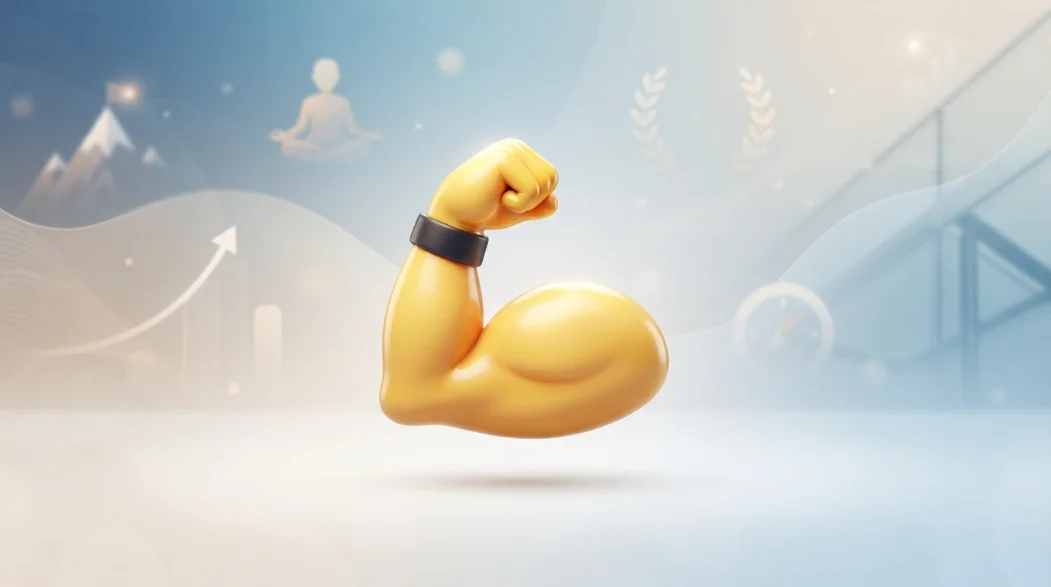
The strong emoji 💪 usually represents strength, muscle, power, effort, or determination. Its official Unicode name is Flexed Biceps, and it shows an arm flexing to display the biceps. In everyday messages, people use it for much more than physical fitness. It can express encouragement, confidence, resilience, achievement, or support.
In texts and social media, 💪 can mean “stay strong,” “I can do this,” “you’ve got this,” or “I’m proud of you.” It may also be used after completing a difficult task, reaching a goal, finishing a workout, or showing determination. The exact meaning depends on the surrounding words and the situation, so it should not automatically be interpreted as a reference to muscles or exercise.
What Does the Strong Emoji 💪 Mean?
The emoji 💪 is officially called Flexed Biceps. Unicode lists it as U+1F4AA, while Emojipedia describes it as an arm flexing to show its biceps. It commonly represents strength or working out, but its use can extend to physical, mental, and symbolic strength.
The most common meanings include:
- Physical strength
- Muscle or fitness
- Hard work
- Determination
- Confidence
- Motivation
- Support
- Resilience
- Achievement
- “You can do it”
For example:
“Finally finished the workout 💪”
Here, 💪 clearly connects to physical effort and fitness.
But:
“You’ll get through this 💪”
has a different meaning. It communicates encouragement and emotional support rather than muscle or exercise.
What Does 💪 Mean in Text and Chat?
In texting, 💪 is often used as a short visual way to show strength, encouragement, or determination.
Someone might send:
“Good luck on your exam 💪”
This usually means something like “You’ve got this” or “Stay strong.”
Another example:
“We finally finished the project 💪”
Here, the emoji emphasizes effort and accomplishment.
It can also appear after a simple statement:
“I’m ready 💪”
That can communicate confidence and determination.
The emoji therefore does not have to be about bodybuilding, lifting weights, or physical strength. The surrounding message tells you which sense is intended.
Different Meanings of the Strong Emoji
1. Physical Strength
The most literal interpretation of 💪 is muscle or physical strength.
“That was a heavy box 💪”
The emoji reinforces the idea of being strong enough to handle something physically demanding.
2. Fitness and Working Out
💪 is commonly associated with exercise, gym sessions, bodybuilding, and physical training.
“Leg day is done 💪”
In this context, the meaning is closely connected to fitness and physical effort.
3. Motivation
The emoji can encourage someone to keep going.
“One more week and we’re done 💪”
Here, it works like a visual form of motivation.
4. Emotional Strength
💪 can also represent staying strong during a difficult situation.
“Thinking of you. Stay strong 💪”
The message is supportive rather than physical.
5. Confidence
Someone may use 💪 to make a statement sound confident.
“I’m ready for the challenge 💪”
The emoji reinforces determination.
6. Achievement
It can celebrate completing something difficult.
“Passed the test! 💪”
In this case, 💪 communicates effort and accomplishment.
7. Support
The emoji can show that someone is standing behind another person.
“You’ve got this 💪”
It works as a simple visual sign of encouragement.
Is 💪 a Positive Emoji?
Usually, 💪 carries a positive, energetic, or supportive tone.
It can communicate confidence and determination, especially when paired with encouraging words.
For example:
“Keep going 💪”
feels supportive.
However, tone can change depending on the conversation. In a competitive or boastful message, it can sometimes suggest confidence or showing off.
For example:
“Nobody can beat me 💪”
may sound more boastful than supportive.
So the emoji itself is not automatically humble, motivational, or boastful. The wording around it matters.
Does 💪 Mean “Stay Strong”?
Yes, 💪 can mean “stay strong.”
This is especially common when someone is going through a difficult situation.
For example:
“I know things are tough right now. Stay strong 💪”
The emoji reinforces the idea of resilience.
It can also be used in shorter messages:
“You can do this 💪”
Here, it acts as an encouragement symbol.
However, 💪 does not exclusively mean “stay strong.” In another conversation, it could simply mean muscle, gym, strength, effort, or achievement.
What Does 💪 Mean From Someone?
When someone sends you 💪, look at the message around it before deciding what they mean.
It may communicate:
- Encouragement
- Support
- Confidence
- Agreement with an effort
- Congratulations
- Motivation
- Physical strength
- Fitness
- Determination
For example:
“Good luck tomorrow 💪”
This is likely encouragement.
“Crushed that workout today 💪”
This is related to fitness and achievement.
“We can handle this 💪”
This suggests teamwork and confidence.
“Thanks for helping me 💪”
This may communicate appreciation and support, depending on the conversation.
There is no universal hidden meaning behind 💪. Context is more useful than assuming the emoji itself reveals a specific emotion.
Is 💪 Flirty?
💪 is not inherently a flirty emoji.
It can appear in playful or romantic conversations, but the emoji itself generally communicates strength, confidence, effort, or encouragement.
For example:
“Looking strong 💪”
could be a compliment about someone’s fitness.
But:
“You’ve got this 💪❤️”
may feel more affectionate because of the heart and the surrounding message.
The romantic tone comes from the complete conversation rather than from 💪 alone.
💪 in Fitness and Gym Conversations
Fitness is one of the clearest contexts for the flexed biceps emoji.
People may use it with messages about:
- Gym workouts
- Weight training
- Muscle building
- Exercise goals
- Strength training
- Fitness progress
- Physical achievements
Examples include:
“Back day 💪”
“New personal best 💪”
“Workout complete 💪”
“Getting stronger every week 💪”
In these cases, the literal connection to the flexed biceps is easy to understand.
💪 as a Symbol of Mental Strength
The strong emoji can move beyond physical strength.
Someone might use it when discussing:
- Getting through a difficult period
- Staying motivated
- Recovering from a setback
- Finishing a challenging task
- Supporting a friend
- Maintaining confidence
For example:
“This week has been rough, but I’m pushing through 💪”
Here, 💪 represents resilience and determination.
This is one reason the emoji works well in supportive conversations without referring to exercise.
Related Emojis and Their Meanings
| Emoji | Official Name | Common Meaning | Tone | Where or When It Is Used |
|---|---|---|---|---|
| 💪 | Flexed Biceps | Strength, effort, confidence, muscle | Motivational, strong | Fitness, encouragement, achievements |
| 🦾 | Mechanical Arm | Mechanical strength, robotics, prosthetic arm | Strong, technical | Technology, robotics, accessibility contexts |
| 👊 | Oncoming Fist | Determination, solidarity, encouragement | Energetic, assertive | Support, greetings, motivation |
| ✊ | Raised Fist | Strength, solidarity, resistance | Powerful, serious | Support, unity, determined statements |
| 🙌 | Raising Hands | Celebration, praise, success | Positive, excited | Achievements, good news, celebrations |
| 👏 | Clapping Hands | Applause, approval, congratulations | Supportive, celebratory | Praise, achievements, reactions |
| 🔥 | Fire | Excitement, excellence, intensity | Energetic, enthusiastic | Praise, achievements, impressive moments |
| 🏋️ | Person Lifting Weights | Weightlifting, exercise, training | Active, focused | Gym and workout conversations |
The most important difference is between 💪 and 🏋️. 💪 can represent general strength or encouragement, while 🏋️ is much more directly connected to weightlifting and exercise.
✊ Raised Fist can also express strength, but its meaning can become more serious or connected to solidarity and resistance. 🙌 Raising Hands is more focused on celebration, while 👏 Clapping Hands is commonly used to praise or congratulate someone.
💪 vs. ✊: What’s the Difference?
Both emojis can communicate strength, but their visual messages are different.
💪 Flexed Biceps usually emphasizes strength, effort, fitness, confidence, or motivation.
✊ Raised Fist can communicate determination, solidarity, unity, or resistance, depending on the context.
Compare:
“Keep training 💪”
This strongly suggests physical effort or motivation.
“We stand together ✊”
This focuses more on solidarity and collective strength.
Choosing between them depends on what kind of strength you want to communicate.
💪 vs. 🏋️: What’s the Difference?
💪 is a broad symbol of strength.
🏋️ Person Lifting Weights is specifically associated with weightlifting and exercise.
For example:
“Getting stronger 💪”
can refer to physical or mental strength.
“Gym session today 🏋️”
more clearly refers to working out.
If you want a general motivational message, 💪 can work well. If you want to specifically show weight training, 🏋️ is more precise.
💪 vs. 🙌: What’s the Difference?
These emojis can both appear in positive messages, but their focus is different.
💪 emphasizes strength, determination, effort, or support.
🙌 emphasizes celebration, praise, excitement, or gratitude.
For example:
“We made it through 💪”
focuses on perseverance.
“We made it through 🙌”
focuses more on celebration.
Realistic Text Message Examples
Example 1: Encouragement
Message:
“Good luck with your presentation tomorrow 💪”
Likely meaning:
The sender is encouraging you and expressing confidence that you can handle it.
Example 2: Workout
Message:
“Finished my first 5K training session 💪”
Likely meaning:
The emoji highlights physical effort and achievement.
Example 3: Emotional support
Message:
“I know this is difficult. Keep going 💪”
Likely meaning:
The sender is offering encouragement and support.
Example 4: Confidence
Message:
“I’m ready for whatever comes next 💪”
Likely meaning:
The emoji reinforces confidence and determination.
Example 5: Accomplishment
Message:
“Finally submitted the whole project 💪”
Likely meaning:
The sender is celebrating completing something that required effort.
Example 6: Playful confidence
Message:
“Okay, I’ll handle it 💪😂”
Likely meaning:
The emoji gives the message a confident but playful tone, while 😂 makes it less serious.
Common Misunderstandings About 💪
💪 Does not always mean muscles
Although the image shows a flexed bicep, people frequently use it symbolically for effort, confidence, motivation, and resilience.
💪 does not automatically mean someone works out
A person can use it to encourage a friend without having anything to do with fitness.
💪 does not automatically mean flirting
The emoji can appear in romantic conversations, but it does not by itself establish romantic interest.
💪 is not always about confidence
Someone might use it to show support when they are actually facing a difficult situation.
💪 does not have one fixed emotional meaning
The same emoji can mean physical strength in one message and emotional support in another.
How to Respond to 💪
Your response should match the situation.
If someone is encouraging you
“Thanks! I’m going to give it my best.”
If they are congratulating you
“Thank you! It was a lot of work.”
If they are talking about fitness
“Nice! Keep it going 💪”
If they are supporting you during a difficult time
“I really appreciate that.”
If they send only 💪
You can respond naturally based on the previous conversation. If the meaning is unclear, you can simply continue the conversation rather than trying to decode the emoji by itself.
Copy and Paste the Strong Emoji
💪
You can copy and paste the strong emoji into texts, captions, comments, messages, and social posts.
Useful combinations include:
- 💪🔥 = strength, effort, or impressive achievement
- 💪❤️ = supportive or affectionate encouragement
- 💪🙌 = effort followed by celebration
- 💪🏋️ = strength and working out
- 💪👏 = effort or achievement deserving praise
- 💪😂 = playful confidence
- 💪✨ = positive motivation or achievement
The combination changes the tone, so choose the additional emoji based on the message you want to send.
Official Unicode Details
The official Unicode name for 💪 is FLEXED BICEPS.
- Emoji: 💪
- Unicode code point: U+1F4AA
- Unicode name: FLEXED BICEPS
- Unicode version: 6.0
- Emoji version: 1.0
- Basic concept: Flexed arm and biceps
- Common associations: Strength, muscle, fitness, effort
Unicode’s current emoji charts identify U+1F4AA as flexed biceps, while its CLDR annotations include terms such as arm, beast, bench, biceps, flex, gains, gym, muscle, strong, and weightlift.
Emojipedia notes that Flexed Biceps was approved in Unicode 6.0 in 2010 and added to Emoji 1.0 in 2015.
The emoji also supports skin-tone modifiers, so versions such as 💪🏻, 💪🏼, 💪🏽, 💪🏾, and 💪🏿 can be used. Unicode lists these as flexed biceps skin-tone sequences.
Different platforms can draw the emoji differently, but the underlying Unicode character remains the same.
Frequently Asked Questions
What does the strong emoji 💪 mean?
💪 usually means strength, muscle, effort, determination, confidence, or encouragement. Its exact meaning depends on the conversation.
What does 💪 mean from a girl or guy?
The meaning does not depend on the sender’s gender. 💪 can express encouragement, confidence, fitness, support, or determination regardless of who sends it.
Does 💪 mean strong?
Yes. Strength is one of its main meanings. It can refer to physical strength or symbolic strength such as determination and resilience.
Does 💪 mean “you got this”?
It can. When used with an encouraging message, 💪 can communicate “you’ve got this,” “keep going,” or “stay strong.”
Is 💪 a gym emoji?
It can be. 💪 is commonly associated with exercise and muscle, but it is broader than a gym-specific emoji. It can also represent motivation, confidence, support, and achievement.
Is 💪 a flirty emoji?
Not by itself. 💪 generally represents strength or encouragement. A romantic meaning depends on the surrounding conversation.
What is the difference between 💪 and 🏋️?
💪 represents general strength, muscle, effort, or motivation. 🏋️ more specifically represents lifting weights and physical exercise.
What is the difference between 💪 and ✊?
💪 commonly emphasizes strength, effort, fitness, or encouragement. ✊ can communicate strength too, but it may also express solidarity, unity, determination, or resistance depending on context.
Can 💪 mean emotional strength?
Yes. Someone can use 💪 to encourage another person to stay strong during a difficult situation.
Conclusion
The strong emoji 💪, officially called Flexed Biceps, is a versatile symbol of strength, effort, confidence, motivation, and support. While its design clearly connects it to muscles and physical strength, its everyday use often goes beyond fitness.
In a workout message, 💪 may mean muscle or training. In a difficult conversation, it can mean “stay strong.” After an achievement, it can highlight effort and determination. The surrounding words are what reveal the intended meaning.
Read More Related Articles:
- Rose Emoji Meaning | What It Really Says About Love …
- Gasp Emoji | Meaning, Examples & What This Shocked …
- ROFL Emoji Meaning | The Ultimate Guide to Laughing Out …