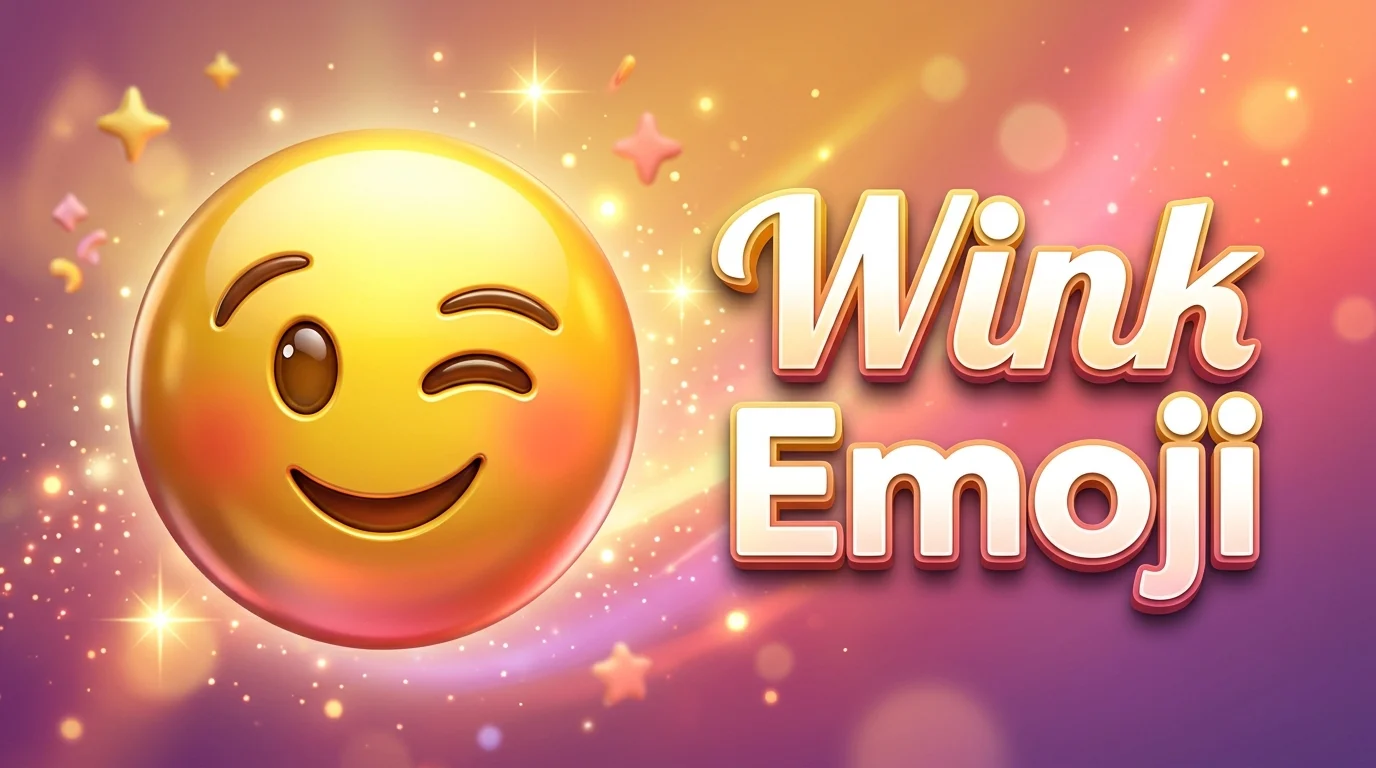
The wink emoji 😉 is commonly used to add playfulness, teasing, humor, or a hint of flirtation to a message. It can make an ordinary sentence feel more personal by suggesting that the sender is joking, being cheeky, or sharing an unspoken thought. However, its meaning is not always romantic. Friends may use it to show sarcasm, soften a playful comment, or signal that something should not be taken too seriously.
What makes the wink emoji interesting is how much its meaning depends on context. A simple “You look nice 😉” may sound flirty, while “I saved you the last slice 😉” can feel like a friendly joke. The same expression can communicate confidence, mischief, affection, or sarcasm depending on the words and the relationship between the people chatting.
Quick Answer
The wink emoji 😉 usually means playfulness, teasing, joking, or flirtation. It adds a knowing or cheeky tone to a message.
Its meaning depends on the conversation. It can be friendly, flirty, sarcastic, or simply a way to show that the sender is not being completely serious.
What Does the Wink Emoji 😉 Mean?
The wink emoji shows a yellow smiling face with one eye closed and the other open. It represents the familiar facial expression people make when they want to communicate something playful without saying it directly.
In everyday messages, 😉 often suggests that there is an extra layer of meaning behind the words. The sender might be joking, teasing someone, hinting at an inside joke, or trying to make a comment sound less serious.
For example, “I know a secret 😉” creates curiosity because the wink makes the sentence feel mischievous. Similarly, “You owe me one 😉” can sound like friendly teasing rather than a serious demand.
The emoji is also used to make conversations feel warmer and more relaxed. It can soften a bold statement, add personality to a short reply, or make a compliment feel more playful.
However, a wink does not automatically mean romantic interest. The surrounding words and the sender’s usual communication style matter more than the emoji alone.
😉 Meaning in Text Messages
In texting, the wink emoji works like a small tone indicator. It helps the reader understand how a sentence is meant to sound, especially when the message could otherwise seem too serious or direct.
Here are some common ways it appears:
- Playful teasing: “You always have an excuse 😉” suggests friendly joking.
- Flirting: “I was hoping you’d say that 😉” adds a romantic hint.
- Sarcasm: “Oh, that sounds like a wonderful idea 😉” may suggest the sender means the opposite.
- Inside jokes: “We both know what happened 😉” hints at shared knowledge.
- Friendly reassurance: “Don’t worry, I’ve got this 😉” makes the message sound confident and relaxed.
The wink can also change the tone of a short reply. A plain “Okay” may sound neutral, but “Okay 😉” can feel warmer, cheekier, or slightly mysterious.
Still, the emoji does not explain the sender’s intention by itself. If the message is important or emotionally sensitive, the words matter more than the wink.
What Does 😉 Mean From Someone?
When someone sends you 😉, they may be trying to make the conversation more playful or suggest that their message has a second meaning. The intention depends on what they said, how well you know each other, and how they normally communicate.
If someone sends it after a compliment: It may add flirtation or make the compliment feel more personal.
If someone sends it after a joke: They are probably showing that they are teasing and do not want you to take the comment seriously.
If someone sends it after making a plan: It may suggest excitement, confidence, or a playful hint about what could happen.
If someone sends it during an ordinary conversation: It may simply be their way of sounding friendly and relaxed.
A useful clue is whether the person uses the wink regularly. If they add it to nearly every casual message, it may be part of their normal texting style rather than a special signal directed at you.
Is the Wink Emoji Positive?
Usually positive
The wink emoji is generally playful, friendly, or lighthearted. It can make a conversation feel less formal and help communicate that a comment is meant with humor.
For example, “You did a great job 😉” can sound like a warm compliment with a little teasing. “I knew you could do it 😉” may communicate encouragement and confidence.
However, the emoji is not always positive. When placed after a critical or dismissive sentence, it can make the message seem sarcastic or passive-aggressive.
For instance, “Nice of you to finally show up 😉” may not be a genuine compliment. The words suggest frustration, while the wink adds an ironic tone.
Can 😉 Be Sarcastic?
Yes. The wink emoji can communicate sarcasm by suggesting that the sender’s words should not be understood literally.
Consider the message “I absolutely love waiting for an hour 😉.” The sentence sounds positive on its own, but the wink suggests the person is actually annoyed.
It can also soften sarcasm between people who know each other well. Friends may use it after a playful complaint to show that there are no hard feelings.
However, sarcasm is difficult to read through text. Someone who does not know the sender’s humor may interpret the message as rude or confusing. If you want to avoid misunderstandings, make the joke clear through the wording instead of relying entirely on the emoji.
The Hidden Hint: 😉 After a Sentence
One interesting feature of the wink emoji is how it changes the meaning of the words that come before it.
Compare these examples:
- “I have a surprise for you.” This sounds like a straightforward statement.
- “I have a surprise for you 😉.” This sounds more playful and mysterious.
- “You were right.” This is a direct acknowledgment.
- “You were right 😉.” This may sound like friendly teasing or a cheeky admission.
The wink can create a sense of shared understanding. It may suggest that the sender knows something, is hinting at a joke, or expects the reader to understand an unspoken message.
This does not mean every sentence with 😉 contains a secret. Sometimes people simply use it to make their messages feel less plain.
Does 😉 Mean “Just Kidding”?
Often, yes. People use the wink emoji to show that a comment is playful rather than completely serious.
For example, “I’m never helping you again 😉” may be a joking complaint between friends. The wink helps show that the sender is not making a serious promise.
It can also appear after exaggerated statements:
- “I’m officially the smartest person here 😉”
- “You are never going to beat me 😉”
- “I deserve an award for that 😉”
In these examples, the emoji adds a cheeky tone. It signals that the sender is playing around rather than making a serious claim.
However, 😉 does not always mean “just kidding.” It can also suggest flirting, irony, or a private joke. The surrounding conversation helps determine which meaning fits.
Does 😉 Mean Flirting or Playfulness?
The wink emoji can communicate both, and that is why it sometimes creates confusion.
When used with a compliment, invitation, or affectionate message, it may suggest romantic interest. When used with a joke or casual remark, it is more likely to communicate friendly playfulness.
For example:
- “You looked really good today 😉” may sound flirty.
- “You finally remembered my birthday 😉” is more likely to be teasing.
- “Maybe we should go out sometime 😉” can suggest romantic interest.
- “I saved you the last cookie 😉” may simply be friendly.
The best way to understand it is to read the entire message rather than treating the emoji as proof of attraction.
Related Smileys and Their Meanings
The wink emoji is part of a wider group of facial expressions used to communicate humor, affection, and different emotional tones. These related emojis can look similar in a conversation but express different intentions.
| Emoji | Official Name | Common Meaning | Tone | Where or When It Is Used |
|---|---|---|---|---|
| 😉 | Winking Face | Teasing, flirting, joking | Playful, cheeky | Light jokes and suggestive messages |
| 😊 | Smiling Face with Smiling Eyes | Happiness, warmth, appreciation | Friendly, gentle | Thank-you messages and kind replies |
| 😏 | Smirking Face | Confidence, suggestiveness, smugness | Knowing, suggestive | Flirty hints or confident remarks |
| 😜 | Winking Face with Tongue | Silly jokes and playful teasing | Goofy, energetic | Funny conversations and lighthearted banter |
| 😘 | Face Blowing a Kiss | Affection, love, or a kiss | Warm, affectionate | Romantic messages and close relationships |
| 😂 | Face with Tears of Joy | Strong laughter | Amused, cheerful | Funny comments and jokes |
| 😇 | Smiling Face with Halo | Innocence or pretending to be innocent | Sweet, mischievous | Playful excuses and joking admissions |
| 😁 | Beaming Face with Smiling Eyes | Excitement and happiness | Cheerful, enthusiastic | Good news and positive reactions |
😉 vs. 😏: What’s the Difference?
The wink emoji 😉 usually feels more open, friendly, and playful. It can show that someone is joking, teasing, or lightly flirting.
The smirking face 😏 often carries more attitude. It may suggest confidence, smug satisfaction, or a more suggestive meaning.
For example:
- “I know something you don’t 😉” sounds playful and mysterious.
- “I know something you don’t 😏” can sound more confident or suggestive.
The difference is subtle, but the smirk often feels more knowing, while the wink can feel more openly friendly.
😉 vs. 😜: What’s the Difference?
Both emojis communicate playfulness, but they create different moods.
The wink 😉 is usually more subtle. It can make a joke feel clever, add a hint of flirtation, or suggest an unspoken meaning.
The winking face with tongue 😜 is more exaggerated and silly. It is often used when someone wants to show that they are being goofy or deliberately ridiculous.
Use 😉 for a cheeky hint and 😜 for a more energetic, joking reaction.
Is 😉 Flirty?
Can be flirty
Yes, the wink emoji is often used in flirting because it can make a message feel personal without being too direct. It adds a playful hint to compliments, invitations, and affectionate comments.
For example:
- “I was hoping you would text me 😉”
- “You always know how to make me smile 😉”
- “Maybe we should spend more time together 😉”
- “That smile is hard to forget 😉”
In these situations, the wink may suggest romantic interest. It can also give the sender room to keep the conversation light rather than making a serious declaration.
However, one wink is not enough to confirm that someone likes you. Look at the overall conversation, whether they show consistent interest, and how they communicate with you.
Is 😉 Rude?
Usually, no. The wink emoji is generally used in a friendly or playful way. But it can feel rude when it follows a sharp comment, an insult, or a message that already sounds dismissive.
For example, “That’s a brilliant idea 😉” could be sincere in one conversation and sarcastic in another. If the sender has just criticized your suggestion, the wink may make the remark feel mocking.
It can also seem inappropriate in formal conversations or when used with someone who does not understand the sender’s humor.
If you are unsure how someone will interpret it, use clearer wording. A friendly sentence should not depend on a wink to communicate respect.
Wink Emoji in Social Media Comments
On social media, 😉 is often used to add personality to comments and captions. It can make a short reaction feel more playful or suggest that the writer is hinting at something.
Common uses include:
- On a photo: “Looking good 😉” may be a playful compliment.
- On a funny post: “You knew exactly what you were doing 😉” suggests teasing.
- On a caption: “Big things are coming 😉” creates curiosity.
- On a friend’s achievement: “I knew you had it in you 😉” adds encouragement.
- On a playful argument: “Whatever you say 😉” may signal friendly sarcasm.
Its meaning can change depending on the platform and the relationship between the people interacting. A wink from a close friend may feel natural, while the same comment from a stranger may seem flirtatious or overly familiar.
Text Message Examples
Here are five everyday situations that show how the wink emoji can change the tone of a conversation.
1. Friendly teasing
- Person A: “You took forever to reply.”
- Person B: “I was busy being important 😉”
Meaning: The sender is joking and does not want the comment to sound like a serious excuse.
2. Flirting
- Person A: “I had a really nice time with you.”
- Person B: “I was hoping you’d say that 😉”
Meaning: The wink adds a romantic or playful hint to the reply.
3. Sharing a secret
- Person A: “How did you know about the surprise?”
- Person B: “I have my ways 😉”
Meaning: The sender is being mysterious and suggesting they know something the other person does not.
4. Light sarcasm
- Person A: “I forgot to bring the snacks.”
- Person B: “Perfect timing, as always 😉”
Meaning: The sender is gently teasing the other person about forgetting something.
5. Giving encouragement
- Person A: “I hope everything goes well tomorrow.”
- Person B: “You’ll do great. I know it 😉”
Meaning: The wink makes the encouragement feel relaxed, confident, and friendly.
Common Misunderstandings About 😉
1. Assuming It Always Means Flirting
The wink emoji can be flirty, but it is also common in friendly conversations. Someone may use it after a joke or casual comment without having romantic intentions.
2. Thinking It Always Means Sarcasm
A wink can suggest irony, but it does not automatically make a sentence sarcastic. Sometimes it simply adds warmth or playfulness.
3. Treating It as a Secret Message
The emoji can hint at shared knowledge, but not every wink hides a secret. It may just be a person’s usual texting habit.
4. Confusing It With a Smirk
The wink and the smirking face can both suggest confidence or mischief, but their expressions and common uses are different. The wink is often more playful, while the smirk can feel more suggestive or self-satisfied.
5. Judging Someone’s Feelings From One Emoji
A single 😉 cannot confirm that someone is interested in you. Their words, behavior, and consistency provide much better clues.
How to Respond to 😉
Your response depends on the tone of the original message. You can match the sender’s playful mood, respond warmly, or ask what they mean if the message is unclear.
- If it feels flirty: “Oh, should I read between the lines? 😉”
- If it is a joke: “I knew you were kidding 😂”
- If it is friendly teasing: “You’re too much sometimes!”
- If it sounds mysterious: “Now you’ve got me curious. What’s going on?”
- If it feels sarcastic: “I’m not sure how to take that one.”
- If it is encouraging: “Thanks! I’ll give it my best.”
You do not need to overthink every wink. Consider the conversation as a whole and respond in a way that feels natural.
Popular Wink Emoji Combinations
The wink emoji can create different moods when paired with other facial expressions and symbols. These combinations are commonly used in casual conversations.
| Combination | Common Meaning |
|---|---|
| 😉❤️ | Playful affection or romantic interest |
| 😉😂 | A joke or teasing comment |
| 😉😘 | Flirtation and affection |
| 😉🔥 | A bold compliment or confident hint |
| 😉🤫 | A shared secret or private joke |
| 😉😜 | Silly teasing and playful mischief |
| 😉🥰 | Warm affection with a playful touch |
| 😉🙄 | Sarcasm or exaggerated annoyance |
The meaning of a combination still depends on the message. For example, 😉❤️ may feel romantic between partners but can also express friendly affection between close friends.
Frequently Asked Questions
1. What does the wink emoji 😉 mean?
The wink emoji usually communicates playfulness, teasing, humor, or flirtation. It can also suggest sarcasm or a hidden meaning, depending on the conversation.
2. Does 😉 mean someone is flirting?
It can indicate flirting, especially when used after a compliment or invitation. However, it can also be a friendly joke, so the emoji alone does not confirm romantic interest.
3. What does the wink emoji mean from a guy?
A guy may use 😉 to tease, flirt, make a joke, or add a playful tone to a message. The surrounding words and his usual communication style help explain his intention.
4. What does the wink emoji mean from a girl?
A girl may use it to show friendliness, humor, affection, sarcasm, or romantic interest. Its meaning depends on the conversation rather than the sender’s gender.
5. What does 😉 mean from a crush?
When a crush sends 😉 after a compliment, invitation, or affectionate message, it may be a subtle sign of flirting. Still, look for consistent interest instead of relying on one emoji.
6. Is the wink emoji friendly or flirty?
It can be either. A joke between friends usually makes it feel friendly, while a personal compliment or romantic hint can make it feel flirty.
7. What is the difference between 😉 and 😏?
The wink emoji usually feels playful and approachable, while the smirking face often suggests confidence, smugness, or a more suggestive attitude.
8. Can the wink emoji be sarcastic?
Yes. It can make a sentence sound ironic or suggest that the sender does not mean the words literally. The message’s context helps reveal whether the sarcasm is friendly or critical.
9. Is it rude to send someone 😉?
Not usually. It is generally playful, but it may feel inappropriate or passive-aggressive after a harsh comment or in a formal conversation.
Conclusion
The wink emoji 😉 is a flexible expression that adds personality to digital conversations. It can communicate flirting, friendly teasing, humor, sarcasm, or a subtle hint that gives a message an extra layer of meaning.
Its most important feature is its dependence on context. A wink after a compliment may feel romantic, while the same emoji after a joke can simply mean “I’m kidding.” Rather than assuming one fixed meaning, pay attention to the words, relationship, and tone of the conversation. That is the best way to understand what someone really intends when they send 😉.
Read More Related Articles:
- Clapping Hands Emoji Meaning | A Cheerful Symbol of Praise …
- New Tired Emoji Meaning | The Exhausted Expression …
- Two Hearts Emoji Meaning | What Really Says About Love …