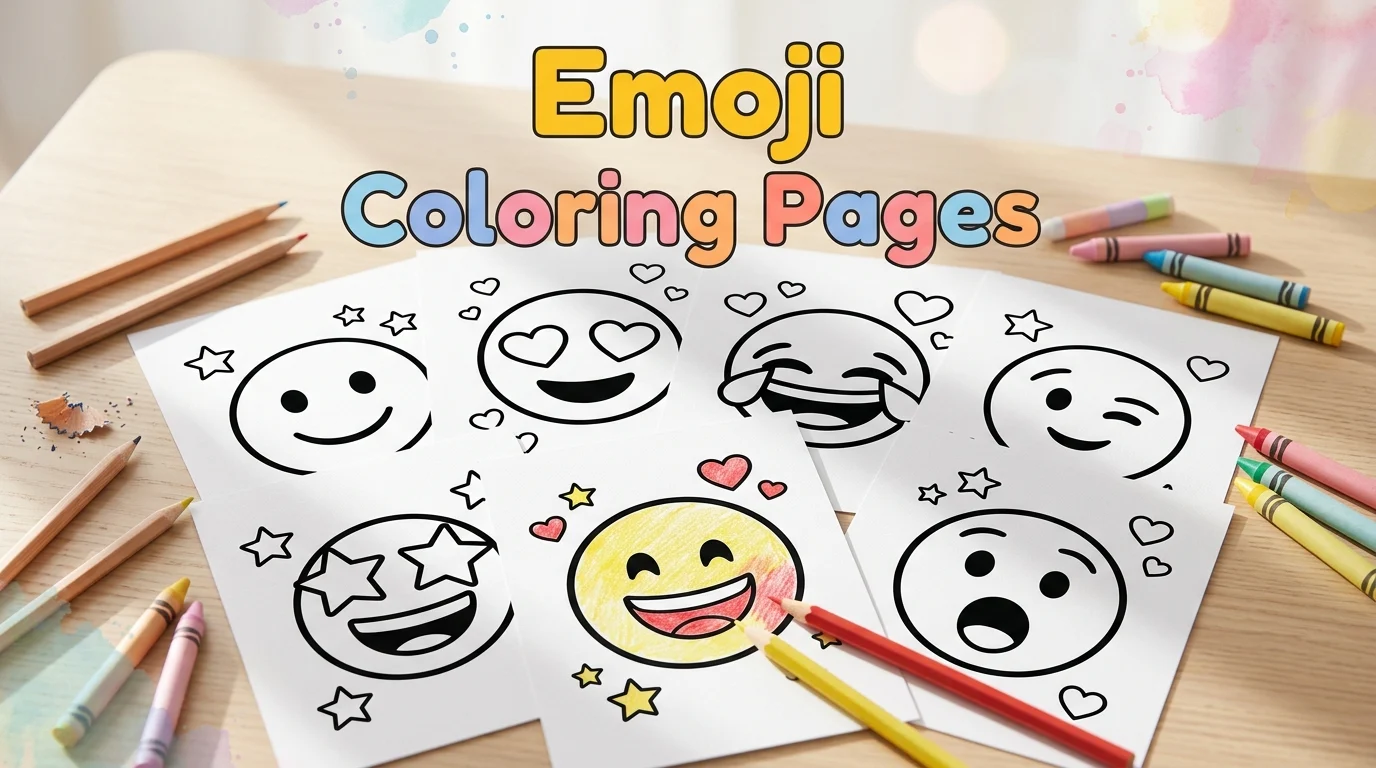
Emoji coloring pages turn digital expressions into a hands-on art activity. Kids can color smiling faces, heart eyes, laughing faces, animals, food, and other emoji-inspired designs while choosing colors. Printable pages are useful for home, classrooms, parties, or quiet time. Outlines work well for younger children, while detailed emoji scenes give kids room to experiment.
Beyond coloring, emoji-themed pages can open conversations about feelings. A child might choose bright colors for a happy face or create an unusual palette because it looks fun. There is no single correct color for most designs, making the activity flexible and creative. Whether you need printable emoji coloring pages for a rainy afternoon or a classroom activity, the design can make coloring feel playful.
Quick Answer
Emoji coloring pages are printable black-and-white designs featuring familiar emoji faces, symbols, animals, food, and expressions that children or adults can color. They work well for home activities, classrooms, parties, quiet time, and creative projects.
What Are Emoji Coloring Pages?
Emoji coloring pages are printable drawings inspired by the expressive characters and symbols people recognize from digital communication.
Instead of appearing in their usual colorful form, the designs are presented as outlines that can be filled with crayons, colored pencils, markers, or other art supplies.
Common designs include:
- Smiling faces
- Laughing faces
- Heart eyes
- Winking faces
- Sunglasses emojis
- Sad and crying faces
- Surprised expressions
- Hearts
- Stars
- Animals
- Food emojis
- Holiday-themed emoji designs
Current printable collections commonly offer individual emoji faces as well as larger scenes and mixed emoji sheets. Some are designed with simple outlines for easier coloring, while others include more details for older children or experienced colorers.
Why Are Emoji Coloring Pages So Popular?
Emoji designs are easy to recognize because they are already part of everyday digital communication.
A child may recognize a laughing face, heart eyes, sunglasses, or a crying face immediately. Turning those familiar symbols into coloring sheets gives the activity a recognizable starting point.
Emoji coloring pages can also be flexible. One child may color a smiley face yellow, while another may choose purple, blue, or rainbow colors.
That freedom makes the activity less about copying a specific design and more about personal creativity.
Free Printable Emoji Coloring Pages
If you are looking for free printable emoji coloring pages, several online collections offer downloadable or printable designs.
Available collections vary considerably. Some provide simple individual faces, while others include large emoji scenes, collages, food, animals, seasonal themes, and decorative backgrounds.
Before printing, check the page’s usage terms. Some websites offer designs for personal or educational use, while other resources may have different restrictions.
For home or classroom use, look for pages that have:
- Clear black outlines
- Enough white space for coloring
- Standard printable dimensions
- Simple shapes for younger children
- More detailed designs for advanced colorers
- Easy print or download options
Emoji Coloring Pages for Kids
Emoji coloring pages can be especially appealing to children because the expressions are familiar and visually simple.
For younger kids, choose designs with:
- Large shapes
- Thick outlines
- Few tiny details
- Large areas to fill
- One main emoji per page
For older children, try pages with:
- Multiple emojis
- Decorative backgrounds
- Patterns
- Emoji scenes
- Small details
- Several expressions on one sheet
This makes it easier to match the page to the child’s coloring ability rather than choosing a design based only on the emoji itself.
Emoji Coloring Pages for Classrooms
Emoji coloring sheets can also fit naturally into classroom activities.
Teachers may use emoji-inspired designs as:
- Morning work
- Art center activities
- Early-finisher work
- Quiet activities
- Classroom decorations
- Feelings discussions
- Writing prompts
- Social-emotional learning activities
Emoji coloring activities can provide a visual starting point for talking about emotions. For example, students could color a happy face and then write a sentence about something that makes them happy.
Some educational resources specifically combine emoji coloring with writing and discussions about feelings and self-expression.
The coloring itself does not have to carry the entire lesson. It can simply provide an easy creative activity that leads into conversation.
Best Emoji Themes to Color
Different emoji themes create different coloring experiences.
Smiley Emojis
Classic smiling faces are a good starting point because they have large, recognizable shapes.
Kids can experiment with unusual face colors, backgrounds, or patterns.
Heart-Eyes Emojis
Heart-eye designs give children opportunities to use reds, pinks, purples, and other bright colors.
They can also add their own hearts, stars, or decorative patterns around the character.
Laughing Emojis
Laughing faces are fun for expressive coloring activities.
Children can use bright colors or create completely new color combinations.
Animal Emojis
Animal emojis add variety beyond facial expressions.
They can also encourage children to think about realistic versus imaginative colors.
Food Emojis
Pizza, fruit, ice cream, and other food-inspired emoji designs can be especially fun for creative coloring.
There is no requirement to make every food look realistic, so children can invent their own combinations.
Seasonal Emojis
Holiday and seasonal designs can be useful for themed activities, classroom displays, or rainy-day projects.
Simple vs. Detailed Emoji Coloring Pages
Not every coloring page works equally well for every age or skill level.
| Type | Best For | Typical Features | Coloring Experience |
|---|---|---|---|
| Simple emoji face | Younger children | Large shapes and bold outlines | Quick and easy |
| Single detailed emoji | Early elementary | Extra facial or decorative details | Moderate |
| Emoji collage | Older kids | Several emojis together | More varied |
| Pattern emoji | Experienced colorers | Repeated shapes and small areas | Detailed |
| Emoji scene | Older children and creative projects | Characters plus backgrounds | Longer activity |
| Emoji feelings sheet | Classroom activities | Several expressions | Coloring plus discussion |
| Seasonal emoji page | Parties and holidays | Themed symbols and decorations | Fun and festive |
| Food emoji page | Kids who enjoy imaginative art | Familiar foods and objects | Creative and playful |
The best option depends on the person doing the coloring. A page with fewer details is not necessarily better or worse. It simply creates a different experience.
Emojis That Work Well for Coloring
Some emoji designs are especially easy to turn into coloring pages because their shapes are clear and recognizable.
Here are several useful choices:
| Emoji | Official Name | Common Idea | Coloring Potential | Good For |
|---|---|---|---|---|
| 😀 | Grinning Face | Happiness and friendliness | Large simple face | Beginners |
| 😂 | Face with Tears of Joy | Laughter and amusement | Face, tears, and details | Kids and classrooms |
| 😍 | Smiling Face with Heart-Eyes | Love or strong enjoyment | Hearts and facial details | Creative coloring |
| 😉 | Winking Face | Playfulness or a joke | Simple facial expression | Beginners |
| 😎 | Smiling Face with Sunglasses | Coolness or confidence | Face and sunglasses | Fun color combinations |
| 😢 | Crying Face | Sadness or tears | Simple expressive face | Feelings activities |
| 😡 | Pouting Face | Anger or frustration | Strong facial features | Emotion discussions |
| 😱 | Face Screaming in Fear | Shock or fear | Dramatic expression | Older kids |
| 🥳 | Partying Face | Celebration and excitement | Hat, face, and decorations | Parties |
| ❤️ | Red Heart | Love and affection | Simple heart shape | Beginners |
These emojis differ in complexity. A simple face such as 😀 can be colored quickly, while an expressive design such as 🥳 may give children more areas to decorate.
How to Choose the Right Emoji Coloring Page
Start with the person who will use the page.
For a preschool child, choose a large emoji with simple shapes.
For an older child, a detailed collage or scene may provide more creative options.
For a classroom, consider whether the sheet supports the purpose of the activity. A feelings-themed page may work better for an emotion discussion, while a large emoji collage may be better for an art center.
For a party, seasonal or celebratory emoji designs can make easy table activities.
Also consider printing quality. Clean black outlines are easier to color and usually produce better results on ordinary home printers.
How to Print Emoji Coloring Pages
Most printable coloring sheets can be printed directly from a browser or downloaded before printing.
For a typical U.S. home printer, 8.5 × 11 inch letter paper is a convenient choice. Some collections also support A4 paper. Current printable emoji resources commonly provide PDF or image-based options.
For better results:
- Open the coloring page.
- Choose the print or download option.
- Select your paper size.
- Check the preview for cropped edges.
- Choose a suitable scale such as “Fit” when needed.
- Print in black and white.
- Let children add their own colors.
You usually do not need a color printer because the purpose of the sheet is to add color by hand.
What Supplies Work Best?
You can use almost any basic coloring supplies.
Crayons
Crayons are a simple choice for younger children. They are easy to hold and work well with large emoji shapes.
Colored Pencils
Colored pencils are useful when the page has smaller details or when someone wants to blend shades.
Markers
Markers create bright, bold results and work especially well with thick outlines.
If using markers, thicker paper can help reduce ink bleeding.
Gel Pens
Gel pens can add small decorative details, highlights, or patterns to finished designs.
Creative Emoji Coloring Ideas
You do not have to follow the traditional colors associated with digital emojis.
Try activities such as:
Rainbow emojis: Give each part of the design a different color.
Mood colors: Ask children to choose colors that match how they feel.
Fantasy emojis: Turn a familiar yellow face into a blue, purple, green, or rainbow character.
Emoji family: Color several related expressions and display them together.
Emoji story: Color three or four emojis and arrange them as a simple visual story.
Pattern backgrounds: Add stars, hearts, dots, stripes, or geometric shapes around the main emoji.
These ideas turn a basic coloring sheet into a more personal art project.
Emoji Coloring Pages and Feelings
Emoji designs can also make it easier to introduce conversations about emotions.
A child might recognize that 😀 looks happy, 😢 looks sad, and 😡 represents anger. That visual familiarity can give adults an easy starting point for discussing feelings.
For example, after coloring a feelings page, you could ask:
- Which emoji did you choose first?
- Which color fits this feeling?
- When might someone feel this way?
- Can one feeling have more than one color?
- Which emoji would you choose today?
The goal is not to decide that every emotion has one correct color. The activity works best when children are free to explain their own choices.
Common Mistakes When Choosing Coloring Pages
Choosing a page that is too detailed
A young child may become frustrated with tiny sections.
Choosing only one style
A mix of simple faces, scenes, food, animals, and expressions keeps the activity more varied.
Assuming emoji colors must be exact
Coloring is a creative activity. A child does not have to reproduce the standard digital appearance of an emoji.
Ignoring printing size
A design that looks good on a screen may not work well when printed too small.
Forgetting usage rights
Free to print does not always mean free for every commercial purpose. Check the website’s stated permissions before using downloaded artwork beyond personal or permitted educational use.
How to Make Emoji Coloring More Fun
A few simple changes can make an ordinary coloring page feel like a larger project.
Try creating an emoji wall where completed pages are displayed together.
You can also make an emoji mood board by grouping happy, surprised, sleepy, excited, and sad expressions.
For a writing activity, ask children to create a short sentence for each emoji.
For an art activity, let them invent an emoji that does not already exist.
They could draw the face, choose its expression, give it a name, and decide what feeling or idea it represents.
Frequently Asked Questions
Are emoji coloring pages free?
Some websites provide free emoji coloring pages, while others offer paid or mixed collections. Always check the individual website’s download and usage terms. Several current collections advertise free printable emoji sheets.
Can I print emoji coloring pages at home?
Yes. Printable coloring sheets are generally designed for home or classroom printing. Standard U.S. letter paper is a common choice.
What age are emoji coloring pages for?
There is no single age range. Simple pages can suit younger children, while detailed collages and patterned designs can work better for older kids.
Do I need a color printer?
No. Most coloring pages are intended to be printed as black outlines and colored afterward.
Can adults use emoji coloring pages?
Yes. Adults can use simple designs for casual creative activities and more detailed patterns for longer coloring sessions.
Can emoji coloring pages be used in classrooms?
Yes, when the specific artwork’s usage permissions allow classroom use. They can be used for art activities, quiet work, feelings discussions, writing prompts, or classroom displays.
What should I use to color emoji pages?
Crayons, colored pencils, and markers are all practical choices. The best option depends on the paper, the detail level, and the desired finish.
Can I create my own emoji coloring page?
Yes. You can draw a simple emoji-inspired face using basic shapes, then print copies for a personal activity. If you are creating something for publication or commercial use, make sure your artwork and any source material are appropriately licensed.
Conclusion
Emoji coloring pages bring familiar digital expressions into a hands-on creative activity. From simple smiling faces to detailed emoji scenes, there are designs for different ages, settings, and skill levels.
The best coloring page is one that fits the person using it. Choose bold outlines for beginners, detailed designs for experienced colorers, and feelings-themed pages when you want to connect art with emotional expression. Most importantly, let the colors be creative. An emoji does not have to look exactly like its digital version to become a fun piece of art.
Discover More Post:
- Butterfly Emoji Meaning | From Transformation to Beauty …
- OK Emoji Meaning Explained | Hidden Feelings, Uses …
- Dizzy Emoji Meaning | What It Really Says in Texts, Chats …