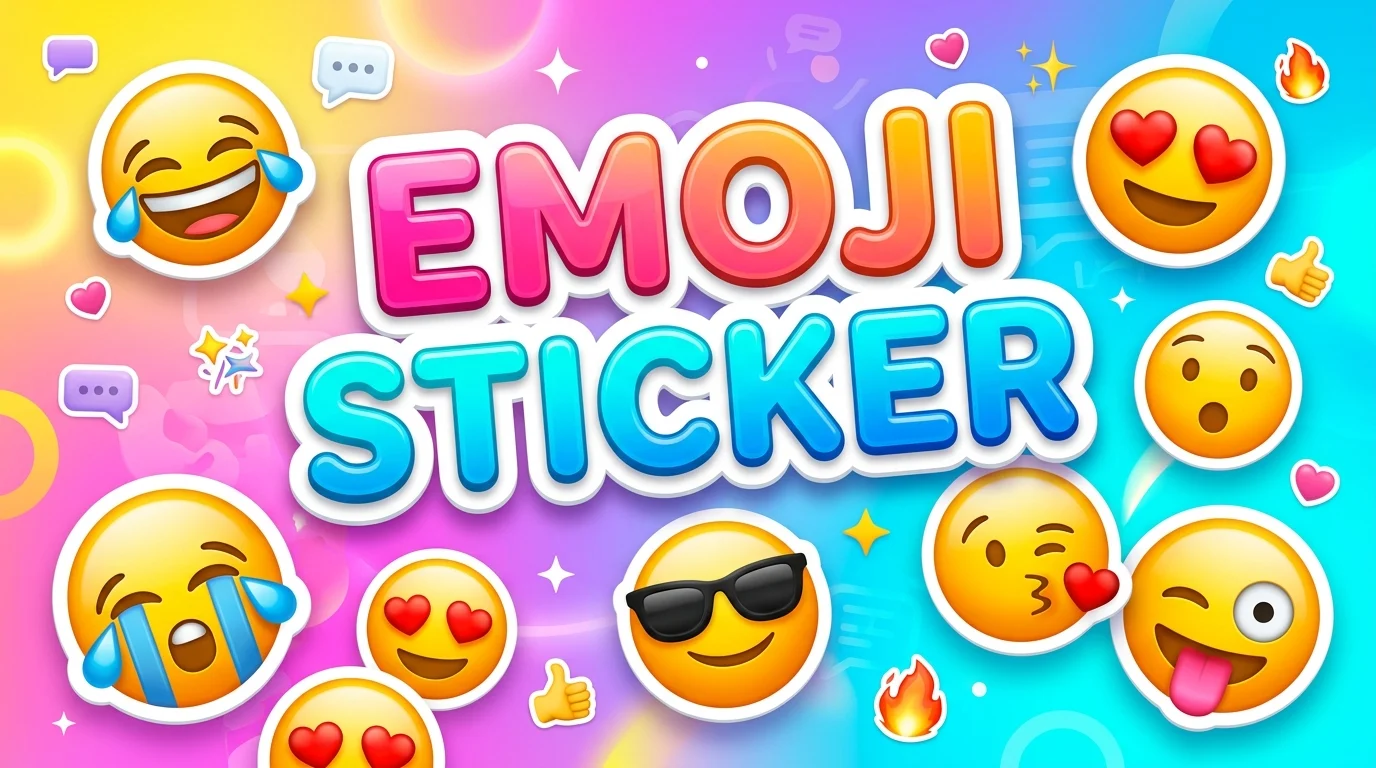
An emoji sticker is a larger, image-based graphic used in chats to express an emotion, reaction, joke, or idea more vividly than a standard emoji. Unlike Unicode emoji, which are characters that can appear alongside words, stickers are usually standalone images and can include custom artwork, characters, text, animation, or detailed expressions. That makes them useful when a simple emoji does not fully capture the feeling you want to send.
In messaging, people often use “emoji sticker” as a casual term for stickers that look like emojis. They may be funny, cute, dramatic, affectionate, sarcastic, or personal. The exact appearance and features depend on the app or sticker pack, so the meaning comes from the image, surrounding conversation, and context.
Quick Answer
An emoji sticker is a larger image or graphic used in messaging to communicate reactions, emotions, jokes, or ideas. Unlike standard Unicode emoji, stickers are image-based and can be much more detailed, animated, personalized, or expressive.
What Is an Emoji Sticker?
An emoji sticker is a visual graphic designed for digital conversations. It may look like a large emoji, cartoon character, reaction image, animated expression, or personalized illustration.
The term can be confusing because people often call almost any small expressive graphic an “emoji.” Technically, however, emoji and stickers are different.
A standard emoji is part of the Unicode system. It behaves more like a character in text, which means you can place it between words, sentences, usernames, or other characters.
A sticker is generally an image-based graphic sent through a messaging service. Stickers can be much larger and more detailed than standard emoji and may include artwork, characters, words, gestures, or animation. Emojipedia also distinguishes stickers from Unicode emoji while noting that the boundary between the two has become less clear in modern messaging.
For example:
“That was hilarious 😂”
uses a regular emoji inside a sentence.
A large laughing character or animated reaction sent separately is more accurately described as a sticker.
Emoji Sticker Meaning in Text and Chat
The meaning of an emoji sticker depends heavily on the specific image.
A sticker may communicate:
- Happiness
- Laughter
- Surprise
- Excitement
- Love
- Affection
- Sadness
- Frustration
- Agreement
- Disagreement
- Humor
- Sarcasm
- Support
- Celebration
- Embarrassment
- Playfulness
Unlike a simple emoji, a sticker can communicate several things at once.
For example, a sticker showing a character falling over laughing can mean:
“That is so funny.”
A sticker showing a character giving a heart can mean:
“I love this.”
A dramatic crying character might mean:
“I’m genuinely upset,” or it may jokingly mean:
“This is so sad that I’m being dramatic.”
The surrounding conversation helps determine which interpretation makes the most sense.
Why Do People Use Emoji Stickers?
People use stickers because they can communicate a reaction quickly without typing a full sentence.
A sticker can also make a conversation feel more expressive and personal.
They add emotion
A plain:
“Okay.”
can feel neutral.
A funny sticker sent after “Okay” can make the same response feel playful.
They make reactions more visual
Instead of typing:
“I cannot stop laughing.”
someone might send a large laughing sticker.
They can show personality
A person may repeatedly use a particular character, animal, cartoon style, or reaction sticker because it fits their personality or sense of humor.
Research on sticker and emoji communication has found that stickers can be more expressive and self-contained than ordinary emoji because their larger size and detailed imagery allow them to communicate more independently.
They can replace words
Sometimes the sticker itself is the complete response.
For example:
Friend: “I passed my exam!”
You: 🎉 celebration sticker
No additional sentence is necessary.
Emoji Sticker vs. Regular Emoji
The biggest difference is that a regular emoji is a Unicode character, while a sticker is generally an image.
| Feature | Regular Emoji | Emoji Sticker |
|---|---|---|
| Basic form | Unicode character | Image or graphic |
| Size | Usually text-sized | Usually larger |
| Works inside text | Yes | Usually sent separately |
| Design | Platform-specific rendering of a shared character | Created as a specific image |
| Custom artwork | Limited to standardized emoji | Very flexible |
| Animation | Some emoji-related features can animate, depending on service | Commonly supported by sticker systems |
| Personalization | Limited | Can be highly personalized |
| Sticker packs | No | Yes |
| Main purpose | Add meaning to text | Provide a larger visual reaction |
Unicode explains that emoji are standardized characters, while sticker systems do not follow the same Unicode rules.
Are Emoji Stickers Actually Emojis?
Technically, not usually.
The word “emoji” is often used casually to describe anything that looks like a small digital reaction. But a sticker is normally an image rather than a Unicode character.
This distinction matters because it explains why a sticker may:
- Be much larger than an emoji
- Contain text
- Include a custom character
- Be animated
- Belong to a particular sticker pack
- Work only within certain apps or services
Emojipedia describes stickers as larger, richer graphics that overlap with emoji in everyday use, while Unicode emoji belong to the standardized character system.
So calling a sticker an “emoji sticker” is understandable in everyday conversation, even though the two are technically different.
Emoji Stickers vs. Emoticons
Emoji stickers are also different from emoticons.
An emoticon is created using ordinary keyboard characters.
Examples include:
- 🙂
- 🙁
- 😉
- A sticker is a visual image.
A standard emoji is a Unicode character.
So the basic distinction is:
Emoticon = keyboard characters
Emoji = Unicode character
Sticker = image or graphic
This is why stickers can contain much more visual detail than traditional emoticons.
Types of Emoji Stickers
There is no single universal sticker category. Different apps and services offer different collections.
Funny Emoji Stickers
These are designed to make people laugh or exaggerate a reaction.
Examples may show:
- Laughing characters
- Dramatic facial expressions
- Characters falling over
- Shocked reactions
- Silly poses
They are useful when a regular 😂 or 🤣 does not feel expressive enough.
Cute Emoji Stickers
Cute stickers often feature:
- Smiling characters
- Animals
- Hearts
- Blushing faces
- Sweet gestures
- Affectionate reactions
They can make a casual message feel warmer.
Reaction Stickers
These provide a visual response to something someone said.
Common reactions include:
- “Yes!”
- “No!”
- “Wow!”
- “Really?”
- “I agree.”
- “I’m shocked.”
- “I’m tired.”
- “Thank you.”
Animated Stickers
Animated stickers add movement to a reaction. Depending on the messaging service, they may show actions such as dancing, waving, laughing, crying, or celebrating.
Personalized Stickers
Some services let users create stickers based on avatars, photos, illustrations, or generated designs.
These can feel more personal than standard emoji because the imagery can be customized.
Funny Emoji Stickers and Their Meaning
Funny stickers are often used differently from ordinary emoji because they can exaggerate an emotion.
For example, someone might send a dramatic crying sticker after a friend says:
“The restaurant is closed.”
The sticker might not mean genuine sadness. It could simply mean:
“Nooo, that’s terrible!”
Similarly, a character screaming dramatically can be humorous rather than genuinely angry.
This is one reason you should not interpret a sticker literally every time.
The visual exaggeration may be part of the joke.
Cute Emoji Stickers and Relationship Context
Cute stickers can appear in friendships, family conversations, romantic relationships, and casual chats.
A heart-filled sticker might express affection, but it does not automatically prove romantic interest.
For example:
“Thank you so much! ❤️”
cute hugging sticker
This may simply communicate warmth and appreciation.
In a romantic conversation, the same style of sticker may feel more affectionate.
The relationship between the people and the surrounding messages matter more than the sticker alone.
Are Emoji Stickers Flirty?
Some emoji stickers can be used flirtatiously, but there is no universal sticker that automatically means flirting.
A sticker showing:
- Blushing
- Winking
- Kissing
- Hearts
- Hugging
- Playful teasing
may feel flirtatious in one conversation.
The same sticker can be friendly in another.
For example:
“You are too sweet 😂”
blushing sticker
could be playful or affectionate.
But it would be a mistake to conclude that the sticker alone proves romantic interest.
Look at the complete conversation, relationship, wording, and established communication style.
What Does It Mean When Someone Sends You an Emoji Sticker?
If someone sends you an emoji sticker without words, it usually works as a reaction.
The image itself becomes the message.
For example:
You: “I finally finished the project.”
Them: celebration sticker
Likely meaning:
“Yay!” or “Congratulations!”
Another example:
You: “I forgot my keys again.”
Them: facepalm sticker
Likely meaning:
“Oh no” or “I can’t believe you did that.”
The exact meaning depends on the sticker’s visual content and the conversation.
Can Emoji Stickers Be Sarcastic?
Yes.
Stickers are especially useful for exaggerated or playful reactions, so they can easily accompany sarcasm.
For example:
“Great, another meeting.”
dramatic crying sticker
The sticker may communicate frustration in a humorous way rather than genuine distress.
Likewise:
“Wow, what an amazing idea.”
eye-roll reaction sticker
The visual reaction can completely change how the sentence is understood.
Still, sarcasm comes from the combination of the words, image, and context, not from stickers having one fixed sarcastic meaning.
Related Emoji and Sticker Reactions
Because “emoji sticker” is a broad term rather than one specific Unicode character, the best related options are visual reactions that perform similar conversational jobs.
| Emoji | Official Name | Common Meaning | Tone | Where or When It Is Used |
|---|---|---|---|---|
| 😂 | Face with Tears of Joy | Strong laughter | Funny, playful | Jokes, funny messages, reactions |
| 🤣 | Rolling on the Floor Laughing | Extreme laughter | Highly playful | Very funny situations |
| 🥹 | Face Holding Back Tears | Emotional appreciation or near-tears | Tender, emotional | Sweet messages, gratitude, affection |
| 😭 | Loudly Crying Face | Intense sadness or dramatic emotion | Emotional, dramatic | Sad reactions or exaggerated humor |
| 🥰 | Smiling Face with Hearts | Affection and warmth | Loving, cute | Sweet messages and affectionate reactions |
| 😱 | Face Screaming in Fear | Shock or extreme surprise | Dramatic | Unexpected news and reactions |
| 🤦 | Person Facepalming | Frustration, disbelief, embarrassment | Exasperated, humorous | Mistakes, awkward moments |
| 🙌 | Raising Hands | Celebration or excitement | Positive, energetic | Congratulations and good news |
These emojis can appear inside text, while a sticker can turn a similar reaction into a larger standalone visual message.
For example, 😂 may simply soften or reinforce a sentence, while a large laughing sticker can become the entire response.
Emoji Sticker vs. Emoji Reaction
An emoji reaction usually works as a quick response to something someone has already said.
For example:
“I got the job!”
❤️
A sticker can serve the same purpose but usually provides a larger and more detailed visual response.
A celebration sticker may communicate much more than simply 🎉 because the image can include movement, characters, gestures, facial expressions, or text.
Emoji Sticker vs. GIF
Stickers and GIFs can look similar, but they are not exactly the same.
A sticker is generally designed as a compact messaging graphic and may be part of a themed sticker collection.
A GIF is an animated image format commonly used for reactions, clips, or short looping scenes.
A sticker might show a cartoon character giving a thumbs-up.
A GIF might show a short looping video clip of a person giving a thumbs-up.
Both can communicate reactions, but they belong to different forms of digital media.
Realistic Emoji Sticker Examples
Example 1: Celebration
Friend: “I got the job!”
You: celebration sticker
Likely meaning: Congratulations and excitement.
Example 2: Funny reaction
Friend: “I accidentally sent the email to the wrong person.”
You: facepalm sticker
Likely meaning: “Oh no!” or playful disbelief.
Example 3: Affection
Friend: “Thanks for helping me today.”
You: cute heart sticker
Likely meaning: Warmth, appreciation, or affection.
Example 4: Sarcasm
Friend: “We have a three-hour meeting tomorrow.”
You: dramatic crying sticker
Likely meaning: Humorous frustration rather than literal sadness.
Example 5: Agreement
Friend: “That movie was amazing.”
You: excited reaction sticker
Likely meaning: Strong agreement or enthusiasm.
Common Misunderstandings About Emoji Stickers
“Every sticker is an emoji.”
Not technically.
A sticker can look like an emoji while still being a separate image rather than a Unicode emoji character.
“Emoji stickers have one fixed meaning.”
They do not.
A sticker’s meaning depends on its visual design, surrounding words, relationship, and conversation.
“A heart sticker always means romantic love.”
Not necessarily.
Hearts can communicate friendship, appreciation, support, kindness, or affection.
“A crying sticker means the person is actually crying.”
Not always.
People frequently use dramatic reactions for humor or exaggeration.
“All stickers work everywhere.”
No.
Sticker formats and sticker collections are often tied to particular apps or services. A sticker available in one messaging environment may not function in another in the same way.
How to Respond to an Emoji Sticker
Your response should match the sticker’s emotional message.
If someone sends a funny sticker
You can respond with:
“😂 Stop!”
or send another funny reaction.
If someone sends a cute sticker
Try:
“Aww, that’s cute.”
If someone sends a celebration sticker
You can say:
“Thank you! 🎉”
If someone sends a supportive sticker
A natural response is:
“I really appreciate that.”
If the sticker is unclear
You can simply ask:
“What does that mean? 😂”
You do not need to assign a deep meaning to an unexplained sticker.
Copy and Paste Emoji Sticker Alternatives
There is no single universal “emoji sticker” character to copy and paste because stickers are image-based rather than one standardized Unicode character.
However, you can use regular emoji as quick text-based alternatives:
😂 🤣 🥰 🥹 😭 😱 🤦 🙌 ❤️ 🎉 👍
For actual stickers, use the sticker collection or sticker creator available in the messaging service you are using.
How Emoji Stickers Work Across Platforms
Sticker features vary between services.
Some messaging platforms provide built-in sticker collections, while others allow users to create, save, or share custom stickers.
This is different from Unicode emoji, where the underlying character is standardized even though its visual design can vary between platforms.
Modern devices have also blurred the boundary between emoji-like graphics and stickers. Emojipedia notes that features such as Memoji, Animoji, Genmoji, and other image-based graphics can behave more like stickers while being presented in ways that resemble emoji.
This is why people may casually call a custom visual an “emoji” even when it is technically a sticker.
Official Facts About Emoji and Stickers
There is no Unicode character officially named “Emoji Sticker.”
Instead:
- Emoji are part of the Unicode Standard.
- Stickers are generally image-based graphics.
- Stickers are not standardized in the same way as Unicode emoji.
- Sticker appearance and availability depend on the service or app.
- Stickers can contain detailed artwork, characters, words, and animation.
- Emoji can be inserted directly into ordinary text.
- Stickers are commonly used as standalone visual messages.
Unicode also notes that an emoji’s formal character name does not necessarily define every meaning or use associated with that emoji. Common interpretation can develop through actual usage and context.
Frequently Asked Questions
What is an emoji sticker?
An emoji sticker is an image-based graphic that resembles an emoji and is used to communicate a reaction, emotion, idea, or joke in a chat.
Are emoji stickers the same as emojis?
Not technically. Emojis are standardized Unicode characters, while stickers are generally images created and distributed through messaging services.
What does an emoji sticker mean?
There is no single meaning. The meaning depends on the specific sticker, its visual expression, the accompanying message, and the conversation.
Can emoji stickers be animated?
Yes. Some sticker systems support animated stickers, although the available features depend on the service.
Are emoji stickers free?
Some sticker collections are free, while others may be paid or available through particular apps or services. Availability depends on the platform.
Can I make my own emoji sticker?
Many modern services and sticker tools allow users to create personalized or custom stickers. The exact creation options depend on the service.
Are emoji stickers better than regular emojis?
Neither is universally better. Regular emojis are convenient inside text, while stickers can provide larger, more detailed, and more expressive reactions.
Can an emoji sticker be used for flirting?
Yes, a sticker can be used flirtatiously, especially if it contains affectionate or playful imagery. However, the sticker alone does not prove romantic interest.
Why do people call stickers emojis?
Because many stickers look like oversized or customized emoji and serve similar communication purposes. In casual conversation, people often use the word “emoji” broadly for expressive digital graphics.
Conclusion
An emoji sticker is best understood as a larger, image-based way to communicate reactions, emotions, jokes, and personality in digital conversations. While stickers often look like emojis, they are technically different because standard emoji are Unicode characters and stickers are generally images.
Use a regular emoji when you want a quick reaction inside a sentence. Choose a sticker when you want something larger, more detailed, dramatic, funny, cute, or personal. Most importantly, interpret a sticker through its visual design and conversation context, rather than assuming it has one fixed meaning.
Read More Related Articles:
- Thank You Emoji Meaning | Sincere Gratitude, Warmth …
- Siren Emoji Meaning | Discover Its Hidden Signals, Warnings …
- Dead Rose Emoji Meaning | What It Really Says About Love, Loss …