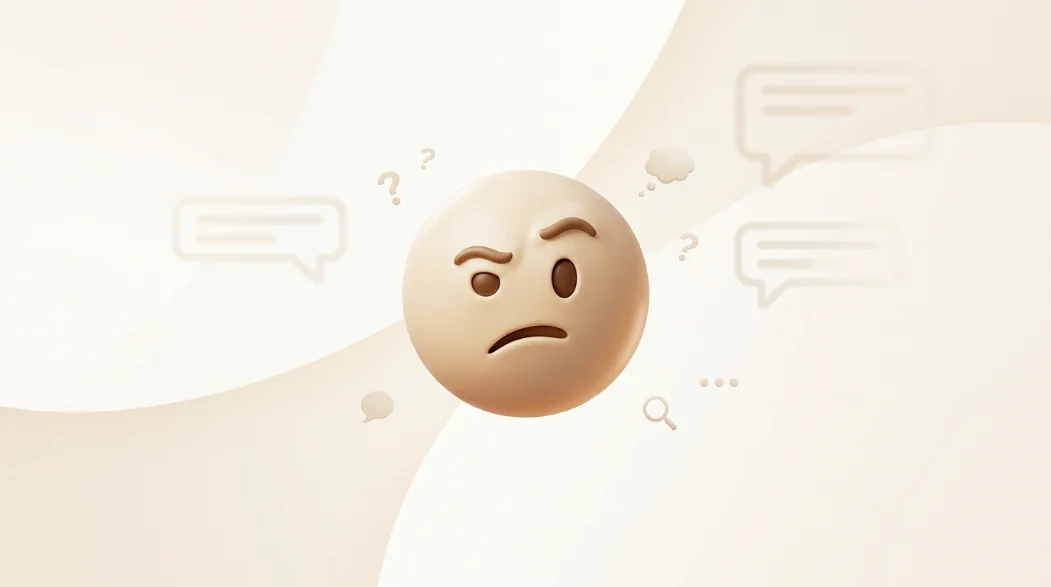
The raised eyebrow emoji 🤨 usually expresses skepticism, doubt, disbelief, suspicion, concern, or mild disapproval. Its flat mouth and uneven eyebrows create a questioning expression that can feel like saying “Really?”, “Are you serious?” or “I’m not sure about that.” The official Unicode name is Face with Raised Eyebrow, and Unicode lists keywords such as disbelief, distrust, skepticism, and disapproval for the emoji.
In texting, 🤨 can be serious, playful, sarcastic, or teasing depending on the message around it. Someone might use it to question an excuse, react to an unbelievable claim, or jokingly show suspicion toward a friend. It does not automatically mean anger or judgment. The surrounding words, relationship, and tone of the conversation are what usually determine its exact meaning.
Quick Answer
🤨 usually means “Really?”, “I doubt that,” or “Are you serious?”
It commonly expresses skepticism, suspicion, disbelief, or mild disapproval, but friends may also use it playfully or sarcastically.
What Does the Raised Eyebrow Emoji 🤨 Mean?
The 🤨 emoji is officially called Face with Raised Eyebrow. It shows a yellow face with a flat, neutral mouth and one eyebrow raised higher than the other. Its expression is commonly associated with skepticism, disbelief, distrust, concern, consideration, and disapproval.
In everyday conversation, the emoji often works like a facial reaction to something questionable.
For example:
“You finished the entire project in 10 minutes? 🤨”
The emoji suggests that the sender is doubtful.
Another example:
“I definitely did not eat the last cookie 🤨”
Here, the emoji can create a playful or suspicious tone.
Because of this, 🤨 is often less about a specific emotion and more about how someone reacts to information.
🤨 Meaning in Text Messages
In texts, the raised eyebrow emoji can communicate several related ideas:
- “Really?”
- “Are you sure?”
- “I don’t believe you.”
- “That sounds suspicious.”
- “What are you talking about?”
- “That doesn’t make sense.”
- “I’m questioning that.”
- “I’m watching you.”
- “Interesting…”
- “You expect me to believe that?”
The exact meaning depends on what came before it.
Consider these two messages:
“You can trust me 🤨”
This can sound suspicious or teasing.
“Wait, you actually got tickets? 🤨”
This could express surprise and mild disbelief rather than distrust.
The same emoji can therefore produce very different tones.
The Emotional Tone of 🤨
The raised eyebrow emoji usually has a skeptical or questioning tone, but its intensity can range from mild to playful.
Mild skepticism
“You said the meeting starts at 6? 🤨”
This simply asks for confirmation.
Strong disbelief
“You seriously expect me to believe that? 🤨”
Here, the emoji reinforces doubt.
Playful suspicion
“You were ‘too busy’ to answer me, huh? 🤨”
The message may be teasing rather than genuinely accusatory.
Mild disapproval
“You really sent that email without checking it? 🤨”
The emoji can suggest that the sender thinks the decision was questionable.
Sarcastic reaction
“Wow, what an incredibly believable story 🤨”
The wording makes the sarcasm clear, while the emoji strengthens the reaction.
So, 🤨 is not automatically rude, angry, or sarcastic. Context controls the intensity.
What Does 🤨 Mean From Someone?
When someone sends 🤨 to you, they may be questioning something you said or reacting to it with doubt.
For example:
“I didn’t order dessert 🤨”
If you had just seen them eating dessert, the emoji could suggest playful suspicion.
Or:
“You really think that’s going to work? 🤨”
That is more clearly skeptical.
A standalone:
“🤨”
can be harder to interpret. It might mean:
- “Really?”
- “What?”
- “I’m suspicious.”
- “Explain yourself.”
- “I don’t believe you.”
- “Interesting…”
- “What am I looking at?”
If the meaning matters, consider the previous messages instead of trying to decode the emoji by itself.
Is the Raised Eyebrow Emoji Rude?
It can be, but it isn’t inherently rude.
A raised eyebrow is a facial expression that can communicate doubt or disapproval. In a serious conversation, 🤨 may make a message feel judgmental.
For example:
“You thought that was a good idea? 🤨”
This could easily sound critical.
But between close friends:
“You bought another pair of shoes? 🤨😂”
The same emoji may be playful teasing.
If you’re speaking with someone you don’t know well, adding clear words can prevent the emoji from sounding harsher than intended.
Is 🤨 a Sarcastic Emoji?
🤨 can be used sarcastically, especially when the written message says something that is obviously questionable.
For example:
“Yes, because ignoring the instructions always works perfectly 🤨”
The emoji helps signal that the statement should not be taken literally.
However, 🤨 does not automatically mean sarcasm. It is better understood as a skeptical or questioning reaction that can become sarcastic when the surrounding message creates that tone.
Is 🤨 a Flirty Emoji?
The raised eyebrow emoji can appear in playful or flirty conversations, but it does not have a specific romantic meaning.
For example:
“Oh, so that’s your excuse? 🤨”
Depending on the relationship and previous conversation, this could be teasing.
Likewise:
“You looked pretty good tonight 🤨”
The words create the romantic possibility, not the emoji itself.
If someone sends 🤨 during a flirtatious conversation, it may add a playful, teasing, or knowing tone. But the emoji alone is not proof of attraction.
🤨 Meaning in Relationships
In relationships or close friendships, 🤨 can be useful for playful suspicion.
Someone might send:
“And who exactly were you texting? 🤨”
This could be joking jealousy, genuine concern, or simple teasing.
The important point is that the emoji does not establish the person’s intention by itself.
Relationship context matters. The same message between two close friends may be funny, while the same message in a tense conversation could feel accusatory.
If the conversation is serious, focus on the actual words rather than treating 🤨 as evidence of jealousy, anger, or distrust.
🤨 as a “Really?” Reaction
One of the most natural uses of 🤨 is as a visual version of “Really?”
For example:
“I can finish the whole assignment in five minutes.”
“🤨”
The response suggests disbelief without needing a full sentence.
It can also make a short reply more expressive:
“You did what? 🤨”
“Really? 🤨”
“Sure… 🤨”
This makes the emoji useful as a reaction to statements that seem exaggerated, surprising, or questionable.
Related Emojis and Their Meanings
| Emoji | Official Name | Common Meaning | Tone | Where or When It Is Used |
|---|---|---|---|---|
| 🤨 | Face with Raised Eyebrow | Doubt, skepticism, suspicion | Skeptical, questioning | Questionable claims, teasing, reactions |
| 🤔 | Thinking Face | Thinking, considering, wondering | Thoughtful, uncertain | Questions, decisions, reflection |
| 🧐 | Face with Monocle | Careful inspection, scrutiny | Analytical, curious | Checking details, examining claims |
| 🙄 | Face with Rolling Eyes | Annoyance, disbelief, exasperation | Dismissive, irritated | Reactions to frustrating or silly remarks |
| 😒 | Unamused Face | Displeasure, dissatisfaction | Unimpressed, annoyed | Awkward or irritating situations |
| 😏 | Smirking Face | Smugness, suggestiveness, knowing attitude | Playful, sly | Teasing, confidence, suggestive comments |
| 😐 | Neutral Face | Neutral or uncertain reaction | Flat, reserved | Awkward or emotionless responses |
| 🤭 | Face with Hand Over Mouth | Surprise, amusement, embarrassment | Playful, amused | Funny secrets, awkward moments, reactions |
| 😕 | Confused Face | Confusion or uncertainty | Puzzled, concerned | Unclear statements or situations |
The closest matches to 🤨 are 🤔 Thinking Face and 🧐 Face with Monocle, but they are not interchangeable.
🤨 focuses on skepticism or questioning.
🤔 focuses more on thinking or uncertainty.
🧐 suggests careful examination or scrutiny.
🙄 is usually stronger and more dismissive because it communicates an eye-roll rather than simply raising an eyebrow.
😏 is also different because its expression can suggest smugness, confidence, or suggestiveness rather than straightforward doubt.
🤨 vs. 🤔: What’s the Difference?
These two emojis are often confused because both can appear in uncertain conversations.
🤨 generally says:
“I doubt that.”
🤔 generally says:
“I’m thinking about that.”
Compare:
“Are you sure that’s the right address? 🤨”
This sounds skeptical.
“Let me check if that’s the right address 🤔”
This sounds thoughtful.
If you are questioning someone’s claim, 🤨 is usually the stronger choice.
If you are thinking through an idea yourself, 🤔 is more natural.
🤨 vs. 🧐: What’s the Difference?
Both can suggest scrutiny, but their tone is different.
🤨 feels like a skeptical reaction.
🧐 feels more like careful examination.
For example:
“That explanation doesn’t sound right 🤨”
This communicates doubt.
“Let me look at the details 🧐”
This communicates inspection.
The distinction is subtle, but useful when you want your emoji to match your intended tone.
🤨 vs. 🙄: What’s the Difference?
🤨 and 🙄 can both react to something annoying or unbelievable, but they do not carry the same intensity.
🤨 usually communicates questioning or skepticism.
🙄 usually communicates annoyance, exasperation, or dismissal.
Compare:
“You really paid $100 for that? 🤨”
This sounds surprised or doubtful.
“You bought that again? 🙄”
This sounds more annoyed.
If you simply want to question something, 🤨 is generally less dismissive.
🤨 vs. 😏: What’s the Difference?
These emojis can sometimes appear in playful conversations, but their meanings are quite different.
🤨 suggests doubt, suspicion, or questioning.
😏 can suggest smugness, confidence, teasing, or a suggestive attitude.
For example:
“You expect me to believe that? 🤨”
The sender is skeptical.
“I know something you don’t 😏”
The sender sounds confident or teasing.
Do not automatically interpret 🤨 as a flirty emoji just because 😏 may have a suggestive tone.
Text Message Examples
Questioning a claim
Message:
“I’m definitely not late 🤨”
Likely meaning:
The sender is playfully challenging the idea that they are not late.
Showing disbelief
Message:
“You finished all of that already? 🤨”
Likely meaning:
The sender is surprised and doubtful.
Teasing a friend
Message:
“You suddenly love running now? 🤨😂”
Likely meaning:
Lighthearted teasing rather than serious criticism.
Questioning an explanation
Message:
“That’s what happened? 🤨”
Likely meaning:
The sender wants more information or is not convinced.
Mild disapproval
Message:
“You posted that without checking the caption? 🤨”
Likely meaning:
The sender thinks the decision was questionable.
Common Misunderstandings About 🤨
It does not always mean anger
The expression is skeptical, not automatically angry. A person can use it casually or playfully.
It does not always mean distrust
Someone may simply be surprised or questioning an unexpected statement.
It does not automatically mean sarcasm
Sarcasm depends on the words and conversation. 🤨 can support sarcasm, but it does not guarantee it.
It does not prove jealousy
In relationship conversations, 🤨 can be used jokingly, but it should not automatically be interpreted as jealousy.
It does not prove flirting
A playful conversation can include 🤨, but the emoji itself is not a romantic signal.
It does not have one fixed meaning
Unicode and CLDR identify concepts such as skepticism, disbelief, distrust, disapproval, and mild surprise. Everyday use can extend beyond those concepts depending on context.
How to Respond to 🤨
The best response depends on why the person used it.
If they’re questioning you
“Yes, I’m serious 😂”
If they’re joking
“Why are you looking at me like that? 😂”
If they seem genuinely doubtful
“I can explain.”
If you want to clarify
“What part sounds suspicious?”
If the conversation is playful
“Don’t give me that look 🤨😂”
If you don’t understand the reaction
“Wait, what does that mean? 😅”
You do not need to send another emoji in response. A simple sentence is often clearer when the conversation is serious.
When Should You Use the Raised Eyebrow Emoji?
🤨 works well when you want to show:
- Doubt
- Mild suspicion
- Disbelief
- Questioning
- Surprise
- Playful judgment
- A “really?” reaction
- Mild disapproval
- A skeptical response
It may be less suitable when you want to communicate strong anger, sadness, affection, or genuine confusion. Another emoji may communicate those emotions more clearly.
Copy and Paste the Raised Eyebrow Emoji
🤨
You can copy and paste it into texts, comments, captions, social posts, and messages.
Some combinations include:
- 🤨❓ = “Really?”
- 🤨😂 = playful disbelief
- 🤨👀 = suspicious or curious reaction
- 🤨💭 = questioning or thinking
- 🤨😏 = skeptical but playful
- 🤨🙄 = stronger disbelief or annoyance
These combinations can change the tone, so the surrounding message still matters.
Official Name and Technical Details
The official Unicode name for 🤨 is FACE WITH RAISED EYEBROW.
- Emoji: 🤨
- Unicode code point: U+1F928
- Unicode version: 10.0
- Emoji version: 5.0
- Category: Smileys & Emotion
- Subgroup: Face-Neutral Skeptical
Unicode lists search keywords associated with the emoji including disapproval, disbelief, distrust, skepticism, surprise, and raised eyebrow.
The emoji was approved as part of Unicode 10.0 in 2017 and added to Emoji 5.0 in 2017. Emojipedia notes that its expression has also been compared with the recognizable raised-eyebrow look associated with comedian Stephen Colbert and actor Dwayne Johnson.
Different platforms can draw the same Unicode emoji somewhat differently. The basic meaning remains connected to the same underlying character, even when the visual design changes.
Frequently Asked Questions
What does 🤨 mean in texting?
🤨 usually means “Really?”, “Are you sure?”, “I doubt that,” or “That seems suspicious.” It can also be playful depending on the conversation.
What does the raised eyebrow emoji mean from a girl?
There is no separate female-specific meaning. A person of any gender can use 🤨 to express skepticism, disbelief, questioning, or playful suspicion. Context matters more than gender.
What does the raised eyebrow emoji mean from a guy?
It does not have a special male-specific meaning. A sender may use 🤨 to question something, show disbelief, tease someone, or express mild suspicion.
Is 🤨 a flirty emoji?
Not by itself. It can appear in a flirty conversation and add a teasing tone, but 🤨 primarily communicates skepticism or questioning.
Is 🤨 a sarcastic emoji?
It can be used sarcastically, especially with ironic wording, but the emoji itself does not automatically mean sarcasm.
Does 🤨 mean “I don’t believe you”?
It can. When someone uses it after a questionable claim, it may communicate disbelief or suspicion.
What is the difference between 🤨 and 🤔?
🤨 generally expresses skepticism or doubt, while 🤔 more often expresses thinking, consideration, or uncertainty.
What is the difference between 🤨 and 🙄?
🤨 is usually a questioning or skeptical reaction. 🙄 more strongly communicates annoyance, exasperation, or dismissal.
What is the official name of 🤨?
The official Unicode name is Face with Raised Eyebrow.
Conclusion
The raised eyebrow emoji 🤨 is one of the clearest emojis for skepticism, doubt, disbelief, suspicion, and questioning. In casual conversations, it can also become playful, teasing, or sarcastic depending on the words around it.
If you want to say “Really?”, question a claim, or show that something does not quite add up, 🤨 can fit naturally. Just remember that it does not automatically mean anger, flirting, jealousy, or sarcasm. The surrounding message and relationship provide the real context.
Read More Related Articles:
- Embarrassed Emoji Meaning | Decode Awkward Moments …
- Warning Emoji Meaning | Hidden Messages, Real World Uses …
- ROFL Emoji Meaning | The Ultimate Guide to Laughing Out …