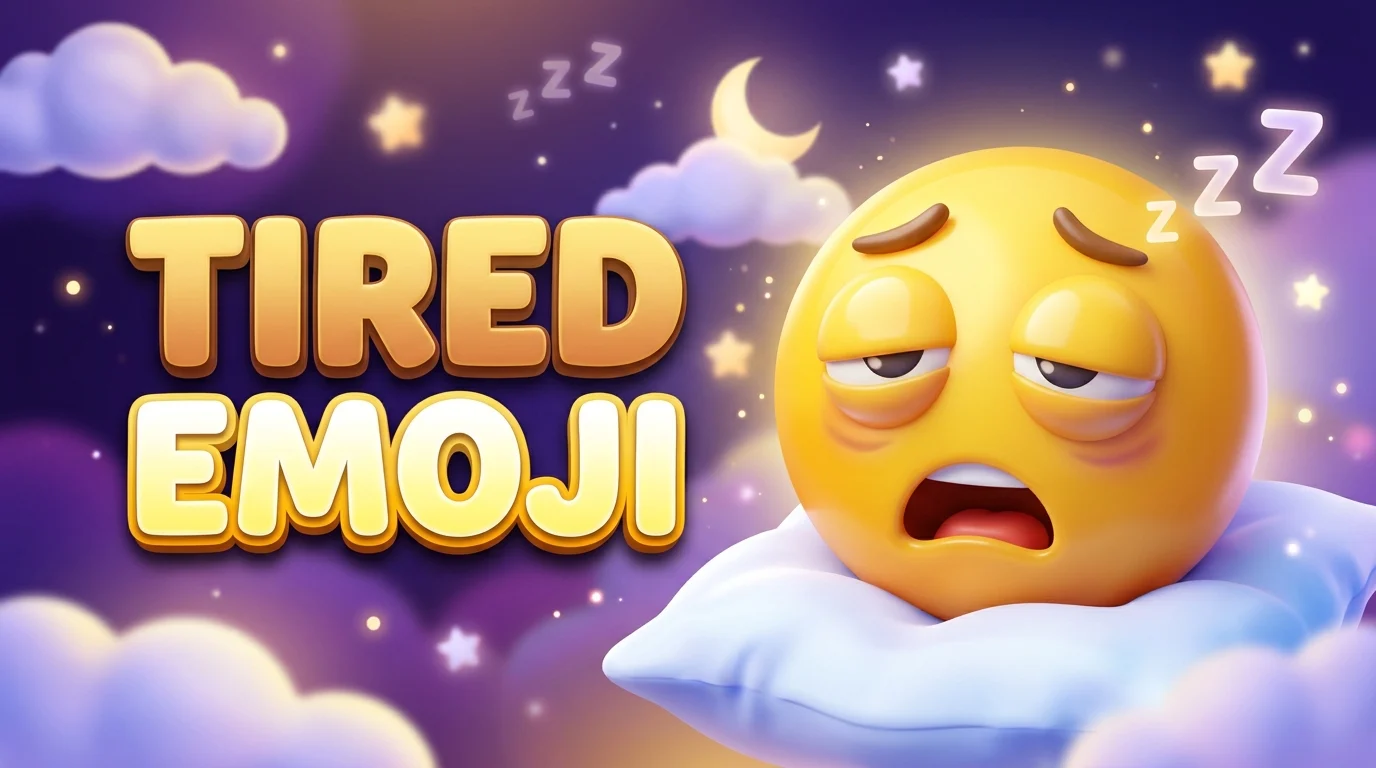
The tired emoji is a familiar way to express feeling worn out, sleepy, overwhelmed, or simply out of energy. People use it when they have had a long day, stayed up too late, faced too many responsibilities, or reached the point where even a small task feels exhausting. It can communicate a feeling that is sometimes difficult to explain in words.
However, the tired emoji does not always mean someone needs sleep. Depending on the conversation, it can also suggest emotional exhaustion, frustration, boredom, or being mentally drained. A person might send it after a stressful meeting, a busy schedule, an awkward situation, or a conversation that has taken too much effort. Its meaning becomes clearer when you consider the message and the situation around it.
Quick Answer
The tired emoji usually represents exhaustion, sleepiness, low energy, or feeling overwhelmed.
In messages, it can also express emotional fatigue, frustration, or being completely done with a situation.
What Does the Tired Emoji Mean?
The tired emoji can communicate several kinds of exhaustion, from ordinary sleepiness to feeling emotionally worn out. Its meaning depends on the situation and the expression shown by the particular emoji.
Here are the most common interpretations:
- Physical exhaustion: Feeling tired after working, exercising, traveling, or completing a demanding day.
- Sleepiness: Wanting to go to bed, struggling to stay awake, or wishing for a nap.
- Mental fatigue: Feeling unable to concentrate after too much thinking or dealing with complicated tasks.
- Emotional exhaustion: Feeling drained after arguments, stressful experiences, or difficult conversations.
- Frustration: Being fed up with something that keeps happening.
- Overwhelm: Having so many responsibilities that you do not know where to start.
One important detail is that the tired emoji can communicate more than a lack of sleep. Sometimes, a person is physically awake but emotionally or mentally exhausted. That is why the same emoji can fit very different conversations.
Tired Emoji Meaning in Text Messages
In text messages, the tired emoji often replaces a longer explanation. Instead of writing that they are exhausted, frustrated, or ready to stop for the day, someone can send an expressive face to communicate the feeling quickly.
For example:
- “I have three assignments left 😩” suggests feeling overwhelmed.
- “I barely slept last night 😪” communicates sleepiness.
- “Another meeting tomorrow? 😫” expresses frustration and exhaustion.
- “Finally finished everything. I’m done 😴” suggests being ready to rest.
The emoji can also soften a complaint. Without it, a message such as “I have so much work” might sound serious or negative. Adding a tired expression makes the sender’s mood more visible and can make the message feel more conversational.
What Does the Tired Emoji Mean From Someone?
When someone sends you a tired emoji, they may be telling you something about their current mood rather than making a direct statement.
The most likely meaning depends on what happened before the message.
If they send it after talking about work: They may be physically or mentally exhausted from a busy schedule.
If they send it late at night: They might be sleepy or suggesting that they are ready to end the conversation.
If they send it after complaining: They may feel frustrated because something has become repetitive or difficult.
If they send it after sharing a personal problem: It may communicate emotional exhaustion or a need for understanding.
If they send it after a joke: They might be pretending to be dramatically exhausted for humorous effect.
It is also possible that someone simply uses tired-looking emojis as part of their usual texting style. One emoji alone cannot tell you exactly how someone feels, so the surrounding conversation matters.
Is the Tired Emoji Positive or Negative?
The tired emoji is generally associated with uncomfortable feelings, but it is not always negative.
It can be used in a lighthearted way when someone wants to joke about being tired after a long day. Friends might exchange it after a busy weekend, a late-night conversation, or a demanding activity.
However, it can communicate genuine frustration or emotional strain when the situation is more serious.
| Situation | Likely Meaning | Overall Tone |
|---|---|---|
| After a long workday | Physical exhaustion | Relatable |
| During a difficult assignment | Mental fatigue | Frustrated |
| After staying awake late | Sleepiness | Casual |
| Following an argument | Emotional exhaustion | Serious |
| During a funny conversation | Dramatic tiredness | Playful |
| After repeated problems | Feeling fed up | Negative |
The best way to understand its tone is to look at the words accompanying it. A tired expression after a joke may be playful, while the same expression after a difficult personal experience may show genuine exhaustion.
Can the Tired Emoji Be Sarcastic?
Yes. The tired emoji can be sarcastic when someone wants to show that they are unimpressed, annoyed, or completely fed up with something.
For example, imagine a friend says they are going to tell the same story for the fifth time. You might respond with a tired-looking emoji to suggest that you have already heard enough.
It can also communicate a dramatic reaction to something that seems unnecessarily complicated.
Examples include:
- “Here we go again 😩” suggests frustration with a repeated situation.
- “Another last-minute change? 😫” shows annoyance.
- “I just love having more work 🙄” uses sarcasm to complain about extra responsibilities.
The tired emoji itself does not automatically make a message sarcastic. The words, timing, and relationship between the people determine whether the reaction feels humorous or genuinely irritated.
Tired Emoji vs. Sleepy Emoji: What’s the Difference?
These two expressions are closely related, but they do not communicate exactly the same feeling.
A tired emoji can represent physical exhaustion, emotional fatigue, frustration, or mental overload. A sleepy emoji usually focuses more directly on wanting to sleep or struggling to stay awake.
For example, someone who has spent the entire day solving difficult problems may feel tired without being sleepy. Another person who stayed awake until 3 a.m. may be sleepy even if they are not emotionally stressed.
The distinction is useful because people sometimes use tired and sleepy expressions interchangeably, even though the feelings behind them can be different.
Does the Tired Emoji Mean Someone Wants to Sleep?
Sometimes, yes. Sleepiness is one of its most common interpretations, especially when someone sends it late at night or mentions having trouble staying awake.
A person might use it after studying for hours, waking up early, or getting very little rest. It can also be a gentle way to communicate that they are ready to stop chatting.
However, context is important. If someone sends a tired emoji after describing a stressful day, they may be talking about emotional exhaustion rather than bedtime.
For example:
- “I have to wake up at 5 a.m. 😴” suggests sleepiness.
- “This week has been too much 😩” suggests feeling overwhelmed.
- “I need a break from everything 😫” may communicate mental or emotional fatigue.
Related Face Emojis and Their Meanings
Several facial emojis can express tiredness, stress, sleepiness, or frustration. They may look similar at first, but their expressions communicate different moods.
| Emoji | Official Name | Common Meaning | Tone | Where or When It Is Used |
|---|---|---|---|---|
| 😫 | Tired Face | Exhaustion, frustration, feeling overwhelmed | Dramatic, strained | After a difficult day or demanding task |
| 😩 | Weary Face | Feeling worn out, fed up, or emotionally drained | Frustrated, emotional | When something feels difficult or repetitive |
| 😪 | Sleepy Face | Sleepiness, tiredness, or wanting rest | Soft, sleepy | Late-night messages or conversations about sleep |
| 😴 | Sleeping Face | Sleeping, resting, or being very sleepy | Calm, relaxed | Bedtime messages and discussions about rest |
| 🥱 | Yawning Face | Boredom, tiredness, or sleepiness | Casual, understated | When someone is yawning or struggling to stay awake |
| 😓 | Downcast Face with Sweat | Stress, pressure, or nervous exhaustion | Uneasy, uncomfortable | After a stressful experience |
| 😔 | Pensive Face | Sadness, disappointment, or low mood | Quiet, serious | When someone feels discouraged |
| 😮💨 | Face Exhaling | Relief, exhaustion, or frustration | Tired, relieved | After completing something difficult |
😫 vs. 😩: What’s the Difference?
These two emojis are easy to confuse because both can express exhaustion and frustration.
The 😫 emoji is commonly used when someone feels physically or mentally worn out. It can suggest that a task is difficult, a day has been exhausting, or a situation has become too much to handle.
The 😩 emoji often communicates a stronger sense of being fed up, emotionally drained, or frustrated. It can be used when something disappointing happens or when a person feels they have reached their limit.
For example:
- “I walked all day and my legs hurt 😫” communicates physical exhaustion.
- “Why does this keep happening to me? 😩” communicates frustration and emotional fatigue.
The difference is not a strict rule. Both can overlap, and the surrounding message helps explain the intended feeling.
😪 vs. 😴: What’s the Difference?
The 😪 emoji usually suggests that someone is sleepy or struggling to stay awake. It can also communicate tiredness in a gentle, expressive way.
The 😴 emoji more directly represents sleeping or being ready to sleep. It is commonly used in bedtime messages or when someone wants to say they are going to rest.
For example:
- “I can barely keep my eyes open 😪” suggests sleepiness.
- “Goodnight, I’m going to sleep 😴” clearly communicates bedtime.
Is the Tired Emoji Flirty?
The tired emoji is not usually considered a flirty symbol on its own. Its main purpose is to express exhaustion, sleepiness, or frustration.
However, it can appear in playful or affectionate conversations. Someone might use it jokingly when they are tired after spending time with a person or staying up late chatting.
For example:
- “You kept me talking until 2 a.m. 😩” may sound playful and affectionate.
- “I’m too tired to think straight after today 😴” is more likely a simple statement about exhaustion.
A flirty interpretation depends on the conversation, the relationship, and the words around the emoji. It should not automatically be treated as a romantic signal.
Is the Tired Emoji Rude?
No, the tired emoji is not inherently rude. Most of the time, it is simply a way to communicate low energy, frustration, or sleepiness.
However, it can feel dismissive if someone sends it while another person is sharing something important. For instance, responding to a serious explanation with a tired-looking expression might make the other person feel that you are bored or uninterested.
It can also sound sarcastic when used as a reaction to someone’s repeated behavior.
If you are unsure how the recipient might interpret it, adding a few words can make your intention clearer. “I’m exhausted after work” communicates something different from sending a tired emoji without explanation.
Tired Emoji on Social Media
On social media, tired-looking emojis are often used to express relatable reactions to everyday struggles.
People may add them to captions, comments, and replies when talking about:
- Long working hours or busy schedules.
- Exams, assignments, and study pressure.
- Early mornings and late nights.
- Parenting responsibilities and household tasks.
- Repetitive problems and frustrating situations.
- Feeling emotionally drained after a difficult week.
The emoji can also add humor to an otherwise ordinary statement. Someone might write about having a long to-do list and use a tired expression to make the complaint feel more relatable.
In comments, it can work as a reaction to someone else’s experience. If a person describes an exhausting day, a tired emoji may communicate understanding without requiring a long response.
On platforms where people use exaggerated reactions, it can also suggest that a situation is so tiring that they have no energy left to explain themselves.
Text Message Examples
Here are realistic examples of how tired-looking emojis can appear in everyday conversations.
1. After a long workday
- Person A: “How was work today?”
- Person B: “So many meetings. I just got home 😫”
Meaning: The person feels physically or mentally exhausted after a demanding day.
2. Talking about sleep
- Person A: “Are you still awake?”
- Person B: “Barely. I need to sleep 😪”
Meaning: The sender is sleepy and struggling to stay awake.
3. During exam preparation
- Person A: “Have you finished studying?”
- Person B: “Not yet. I have two more chapters 😩”
Meaning: The sender feels overwhelmed by the amount of studying left.
4. Reacting to repeated problems
- Person A: “The internet stopped working again.”
- Person B: “Seriously? Not again 😫”
Meaning: The emoji communicates frustration with something that keeps happening.
5. Ending a late-night conversation
- Person A: “One more question!”
- Person B: “Tomorrow, please. I’m falling asleep 😴”
Meaning: The sender is ready to end the conversation and rest.
Common Misunderstandings About the Tired Emoji
1. Assuming It Always Means Sleepiness
The tired emoji can communicate mental fatigue, frustration, or emotional exhaustion. Someone may be tired of a situation without actually wanting to sleep.
2. Thinking It Always Shows Anger
A tired expression can look dramatic, but it does not necessarily mean someone is angry. It may simply show that they have had a long day or need a break.
3. Confusing Physical and Emotional Exhaustion
Physical exhaustion usually relates to the body needing rest. Emotional exhaustion relates to feeling mentally or emotionally drained. The same emoji can represent either experience.
4. Treating It as a Romantic Signal
Sending a tired emoji does not automatically suggest attraction or affection. It usually communicates a mood rather than romantic interest.
5. Assuming Everyone Uses It the Same Way
Some people use tired-looking emojis seriously, while others use them dramatically for humor. Personal texting habits and conversation style can change the intended meaning.
How to Respond to the Tired Emoji
Your response should depend on why the person seems tired. If they are genuinely exhausted, a thoughtful reply can show that you understand. If they are joking, a playful response may fit better.
Here are some natural replies:
- If they had a busy day: “Sounds exhausting. Hope you get some rest.”
- If they are sleepy: “You should probably get some sleep.”
- If they feel overwhelmed: “Take it one thing at a time. You’ve got this.”
- If they are frustrated: “I can understand why you’re fed up.”
- If they are joking: “Same here. I need a vacation too.”
- If they are ending the conversation: “No worries. Talk tomorrow!”
You can also ask whether they are physically tired or dealing with something stressful. That small question may help you understand what they are trying to communicate.
Frequently Asked Questions
1. What does the tired emoji mean?
The tired emoji usually represents exhaustion, sleepiness, low energy, or feeling overwhelmed. It can also communicate frustration or emotional fatigue depending on the conversation.
2. What does 😫 mean from a girl or guy?
When someone sends 😫, they may be expressing exhaustion, frustration, or feeling overwhelmed. The meaning is generally the same regardless of gender, and the surrounding conversation provides the best clue.
3. What is the difference between 😫 and 😩?
Both emojis can express exhaustion. 😫 often suggests feeling worn out or strained, while 😩 commonly communicates being fed up or emotionally drained. Their meanings can overlap.
4. Does the tired emoji mean someone is sleepy?
It can. People often use tired-looking emojis when they need sleep or cannot stay awake. However, the same expression can also represent mental or emotional exhaustion.
5. Is the tired emoji negative?
It usually communicates an uncomfortable feeling, such as exhaustion or frustration. However, it can also be used playfully to joke about a busy day or a tiring situation.
6. Can the tired emoji be sarcastic?
Yes. It can suggest that someone is unimpressed, annoyed, or fed up with something. The words and situation determine whether the message is sarcastic.
7. Is the tired emoji flirty?
Not usually. Its main meaning relates to exhaustion or sleepiness. It can appear in affectionate conversations, but the emoji alone is not a clear sign of flirting.
8. What does the tired emoji mean on social media?
On social media, it often expresses relatable exhaustion, stress, boredom, or frustration. People use it in captions and comments about work, school, daily responsibilities, and difficult experiences.
9. What emoji is best for saying you need sleep?
The 😴 emoji is a clear choice when you want to communicate that you are sleeping or ready for bed. The 😪 emoji can suggest that you are sleepy and struggling to stay awake.
Conclusion
The tired emoji is a simple but expressive way to communicate exhaustion, sleepiness, frustration, and low energy. It can describe a physically demanding day, an overwhelming workload, or the feeling of being emotionally drained.
Although it is often associated with needing sleep, its meaning goes beyond bedtime. People also use it to react to repetitive problems, stressful situations, and everyday moments when they have simply had enough. Understanding the context helps you recognize whether someone is joking, asking for sympathy, or genuinely feeling exhausted.
Read More Related Articles:
- Clapping Hands Emoji Meaning | A Cheerful Symbol of Praise …
- New Tired Emoji Meaning | The Exhausted Expression …
- Two Hearts Emoji Meaning | What Really Says About Love …