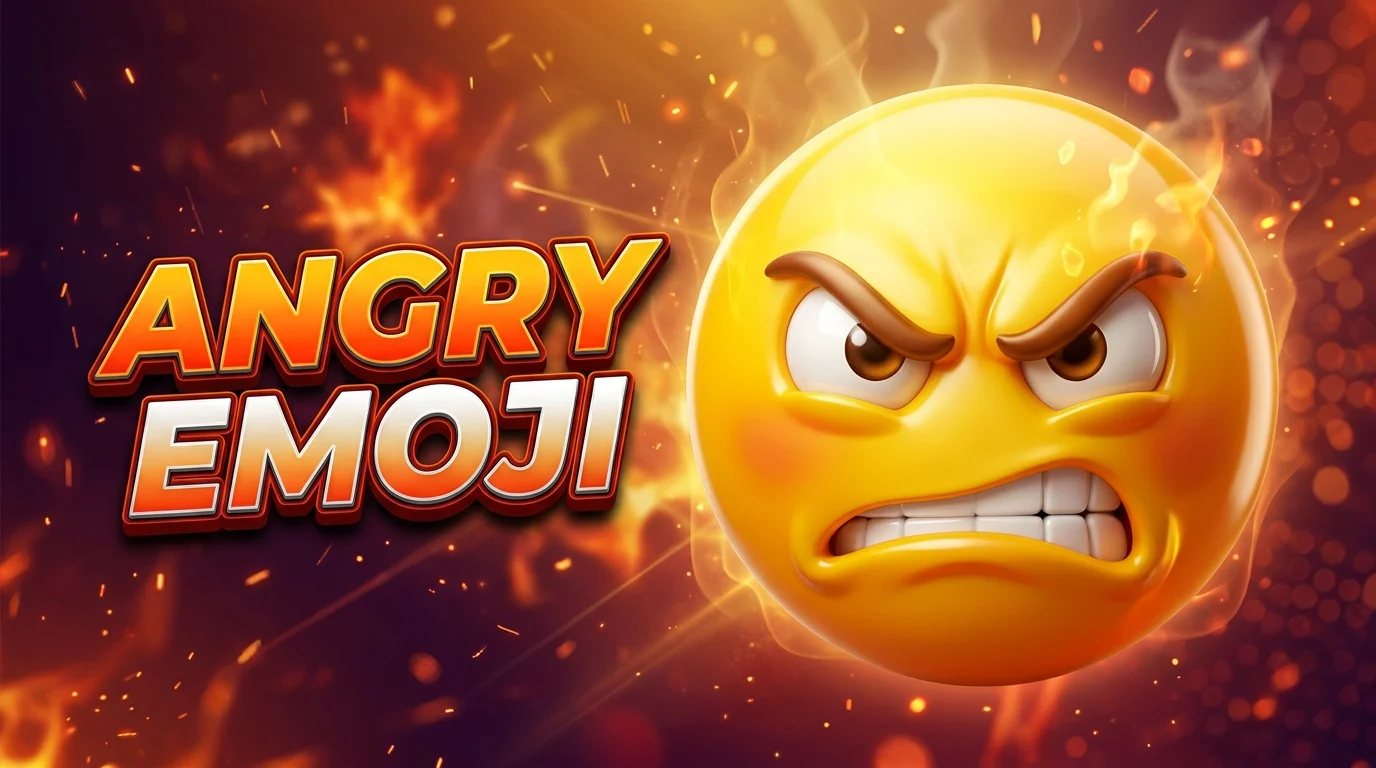
The angry emoji 😠 is commonly used to express anger, irritation, frustration, or disappointment. It shows a yellow face with lowered eyebrows and a deep frown, making it a clear way to communicate that something is wrong or upsetting. People often use it when they feel annoyed by someone’s behavior, disagree with a situation, or want to show displeasure without writing a long explanation.
However, the angry emoji does not always communicate serious anger. In friendly conversations, it can express playful annoyance, mock frustration, or a dramatic reaction to something small. Its meaning depends on the message, the relationship between the people, and the situation in which it appears.
Quick Answer
The angry emoji 😠 means anger, irritation, frustration, or strong displeasure. It shows that someone is unhappy about something.
In casual chats, it can also express playful annoyance or an exaggerated reaction between friends.
What Does the Angry Emoji 😠 Mean?
The angry emoji 😠 represents a person who feels mad, irritated, or upset. Its lowered eyebrows, serious eyes, and frowning mouth create an expression of clear displeasure.
People use it when something bothers them, when they feel treated unfairly, or when they want to show that they are not happy with a particular situation.
Common meanings include:
- Anger: Feeling mad about someone’s words or actions.
- Irritation: Being bothered by something annoying.
- Frustration: Feeling upset because something is not going as expected.
- Disapproval: Showing that something is unacceptable.
- Disappointment: Reacting negatively when expectations are not met.
- Playful annoyance: Pretending to be angry in a humorous conversation.
For example, someone might send 😠 after a friend cancels plans at the last minute. Another person might use it when a game keeps freezing or someone repeatedly makes the same mistake.
The emoji makes the emotional tone easier to recognize, especially when a short message could otherwise sound unclear.
😠 Meaning in Text Messages
In text messages, the angry emoji usually communicates that the sender is annoyed, upset, or frustrated. It adds an emotional reaction to words that might otherwise seem too plain.
For example:
- “You forgot again 😠” expresses frustration about a repeated mistake.
- “That was not fair 😠” shows disagreement and displeasure.
- “I waited for an hour 😠” communicates annoyance about the delay.
- “Stop doing that 😠” makes the request sound more serious.
- “My phone stopped working again 😠” shows frustration with a problem.
The angry emoji can also replace a longer emotional response. Instead of explaining that something has made them mad, a person may simply send 😠 to show their reaction.
Still, the surrounding words matter. A message such as “You’re so annoying 😠” may sound genuinely irritated, while “You ate my fries 😠” between close friends may be a playful complaint.
What Does 😠 Mean From Someone?
When someone sends you the angry emoji, they may be expressing frustration, disappointment, or irritation about something that happened.
The exact meaning depends on your conversation and your relationship with that person.
If a friend sends 😠: They may be annoyed about something you said or done. If the conversation is playful, they could simply be pretending to be angry.
Apartner sends 😠: They might feel disappointed, ignored, or frustrated. It can also be a teasing reaction when you have playfully upset them.
If a family member sends 😠: They may be showing disapproval or expressing frustration about a particular situation.
If a coworker sends 😠: It may indicate genuine dissatisfaction or disagreement. In a professional conversation, it is worth taking the reaction seriously rather than assuming it is a joke.
If someone sends 😠 without words: They may want you to notice that something has upset them. However, the emoji alone does not explain what caused the reaction.
Rather than guessing, consider what happened just before the emoji appeared. A short, calm question can help clear up the meaning.
Is the Angry Emoji Positive or Negative?
The angry emoji is generally negative because it represents anger, irritation, and displeasure. It usually shows that someone is unhappy about a person, action, or situation.
However, negative emotions are not always expressed negatively toward another person. Someone may use 😠 to complain about bad weather, a slow internet connection, a disappointing result, or an unexpected problem.
It can also be used humorously between people who understand each other’s communication style.
For example:
- “You finished the snacks without me 😠” may be playful.
- “I can’t believe they cancelled again 😠” shows real frustration.
- “You better not forget my birthday 😠” could be a joking warning.
The emoji itself signals anger, but the message determines whether that anger is serious, exaggerated, or playful.
Can 😠 Be Sarcastic?
Yes, the angry emoji can be sarcastic when someone uses it to express fake anger or make a humorous complaint.
Sarcasm often happens when the words and emotional expression do not match literally.
For example:
- “Oh great, another Monday 😠”
- “You really took the last cookie? 😠”
- “Amazing, my internet stopped working again 😠”
In these examples, the sender may not be seriously angry. They are using the emoji to exaggerate their frustration or make the message more entertaining.
However, sarcasm depends on context. If the conversation is already tense, the same emoji may look like genuine anger instead of a joke.
Does 😠 Mean Someone Is Mad at You?
Not always. The angry emoji can express frustration about something completely unrelated to the person receiving it.
For example, someone might send:
- “My bus is late again 😠”
- “I lost the game 😠”
- “The weather ruined our plans 😠”
In these situations, the sender is upset about an event rather than angry at you.
If the emoji appears after something you said, it may be directed toward your comment or behavior. Even then, it does not automatically mean the person is deeply angry.
Look at the full conversation before deciding how to respond. A single emoji is not always enough to understand someone’s feelings.
Does 😠 Mean Frustration or Anger?
The angry emoji can represent both, but there is a small difference between these emotions.
Anger usually means someone feels mad or offended because of something they consider wrong, unfair, or upsetting.
Frustration often means someone feels bothered because something is difficult, delayed, or not working as expected.
For example:
- “You lied to me 😠” expresses anger or disappointment.
- “This computer keeps freezing 😠” expresses frustration.
- “They changed the rules again 😠” may communicate both.
The emoji is flexible enough to represent different levels of negative emotion. The words around it help show whether the sender is angry at someone or simply frustrated with a situation.
Related Angry Emojis and Their Meanings
Several emojis express anger, irritation, or other negative emotions. Although they may look similar in meaning, each one creates a slightly different tone.
| Emoji | Official Name | Common Meaning | Tone | Where or When It Is Used |
|---|---|---|---|---|
| 😠 | Angry Face | Anger, irritation, displeasure | Stern, annoyed | Complaints and disagreements |
| 😡 | Enraged Face | Strong anger or rage | Intense, furious | Serious frustration or exaggerated anger |
| 😤 | Face with Steam From Nose | Frustration, determination, or pride | Defiant, huffy | Showing annoyance or confidence |
| 🤬 | Face with Symbols on Mouth | Extreme anger or swearing | Explosive, aggressive | Strong reactions and outrage |
| 🙄 | Face with Rolling Eyes | Annoyance or disbelief | Sarcastic, dismissive | Responding to irritating behavior |
| 😒 | Unamused Face | Displeasure or dissatisfaction | Unimpressed, irritated | Showing that something is not funny |
| 😣 | Persevering Face | Struggling or feeling distressed | Tense, uncomfortable | Difficult or frustrating situations |
| 😾 | Pouting Cat Face | Anger or displeasure | Grumpy, playful | Expressing irritation in a cute way |
😠 vs. 😡: What’s the Difference?
The angry emoji 😠 and the enraged face 😡 both communicate anger, but they usually suggest different levels of intensity.
😠 generally expresses irritation, displeasure, or ordinary anger. It can show that someone is bothered without suggesting extreme rage.
😡 usually looks more intense because of its red face and strong expression. People often use it to communicate fury, serious frustration, or exaggerated anger.
For example:
- “You forgot to call me 😠” suggests annoyance.
- “I cannot believe you did that 😡” communicates stronger anger.
Use 😠 for general irritation and 😡 when the reaction feels more intense.
😠 vs. 😤: What’s the Difference?
The angry emoji 😠 shows a direct expression of anger or displeasure. The face with steam from nose 😤 often communicates frustration, determination, or a proud, huffy reaction.
For example:
- “That was completely unfair 😠” shows anger.
- “I am not giving up 😤” communicates determination.
- “This is getting ridiculous 😠” expresses irritation.
- “I worked so hard for this 😤” can show pride or effort.
Although both can appear in frustrating situations, 😠 is more directly associated with anger, while 😤 has a broader meaning.
Is the Angry Emoji Flirty?
The angry emoji is not usually considered a flirty symbol, but it can appear in playful or affectionate conversations.
Someone might use 😠 to pretend to be upset when their partner forgets to send a message, eats their favorite food, or makes a teasing comment.
For example:
- “You went out without telling me 😠”
- “You forgot our movie night 😠”
- “You always steal my food 😠”
These messages may express playful annoyance rather than genuine anger.
The emoji does not automatically mean someone is flirting. The relationship, conversation, and other affectionate signals help determine whether the reaction is teasing or serious.
Is 😠 Rude?
The angry emoji can seem rude because it communicates a strong negative emotion. When sent without an explanation, it may make the recipient feel blamed, criticized, or confronted.
For example, replying to someone’s question with only 😠 can appear unfriendly or aggressive. The other person may not understand what caused the reaction.
However, it is not automatically rude. Friends may use it jokingly, and people sometimes send it to express frustration about something that has nothing to do with the recipient.
In professional conversations, it is generally better to explain a problem with clear words instead of relying on an angry face. This helps prevent misunderstandings and keeps the discussion respectful.
Angry Emoji in Social Media Comments
On social media, the angry emoji is often used to react to posts, comments, opinions, and situations that people find upsetting or unfair.
Its meaning can change slightly depending on the topic.
- On Instagram: People may use 😠 to react to disappointing news, annoying behavior, or an irritating post.
- On TikTok: It can express frustration with a video, an unpopular opinion, or something happening in the comments.
- On Facebook: The angry face may communicate displeasure or outrage about a post or public issue.
- On Snapchat: Friends may use it to show playful annoyance or complain about something that happened.
- On X: People may use it to express disagreement, criticism, or frustration during discussions.
A public comment can feel stronger than a private message because many people may see it. When the target of the anger is unclear, adding a few words can make the intended meaning easier to understand.
Text Message Examples
Here are realistic examples showing how the angry emoji can be used in everyday conversations.
1. When Someone Forgets Something
- Person A: “I forgot to bring your book.”
- Person B: “You promised you wouldn’t forget 😠”
Meaning: Person B is disappointed and annoyed about the forgotten book.
2. When Plans Get Cancelled
- Person A: “Sorry, I can’t come tonight.”
- Person B: “Again? We planned this all week 😠”
Meaning: The emoji shows frustration because the plans have been cancelled again.
3. When Someone Is Teasing
- Person A: “I ate the last slice of pizza.”
- Person B: “You did what? 😠”
Meaning: Person B may be pretending to be angry in a playful way.
4. When Technology Stops Working
- Person A: “Why are you taking so long?”
- Person B: “My internet keeps disconnecting 😠”
Meaning: The sender is frustrated with a technical problem.
5. When Something Feels Unfair
- Person A: “They gave someone else credit for your work.”
- Person B: “That is so unfair 😠”
Meaning: The emoji expresses anger about an unfair situation.
Common Misunderstandings About 😠
1. Thinking It Always Means Serious Anger
The angry emoji can show genuine anger, but it can also be used for small complaints or playful reactions. The situation makes the difference.
2. Confusing 😠 With 😡
Both emojis represent anger, but 😡 generally communicates a stronger level of rage. Using one instead of the other can change the emotional intensity of a message.
3. Assuming the Sender Is Angry at You
Someone may be upset about a delay, mistake, or unrelated event. The emoji does not always target the person receiving it.
4. Thinking It Always Means Hatred
Anger and hatred are different emotions. The angry emoji usually communicates irritation or displeasure, not necessarily deep dislike.
5. Assuming It Is Always Rude
Among close friends, 😠 can be a funny way to pretend to be upset. In serious conversations, however, it may sound harsh.
6. Ignoring the Words Around It
The same emoji can communicate different emotions depending on the sentence. Reading only the emoji without considering the message can lead to an incorrect interpretation.
How to Respond to 😠
The best response depends on whether the sender is genuinely angry, mildly frustrated, or joking.
- If they seem genuinely upset: “I’m sorry. What happened?”
- If they are frustrated about a situation: “That sounds really annoying.”
- If they are playfully angry: “Okay, okay! Don’t be mad 😂”
- If they are upset with you: “I didn’t mean to upset you. Can we talk about it?”
- If you do not understand the reaction: “Is something wrong?”
- If they are complaining about a mistake: “I understand why that bothered you.”
A calm response is usually better than sending another angry emoji. It gives the other person a chance to explain what they mean and can prevent a small disagreement from becoming a bigger argument.
Popular Angry Emoji Combinations
The angry emoji can appear with other symbols to make a reaction more expressive. These combinations are informal and their meanings depend on the conversation.
| Combination | Common Meaning |
|---|---|
| 😠🔥 | Strong anger or heated frustration |
| 😠💢 | Irritation or visible annoyance |
| 😠🙄 | Anger mixed with disbelief |
| 😠😭 | Frustration mixed with sadness or dramatic emotion |
| 😠💔 | Anger caused by emotional hurt |
| 😠😤 | Feeling extremely annoyed or fed up |
| 😠😂 | Pretending to be angry in a funny way |
| 😠💀 | An exaggerated reaction to something irritating |
These combinations can help communicate more than one emotion at a time. For example, 😠😂 may show that someone is joking, while 😠💔 can suggest that the anger comes from feeling hurt.
Frequently Asked Questions
1. What does the angry emoji 😠 mean?
The angry emoji 😠 represents anger, irritation, frustration, or displeasure. People use it when something bothers them or when they want to show that they are unhappy about a situation.
2. What does 😠 mean in texting?
In texting, 😠 usually means that someone is annoyed or upset. It can also express playful frustration when friends are joking with each other.
3. What is the difference between 😠 and 😡?
😠 generally represents anger or irritation, while 😡 usually communicates stronger anger or rage. The red face of 😡 makes its expression appear more intense.
4. Does 😠 mean someone is mad at you?
Not necessarily. The sender may be angry about an unrelated situation, such as a delay or a disappointing result. The conversation helps reveal whether the anger is directed at you.
5. Is the angry emoji positive or negative?
It is generally a negative emoji because it represents anger, frustration, and displeasure. However, people sometimes use it playfully to pretend to be upset.
6. Can 😠 be used sarcastically?
Yes. People may use it to exaggerate a small complaint or make a sarcastic comment. For example, “My favorite show ended on a cliffhanger 😠” can be a humorous reaction.
7. Does 😠 mean frustration?
Yes. The angry emoji can express frustration when something is difficult, inconvenient, or not going as expected. It can also represent direct anger toward a person or situation.
8. Is 😠 a flirty emoji?
It is not usually a flirty emoji, but it can be used playfully between romantic partners. Someone might send it to pretend to be upset about a missed call or a teasing comment.
9. Is sending 😠 rude?
It can seem rude if it is sent during a serious conversation without explanation. However, friends may use it humorously when they understand each other’s tone.
10. What emoji is stronger than 😠?
The enraged face 😡 usually communicates stronger anger. The face with symbols on mouth 🤬 can express an even more explosive reaction or intense frustration.
Conclusion
The angry emoji 😠 is a clear way to express anger, irritation, frustration, and displeasure in digital conversations. It can show that someone is upset about a mistake, disappointed by an event, or simply annoyed by something inconvenient.
Although it usually carries a negative tone, it can also be playful or sarcastic between people who understand each other’s humor. The difference between a genuine complaint and a joking reaction comes from the words, relationship, and situation surrounding it.
Understanding these details makes it easier to use the angry emoji naturally and interpret it correctly when someone sends it to you.
Discover More Post:
- Nails Emoji Meaning Explained | Confidence, Sass & Style in …
- Battery Emoji Meaning | Power, Low Energy & Life’s Daily …
- Frowning Emoji Meaning | Decode the Mood Behind the Face …