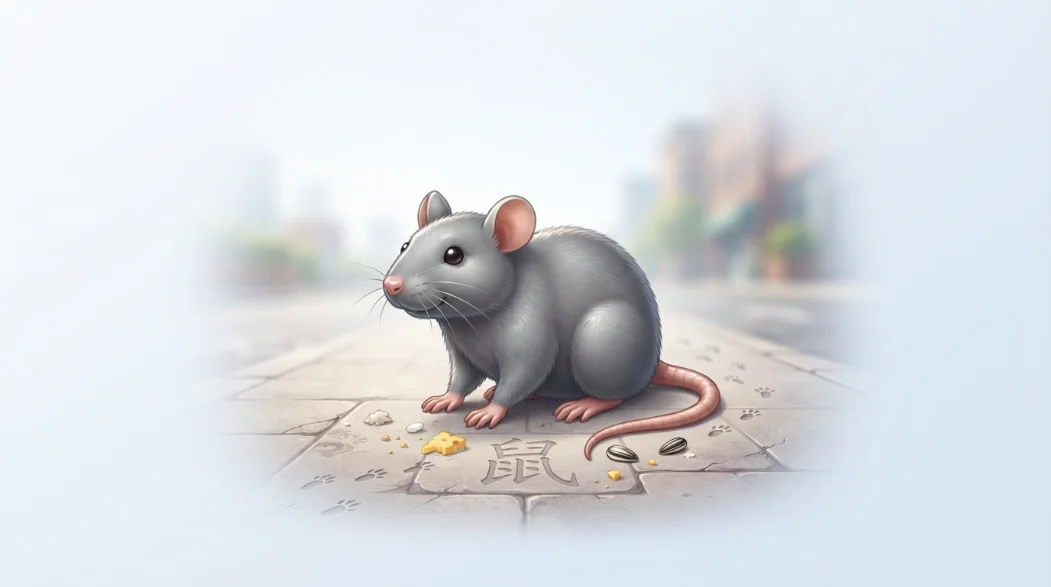
The rat emoji 🐀 usually represents a rat, rodent, or something associated with rats. It can be used literally when talking about the animal, but its meaning can change in casual messages. Depending on the context, 🐀 may suggest something sneaky, unpleasant, dirty, annoying, or even insulting because the word “rat” has several metaphorical uses. Emojipedia also notes that the emoji can be used in metaphorical senses, including as an insult.
In some conversations, 🐀 is simply playful or humorous, especially when someone is talking about an actual rat, a pet, food, a city environment, or a funny situation. It can also relate to the Chinese zodiac, where the rat is one of the 12 zodiac animals. Context matters, so the emoji should not automatically be interpreted as an insult or negative comment.
Quick Answer
🐀 usually means “rat” or “rodent,” but it can also represent sneaky behavior, an insult, something unpleasant, or a playful reference to rats.
Its meaning depends heavily on the words, situation, and relationship between the people using it.
What Does the Rat Emoji 🐀 Mean?
The 🐀 emoji is the Rat emoji. It depicts a gray rat shown in profile, with a long tail and pink details on its ears, feet, and tail. Unicode lists 🐀 as rat, with the code point U+1F400.
Its most direct meaning is simply the animal:
“There’s a rat in the garage 🐀.”
Here, there is no hidden meaning. The emoji represents an actual rat.
However, the word “rat” has several meanings in everyday English. Because of that, 🐀 can sometimes take on a more figurative meaning.
For example:
“He told everyone what happened. 🐀”
In this context, the emoji may reinforce the idea of someone being a rat, meaning someone who revealed information or betrayed another person.
That interpretation comes from the surrounding language, not from the emoji having one guaranteed negative meaning.
🐀 Meaning in Text Messages
In texts, the rat emoji can communicate several different ideas.
Literal rat
The simplest use is talking about the actual animal.
“I saw a huge rat outside 🐀.”
Something unpleasant
Someone may use 🐀 when talking about an unpleasant or unwanted situation involving rodents.
“We definitely need to clean the basement 🐀.”
Sneaky behavior
Because rats can be associated with sneaking around in popular expressions, 🐀 may sometimes be used to suggest that someone is being sneaky.
“Why were you looking through my messages? 🐀”
The tone here depends on the relationship and wording.
An insult
Calling someone a “rat” can be insulting. The emoji can reinforce that meaning when the surrounding message clearly uses the word negatively.
“You really told them everything? 🐀”
This is much more negative than simply using 🐀 to represent the animal.
Humor
The emoji can also be used purely for comedy.
“Me avoiding responsibilities all weekend 🐀”
The humor comes from the comparison or situation rather than a literal statement about rats.
Emotional Tone of 🐀
Unlike many facial emojis, 🐀 does not have one fixed emotional expression.
Its emotional tone can range from neutral and factual to funny, gross, teasing, or insulting.
Neutral
“The documentary was about rats 🐀.”
The emoji simply represents the animal.
Playful
“Look at this little guy 🐀😂”
Here, the emoji may make the message feel humorous or affectionate.
Gross or unpleasant
“There were rats near the trash cans 🐀🤢.”
The surrounding 🤢 makes the negative reaction much clearer.
Insulting
“You sold us out, you rat 🐀.”
Here, the emoji reinforces a direct insult.
Mischievous
“Who ate all the snacks? 🐀”
The emoji can make the message feel teasing or playful.
The key point is that 🐀 does not automatically mean something bad. The text around it determines much of the tone.
What Does 🐀 Mean From Someone?
If someone sends you 🐀, look at the complete message before deciding what they mean.
It might mean:
- They are talking about an actual rat.
- They saw a rat somewhere.
- They are making a joke.
- They are calling someone sneaky.
- They are teasing a friend.
- They are referring to someone as a “rat.”
- They are using the animal as part of a funny comparison.
- They are talking about the Chinese zodiac.
For example:
“I just saw a rat outside 🐀”
This is probably literal.
But:
“You really told them my secret 🐀”
This is much more likely to be a playful or serious insult.
The relationship between the sender and recipient also matters. Friends may use 🐀 jokingly in ways that would sound offensive in a different conversation.
Is the Rat Emoji an Insult?
It can be.
In English, “rat” can be used as an insult for someone viewed as disloyal, sneaky, or someone who reveals information about another person.
For example:
“You told the teacher? You rat 🐀”
The emoji strengthens the insult.
But you should not assume that every use of 🐀 is insulting. Someone discussing wildlife, pets, pest control, city animals, or a funny picture may use it completely literally.
The surrounding words are more important than the emoji by itself.
Is 🐀 a Flirty Emoji?
Not usually.
The rat emoji is not inherently romantic or flirtatious. It normally represents the animal or one of the figurative meanings associated with the word “rat.”
It could appear in a playful conversation between people who are flirting, but that does not make 🐀 a standard flirting emoji.
For example:
“You’re such a little rat 😂🐀”
Between close friends, this might be playful teasing.
In another conversation, the same words could be insulting.
If you’re trying to understand whether someone is flirting, look at the complete conversation, wording, and established communication style rather than treating 🐀 as a romantic signal.
Can 🐀 Mean “Sneaky”?
Yes, depending on context.
People sometimes associate rats with sneaking, hiding, or moving around unnoticed. The emoji can therefore be used jokingly to describe someone acting sneaky.
For example:
“You disappeared as soon as the work started 🐀😂”
Here, 🐀 may suggest playful teasing.
However, “sneaky” is a contextual interpretation, not the official definition of the emoji.
Can 🐀 Mean Someone Is a Snitch?
It can.
The word rat is sometimes used for a person who gives information about someone else, especially in an insulting context.
For example:
“Who told everyone what happened? 🐀”
The emoji can reinforce the idea of a snitch or someone who revealed information.
Again, this meaning comes from the use of “rat” as an insult in English, rather than from a special Unicode meaning for snitching.
Rat Emoji in the Chinese Zodiac
The rat has an additional cultural meaning because it is one of the 12 animals in the Chinese zodiac. Emojipedia specifically identifies 🐀 as one of the Chinese zodiac animals.
Someone may therefore use 🐀 when talking about:
- Chinese zodiac signs
- Lunar New Year
- Zodiac years
- Traditional astrology
- Cultural celebrations
In this context, the emoji does not carry the insulting meaning associated with calling someone a “rat.”
The surrounding topic makes the intended meaning clear.
Rat Emoji vs. Mouse Emoji
One of the most common points of confusion is the difference between 🐀 and 🐁.
🐀 is Rat.
🐁 is Mouse.
Unicode lists them as separate emoji characters: U+1F400 for rat and U+1F401 for mouse.
The visual designs can also help distinguish them. Emojipedia describes 🐀 as a larger rat with a long tail, while 🐁 is depicted as a smaller mouse with large ears.
If you’re specifically talking about a mouse, 🐁 is the more precise choice.
Related Animal Emojis and Their Meanings
| Emoji | Official Name | Common Meaning | Tone | Where or When It Is Used |
|---|---|---|---|---|
| 🐀 | Rat | Rat, rodent, or figurative “rat” | Neutral, playful, or negative | Animal references, jokes, insults, zodiac |
| 🐁 | Mouse | Small mouse or rodent | Neutral, cute | Animals, pets, small creatures |
| 🐭 | Mouse Face | Mouse or cute mouse character | Cute, playful | Animal jokes, cartoons, cute messages |
| 🐹 | Hamster | Hamster or small pet | Cute, friendly | Pets, animals, playful posts |
| 🐿️ | Chipmunk | Chipmunk or small woodland animal | Playful, energetic | Nature, animals, outdoor topics |
| 🦫 | Beaver | Beaver, wildlife, building or nature | Neutral, playful | Nature, animals, outdoor topics |
| 🦔 | Hedgehog | Hedgehog or small spiny animal | Cute, friendly | Pets, wildlife, cute content |
| 🦨 | Skunk | Skunk or unpleasant smell | Humorous, negative | Wildlife, smells, jokes |
The most important comparison is 🐀 versus 🐁. They are separate Unicode characters representing different animals. 🐭 is also different because it shows a mouse face rather than the full-body animal.
If you want a general small-rodent reference, 🐁 or 🐭 may be more appropriate than 🐀. If the message involves a rat specifically, 🐀 is the clearest choice.
Text Message Examples
Talking about a real rat
“There was a rat in the alley last night 🐀.”
Likely meaning: A literal reference to the animal.
Making a joke
“Me when someone says there are snacks in the kitchen 🐀😂.”
Likely meaning: A playful comparison, not a literal rat reference.
Calling someone sneaky
“You waited until I left and took the last slice 🐀.”
Likely meaning: Friendly teasing if the relationship supports that tone.
Calling someone a rat
“You told everyone my secret? You rat 🐀.”
Likely meaning: An insult or accusation of betrayal.
Talking about the zodiac
“My Chinese zodiac sign is the Rat 🐀.”
Likely meaning: A cultural or zodiac reference.
Common Misunderstandings About 🐀
It does not always mean “snitch”
The figurative meaning exists, but many uses are completely literal.
It does not always mean something disgusting
A person may use 🐀 simply because they are discussing an animal.
It is not automatically an insult
The tone depends on the surrounding message.
It is not the same as 🐁
🐀 represents a rat, while 🐁 represents a mouse.
It is not automatically cute
Unlike 🐹 or 🐭, the rat emoji can carry negative associations in some contexts. But whether it feels cute, funny, neutral, or unpleasant depends on how it is being used.
It does not prove someone’s attitude
If someone sends 🐀 without explanation, avoid assuming they are insulting you. The rest of the conversation may completely change the interpretation.
How to Respond to the Rat Emoji
Your response should match the context.
If they saw an actual rat
“Seriously? Where?”
If they’re joking
“😂 Why is that so accurate?”
If they’re teasing you
“Okay, okay, I get it 😂”
If the message feels insulting
“Are you joking, or are you actually calling me a rat?”
If they’re talking about the zodiac
“Oh, you’re a Rat zodiac sign?”
A short clarification is often better than guessing when the meaning is unclear.
Copy and Paste the Rat Emoji
🐀
You can copy and paste the rat emoji into texts, captions, comments, messages, and social posts.
Some combinations include:
- 🐀😂 for a funny rat reference
- 🐀👀 for a sneaky or curious vibe
- 🐀🤫 for a secretive or teasing context
- 🐀🏙️ for a city or urban rat reference
- 🐀🍕 for a humorous food or city reference
- 🐀🧧 for a Chinese zodiac or Lunar New Year context
These combinations can change the tone, so the surrounding message still matters.
Official Name and Technical Details
The official Unicode name for 🐀 is RAT.
- Emoji: 🐀
- Official Unicode name: RAT
- Unicode code point: U+1F400
- Unicode version: 6.0
- Emoji version: 1.0
- Category: Animals & Nature
- General concept: Rat
Unicode’s current emoji list identifies U+1F400 as rat and places it among animal emoji.
The rat emoji was approved as part of Unicode 6.0 in 2010 and added to Emoji 1.0 in 2015.
Its visual appearance can vary across platforms. Different services may change details such as the rat’s body shape, colors, facial features, or pose while representing the same underlying Unicode character.
Frequently Asked Questions
What does the 🐀 emoji mean?
🐀 usually represents a rat or rodent. Depending on context, it can also suggest something sneaky, unpleasant, humorous, or insulting.
What does 🐀 mean in text?
In text messages, 🐀 can be a literal reference to a rat or a figurative reference to someone being sneaky, disloyal, or a “rat.” Context determines which meaning applies.
Is 🐀 a bad emoji?
Not necessarily. It can be neutral or humorous when discussing an actual animal. It can become negative when used as an insult.
What does 🐀 mean from a girl or guy?
The emoji itself does not have a different meaning based on the sender’s gender. The message, relationship, and context are more useful for understanding it.
Does 🐀 mean snitch?
It can. “Rat” is sometimes used as an insult for someone who reveals information about another person. The surrounding message should make that interpretation clearer.
Is 🐀 a flirting emoji?
No, not inherently. It is mainly an animal emoji and can have literal, humorous, or negative meanings. A romantic interpretation would come from the broader conversation.
What is the difference between 🐀 and 🐁?
🐀 is the Rat emoji, while 🐁 is the Mouse emoji. They represent different animals and have different Unicode code points.
What is the difference between 🐀 and 🐭?
🐀 represents a rat, while 🐭 is Mouse Face, showing the face of a mouse rather than the full animal.
Is 🐀 part of the Chinese zodiac?
Yes. The rat is one of the 12 animals in the Chinese zodiac, so 🐀 can be used in zodiac and Lunar New Year contexts.
Conclusion
The rat emoji 🐀 primarily represents a rat, but its meaning can go beyond the literal animal. In texts and chats, it may be funny, playful, neutral, sneaky, unpleasant, or insulting depending on the surrounding words.
The biggest distinction to remember is that 🐀 does not automatically mean “snitch,” “dirty,” or “bad.” When the conversation is about the animal itself, the meaning is simply literal. When the emoji appears alongside teasing, accusations, or words like “rat,” its figurative meaning becomes more likely.
Discover More Post:
- Gasp Emoji | Meaning, Examples & What This Shocked …
- Rose Emoji Meaning | What It Really Says About Love …
- Praying Emoji Meaning | A Deeper Look at Faith, Hope …