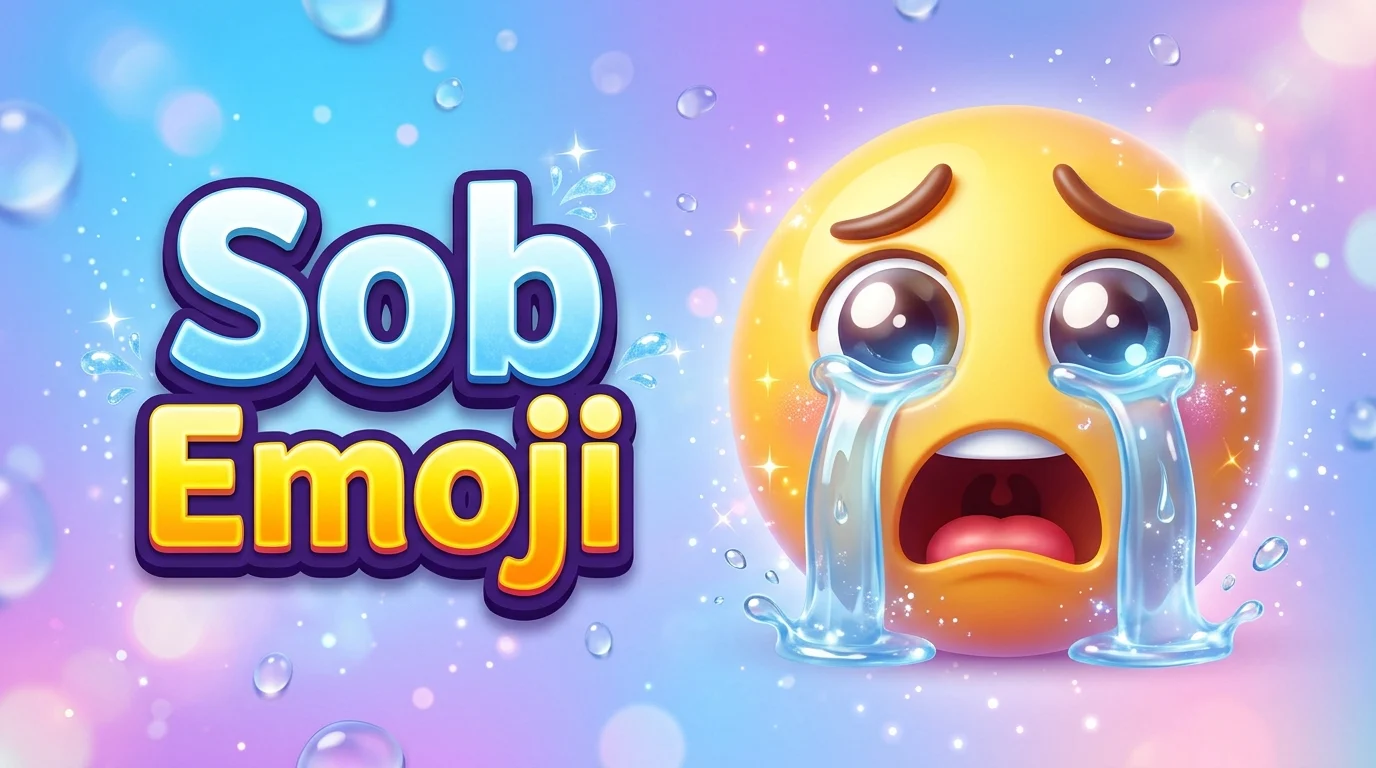
The sob emoji 😭 is commonly used to express intense sadness, crying, emotional pain, or feeling overwhelmed. However, its meaning is not always negative. In everyday texting and social media, people also use it to show uncontrollable laughter, excitement, affection, embarrassment, or an exaggerated reaction to something surprising.
What makes 😭 interesting is how easily it changes with context. Someone might send it after hearing upsetting news, while another person may use the same emoji to react to a hilarious joke. It can communicate genuine tears or a dramatic online reaction without the sender actually crying. Understanding the words around it helps reveal what the person really means.
Quick Answer
The sob emoji 😭 usually represents intense crying, sadness, emotional pain, or feeling overwhelmed.
In casual online conversations, it can also mean laughing hard, being touched, feeling excited, or reacting dramatically to something.
What Does the Sob Emoji 😭 Mean?
The sob emoji 😭 shows a face with closed, tightly curved eyes and streams of tears running down its cheeks. Its expression suggests strong emotion, especially crying or distress.
Its most familiar meaning is sadness. People use it when they feel hurt, disappointed, lonely, or emotionally affected by something. It can also express sympathy when someone shares difficult news.
But online communication has given this emoji several additional meanings. In casual conversations, 😭 often works as an exaggerated reaction. Someone might use it because a situation is extremely funny, unexpectedly cute, embarrassing, or exciting.
For example, a person might send 😭 after receiving a heartfelt message, watching a funny scene, or seeing something adorable. The emoji does not always mean that the sender is literally crying.
The main meanings include:
- Sadness: Feeling upset, hurt, or disappointed.
- Emotional overwhelm: Having a strong reaction to something.
- Laughter: Finding something so funny that words are not enough.
- Affection: Feeling touched by a sweet or thoughtful moment.
- Excitement: Reacting dramatically to surprising or happy news.
- Embarrassment: Feeling awkward about something that happened.
The surrounding conversation usually makes the intended meaning clear.
😭 Meaning in Text Messages
In text messages, the sob emoji can communicate feelings that are difficult to explain with words. It adds emotional intensity to a short reply and helps the sender show how strongly they reacted.
When someone receives disappointing news, 😭 may express genuine sadness. If a friend shares a funny story, the same emoji may mean that the sender cannot stop laughing.
Here are some common examples:
- “I missed the last train 😭” expresses frustration or disappointment.
- “That joke was too funny 😭” shows strong laughter.
- “You remembered my birthday 😭” expresses happiness and appreciation.
- “I have so much work tomorrow 😭” communicates stress or feeling overwhelmed.
- “This puppy is so tiny 😭” shows affection or an emotional reaction to something cute.
The emoji can also soften a message that might otherwise sound serious. It signals that the sender is reacting emotionally rather than simply stating information.
What Does 😭 Mean From Someone?
When someone sends you 😭, the meaning depends on what you were discussing before the emoji appeared.
If you shared bad news, they may be expressing sadness or sympathy. If you made a joke, they may be laughing. If you shared something personal or meaningful, the emoji could show that your message touched them.
It can also be a way of reacting when someone does not know what to say. A person might send 😭 because a situation is so awkward, surprising, or emotionally intense that a regular written response feels insufficient.
Consider these situations:
- After good news: They may be extremely happy or excited for you.
- After a funny message: They probably mean they are laughing hard.
- After an emotional story: They may feel touched or sad.
- After a mistake: They might be embarrassed or frustrated.
- After a compliment: They may feel shy, appreciated, or overwhelmed.
One emoji alone cannot reveal someone’s exact feelings. Read the full message and consider the relationship you have with that person.
Is the Sob Emoji Positive?
Yes, the sob emoji can have a positive meaning, even though its facial expression looks sad.
In casual online conversations, people frequently use 😭 to show happiness, affection, excitement, or amusement. It can represent an emotional reaction that feels too strong for ordinary words.
For example:
- “You got the job 😭” can express happiness and excitement.
- “Your message made my day 😭” can show that someone feels touched.
- “This song is beautiful 😭” can express deep appreciation.
- “I finally finished my exams 😭” can show relief after a stressful experience.
The positive meaning usually comes from the situation rather than the emoji’s appearance. If the message describes something wonderful, the tears may represent happy or overwhelmed feelings instead of sadness.
Can 😭 Be Sarcastic?
Yes. The sob emoji can be sarcastic when someone uses it to exaggerate a minor problem or make fun of a situation.
For example, someone might say:
“I have to wake up ten minutes early tomorrow 😭”
The person probably is not genuinely heartbroken. They are making a dramatic joke about a small inconvenience.
It can also communicate playful frustration, mock disappointment, or disbelief.
Examples include:
- “My favorite show ended on a cliffhanger 😭”
- “There is no chocolate left 😭”
- “I have to do the dishes again 😭”
- “You finished the whole pizza without me 😭”
In these situations, the emoji makes the reaction intentionally dramatic. The sender may be joking rather than expressing serious emotional pain.
The Difference Between Crying and Laughing With 😭
One of the most confusing things about the sob emoji is that it can represent both sadness and laughter.
When someone uses 😭 to express sadness, the message usually includes something upsetting, disappointing, or emotionally difficult. When it represents laughter, it often appears after a joke, funny comment, or ridiculous situation.
Compare these examples:
| Message | Likely Meaning |
|---|---|
| “I really miss my old friends 😭” | Sadness or longing |
| “I dropped my phone again 😭” | Frustration or disappointment |
| “That video is hilarious 😭” | Uncontrollable laughter |
| “You actually said that 😭” | Amusement or disbelief |
| “This little kitten is adorable 😭” | Affection or emotional excitement |
The emoji itself does not tell the whole story. The words and situation provide the clues needed to understand its meaning.
Does 😭 Mean “I’m Crying”?
Sometimes, yes. The sob emoji can communicate that someone is crying or feels close to tears.
A person may use it when discussing a painful experience, a personal disappointment, or an emotional moment. It can also express sympathy when someone else is struggling.
However, online conversations often use crying expressions figuratively. Someone might send 😭 after seeing a funny meme without shedding a single tear.
It is useful to distinguish between literal and exaggerated use:
- Literal crying: The person feels genuinely sad or emotionally hurt.
- Figurative crying: The person is exaggerating a reaction for humor or emphasis.
- Happy tears: The person feels touched, grateful, or extremely happy.
- Laughter tears: The person finds something incredibly funny.
If the conversation is serious, avoid assuming the emoji is a joke. A thoughtful response may be more appropriate.
Related Crying and Emotional Emojis and Their Meanings
Several emojis can express sadness, emotional reactions, or tears. Although they may look similar, each one has a slightly different tone.
| Emoji | Official Name | Common Meaning | Tone | Where or When It Is Used |
|---|---|---|---|---|
| 😭 | Loudly Crying Face | Intense crying, laughter, or emotional overwhelm | Dramatic, emotional | Strong reactions, sadness, or funny moments |
| 😢 | Crying Face | Sadness, disappointment, or sympathy | Soft, sad | Personal struggles and upsetting news |
| 😿 | Crying Cat | Sadness or disappointment | Cute, emotional | Playful reactions and sad messages |
| 🥺 | Pleading Face | Tenderness, vulnerability, or asking sweetly | Soft, affectionate | Requests and emotional messages |
| 🥹 | Face Holding Back Tears | Being touched, grateful, or emotional | Warm, heartfelt | Sweet moments and appreciation |
| 😥 | Sad but Relieved Face | Worry, stress, or relief | Concerned, uneasy | Difficult situations and close calls |
| 😞 | Disappointed Face | Disappointment or discouragement | Low, unhappy | Unmet expectations and bad news |
| 😔 | Pensive Face | Thoughtfulness, sadness, or regret | Quiet, reflective | Serious conversations and personal feelings |
😭 vs. 😢: What’s the Difference?
Both emojis can represent sadness, but they communicate different levels of emotional intensity.
The sob emoji 😭 usually suggests a stronger or more dramatic reaction. It can represent intense crying, overwhelming feelings, or even laughter in casual online conversations.
The crying face 😢 generally communicates quieter sadness, disappointment, or sympathy. It often feels more restrained and sincere.
For example:
- “I lost something important 😢” expresses sadness.
- “I cannot believe this happened to me 😭” suggests a stronger emotional reaction.
The best choice depends on how intense you want your message to sound.
😭 vs. 🥹: What’s the Difference?
The sob emoji 😭 often communicates intense crying, exaggerated emotion, or uncontrollable laughter. The face holding back tears 🥹 usually represents being deeply touched, grateful, or emotionally moved.
For example:
- “I failed my test 😭” expresses disappointment.
- “You made me feel so special 🥹” shows appreciation and tenderness.
Both can appear in emotional conversations, but 🥹 often has a softer and more affectionate feeling.
Is 😭 Flirty?
The sob emoji is not automatically flirty, but it can appear in playful or affectionate conversations.
Someone might use it when they receive a sweet compliment, miss a person, or feel overwhelmed by a romantic message.
For example:
- “You looked so good today 😭”
- “I miss talking to you 😭”
- “Stop being so sweet 😭”
In these situations, the emoji can make the message sound playful, shy, or emotionally expressive.
However, it does not prove romantic interest. Friends also use 😭 when joking, reacting to compliments, or expressing affection. Look at the person’s words and overall communication style before deciding whether the message is flirting.
Is 😭 Rude?
No, the sob emoji is not generally considered rude. It is usually used to communicate emotion, humor, or an exaggerated reaction.
However, it may feel insensitive if someone uses it in response to another person’s serious problem. For example, replying with 😭 to a message about a painful personal experience could appear dismissive if the other person expects sympathy.
It can also sound sarcastic when used after a complaint or disagreement.
To avoid misunderstandings, consider the seriousness of the conversation. A crying emoji may be suitable for a playful exchange, while a supportive written response is often better when someone is genuinely upset.
Sob Emoji in Social Media Comments
The sob emoji is common in informal social media conversations because it can express several reactions without requiring a long comment.
People may use it under funny posts, emotional stories, cute pictures, surprising announcements, or relatable content.
Some common uses include:
- Funny posts: To show that something made them laugh uncontrollably.
- Cute pictures: To express affection or an overwhelming reaction.
- Emotional stories: To show sadness or sympathy.
- Good news: To communicate excitement or happiness.
- Relatable posts: To exaggerate frustration or disappointment.
- Unexpected moments: To show shock, disbelief, or amusement.
Its flexible meaning makes it useful in comments and replies. Still, the tone of a post matters. The same emoji can look playful under a meme and deeply emotional under a personal story.
Frequently Asked Questions About the Sob Emoji
8. Does 😭 mean laughing or crying?
It can mean either. In serious conversations, it often represents sadness or distress. In casual chats, it can mean something is extremely funny. The surrounding message helps identify the intended meaning.
9. Is 😭 flirty?
It can be used in affectionate or playful conversations, especially after a compliment or sweet message. However, it does not automatically indicate romantic interest.
10. What does 😭😭😭 mean?
Repeating the emoji usually adds emphasis. It can make sadness, laughter, excitement, or embarrassment sound more intense and dramatic.
11. Is 😭 appropriate when someone shares bad news?
It can express sympathy, but some people may interpret it as an exaggerated or playful reaction. When someone is sharing something serious, a sincere written response is usually clearer.
12. Why do people use 😭 instead of 😂?
Some people prefer 😭 because it feels more dramatic or expressive. It can communicate laughter along with surprise, disbelief, or emotional overwhelm. Both emojis are still commonly used.
Conclusion
The sob emoji 😭 is more than a symbol of sadness. It can express heartbreak, frustration, laughter, excitement, affection, embarrassment, and feelings that are difficult to put into words.
Its meaning depends on the situation. A message about loss may use 😭 to show genuine sadness, while a funny comment may use it to express uncontrollable laughter. Understanding the surrounding words and the sender’s tone helps you interpret it correctly.
Whether you see it in a private message, group chat, or social media comment, remember that 😭 usually communicates a strong emotional reaction, not necessarily actual crying.
Discover More Post:
- OK Emoji Meaning Explained | Hidden Feelings, Uses & Texting …
- Windows Emoji Shortcut | Master Faster Typing and Hidden …
- Red Circle Emoji | Meaning, Uses & Hidden Messages You …