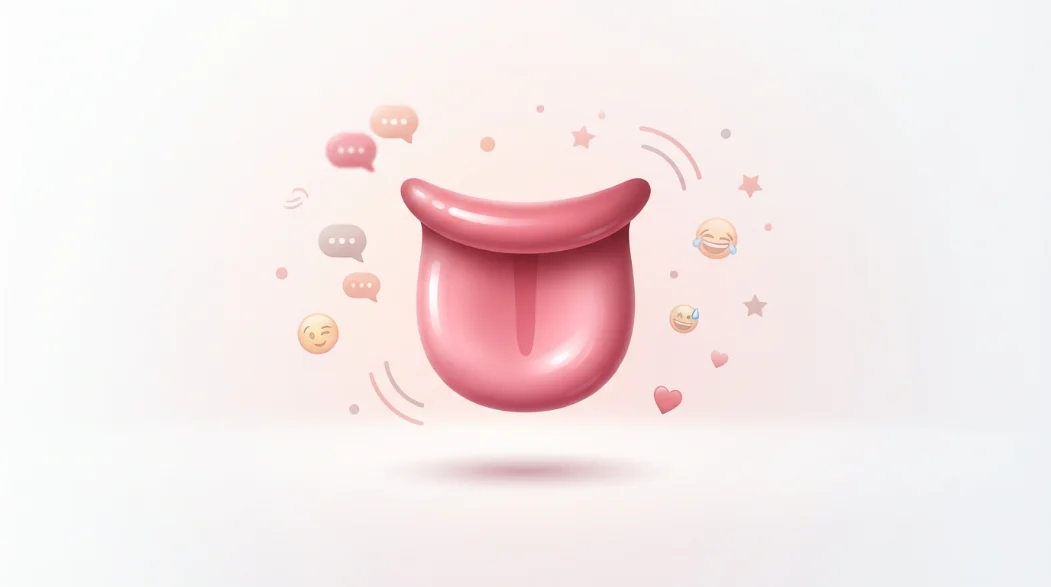
The tongue emoji 👅 usually represents a tongue, sticking out, playful teasing, silliness, or a joking attitude. Unlike a face emoji with a tongue sticking out, 👅 shows only the tongue, so its meaning depends heavily on the words and situation around it.
It can be used casually in jokes, playful comments, food-related messages, or messages where someone wants to sound cheeky. Emojipedia describes it as a tongue sticking out and notes that it can also represent licking in different contexts.
In texting, 👅 can sometimes carry a flirty or suggestive tone, especially when paired with romantic or sexual wording. However, the emoji does not automatically mean flirting. A friend might use it simply to be silly, tease you, or make a message less serious. The surrounding words, relationship, and conversation style are much more useful for understanding what the sender intended.
Quick Answer
👅 usually means a tongue, playfulness, teasing, silliness, or a joking expression.
In some conversations, especially romantic ones, it can also have a flirty or suggestive meaning, but context determines the tone.
What Does the Tongue Emoji 👅 Mean?
The official Unicode name of 👅 is TONGUE. It represents a tongue and is one of the simplest human-body emojis. Unicode identifies the character as U+1F445, while Emojipedia describes common uses involving a sticking-out tongue and, in some contexts, licking.
People often use 👅 to add a playful feeling to a message.
For example:
“I ate the whole cake 👅”
Here, the emoji can make the message feel silly or cheeky.
Or:
“That looks so good 👅”
In this context, it may suggest that the food looks delicious or that the sender is jokingly showing excitement about eating it.
The same emoji can therefore have several interpretations without having one fixed emotional meaning.
👅 Meaning in Text Messages
In texting, the tongue emoji can communicate several related ideas:
- Playfulness
- Silliness
- Teasing
- Joking
- Cheekiness
- Enjoyment of food
- Licking
- Flirting
- Suggestive humor
The exact meaning depends on what accompanies it.
For example:
“Just kidding 👅”
This makes the message feel playful.
“Stop teasing me 👅”
This can create a cheeky or teasing tone.
“That dessert looks amazing 👅”
Here, the emoji can relate to appetite or licking rather than flirting.
So, when you see 👅 in a text, don’t assume that it has a romantic meaning immediately.
What Is the Emotional Tone of 👅?
The tongue emoji is generally more playful and expressive than serious.
Playful
“You can’t catch me 👅”
The emoji makes the message sound teasing rather than hostile.
Silly
“I have no idea what I’m doing 👅”
Here, it adds a goofy feeling.
Teasing
“I told you I was right 👅”
The sender may be playfully rubbing in the fact that they were correct.
Flirty
“You know what you’re doing 👅”
Depending on the conversation, this could carry a suggestive tone.
Food-related
“That pizza looks incredible 👅”
The emoji can simply suggest appetite or enjoyment.
The important point is that 👅 does not have one guaranteed emotional tone.
Does 👅 Mean Flirting?
It can, but it does not always mean flirting.
The tongue is sometimes associated with playful or suggestive behavior, so 👅 can take on a flirty meaning when used in a romantic conversation.
For example:
“You looked really good tonight 👅”
The words already create a romantic or suggestive context. The emoji can intensify that tone.
But consider:
“This ice cream is so good 👅”
That is much more likely to be about food.
Or:
“Gotcha 👅”
That may simply be playful teasing.
If someone sends 👅 by itself, there is not enough information to confidently conclude that they are flirting.
What Does 👅 Mean From Someone?
When someone sends you 👅, consider the complete message rather than the emoji alone.
It may mean:
- “I’m joking.”
- “I’m teasing you.”
- “I’m being playful.”
- “I’m being cheeky.”
- “That looks delicious.”
- “I’m trying to make this message less serious.”
- “I’m being a little flirty.”
- “I’m making a suggestive joke.”
For example:
“You really thought you were going to win 👅”
This is probably playful teasing.
“Come over here 👅”
Depending on the relationship and conversation, this can sound more flirtatious or suggestive.
“This cake is everything 👅”
The context points toward food and enjoyment.
The sender’s usual communication style also matters. If they regularly use playful emojis with everyone, 👅 may not carry any special romantic meaning.
Is the Tongue Emoji Rude?
Not necessarily.
👅 can be completely harmless and playful. However, it can feel immature, cheeky, sarcastic, or suggestive in certain conversations.
For example:
“Haha, I beat you 👅”
This is playful.
But:
“You know you want it 👅”
That has a much more suggestive tone because of the wording.
The emoji itself does not determine whether a message is rude. The surrounding language and situation do most of the work.
Can 👅 Be Sexual or Suggestive?
Yes. 👅 can be interpreted suggestively in some contexts.
This happens because a tongue can have literal associations with licking, and emoji are often used beyond their literal definitions. Emojipedia specifically notes licking as an alternative use for the emoji.
For example, 👅 paired with certain romantic or sexual language may make a message noticeably more suggestive.
However, it is better not to interpret the emoji in isolation.
A message such as:
“This sauce is so good 👅”
is easily understood as food-related.
A message such as:
“You know exactly what you’re doing 👅”
could carry a very different meaning depending on the conversation.
Context is the difference.
👅 vs. 😛: What’s the Difference?
The biggest difference is that 👅 shows only a tongue, while 😛 is a complete face with its tongue sticking out.
😛 has an established playful facial expression and is commonly associated with fun, silliness, excitement, or joking. Emojipedia also notes that it can sometimes be interpreted suggestively because of the tongue.
👅 is more open-ended.
Because it has no eyes, smile, or other facial features, the reader has to rely more heavily on the surrounding words.
👅 vs. 😜: What’s the Difference?
😜 is Winking Face with Tongue, so it clearly combines a wink with a tongue sticking out.
That makes 😜 more obviously playful or cheeky in many situations.
👅 is much simpler. It can represent a literal tongue, licking, teasing, or suggestive humor without necessarily communicating a wink or facial expression.
If you want your message to look obviously playful, 😜 may communicate that more clearly.
👅 vs. 😝: What’s the Difference?
😝 is Squinting Face with Tongue. Its tightly closed eyes and open mouth create a stronger exaggerated expression.
It can feel more energetic, goofy, or over-the-top than 👅.
By contrast, 👅 is visually simpler and can fit into more types of messages, including food-related comments and playful text.
Related Tongue and Playful Emojis
| Emoji | Official Name | Common Meaning | Tone | Where or When It Is Used |
|---|---|---|---|---|
| 👅 | Tongue | Tongue, teasing, licking, playful expression | Playful, cheeky, sometimes suggestive | Jokes, teasing, food, flirting |
| 😛 | Face with Tongue | Fun, silliness, sticking out the tongue | Playful, goofy | Jokes, casual texts, teasing |
| 😜 | Winking Face with Tongue | Cheeky joke, playful teasing | Playful, mischievous | Jokes, banter, teasing |
| 😝 | Squinting Face with Tongue | Strong silliness or exaggerated joking | Goofy, energetic | Reactions, jokes, playful messages |
| 😋 | Face Savoring Food | Delicious food, enjoyment, appetite | Happy, playful | Food posts, meals, cravings |
| 🫦 | Biting Lip | Nervousness, attraction, anticipation | Flirty, suggestive, tense | Romantic or emotionally charged messages |
| 👄 | Mouth | Mouth, talking, kissing, lips | Neutral to expressive | Conversation, beauty, affection |
| 💋 | Kiss Mark | Kiss, affection, romantic gesture | Affectionate, flirty | Romantic texts and messages |
| 🤪 | Zany Face | Wild humor, silliness, absurdity | Goofy, chaotic | Jokes, playful reactions |
The most important comparison is between 👅, 😛, 😜, and 😝. All four can communicate playfulness, but the facial emojis provide much more emotional information.
👅 is the most open-ended. 😛 is a simple playful face. 😜 adds a wink and can feel more mischievous. 😝 gives the expression a stronger, exaggerated feel.
🫦 is different because its common interpretations can lean more toward attraction, anticipation, or suggestiveness. It should not automatically be treated as equivalent to 👅.
Text Message Examples
1. Playful teasing
“You really thought you could beat me 👅”
Likely meaning: The sender is teasing you after winning or proving a point.
2. Food
“That burger looks amazing 👅”
Likely meaning: The sender is expressing appetite or excitement about the food.
3. Just joking
“I’m taking the last slice 👅”
Likely meaning: The sender is making a playful statement rather than seriously trying to upset someone.
4. Flirty context
“You looked good tonight 👅”
Likely meaning: The wording and emoji together may create a flirtatious or suggestive tone.
5. Cheeky reaction
“Told you so 👅”
Likely meaning: The sender is playfully emphasizing that they were right.
When 👅 Can Be Misunderstood
Because 👅 is visually simple, it can be easy to overinterpret.
A playful message may look flirty
“You’re annoying 👅”
Between close friends, this could be harmless teasing.
A food message may look suggestive
“I could eat this all day 👅”
The context may be completely about food.
A romantic message may be more suggestive
“Come closer 👅”
Here, the surrounding words give the emoji a stronger romantic or suggestive interpretation.
This is why reading the entire message is more reliable than assigning a fixed meaning to 👅.
How to Respond to the Tongue Emoji
Your response depends on the tone of the original message.
If they’re joking
“😂 Okay, okay.”
If they’re teasing you
“Keep talking 😏”
If they’re talking about food
“Now I’m hungry 😂”
If the message feels flirty
“Someone’s feeling playful today 😏”
If you’re unsure
“What does that mean? 😂”
You do not need to match the same emoji. A simple text response can make the intended tone clearer.
Copy and Paste the Tongue Emoji
👅
You can copy and paste the tongue emoji into texts, captions, comments, and social media posts.
Some combinations include:
- 👅😂 for silly teasing
- 👅😜 for playful mischief
- 👅🍕 for enjoying food
- 👅😋 for appetite or delicious food
- 👅😉 for cheeky flirting
- 👅🫦 for a more suggestive tone
The meaning of a combination still depends on the surrounding message.
Official Name and Technical Details
The official Unicode name of 👅 is TONGUE.
- Emoji: 👅
- Unicode code point: U+1F445
- Unicode name: TONGUE
- Unicode version: 6.0
- Emoji version: 1.0
Unicode’s emoji data identifies U+1F445 as TONGUE, and its historical emoji documentation also records the character as U+1F445.
Emojipedia states that Tongue was approved as part of Unicode 6.0 in 2010 and added to Emoji 1.0 in 2015.
The exact visual design can vary between platforms and devices, but the underlying Unicode character remains the same.
It is also useful to remember that an official Unicode name does not define every possible interpretation. Unicode itself explains that character names are unique identifiers and may not cover all meanings an emoji can have in actual use.
Frequently Asked Questions
What does the 👅 emoji mean?
👅 usually represents a tongue, sticking out the tongue, playfulness, teasing, or silliness. It can also suggest licking or become flirty or suggestive depending on context.
What does 👅 mean in texting?
In texting, 👅 can mean “I’m joking,” “I’m teasing you,” “I’m being playful,” or “that looks delicious.” In romantic conversations, it may also add a flirty or suggestive tone.
Is 👅 a flirty emoji?
It can be flirty, but it is not automatically flirty. The surrounding words and relationship between the people communicating are important.
Does 👅 mean licking?
It can. Emojipedia lists licking as one contextual use of the Tongue emoji.
What is the difference between 👅 and 😛?
👅 is simply the tongue, while 😛 is a complete face with a tongue sticking out. 😛 generally communicates the playful facial expression more clearly.
What does 👅 mean from a girl or guy?
The emoji does not have a different fixed meaning based on the sender’s gender. The conversation, wording, relationship, and communication style provide more useful context.
Is 👅 inappropriate?
Not by itself. It can be completely playful or food-related, but certain combinations can make it suggestive or inappropriate for a particular conversation.
What is the official name of 👅?
The official Unicode name is TONGUE.
Is 👅 the same as 😜?
No. 😜 is Winking Face with Tongue, while 👅 is simply Tongue. The wink makes 😜 more explicitly facial and mischievous.
Conclusion
The tongue emoji 👅 is a flexible emoji that most often adds playfulness, teasing, silliness, or a cheeky tone to a message. It can also represent licking or appetite and may become flirty or suggestive when the surrounding conversation points in that direction.
The safest way to understand 👅 is to read the whole message, not the emoji alone. A friend using it after a joke can mean something very different from a romantic partner using it alongside suggestive wording.
Discover More Post:
- Gasp Emoji | Meaning, Examples & What This Shocked …
- Rose Emoji Meaning | What It Really Says About Love …
- Praying Emoji Meaning | A Deeper Look at Faith, Hope …