Quick Answer:
The disappointed emoji 😞 usually expresses disappointment, sadness, regret, or feeling let down. It can also suggest emotional pain or discouragement, but its exact tone depends on the message and situation.
The disappointed emoji 😞 usually expresses disappointment, sadness, regret, or feeling let down. Its downcast eyes and frown give it a subdued, unhappy expression rather than the stronger emotional intensity associated with loudly crying or deeply distressed emojis. People often use it when something did not go as hoped or when they want to show that a situation hurt their feelings.
In texts and chats, 😞 can communicate anything from mild disappointment to deeper sadness. A message such as “I thought you were coming 😞” may show that someone feels let down, while “I really messed that up 😞” can express regret. The surrounding words and relationship between the people involved are important when interpreting it.
What Does the Disappointed Emoji 😞 Mean?
The 😞 emoji is officially called Disappointed Face. Unicode identifies it as U+1F61E, and its current Unicode keywords include ideas such as disappointed, dejected, sad, unhappy, blame, and failure.
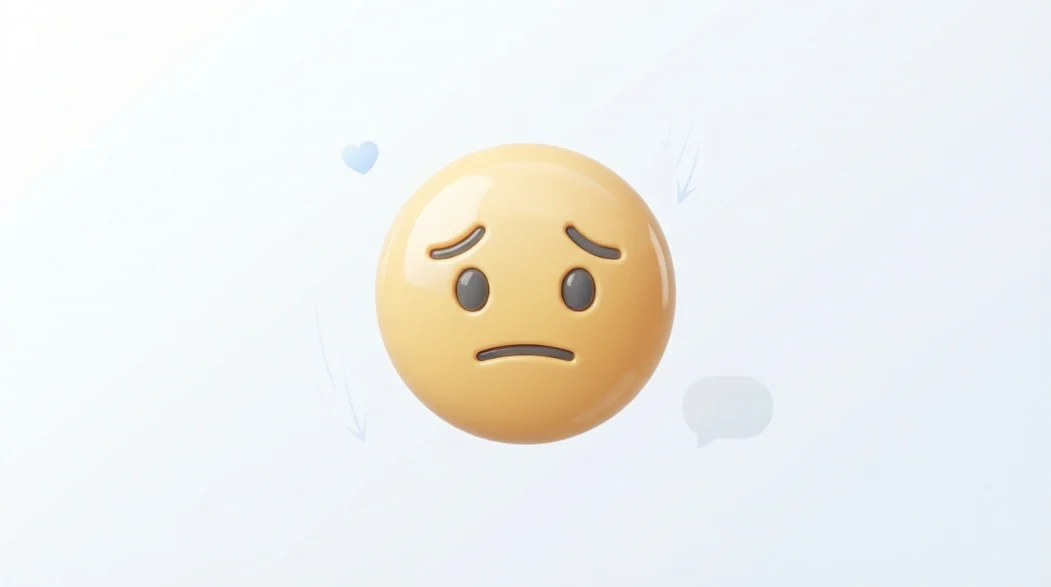
Emojipedia describes 😞 as a yellow face with a frown and downcast eyes. It can communicate several unhappy emotions, including:
- Disappointment
- Sadness
- Regret
- Remorse
- Emotional hurt
- Discouragement
- Feeling let down
- Feeling unhappy about an outcome
The most important idea is something did not go the way the person wanted or expected.
For example:
“I really thought I would get the job 😞”
Here, the emoji reinforces disappointment after an unwanted result.
It does not necessarily mean the person is devastated. In many conversations, 😞 simply adds emotional weight to a disappointing situation.
😞 Meaning in Text Messages and Chat
In texting, the disappointed emoji can be used when someone wants to show that they are unhappy without writing a long emotional explanation.
Common meanings include:
- “That was disappointing.”
- “I feel let down.”
- “I wish things had gone differently.”
- “That hurt my feelings.”
- “I regret what happened.”
- “I’m sad about this.”
- “I was hoping for something else.”
For example:
“You canceled again 😞”
This usually suggests that the sender feels disappointed by the cancellation.
Another example:
“I didn’t pass the test 😞”
Here, 😞 communicates sadness and discouragement.
The emoji can make a plain statement feel more emotionally personal.
The Emotional Tone of 😞
The disappointed emoji generally has a sad, subdued, and hurt tone.
It is different from emojis that show very intense crying, anger, or fear.
Mild disappointment
“Guess the concert is sold out 😞”
The sender is unhappy, but the situation may not be deeply serious.
Feeling let down
“You said you would call me 😞”
Here, the emoji can make the message feel more personal because it suggests emotional disappointment.
Regret
“I shouldn’t have said that 😞”
The emoji can communicate remorse or regret.
Discouragement
“I studied all week and still failed 😞”
The message combines disappointment with frustration and discouragement.
The emoji itself does not specify exactly which emotion the sender feels. Context supplies that detail.
What Does 😞 Mean From Someone?
If someone sends you 😞, they may be telling you that they feel disappointed, sad, discouraged, or emotionally let down.
For example:
“I was really looking forward to seeing you 😞”
This likely communicates disappointment because plans did not work out.
Or:
“I thought you understood me 😞”
The emoji can make the message sound more emotionally hurt.
However, you should not automatically assume the sender is angry with you. The reason for the disappointment depends on the rest of the conversation.
A useful way to interpret 😞 is to ask:
- What happened immediately before the emoji?
- What words were used with it?
- Is the sender describing an outcome, mistake, or personal feeling?
- Is this consistent with the tone of the conversation?
Those details usually matter more than the emoji by itself.
Can 😞 Mean Someone Is Hurt?
Yes. 😞 can suggest emotional hurt, especially when someone feels let down by another person.
For example:
“I trusted you with that 😞”
This can communicate more than simple disappointment. The surrounding words make the emotional impact clearer.
Still, 😞 does not automatically mean serious emotional pain. Someone may also use it for something relatively minor, such as missing a favorite food or losing a game.
Can 😞 Be Used for Regret?
Yes. Regret is one of the possible interpretations of the disappointed emoji.
For example:
“I shouldn’t have ignored your message 😞”
Here, the emoji supports the idea that the person feels sorry about what they did.
Another example:
“I wish I had handled it differently 😞”
The emoji adds a quiet, remorseful tone.
This is different from an emoji such as 😭, which visually communicates much stronger crying.
Is the Disappointed Emoji Flirty?
Not by itself.
The 😞 emoji is primarily associated with disappointment and other unhappy emotions. It can appear in a romantic or flirty conversation, but the emoji alone does not prove romantic interest.
For example:
“You left without saying goodbye 😞”
Depending on the relationship, this could be affectionate, disappointed, or simply emotional.
The important clue is the complete conversation, not the emoji alone.
Is 😞 Rude or Passive-Aggressive?
😞 is not inherently rude or passive-aggressive.
It can become part of a passive-aggressive message if the surrounding wording is intentionally guilt-inducing.
For example:
“Oh, okay. I guess I wasn’t invited 😞”
The words create the possibility of a guilt-inducing tone. The emoji simply reinforces the disappointed appearance.
Compare that with:
“The restaurant was closed 😞”
That is simply disappointment.
Context determines whether the message feels sincere, dramatic, sarcastic, or passive-aggressive.
Related Emojis and Their Meanings
| Emoji | Official Name | Common Meaning | Tone | Where or When It Is Used |
|---|---|---|---|---|
| 😞 | Disappointed Face | Disappointment, sadness, feeling let down | Sad, subdued | Disappointing outcomes, regret, personal messages |
| 😔 | Pensive Face | Sadness, reflection, concern | Quiet, thoughtful | Emotional reflection, serious conversations |
| 😢 | Crying Face | Sadness, hurt, crying | More emotional | Bad news, hurt feelings, emotional moments |
| 😭 | Loudly Crying Face | Intense sadness or overwhelming emotion | Very emotional | Major disappointment, dramatic reactions, strong feelings |
| 🙁 | Slightly Frowning Face | Mild sadness or displeasure | Mild, subdued | Small disappointments and unhappy reactions |
| ☹️ | Frowning Face | Sadness, unhappiness, disapproval | Negative, serious | Unhappy reactions and unfavorable situations |
| 😥 | Sad but Relieved Face | Distress mixed with relief | Emotional, relieved | Difficult situations that turned out okay |
| 😟 | Worried Face | Concern, worry, uneasiness | Anxious, serious | Uncertain or troubling situations |
| 😓 | Downcast Face with Sweat | Stress, difficulty, nervousness, sadness | Stressed, uncomfortable | Hard situations, pressure, awkward moments |
The closest comparisons are 😔 Pensive Face, 😢 Crying Face, and 🙁 Slightly Frowning Face.
😞 is especially useful when the central idea is disappointment or feeling let down. 😔 tends to feel more reflective, while 😢 more clearly communicates crying or sadness. 🙁 is generally milder.
😥 is also different because it combines an unhappy expression with a sense of relief. 😟 focuses more on worry than disappointment.
😞 vs. 😔: What’s the Difference?
Both emojis can express sadness, but their emotional focus is slightly different.
😞 Disappointed Face is strongly associated with disappointment, unhappiness, and feeling let down.
😔 Pensive Face often feels quieter and more reflective.
Compare:
“I didn’t get the position 😞”
This clearly expresses disappointment.
“I’ve been thinking about everything that happened 😔”
This feels more reflective and thoughtful.
They can overlap, but the context helps determine which one fits better.
😞 vs. 😢: What’s the Difference?
The main distinction is emotional intensity and visual expression.
😞 has a closed, downcast expression and usually communicates disappointment, sadness, or regret.
😢 includes a visible tear and more directly represents crying or emotional hurt.
For example:
“The event was canceled 😞”
suggests disappointment.
“I can’t believe she’s gone 😢”
suggests much deeper sadness.
Neither emoji has a guaranteed intensity level in every conversation, but their visual designs create different emotional impressions.
😞 vs. 🙁: What’s the Difference?
😞 generally feels more emotionally downcast.
🙁 Slightly Frowning Face can communicate a milder negative reaction.
For example:
“My order arrived late 🙁”
can sound like a relatively minor complaint.
“My best friend moved away 😞”
feels more emotionally significant.
Choosing between them depends on how strongly you want to express the disappointment.
Realistic Text Message Examples
1. A canceled plan
“I was really looking forward to tonight 😞”
Likely meaning: The sender is disappointed that the plan did not happen.
2. A missed opportunity
“I applied, but I didn’t get the position 😞”
Likely meaning: The emoji expresses disappointment and discouragement.
3. Feeling let down
“You told me you’d be there 😞”
Likely meaning: The sender may feel personally disappointed or hurt.
4. Regret
“I wish I hadn’t said that 😞”
Likely meaning: The emoji supports a feeling of regret or remorse.
5. A small disappointment
“They ran out of my favorite dessert 😞”
Likely meaning: A lighthearted expression of disappointment rather than deep sadness.
Common Misunderstandings About 😞
It does not always mean deep sadness
Someone may use 😞 for something very minor. The seriousness comes from the situation and wording.
It does not automatically mean anger
😞 is visually sad rather than angry. If the sender is angry, the surrounding message usually provides stronger evidence.
It does not prove someone feels betrayed
A person can use 😞 after being mildly disappointed. Do not automatically interpret it as a serious relationship problem.
It does not automatically mean crying
The emoji represents disappointment and sadness without showing a tear. 😢 and 😭 are more directly associated with crying.
It does not automatically mean romantic disappointment
A romantic conversation can contain 😞, but the emoji can also refer to friendships, work, plans, school, purchases, sports, or everyday situations.
How to Respond to 😞
Your response should depend on why the person is disappointed.
- If they are upset about plans
“I’m sorry. I know you were looking forward to it.”
- If they failed at something
“Don’t be too hard on yourself. You gave it your best.”
- If you caused the disappointment
“I’m sorry I let you down. I should have communicated better.”
- If you’re unsure what happened
“What happened?”
- If it’s a small disappointment
“Aw, that’s frustrating 😞”
The best response usually addresses the actual situation instead of focusing only on the emoji.
Copy and Paste the Disappointed Emoji
😞
You can copy and paste 😞 into texts, captions, comments, messages, and social posts.
Some combinations include:
- 😞💔 for emotional disappointment
- 😞🥺 for feeling hurt or vulnerable
- 😞😔 for a quiet sad mood
- 😞🙏 for disappointment mixed with a hopeful or apologetic tone
- 😞💭 for regret or reflection
- 😞❤️ for emotional hurt in an affectionate context
These combinations do not have fixed meanings. The surrounding message still determines how they are understood.
Official Name and Technical Details
The official Unicode name for 😞 is Disappointed Face.
- Emoji: 😞
- Unicode code point: U+1F61E
- Unicode name: DISAPPOINTED FACE
- Unicode version: 6.0
- Emoji version: 1.0
- Category: Smileys & Emotion
- General concept: Disappointment and unhappy emotion
Unicode lists 😞 as Disappointed Face and includes related keywords such as disappointed, dejected, sad, and unhappy.
The emoji was approved in Unicode 6.0 in 2010 and added to Emoji 1.0 in 2015.
Its visual appearance can vary slightly between platforms. The basic concept remains a yellow face with a frown and downcast eyes.
Frequently Asked Questions
What does 😞 mean?
😞 usually means disappointment, sadness, regret, or feeling let down. The exact interpretation depends on the surrounding message.
What is the official name of 😞?
The official Unicode name is Disappointed Face.
What does 😞 mean in texting?
In texting, 😞 often communicates that someone is disappointed, unhappy, discouraged, or hurt by an outcome.
Does 😞 mean sad?
Yes. Sadness is one possible meaning, although the emoji is especially associated with disappointment and feeling let down.
Is 😞 stronger than 🙁?
Generally, 😞 has a more downcast and emotionally sad appearance, while 🙁 is a more mild frown. Context can still change how strongly either emoji feels.
What is the difference between 😞 and 😢?
😞 usually emphasizes disappointment or unhappiness, while 😢 more directly represents crying or sadness.
What is the difference between 😞 and 😔?
😞 commonly communicates disappointment or feeling let down. 😔 often has a quieter, more thoughtful or reflective tone.
Can 😞 mean regret?
Yes. Someone may use 😞 when admitting a mistake or expressing regret about something they said or did.
Does 😞 mean someone is mad?
Not necessarily. The emoji itself is associated more with disappointment and sadness than anger. The accompanying words should be considered before interpreting the tone.
Is 😞 a breakup emoji?
It can appear in conversations about breakups or relationship problems, but it is not specifically a breakup emoji. It can describe disappointment in many unrelated situations.
Conclusion
The disappointed emoji 😞 is mainly used to express disappointment, sadness, regret, discouragement, or feeling let down. Its quiet, downcast expression makes it useful for both everyday frustrations and more personal emotional situations.
When interpreting 😞, focus on the words around it and the situation being discussed. It may represent anything from a small disappointment to genuine emotional hurt. Compared with 😔, 😢, 😭, and 🙁, its strongest association is with the feeling that something did not turn out as hoped.
Read More Related Articles:
- Rose Emoji Meaning | What It Really Says About Love …
- Gasp Emoji | Meaning, Examples & What This Shocked …
- ROFL Emoji Meaning | The Ultimate Guide to Laughing Out …