Quick Answer:
The laughing emoji meme usually refers to 😂 Face with Tears of Joy used to show that something is very funny, amusing, or intentionally humorous. In memes, it can also add exaggerated laughter, playful sarcasm, or a reaction to something relatable.
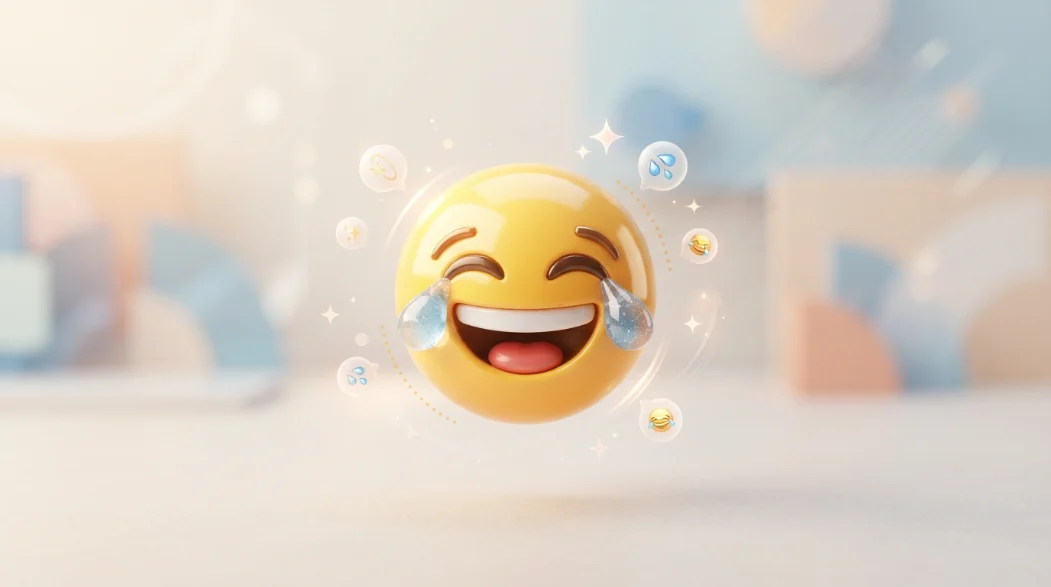
The laughing emoji meme usually features 😂, officially called Face with Tears of Joy. It shows a wide grin with tears coming from both eyes and is commonly used to express laughter, amusement, or strong enjoyment. When it appears in a meme, caption, comment, or text, it can make the reaction feel more expressive than simply writing “lol.” The exact tone depends on the joke and surrounding words.
A laughing emoji meme can also be used for irony, exaggeration, awkward humor, or a situation that is funny because it is relatable. The emoji itself does not automatically mean sarcasm or mockery. The image, caption, conversation, and relationship between the people involved all help determine what the reaction means.
What Does the Laughing Emoji Meme Mean?
The laughing emoji meme most often uses 😂 Face with Tears of Joy to communicate:
- “That is really funny.”
- “I’m laughing.”
- “That made me laugh.”
- “This is hilarious.”
- “I cannot take this seriously.”
- “This situation is ridiculously funny.”
The official Unicode name is Face with Tears of Joy, not “laughing emoji meme.” The phrase “laughing emoji meme” describes the way people use the emoji in humorous online content. Unicode lists 😂 as U+1F602. It was approved in Unicode 6.0 in 2010 and added to Emoji 1.0 in 2015.
When the emoji becomes part of a meme, its job is usually to reinforce the joke or reaction.
For example:
When you say you’ll go to bed early and suddenly it’s 2 a.m. 😂
Here, 😂 signals that the situation is relatable and funny.
Laughing Emoji Meme Meaning in Text and Chat
In texts, 😂 works as a direct emotional reaction.
Someone might send:
“You really forgot your own password again 😂”
The emoji softens the statement and makes it clear that the sender is laughing rather than simply criticizing.
It can also appear after a short reaction:
“No way 😂”
In that case, the emoji can communicate surprise mixed with amusement.
A repeated sequence can increase the expressive feeling:
“😂😂😂”
This generally suggests stronger laughter than a single 😂, although the exact intensity depends on the person using it.
Why Is 😂 Used in Memes?
Memes often rely on quick visual reactions. 😂 works well because its meaning is easy to recognize as laughter.
A meme may combine:
- A funny image
- A short caption
- A relatable situation
- An exaggerated reaction
- 😂 as a visual response
For example:
Me: I’m only going to watch one episode.
Also me at 4 a.m.: 😂
Here, the emoji adds a humorous reaction to the contradiction.
The emoji can also make an ordinary statement feel more like a joke:
“I definitely have my life together 😂”
The words suggest one thing, while the emoji signals that the statement is not meant completely literally.
Different Meanings of 😂 in Memes
Genuine laughter
The simplest use is to show that something is genuinely funny.
“This meme is too good 😂”
The sender is directly expressing amusement.
Relatable humor
😂 can react to situations that people recognize from their own lives.
“Me opening the fridge for the fifth time hoping new food appeared 😂”
The humor comes from the familiar situation.
Self-deprecating humor
People may use 😂 when joking about themselves.
“I studied for three hours and still forgot everything 😂”
The emoji helps show that the person is laughing at their own situation.
Exaggerated reaction
Sometimes 😂 is used to make a reaction sound bigger and more dramatic.
“You actually said that out loud 😂”
The sender may be amused without literally laughing uncontrollably.
Sarcasm or irony
😂 can appear alongside statements that are intentionally ironic.
“Love getting an email marked urgent at 11:59 p.m. 😂”
The sender is probably not expressing genuine happiness. The emoji helps signal humorous frustration.
Playful teasing
A person can use 😂 to make teasing sound lighter.
“You really thought that was going to work 😂”
The tone could be friendly teasing rather than serious criticism.
The surrounding relationship and conversation matter here.
Is the Laughing Emoji Meme Sarcastic?
It can be, but 😂 does not automatically mean sarcasm.
For example:
“Great, another meeting at 7 a.m. 😂”
The sentence suggests that the speaker is joking about something they probably do not enjoy.
But:
“That joke was hilarious 😂”
may simply be a genuine reaction.
The difference comes from the words and situation. The emoji itself represents amusement, while the broader message determines whether that amusement is sincere, ironic, or playful.
Is 😂 Still Used in Memes?
😂 continues to be recognized as a standard laughing emoji and remains part of Unicode’s current emoji set. Unicode’s emoji data lists it as Face with Tears of Joy with keywords including funny, happy, hilarious, laugh, and joy.
People’s preferences for laughing emojis can vary by community, platform, and personal style. Emojipedia has documented different periods in which users debated or shifted between 😂, 🤣, 😭, and other reactions. That does not give any one emoji a universal social meaning.
So if you see 😂 in a meme today, the safest interpretation is still that it communicates laughter or amusement unless the surrounding content clearly changes the tone.
Laughing Emoji Meme vs. Other Laughing Emojis
| Emoji | Official Name | Common Meaning | Tone | Where or When It Is Used |
|---|---|---|---|---|
| 😂 | Face with Tears of Joy | Strong laughter or amusement | Funny, expressive | Memes, texts, comments, reactions |
| 🤣 | Rolling on the Floor Laughing | Very intense laughter | Hilarious, exaggerated | Extremely funny jokes, memes, reactions |
| 😆 | Grinning Squinting Face | Big grin or laughter | Cheerful, energetic | Jokes, playful messages, reactions |
| 😅 | Grinning Face with Sweat | Nervous or relieved laughter | Awkward, lighthearted | Embarrassing moments, close calls |
| 😭 | Loudly Crying Face | Strong emotion, including exaggerated laughter | Dramatic, intense | Humor, emotional reactions, dramatic memes |
| 😹 | Cat with Tears of Joy | Laughing with a cat theme | Cute, humorous | Cat jokes, playful reactions |
| 💀 | Skull | “I’m dead” from laughter or shock | Dramatic, humorous | Internet jokes, memes, exaggerated reactions |
| 🫠 | Melting Face | Overwhelmed, embarrassed, or humorously defeated | Relatable, awkward | Awkward situations, stressful jokes, memes |
The closest comparison is usually 😂 versus 🤣. 😂 communicates strong laughter, while 🤣 is designed around an even more exaggerated image of laughing so hard that someone is rolling on the floor. Emojipedia describes 🤣 as often conveying more intense laughter than 😂.
😭 can also be confusing because it may represent actual crying or exaggerated laughter. 💀 is another common internet reaction that can mean something like “that was so funny I’m dead,” but its official name is simply Skull. The meaning comes from common contextual use rather than its literal appearance.
Laughing Emoji Meme Examples
Example 1: Relatable meme
“Me checking my bank account after saying I deserved a little treat 😂”
Likely meaning: The creator is joking about spending more money than planned.
Example 2: Unexpected situation
“He really walked into the wrong classroom and started taking notes 😂”
Likely meaning: The sender finds the situation funny.
Example 3: Self-joke
“I said I would clean my room today. Anyway, here I am watching TV 😂”
Likely meaning: The person is laughing at their own lack of productivity.
Example 4: Sarcastic reaction
“Nothing like a surprise deadline on Friday afternoon 😂”
Likely meaning: The sender is humorously expressing frustration.
Example 5: Playful teasing
“You called that cooking? 😂”
Likely meaning: The person is teasing someone about their cooking.
The same emoji can support different tones because the words and situation change its interpretation.
Common Misunderstandings About the Laughing Emoji Meme
😂 does not always mean uncontrollable laughter
The emoji depicts tears of joy, but one emoji does not necessarily describe the exact physical intensity of someone’s reaction.
Someone may use 😂 simply to mean “that’s funny.”
😂 does not automatically mean sarcasm
Sarcasm depends on the surrounding statement and context.
😂 is not the same as 🤣
Both communicate laughter, but 🤣 has a more exaggerated design and is commonly used for especially intense laughter.
😂 does not guarantee that someone agrees with a joke
A person can laugh at a statement without agreeing with it.
😂 does not automatically mean the sender is mocking you
If someone replies with 😂, they could be laughing with you, reacting to the situation, or teasing you. The complete conversation matters.
How to Respond to a Laughing Emoji Meme
Your response should match the tone of the meme or message.
If you also think it is funny
“😂😂 I wasn’t ready for that.”
If you’re joining the joke
“That is way too accurate 😂”
If someone is teasing you
“Okay, okay, you got me 😂”
If you’re unsure whether they are joking
“Wait, are you serious or joking? 😂”
If the meme is funny but slightly awkward
“That is painfully accurate 😂”
There is no single required response to 😂. Matching the sender’s tone is usually enough.
Copy and Paste the Laughing Emoji
😂
You can copy and paste the laughing emoji into texts, captions, comments, memes, and social posts.
Common combinations include:
- 😂😂😂 = strong laughter
- 😂😭 = exaggerated emotional reaction
- 😂🤣 = intense laughter
- 😂🙈 = embarrassed laughter
- 😂🤦 = laughing at a frustrating mistake
These combinations are informal and can have slightly different meanings depending on the conversation.
Official Unicode Details for 😂
The official Unicode name for 😂 is Face with Tears of Joy.
- Emoji: 😂
- Unicode code point: U+1F602
- Unicode version: 6.0
- Emoji version: 1.0
- Unicode category: Smileys & Emotion
- Common concept: Laughter, amusement, joy
Unicode’s current emoji list identifies U+1F602 as Face with Tears of Joy.
Emojipedia notes that the emoji was approved in Unicode 6.0 in 2010 and added to Emoji 1.0 in 2015.
Its visual design can vary slightly between Apple, Google, Microsoft, Samsung, WhatsApp, and other platforms. The underlying Unicode character remains the same even when the artwork changes.
Frequently Asked Questions
What does the laughing emoji meme mean?
The laughing emoji meme usually uses 😂 Face with Tears of Joy to show that something is funny, amusing, relatable, or intentionally humorous.
What is the official name of 😂?
The official Unicode name is Face with Tears of Joy.
Is 😂 a laughing emoji?
Yes. 😂 is commonly used to express laughter and amusement.
What does 😂 mean in a meme?
In a meme, 😂 usually acts as a visual reaction that reinforces humor. It can also communicate irony, playful teasing, exaggeration, or relatable frustration.
Is 😂 sarcastic?
It can be used sarcastically, but the emoji itself is not inherently sarcastic. The words and situation determine the tone.
What is the difference between 😂 and 🤣?
😂 is Face with Tears of Joy, while 🤣 is Rolling on the Floor Laughing. Both communicate laughter, but 🤣 generally conveys a more exaggerated level of laughter.
Why do people use 😂 in funny comments?
It gives a quick visual signal that the person found something amusing. It can also make a short comment feel warmer or more playful.
Can 😂 mean “I’m dying laughing”?
It can express very strong amusement, and some people use it for an exaggerated “I’m dying laughing” reaction. Other emojis, including 💀 and 😭, can also communicate that idea depending on the community and context.
Is 😂 the same as the crying laughing emoji?
Yes. “Crying laughing emoji” and “laughing crying emoji” are common informal descriptions of 😂. Its official Unicode name is Face with Tears of Joy.
Conclusion
The laughing emoji meme most commonly uses 😂 Face with Tears of Joy to show laughter, amusement, or a humorous reaction. In memes and online conversations, it can also add playful exaggeration, irony, teasing, or relatable humor.
The important distinction is context. 😂 does not automatically mean sarcasm, mockery, flirting, or extreme laughter. The words, image, and conversation around it tell you how the reaction should be understood. When you need a stronger laughter reaction, 🤣 may fit better, while 😅, 😭, or 💀 can create very different tones.
Read More Related Articles:
- Rose Emoji Meaning | What It Really Says About Love …
- Gasp Emoji | Meaning, Examples & What This Shocked …
- ROFL Emoji Meaning | The Ultimate Guide to Laughing Out …