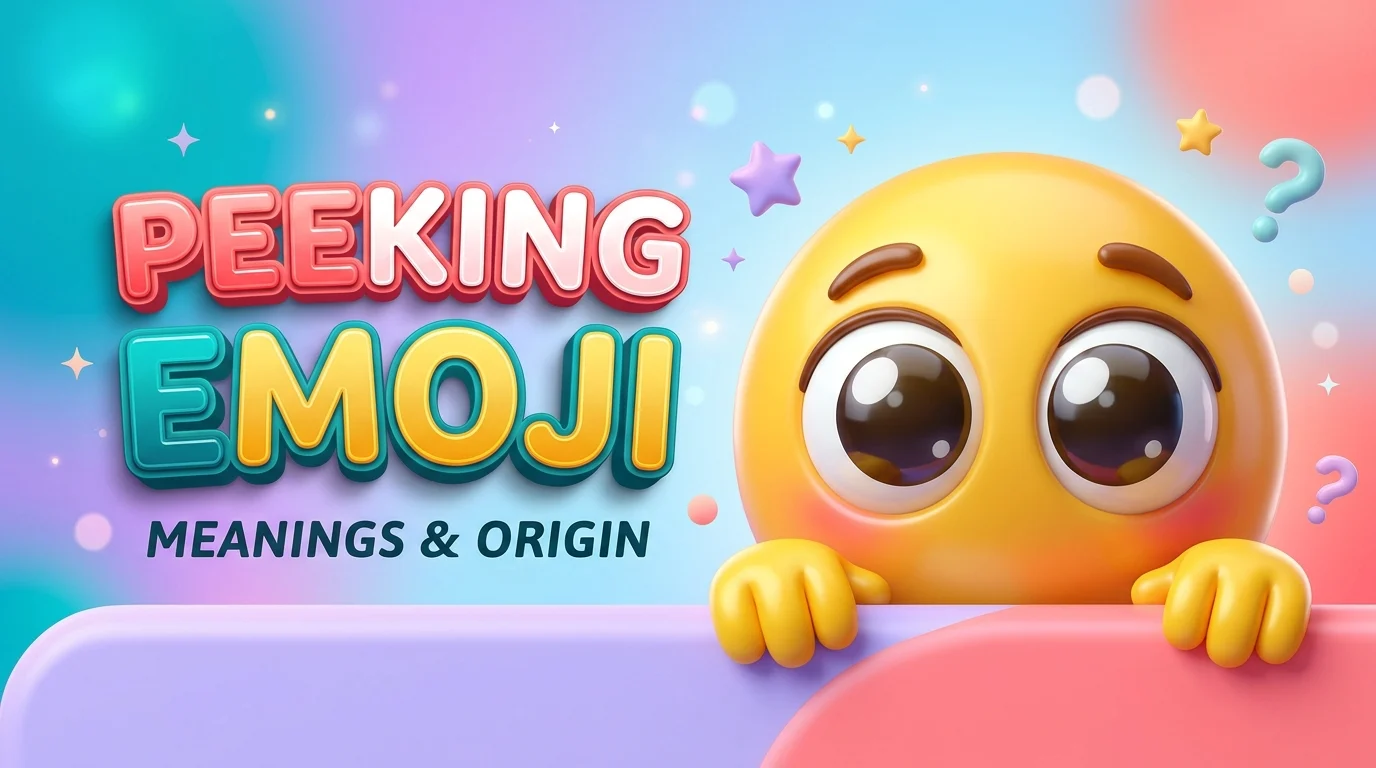
The peeking emoji is often used to express curiosity, shyness, nervousness, or the feeling of wanting to look at something without fully showing yourself. Its meaning depends on the emoji being used, the conversation, and the emotion the sender wants to communicate. A face peeking out from behind its hands can suggest embarrassment or uncertainty, while a face looking around a corner can feel curious, playful, or suspicious.
People use peeking emojis when they want to react without saying too much. They can make a message feel shy, dramatic, funny, or quietly interested. However, there is no single emoji officially named “Peeking Emoji,” so people may use different symbols when searching for this expression. Understanding the specific design and the surrounding message helps you work out what someone really means.
Quick Answer
The peeking emoji usually expresses curiosity, shyness, nervousness, or playful hesitation, as if someone wants to look but is not ready to reveal themselves completely.
Its exact meaning depends on the symbol used, the conversation, and whether the sender is joking, embarrassed, or genuinely curious.
What Does the Peeking Emoji Mean?
The peeking emoji represents the feeling of looking at something while remaining partly hidden. It can communicate curiosity, hesitation, embarrassment, or a desire to see what is happening without drawing too much attention.
One common interpretation comes from the face with peeking eyes, often represented by the 👀 emoji. This symbol can suggest that someone is watching closely, noticing something interesting, or waiting to see what happens next. Another related expression is the see-no-evil monkey 🙈, which can suggest embarrassment, shyness, or not wanting to look at something awkward.
The meaning changes with the situation. Someone might use a peeking expression before asking a personal question, reacting to unexpected news, or hinting that they have noticed something interesting.
For example, “I have a question 👀” can make the message feel curious or teasing. By contrast, “I can’t look 🙈” suggests embarrassment or discomfort.
The key is to identify which emoji the sender used. Different peeking-style emojis can communicate different emotions, even when they share the idea of looking or hiding.
Peeking Emoji Meaning in Text Messages
In text messages, a peeking emoji can soften a question, add suspense, or show that someone is interested in what is happening. It gives a written message a visual reaction that words alone might not fully express.
Here are some common uses:
- Curiosity: The sender wants to know more about a situation.
- Shyness: They feel hesitant about asking or saying something.
- Playfulness: They are joking about watching, waiting, or sneaking a look.
- Embarrassment: They feel awkward about a conversation or situation.
- Suspense: They are waiting for news, a response, or a reveal.
- Interest: They have noticed something and want to see what happens next.
For example, someone might text “So, what happened after that? 👀” to show curiosity. A message such as “I’m too embarrassed to look 🙈” communicates a different feeling.
A peeking emoji can also make a message feel less direct. Instead of asking a question plainly, the sender may use it to signal interest while keeping the tone light.
What Does the Peeking Emoji Mean From Someone?
When someone sends you a peeking emoji, they may be curious about your response, interested in a topic, or playfully waiting for more information. The emoji alone cannot tell you exactly what they are thinking.
The surrounding conversation provides the strongest clue.
If they send 👀 after your message: They may be intrigued, surprised, or expecting you to explain something further.
If they send 🙈 after a compliment: They may be feeling shy, flattered, or embarrassed in a playful way.
If they use a peeking expression before asking a question: They may want to make the question feel less serious or more teasing.
If they send it after sharing gossip or surprising news: They may be inviting you to react or showing that they are eager to see what happens.
It is easy to read too much into a small symbol. A peeking emoji does not automatically mean attraction, suspicion, or secret interest. Look at the person’s words, their usual texting style, and the situation before deciding what the message means.
Is the Peeking Emoji Positive?
The peeking emoji is often playful or neutral, but it can communicate different feelings depending on its design and context.
A curious-looking face may feel positive when someone is excited to hear news or interested in a conversation. A shy expression can feel sweet or friendly when a person is responding to praise. In a humorous exchange, the same visual idea can add suspense or exaggerate a reaction.
However, peeking can also suggest uncertainty, discomfort, or suspicion. For example, 👀 after an unexpected statement might mean “I’m paying attention” or “That sounds interesting.” In a tense conversation, it could instead suggest that someone is questioning what they have heard.
The emoji itself does not determine whether the message is positive. The words around it and the relationship between the people communicating are more useful clues.
Can the Peeking Emoji Be Flirty?
Yes, a peeking emoji can contribute to a flirty message, especially when it is used to express playful curiosity, shyness, or anticipation. However, it is not automatically romantic.
For example, someone might send “You looked really good today 🙈” to show that they feel a little embarrassed while giving a compliment. Another person might write “Are you going to tell me who you like? 👀” to tease someone about a possible crush.
In these situations, the emoji adds a playful tone to the words. It can make a message feel less serious or suggest that the sender is being a little coy.
The same emoji can also appear in ordinary conversations between friends. Someone may use it to react to gossip, a surprise, or a funny story without any romantic intention.
If you are trying to understand a message from someone you like, pay attention to the full conversation rather than relying on the emoji alone. Repeated compliments, personal questions, and the overall tone may provide more context than one symbol.
Can the Peeking Emoji Be Sarcastic?
A peeking emoji can sound sarcastic when it is used to react to something suspicious, unexpected, or difficult to believe.
For example, someone might write “Oh, you just happened to forget? 👀” to suggest that they are questioning the explanation. In another conversation, “Interesting choice 👀” could be a playful observation or a subtle criticism.
The emoji can create the feeling that the sender is watching closely and waiting for an explanation. This makes it useful for teasing, pointing out contradictions, or reacting to information that seems surprising.
However, sarcasm is not guaranteed. A message such as “I heard you have exciting news 👀” may simply show curiosity. Without additional context, it is difficult to distinguish a sarcastic reaction from a playful or genuinely interested one.
Why Do People Use Peeking Emojis Instead of Words?
Peeking emojis help people communicate a reaction without spelling out every thought. A short message can feel more expressive when a symbol adds curiosity, hesitation, or humor.
For example, “Tell me more 👀” is direct, but the emoji can make it feel more playful and anticipatory. Similarly, “I can’t believe you said that 🙈” conveys embarrassment, while the emoji reinforces the idea of not wanting to see or face the situation.
Peeking-style emojis are also useful when people want to react without interrupting a conversation. They can signal that someone is paying attention, waiting for details, or inviting another person to continue.
Another reason is that emojis leave some room for interpretation. A sender may not want to state exactly what they are thinking, so a visual reaction lets them express interest while keeping the message light.
That flexibility is part of what makes peeking emojis popular in casual digital conversations.
Related Emojis and Their Meanings
Several emojis can communicate curiosity, shyness, embarrassment, or the feeling of watching something unfold. They are related in tone, but they are not interchangeable.
| Emoji | Official Name | Common Meaning | Tone | Where or When It Is Used |
|---|---|---|---|---|
| 👀 | Eyes | Watching, curiosity, interest | Curious, teasing | Reacting to news or hinting at something interesting |
| 🙈 | See-No-Evil Monkey | Embarrassment, shyness, playful avoidance | Shy, humorous | Responding to compliments or awkward situations |
| 🫣 | Face with Peeking Eye | Nervous curiosity, fear, or reluctant watching | Anxious, playful | Looking at something uncomfortable or suspenseful |
| 🤭 | Face with Hand Over Mouth | Surprise, giggling, or holding back a reaction | Playful, embarrassed | Reacting to gossip or a funny secret |
| 🫢 | Face with Open Eyes and Hand Over Mouth | Shock, surprise, or sudden realization | Surprised | Responding to unexpected information |
| 😳 | Flushed Face | Embarrassment, shock, or feeling exposed | Awkward, surprised | Reacting to an unexpected compliment or revelation |
| 🥺 | Pleading Face | Vulnerability, pleading, or tenderness | Soft, emotional | Making a request or expressing a sensitive feeling |
| 🤫 | Shushing Face | Silence, secrecy, or keeping something quiet | Secretive, playful | Asking someone to keep a secret or lower their voice |
👀 vs. 🫣: What’s the Difference?
The eyes emoji 👀 usually suggests that someone is watching, paying attention, or curious about what happens next. It can also add a teasing or suspicious tone to a message.
The face with peeking eye 🫣 conveys a more vulnerable reaction. It can suggest that someone is nervous about looking but still wants to see what happens. This makes it useful for awkward, frightening, or suspenseful situations.
For example, “Tell me what happened 👀” shows interest in hearing details. “I’m scared to open the message 🫣” suggests nervous anticipation.
Both emojis can express curiosity, but 👀 often feels more like observing something, while 🫣 can communicate a mixture of curiosity and discomfort.
🙈 vs. 🫣: What’s the Difference?
The see-no-evil monkey 🙈 often represents embarrassment, playful avoidance, or not wanting to look at something awkward. It can also be used as a lighthearted reaction to a compliment.
The face with peeking eye 🫣 more clearly combines looking with nervousness or apprehension. Its expression suggests that the person is peeking despite feeling uncomfortable or afraid.
For example, “Stop, you’re making me blush 🙈” communicates playful embarrassment. “I don’t want to see the result, but I’m looking anyway 🫣” expresses nervous curiosity.
The two emojis overlap, but the face with peeking eye is especially suited to moments when someone feels uneasy yet cannot resist looking.
Is the Peeking Emoji Rude?
Usually, a peeking emoji is not rude. It often makes a conversation more playful or expressive. However, it can sound intrusive or judgmental when used in the wrong context.
For example, 👀 after a harmless announcement might show interest. After a private or sensitive statement, the same emoji could feel as though the sender is prying for information.
Similarly, using a peeking expression in response to someone’s embarrassment may seem supportive between close friends but insensitive if the person is genuinely upset.
If you are unsure how the emoji will be received, consider the topic and your relationship with the other person. A symbol that works well in a casual chat may not be appropriate during a serious discussion.
Peeking Emoji on Social Media
On social media, peeking-style emojis often appear in comments, captions, and replies to signal interest or anticipation. They can be used when a creator hints at an announcement, when someone shares surprising news, or when a conversation becomes entertaining.
Common examples include:
- Reacting to a teaser: “Something big is coming 👀”
- Showing interest in gossip: “Wait, what happened next? 👀”
- Expressing nervous anticipation: “Opening the results now 🫣”
- Reacting to an awkward moment: “I would disappear 🙈”
- Responding to a surprising reveal: “I did not expect that 🫢”
The meaning can also shift within different online communities. Some people use 👀 as a simple sign of attention, while others use it to suggest suspicion or playful teasing.
There is no single rule that applies to every platform or group. The post, caption, and comments around the emoji help establish its intended meaning.
Text Message Examples
Here are realistic examples showing how peeking-style emojis can change the tone of a conversation.
1. Showing curiosity
- Person A: “I have some interesting news.”
- Person B: “Tell me everything 👀”
Meaning: The sender is curious and wants to hear more.
2. Feeling shy after a compliment
- Person A: “You looked amazing today.”
- Person B: “You’re making me blush 🙈”
Meaning: The sender responds with playful embarrassment or shyness.
3. Nervous anticipation
- Person A: “Your exam results are available.”
- Person B: “I’m scared to check 🫣”
Meaning: The sender wants to see the result but feels nervous about it.
4. Reacting to gossip
- Person A: “Apparently, they have a big announcement.”
- Person B: “Now I’m interested 👀”
Meaning: The sender is intrigued and wants more information.
5. Responding to a surprising message
- Person A: “I finally told them how I feel.”
- Person B: “Wait, you actually did that? 😳”
Meaning: The sender is surprised by the news.
6. Teasing a friend
- Person A: “You said you weren’t interested.”
- Person B: “I never said that 👀”
Meaning: The emoji makes the reply feel playful or slightly challenging.
7. Avoiding an awkward situation
- Person A: “Remember what you said in front of everyone?”
- Person B: “Please don’t remind me 🙈”
Meaning: The sender feels embarrassed and would rather not revisit the moment.
Common Misunderstandings About the Peeking Emoji
1. Assuming It Always Means Someone Is Watching You
The eyes emoji can suggest watching, but it often communicates ordinary curiosity or interest. It does not necessarily mean someone is monitoring you.
2. Treating Every Peeking Emoji as Flirting
A peeking expression can appear in a flirty conversation, but it can also be used with friends, family, or coworkers. The surrounding message matters more than the symbol alone.
3. Confusing Shyness With Fear
The see-no-evil monkey 🙈 often communicates embarrassment or playful avoidance. The face with peeking eye 🫣 can suggest nervousness, fear, or reluctant curiosity. Their meanings overlap, but they are not identical.
4. Assuming the Emoji Has One Fixed Meaning
Different people use emojis differently. A symbol that feels teasing to one person may seem confusing or serious to another.
5. Ignoring the Message Around It
A peeking emoji can change the tone of a sentence, but it rarely provides the whole meaning by itself. Read the words, consider the situation, and look at how the sender normally communicates.
How to Respond to a Peeking Emoji
The best response depends on the conversation and the specific emoji the other person sends.
- If they send 👀 because they are curious: Share the information they seem to be asking about.
- If they send 🙈 after a compliment: Respond warmly or playfully if you are comfortable doing so.
- If they send 🫣 about a stressful situation: Acknowledge their nervousness or offer reassurance.
- If they use it to tease you: You can joke back if the conversation feels friendly.
- If the meaning is unclear: Ask what they mean instead of assuming their intention.
For example, if someone texts “I heard something interesting 👀,” you could reply, “What did you hear?” If they respond with “I’m too embarrassed to look 🙈,” a gentle answer such as “It’s okay, take your time” may fit better.
Matching the tone of the conversation is usually more effective than trying to assign a definite meaning to one emoji.
Frequently Asked Questions
1. What is the peeking emoji?
“Peeking emoji” is a general description rather than the official name of one specific emoji. People may use 👀, 🫣, or 🙈 to express watching, nervous curiosity, shyness, or playful avoidance.
2. What does 🫣 mean from someone?
The face with peeking eye often suggests nervous curiosity, fear, embarrassment, or the feeling of wanting to look at something despite being uncomfortable. The context determines which interpretation fits best.
3. What does 👀 mean in a text?
The eyes emoji commonly signals curiosity, attention, interest, or playful suspicion. It can mean that the sender has noticed something and wants to see what happens next.
4. Does the peeking emoji mean someone likes you?
Not necessarily. It can contribute to a flirty or shy message, but it is also common in friendly conversations, jokes, and reactions to surprising news. One emoji is not enough to establish romantic interest.
5. Is the peeking emoji positive or negative?
It can be either, although it is often playful or neutral. Depending on the conversation, it may communicate excitement, curiosity, embarrassment, nervousness, or suspicion.
6. What is the difference between 👀 and 🙈?
The eyes emoji usually focuses on watching or curiosity. The see-no-evil monkey often communicates embarrassment, playful avoidance, or not wanting to look at something awkward.
7. What is the difference between 🙈 and 🫣?
The see-no-evil monkey often represents shyness or embarrassment, while the face with peeking eye more directly suggests looking despite feeling nervous, afraid, or uncomfortable.
8. Can the peeking emoji be sarcastic?
Yes. It can suggest disbelief, suspicion, or a teasing reaction when someone says something unexpected. However, sarcasm depends on the message and the relationship between the people communicating.
9. How should I reply when someone sends a peeking emoji?
Respond according to the situation. You can share more information if they seem curious, joke back if they are teasing, or offer reassurance if they appear nervous. If the meaning is unclear, ask a simple follow-up question.
Conclusion
The peeking emoji is a flexible way to express curiosity, shyness, nervousness, or playful interest without spelling everything out. Its meaning depends on the particular symbol, the message around it, and the relationship between the sender and receiver.
The eyes emoji often suggests attention or curiosity, the see-no-evil monkey can express embarrassment, and the face with peeking eye combines looking with a sense of hesitation or unease. Recognizing these differences makes it easier to understand messages without reading too much into them.
When someone sends a peeking emoji, consider the whole conversation before deciding what they mean. A small symbol can add personality to a message, but context is what makes its meaning clear.
Discover More Post:
- Choking Emoji Meaning | What It Really Says in Texts …
- Battery Emoji Meaning | Power, Low Energy & Life’s Daily …
- Frowning Emoji Meaning | Decode the Mood Behind the Face …