Quick Answer:
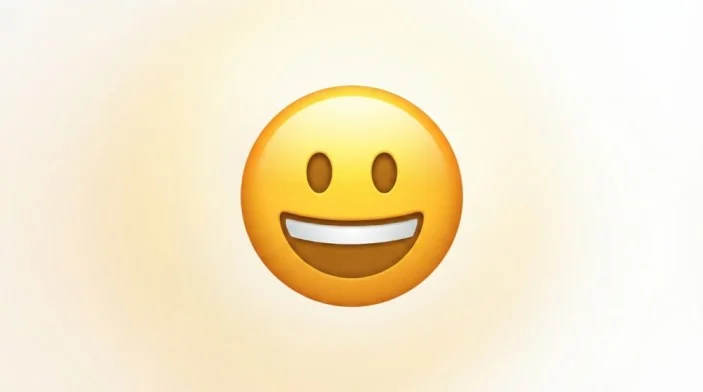
The happy face emoji 😀 usually expresses happiness, friendliness, excitement, or cheerful positivity. Its exact tone can range from a simple smile to strong enthusiasm depending on the message around it.
The happy face emoji 😀 is officially called Grinning Face. It shows a yellow face with an open smile and visible teeth, and it is commonly used to express happiness, amusement, excitement, or a friendly mood.
In everyday texting, 😀 can mean something as simple as “I’m happy” or “That’s great!” It can also make a message feel more upbeat and welcoming. However, it does not have one fixed emotional meaning. The words around the emoji can make it feel genuinely cheerful, playful, enthusiastic, or occasionally exaggerated.
It is also easy to confuse 😀 with other smiling emojis such as 😃, 😄, and 😊. Those emojis overlap in meaning, but their facial expressions and emotional tones are slightly different.
What Does the Happy Face Emoji 😀 Mean?
The most common meaning of 😀 is happiness or a cheerful mood.
Someone may use it to show that they are:
- Happy
- Excited
- Amused
- Friendly
- Positive
- Pleased
- Enthusiastic
For example:
“I finally finished my project 😀”
Here, 😀 reinforces the person’s happiness and sense of accomplishment.
It can also be used as a simple positive reaction:
“That sounds great 😀”
In this situation, the emoji makes the response feel warmer and more upbeat.
Unlike some facial emojis, 😀 usually has a straightforward positive appearance. It does not normally suggest sadness, anger, embarrassment, or romantic attraction on its own.
What Does 😀 Mean in Texting?
In text messages, 😀 often works as an emotional signal that tells the reader to interpret the message positively.
For example:
“Thanks for helping me today 😀”
The emoji makes the sentence sound friendly and appreciative.
Or:
“Guess what? I got the job 😀”
Here, it clearly supports the feeling of happiness and excitement.
It can also appear at the end of an ordinary sentence:
“See you tomorrow 😀”
In that context, it may simply make the message sound cheerful rather than adding a completely separate meaning.
Because text does not show facial expressions or voice tone, a smiley can help communicate the mood behind a sentence. Still, the surrounding words remain important.
Is 😀 a Happy Emoji?
Yes. 😀 is one of the clearest emojis for expressing a happy or cheerful facial expression.
Its official Unicode name is Grinning Face, rather than “Happy Face.” The keyword “happy face emoji” is a common way to describe it because its open smile and visible teeth give it a strongly positive appearance. Unicode lists 😀 as U+1F600, Grinning Face.
The emoji can express different levels of happiness.
For example:
“Good morning 😀”
Simple friendliness.
“I won! 😀”
Happiness and excitement.
“You actually did it! 😀”
Excitement or enthusiastic encouragement.
So, the basic emotional direction stays positive, while the intensity comes from the context.
What Does 😀 Mean From Someone?
If someone sends you 😀, they are usually communicating a positive or friendly mood.
For example:
“That was really fun 😀”
They are likely emphasizing that they enjoyed the experience.
If someone says:
“I’m glad you came 😀”
the emoji adds warmth and friendliness.
If the message is:
“Okay, you got me 😀”
it could show playful amusement rather than simple happiness.
The important thing is not to treat 😀 as a secret code. One emoji cannot reliably tell you whether someone is flirting, joking, being sarcastic, or expressing a particular relationship feeling.
Look at the complete message and the normal communication style between you.
Does 😀 Mean Someone Is Happy?
Usually, yes, but not necessarily in a literal or serious sense.
A person may use 😀 because they are genuinely happy. They may also use it simply because they want their message to sound friendly.
For example:
“Sure, I’ll send it over 😀”
The sender may not be especially excited. They may simply be adding a cheerful tone to an otherwise plain response.
This distinction matters because emojis often communicate tone, not just a specific emotion.
Is 😀 a Friendly Emoji?
Yes. 😀 can work very naturally in friendly conversations.
You might see it in messages such as:
“Good to hear from you 😀”
“Hope you have a great weekend 😀”
“That sounds like fun 😀”
In these examples, the emoji helps create an open, positive tone.
It can be used between friends, family members, coworkers, classmates, or other people who are having a casual conversation.
Is 😀 a Flirting Emoji?
😀 can appear in a flirty conversation, but it is not specifically a flirting emoji.
For example:
“You looked great tonight 😀”
Depending on the conversation, that could be a friendly compliment or part of a flirtatious exchange.
By comparison, an emoji such as 😘 or 😍 communicates romantic or affectionate signals more directly.
So if someone sends you 😀, do not assume they are flirting simply because they used a smiling face. The wording, relationship, and conversation history matter more.
Can 😀 Be Sarcastic?
Yes, although sarcasm usually comes from the words and situation, rather than from the emoji itself.
For example:
“Awesome, another three-hour meeting 😀”
If the person clearly dislikes long meetings, the cheerful smile can make the sentence sound ironic.
Another example:
“You forgot the tickets again 😀”
Depending on the context, the smile could soften a complaint or make the sarcasm more obvious.
Without that surrounding context, 😀 generally has a positive and cheerful meaning.
Can 😀 Be Passive-Aggressive?
It can sometimes be interpreted that way, especially when a very cheerful emoji appears next to criticism or an obviously negative situation.
For example:
“Thanks for leaving everything for me to clean up 😀”
The words make it clear that the sender is not simply expressing happiness.
However, the emoji itself is not inherently passive-aggressive. It is the combination of the wording, situation, and tone that creates that interpretation.
How Strong Is the Emotion in 😀?
😀 generally communicates more visible enthusiasm than a very subtle smile, but it is not automatically an extremely intense emotion.
Compare:
“Sounds good 🙂”
with:
“Sounds good 😀”
The first can feel calm or understated. The second usually feels more openly cheerful.
And:
“That’s amazing 🤩”
typically signals much stronger excitement or admiration than 😀.
This makes 😀 useful when you want a message to feel clearly positive without necessarily making it dramatic.
Happy Face Emoji 😀 vs. Other Smiling Emojis
Several emojis can represent happiness, but their expressions are not interchangeable in every situation.
| Emoji | Official Name | Common Meaning | Tone | Where or When It Is Used |
|---|---|---|---|---|
| 😀 | Grinning Face | Happiness, cheerfulness, positive excitement | Bright, friendly, cheerful | Happy reactions, casual texts, good news, positive replies |
| 😃 | Grinning Face with Big Eyes | Happiness, excitement, enthusiasm | Energetic, upbeat | Excited reactions, greetings, celebrations |
| 😄 | Grinning Face with Smiling Eyes | Genuine happiness, amusement, warmth | Warm, joyful, expressive | Friendly conversations, laughter, positive news |
| 😊 | Smiling Face with Smiling Eyes | Warmth, gratitude, happiness, friendliness | Gentle, sweet, warm | Appreciation, kind messages, compliments |
| 🙂 | Slightly Smiling Face | Mild happiness or friendliness | Subtle, restrained | Calm replies, simple positive reactions |
| 😁 | Beaming Face with Smiling Eyes | Strong happiness or excitement | Very cheerful, energetic | Celebrations, proud reactions, enthusiastic messages |
| 😆 | Grinning Squinting Face | Strong amusement or laughter | Playful, energetic | Jokes, funny situations, laughing reactions |
| 🥰 | Smiling Face with Hearts | Feeling loved, affectionate happiness | Tender, affectionate | Loving messages, sweet reactions, romantic contexts |
| 🤩 | Star-Struck | Amazement, admiration, intense excitement | Excited, enthusiastic | Impressive news, admiration, exciting experiences |
The biggest source of confusion is usually between 😀, 😃, 😄, and 😊.
They all communicate positive feelings, but their facial expressions create slightly different impressions.
😀 vs. 😃: What’s the Difference?
😀 is Grinning Face, while 😃 is Grinning Face with Big Eyes.
Both can express happiness and excitement.
😀 has a more straightforward grin and can feel like a general happy reaction.
😃 has larger, more open-looking eyes and can feel more energetic or excited.
For example:
“I got the tickets 😀”
sounds happily satisfied.
“I GOT THE TICKETS 😃”
can feel more visibly excited.
The difference is subtle, so many people use them interchangeably.
😀 vs. 😄: What’s the Difference?
😀 and 😄 both show a broad grin, but 😄 is officially Grinning Face with Smiling Eyes.
The smiling eyes give 😄 a warmer, more expressive appearance.
You might use:
“That was fun 😀”
for a general happy reaction.
And:
“That was hilarious 😄”
when the smile is connected more strongly to amusement or genuine warmth.
Neither emoji has a guaranteed emotional intensity. Personal style also affects how people use them.
😀 vs. 😊: What’s the Difference?
This is one of the most useful distinctions.
😀 is more open and visibly cheerful.
😊 is softer and more warm, gentle, or affectionate. Emojipedia describes 😊 as a warm smile that can communicate positive feelings such as happiness and gratitude.
Compare:
“Thanks for helping me 😀”
with:
“Thanks for helping me 😊”
The first can sound openly cheerful. The second can feel softer and more personal.
That does not mean 😊 is romantic. It can be completely friendly.
😀 vs. 🙂: What’s the Difference?
😀 usually expresses a more obvious grin, while 🙂, officially Slightly Smiling Face, communicates a more subdued positive feeling. Emojipedia notes that 🙂 can also take on ironic or passive-aggressive meanings depending on context.
For a visibly happy reaction:
“I passed the test 😀”
For a restrained positive response:
“Okay, sounds good 🙂”
The second can feel more neutral because the smile is smaller.
😀 vs. 😁: What’s the Difference?
😁 is officially Beaming Face with Smiling Eyes and generally has a more intense, energetic grin.
You might use 😀 for:
“I’m happy we made it.”
And 😁 for:
“We finally made it! 😁”
Again, these are not strict rules. People often choose between them based on personal preference.
😀 vs. 🤩: What’s the Difference?
😀 communicates happiness or a cheerful mood.
🤩 communicates strong excitement, amazement, or admiration.
For example:
“I got a new laptop 😀”
shows happiness.
“I got the laptop I’ve wanted for years 🤩”
adds a much stronger sense of excitement or admiration.
If you want a simple happy expression, 😀 is often a better fit.
Examples of the Happy Face Emoji in Texts
“Good morning 😀”
Likely meaning: A cheerful, friendly greeting.
The emoji adds warmth to a simple message.
“I finally finished it 😀”
Likely meaning: Happiness or relief after completing something.
The words explain why the sender is smiling.
“That sounds great 😀”
Likely meaning: Positive agreement.
It makes the response feel more upbeat than a plain “That sounds great.”
“You were right 😀”
Likely meaning: A cheerful or playful admission.
Depending on the conversation, it can also be slightly teasing.
“We’re going on vacation 😀”
Likely meaning: Excitement and happiness.
The context makes the positive emotion obvious.
“Another Monday 😀”
Likely meaning: Could be genuine cheerfulness or sarcasm.
If the sender dislikes Mondays, the emoji may be deliberately ironic.
When Should You Use the Happy Face Emoji?
😀 works well when you want to make a message feel clearly positive.
Good situations include:
- Sharing good news
- Saying hello
- Showing excitement
- Reacting positively
- Celebrating an achievement
- Thanking someone
- Making a casual message friendlier
- Showing amusement
- Responding to something enjoyable
For example:
“Thanks! 😀”
can make a short reply feel warmer.
But if you are discussing something serious, the emoji may not always be appropriate.
For example:
“I’m sorry about your loss 😀”
would normally be inappropriate because the cheerful facial expression conflicts with the message.
In serious conversations, choose an emoji that matches the emotional situation—or leave the emoji out.
How Should You Respond to 😀?
Your response depends on what the person actually said.
If they are sharing good news
“That’s awesome! 😄”
If they are greeting you
“Hey! 😀 How are you?”
If they are thanking you
“Of course! Happy to help.”
If they are joking
“Haha, exactly 😂”
If you’re unsure about the tone
Respond to the words instead of trying to decode the emoji by itself.
The safest approach is to match the overall mood of the conversation rather than assuming that 😀 carries a hidden message.
Can You Copy and Paste the Happy Face Emoji?
Yes. Here is the emoji:
😀
You can copy and paste it into texts, captions, comments, emails, and other supported apps.
The emoji may look slightly different depending on the device or service displaying it. These visual differences generally do not change its basic meaning.
Official Name and Unicode Details
The official Unicode name for 😀 is Grinning Face.
Its Unicode code point is U+1F600. Unicode lists it among the face emojis, alongside other smiling and grinning expressions.
The character is therefore more precisely identified as:
😀 Grinning Face
“Happy face emoji” is a natural descriptive term, but Grinning Face is the official Unicode name.
The emoji family contains many related facial expressions, including 😃 Grinning Face with Big Eyes, 😄 Grinning Face with Smiling Eyes, and 😊 Smiling Face with Smiling Eyes.
Common Misunderstandings About 😀
Does 😀 always mean someone is genuinely happy?
No. It usually communicates a positive tone, but people can also use it playfully, humorously, or sarcastically.
Does 😀 mean someone is flirting?
Not by itself. It is primarily a general happy or cheerful emoji.
Is 😀 the same as 😊?
No. Their meanings overlap, but 😀 usually has a more open, obvious grin, while 😊 tends to feel softer and warmer.
Is 😀 the same as 😃?
They are very similar, but 😃 has the official name Grinning Face with Big Eyes, giving it a somewhat more energetic facial expression.
Can 😀 be sarcastic?
Yes. The surrounding words and situation can turn a normally cheerful emoji into an ironic or sarcastic signal.
What is the official name of the happy face emoji?
For 😀, the official Unicode name is Grinning Face.
Frequently Asked Questions
What does the happy face emoji 😀 mean from a girl?
It generally means happiness, friendliness, amusement, or a positive mood. It does not have a different universal meaning based on the sender’s gender.
What does 😀 mean from a guy?
It usually communicates the same basic ideas: happiness, friendliness, amusement, or enthusiasm. The surrounding message matters more than the sender’s gender.
Is 😀 a good emoji for texting?
Yes. It is a versatile choice for casual, positive conversations, especially when you want a message to sound cheerful and friendly.
Does 😀 mean “I’m happy”?
It can. It may also simply add a cheerful tone to a message without literally stating that the sender is happy.
What does 😀 mean from someone you like?
It generally indicates a positive or friendly tone, but it does not prove romantic interest. Look at the actual wording and the broader conversation before interpreting it as flirting.
Which emoji is more cheerful: 😀 or 😊?
Both are positive, but 😀 generally looks more openly cheerful because of its broad grin. 😊 tends to feel softer, warmer, or more gentle.
What is the difference between 😀 and 😄?
😀 is Grinning Face, while 😄 is Grinning Face with Smiling Eyes. Their meanings overlap, but 😄 can give a warmer or more expressive impression because of its smiling eyes.
Can 😀 be used professionally?
It can be appropriate in casual workplace communication when the relationship and setting support emojis. In formal or sensitive messages, a plain-text response may be safer.
Conclusion
The happy face emoji 😀 is officially called Grinning Face and is commonly used to express happiness, cheerfulness, amusement, friendliness, or positive excitement. It is one of the more straightforward smiling emojis, but its exact tone still depends on the message surrounding it.
Use 😀 when you want a message to feel openly positive and cheerful. If you want a softer expression, 😊 may fit better; for stronger excitement, 😁 or 🤩 may communicate more energy.
Most importantly, do not assume that 😀 automatically means flirting, romantic interest, or intense happiness. The words, situation, and relationship provide the context that gives the emoji its final meaning.
Read More Related Articles:
- Nervous Emoji Meaning | What Does Mean in Texts?
- Thank You Emoji Meaning | Best Emojis to Say Thanks
- Nerd Emoji Meme | Meaning, Uses, and Funny Examples in …










3 thoughts on “Happy Face Emoji 😀 Meaning | What Does 😀 Mean in Texts in 2026”